
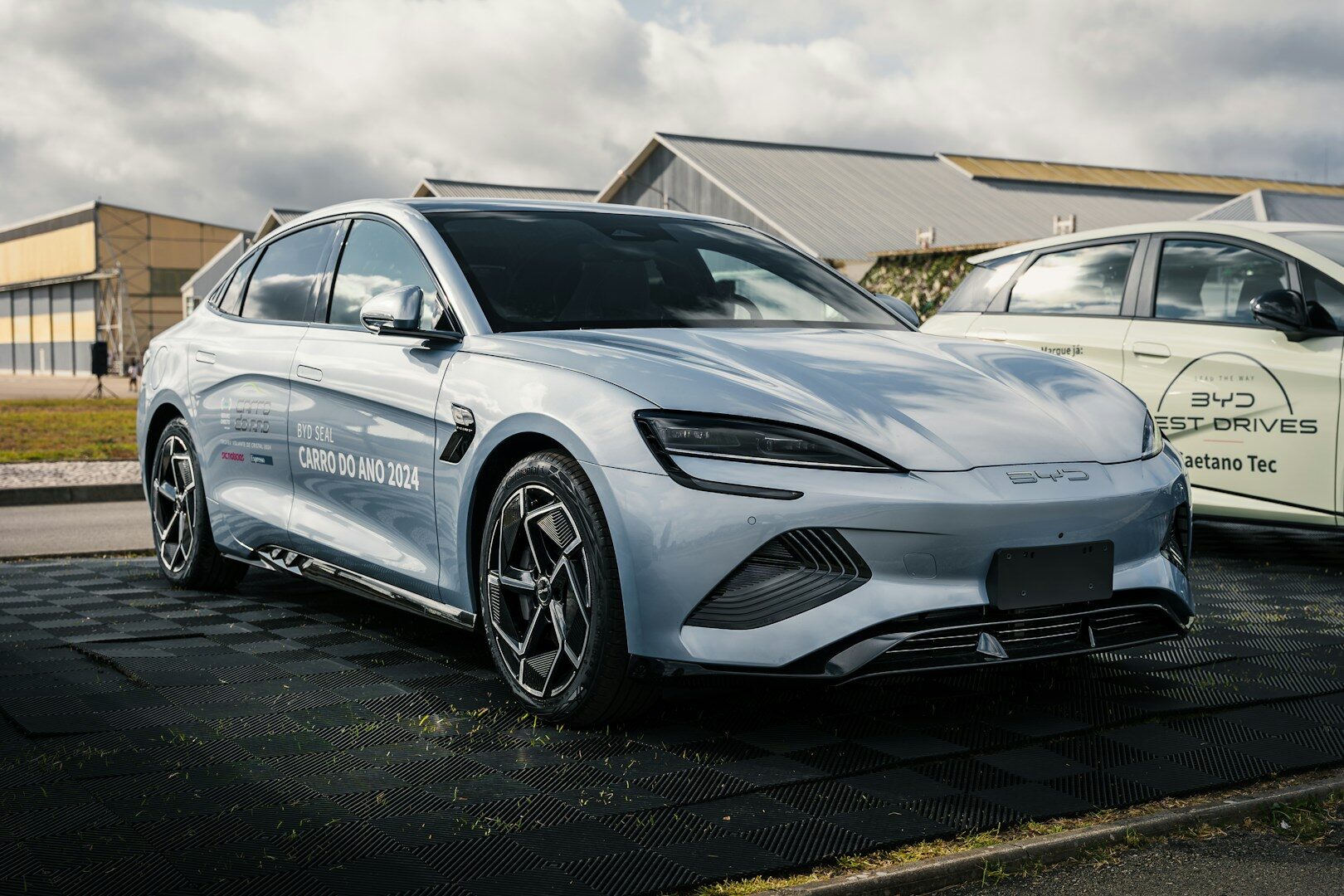
Europe’s Used-Car Books Are Quietly Marking Down Chinese Brands
Spain is where you can actually see this happening in public. The GANVAM-DAT index, which is the reference book Spanish dealers, banks, insurers and government agencies use to price a used car, put the average Chinese-brand vehicle at 60.7 percent of its original price after 36 months, against 65.5 percent for mainstream European and Japanese rivals. That’s not a collapse. It’s about five points, or roughly one bad options package. But five points on a book value is a fortune when you’re a leasing company writing thousands of contracts, and the trend line since then has not been kind.
The first-half 2026 update from GANVAM shows what’s actually going on, and it’s messier than “Chinese cars don’t hold value.” Three-year-old battery-electric cars in Spain now retain 46.2 percent, down from 50 percent a year earlier. Plug-in hybrids sit at 54.8 percent, six points worse. Gasoline cars dropped nine points to 57 percent. Diesels fell from 64 percent to about 54. Conventional hybrids are the least-bad bet at 65 percent, and even they gave up five points. Nearly-new stock is down 5.1 percent year over year to an average of €25,103. Cars over a decade old, which make up more than half of Spanish used transactions, slid 4 percent.
Read that again. Everything is falling. The Chinese brands are falling faster, but the interesting story is that a 14-year-old Golf in Valencia is worth less this year partly because a Jaecoo showroom opened down the street.
Why the Chinese brands lose the race
The honest answer is powertrain mix and price cuts, not build quality. GANVAM’s own breakdown shows 44 percent of Chinese-brand sales in Spain are electrified, well above the market norm, and electrified cars are the fastest-depreciating things on the road right now. Battery tech improves annually, new-car prices keep sliding, and every discount a manufacturer offers on a new EV instantly reprices every used one in the country. That’s not a Chinese problem. That’s an EV problem that Chinese brands are disproportionately exposed to because of what they chose to sell.
Related Articles
- The Physics Behind Using Suspension Impulses to Break Rear Grip on Purpose
- This ‘Trading Floor’ For New Cars Just Went Bankrupt. Federal Records Show It Wasn’t Even Legally Cleared To Move Its Own Inventory
Then there’s the channel. Nearly 70 percent of Chinese-brand sales in Spain go to private buyers, versus 46.3 percent for the market overall. Fleet and rental buyers, who normally set the floor under a brand’s used values by buying predictably and reselling in volume, have largely stayed away. Six brands account for 94 percent of Chinese sales there: MG, BYD, Omoda, Jaecoo, Ebro and Leapmotor. But GANVAM’s methodology counts more than 26 Chinese-owned brands in Spain, defined by corporate ownership rather than assembly location. Polestar and Lynk & Co are on that list, which should interest American readers who assume “Chinese car” means something built in Shenzhen.
The trust problem is measurable
Germany’s DAT runs the longest-running consumer survey in the European car business, and its 2026 findings are brutal in a specific way. Sixty-five percent of German new-car buyers say they’ve noticed Chinese cars in traffic. Nearly 80 percent have noticed them in advertising and media. Only 5 percent would consider buying one. General car owners were warmer at 29 percent, and Gen Z warmer still at 35 percent. Women were eight points more likely than men to welcome the new competition.
Awareness without intent is exactly the condition that produces weak residuals. A used car needs a second buyer, and a second buyer needs a reason to believe the brand will still have a parts warehouse in year seven.
What the tariffs did to the product plan
The EU’s definitive countervailing duties hit BEV imports from China in October 2024: 17.0 percent for BYD, 18.8 for Geely, 35.3 for SAIC, 20.7 for other cooperating exporters, all stacked on the standard 10 percent car tariff. Tesla’s Shanghai output got 7.8 percent. The duties cover battery-electric cars only, which is why Chinese brands pivoted hard into plug-in hybrids and gasoline models almost overnight.
That pivot has a residual-value cost nobody talks about. Rapid lineup churn orphans the cars you already sold. A three-year-old EV from a brand that has since reoriented its European range around PHEVs looks like a discontinued experiment to the next buyer, whatever its actual condition.
The part that should interest mechanics and adjusters
GANVAM-DAT doesn’t just plug in age and mileage. It factors battery stress, including charge type and duration, plus telematics data, to estimate current and future vehicle condition. That’s the direction every valuation book is heading, and it means a car that lived on DC fast chargers will eventually be worth measurably less than an identical one that didn’t. Owners should start treating charging history the way they treat service records.
Falling actual cash value also quietly changes crash economics. Insurers total a car when repair cost crosses a percentage of its value. Drop the value and the same fender-and-quarter-panel hit that was repairable last year becomes a write-off this year. For EVs with structural battery packs and limited independent repair networks, that threshold arrives early. Fewer surviving cars means thinner used supply, which sounds like it should support prices, except it also means fewer independent shops bother to buy the diagnostic tooling. That loop is how a brand gets stuck.
Americans aren’t getting these cars anyway
Two separate federal actions closed the door. The Section 301 review raised duties on Chinese electric vehicles to 100 percent effective September 27, 2024. More permanently, the Commerce Department’s connected vehicle rule bars Chinese- and Russian-linked connectivity and automated-driving software starting with model year 2027, bars the hardware from model year 2030, and prohibits Chinese-controlled manufacturers from selling connected vehicles here at all beginning with MY2027. Tariffs can be repealed by the next administration. A national-security software ban is a different animal.
Related Articles
- Chrysler Just Won a Warranty Lawsuit Without Anyone Ever Checking Its Math
- This South Carolina ‘Widowmaker’ Tree Already Had a Body Count and a Nickname. Then It Killed Four More People In One Night.
So this isn’t a warning about your next purchase. It’s a preview of what happens to any brand that buys market share with price rather than earning it with residuals, and it’s a live demonstration that EV values move faster than the industry’s actuarial models were built for. Battery-electric cars took 20.7 percent of EU registrations in the first half of 2026. Every one of those will hit the used market around 2029.
The practical lesson travels fine across the Atlantic. If you’re buying new and financing long, the residual assumption baked into your loan is a guess, and lately it’s been a bad one. Lease instead of buy when a segment is repricing this fast. If you’re shopping used, somebody else’s depreciation is your discount, provided you’ve confirmed the dealer network, the battery warranty transfer terms and whether anyone within 200 miles can actually service the thing.