
A ribbon-cutting in Suwanee, Georgia doesn’t usually make national news. But the one held by YYFORE Technologyast week deserves a second look, because the parts it just started building in the United States are exactly the kind of hardware the federal government has spent the past year and a half trying to keep out of American cars.
YFORE is a Chinese Tier 1 automotive electronics supplier that works with more than 30 automakers across three continents. Its new 62,225-square-foot facility combines R&D, manufacturing, procurement, sales and delivery under one roof, and the company marked the opening by rolling its first US-built digital key module off the line. Alongside it: digital rearview mirrors with built-in driver and occupant monitoring, radar-based interior sensing, and an anti-pinch door sensor the company calls an industry first.
CEO Leo Liu framed the move as customer service, calling it part of YFORE’s “Global Footprint, Local Excellence” strategy.
That framing is true. It’s also incomplete.
This isn’t really a story about a new factory creating jobs in Georgia. It’s a story about a Chinese supplier racing to relabel its supply chain as American before a federal deadline makes that relabeling mandatory instead of optional.
In January 2025, the Commerce Department’s Bureau of Industry and Security finalized a rule aimed squarely at products like YFORE’s. It bars the sale of vehicles running Chinese- or Russian-linked connected-vehicle software starting with the 2027 model year, and it bars the import of the underlying hardware starting with model year 2030. The government’s stated concern isn’t performance or price. It’s that a wireless link controlled by a foreign adversary is also a wireless link a foreign adversary can use.
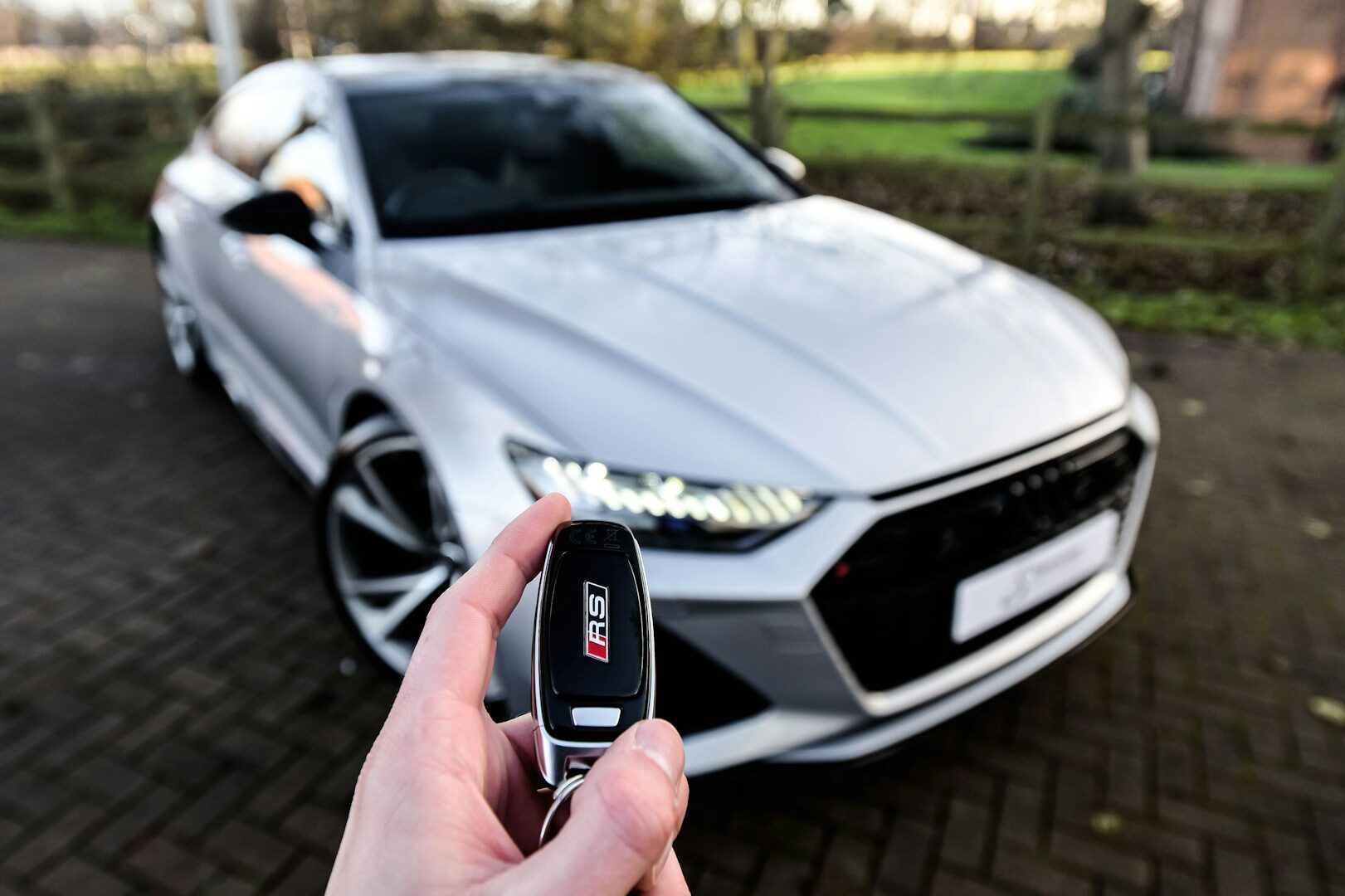
Digital keys that talk to your phone over Bluetooth and ultra-wideband. Mirrors with cameras that watch the driver’s face. Radar that senses whether a toddler is still in the back seat. All of it depends on wireless links and cameras reaching into the cabin, which is precisely the vehicle-connectivity category the rule was written to police. YFORE’s entire product catalog lives inside that category.
Here’s the detail that didn’t make it into last week’s press release: YFORE’s technology is deeply wired into Huawei’s automotive ecosystem. The company has been honored as an Outstanding Partner for Huawei Wallet Digital Key, co-authored the industry blueprint for Huawei-backed NearLink wireless technology, and builds mirrors and access systems for HarmonyOS-based vehicles. Huawei itself has been on a US trade blacklist since 2019, over the same national-security concerns the new connected-vehicle rule was written to address.
Building a factory in Georgia doesn’t change any of that math. The BIS rule doesn’t ban parts because of a zip code. It bans them based on who owns, controls, or directs the company that makes them. A Made in USA sticker on a digital key module says nothing about where the firmware was written, where the chips came from, or who can push a software update to it after the sale. Final assembly and supply-chain control are two different things, and only one of them just moved to Suwanee.
None of this is a new playbook. Japanese automakers spent the 1980s building assembly plants across Ohio, Kentucky and Tennessee for the same reason: American-made cars couldn’t be taxed, quota’d or politically shamed the way imports could. Forty years later, a Chinese electronics supplier is running the same play in Georgia, except this time the product isn’t sheet metal. It’s cameras and radios.
The feature everyone is celebrating this week isn’t the interesting part. The address is.
YFORE says it’s already holding technology exchange sessions with General Motors and Ford, according to its own newsroom. The timing is notable. GM told its suppliers to eliminate China-sourced parts entirely by 2027, the same model year the software half of the federal ban takes effect. A Georgia mailing address may be exactly what lets a line item quietly stop reading as Chinese-sourced on a purchase order.
There’s a genuine engineering upgrade buried in here, too. YFORE’s digital key system leans on ultra-wideband radio, not just Bluetooth, specifically because UWB measures distance precisely enough to shut down the relay attacks that let thieves trick older keyless systems into thinking the fob is closer than it actually is. That’s a real fix for a real problem, one that has pushed comprehensive insurance claims higher across markets that adopted passive keyless entry early.
The anti-pinch sensor matters for a less flattering reason. As automakers chase flush, motorized door handles and heavier power-closing doors and trunks for a cleaner look and better aerodynamics, they’ve also created new ways to pinch fingers, plus new electronics that turn a $40 door handle repair into a $400 one. A sensor that reacts the instant something touches the pinch zone, instead of only after a set force threshold, is a genuine safety improvement. It’s also a quiet admission of how complicated, and how expensive to fix, the modern car door has become.
Suwanee isn’t a random pin on a map, either. It sits inside the metro Atlanta corridor that has absorbed the bulk of Korean automotive investment in the US, including Hyundai’s Georgia battery operations a couple of hours down the interstate. YFORE isn’t reshoring into empty space. It’s plugging into a supply base that already exists.
Nothing about this factory is illegal, and nothing about it guarantees YFORE’s parts eventually get banned from American cars. The company may well satisfy every ownership and control test the rule requires. But the opening in Suwanee is best read as evidence of a deadline, not a celebration of one. When a foreign supplier’s product line and a foreign government’s national-security anxieties line up this neatly, the ribbon-cutting is never really the story.
Watch the ownership structure, not the zip code.