
Forget the model years for a second. The number that actually matters in America’s ban on Chinese connected-car technology isn’t 2027 or 2030. It’s 1,000.
Garage Deals: Nowell Leather’s Hand-Stitched EDC Gear Belongs in Every Gearhead’s Glovebox
That’s how many employees a small Ohio electronics maker called Eagle Wireless expects to have within three years, up from 140 today. Eagle builds the circuit boards that let a modern car talk to the outside world: the modem that reports a crash, the antenna that pulls in traffic data, the module a dealer uses to push a software update overnight. None of that sounds like national security. The federal government has decided it is.
This Was Never Just a Parts Ban
In January 2025, the Commerce Department’s Bureau of Industry and Security finalized a rule restricting what it calls the Vehicle Connectivity System, essentially anything in a car that communicates off-board above 450 megahertz, when that hardware or software is designed, built, or supplied by companies tied to China or Russia. Software is banned first, starting with model year 2027. Hardware follows in model year 2030. The Auto Wire has covered the fallout from that rule in detail, including Polestar’s exit from the US market and a newer bill in Congress that would go considerably further.
The deadlines sound distant. They aren’t. Vehicle programs get locked in years before a car reaches a dealer lot, which means the real deadline for lining up a compliant supplier already passed for a lot of purchasing departments, whether they’ve noticed yet or not.
Polestar found this out the hard way, and not for the reason most people assume. The rule doesn’t only ban Chinese-made parts. It separately bars any manufacturer that is itself owned or controlled by China or Russia from selling connected vehicles in the US starting with model year 2027, regardless of where the parts come from. Polestar is majority owned by China’s Geely. It could source every antenna and modem from Ohio and still be locked out. That’s a distinction almost nobody outside a compliance department seems to appreciate: this is as much a corporate-ownership ban as it is a parts ban.
Ohio’s Accidental Winner
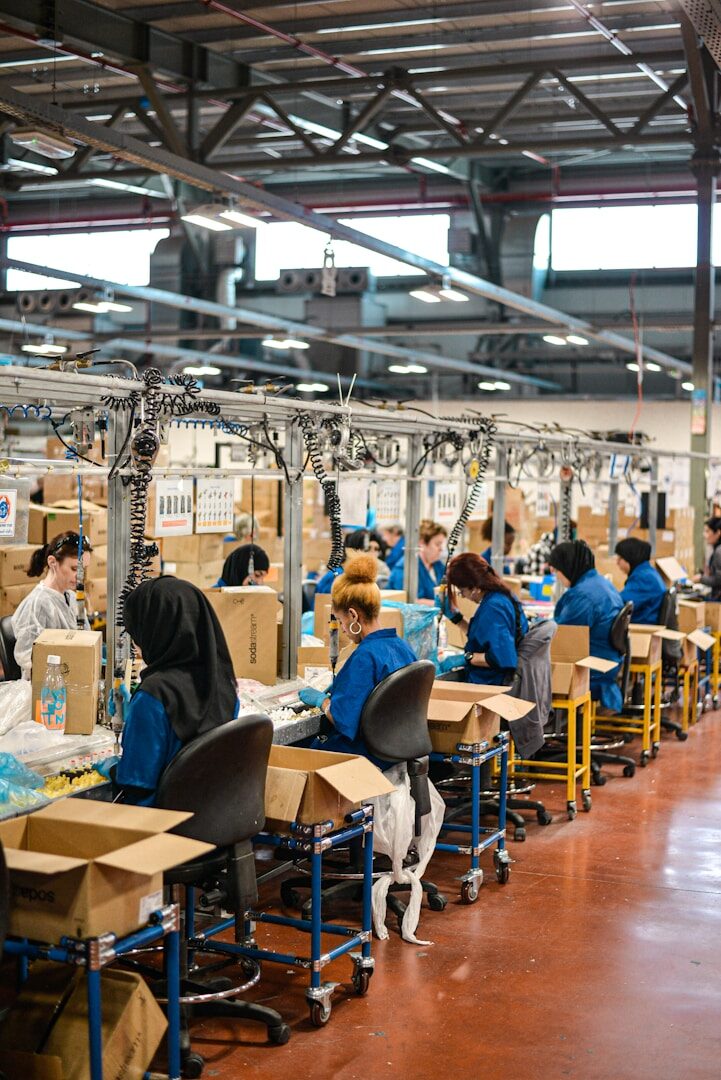
That’s the backdrop for what’s happening at Eagle’s plant in Solon, outside Cleveland. Robotic arms place capacitors and diodes onto circuit boards, which pass through an oven running around 500 degrees before getting serial numbers and heading out the door. Eagle was formed in late 2025 specifically to fill the supply vacuum this rule created, and expects revenue to roughly double this year, toward $100 million, as it competes against established players like Rolling Wireless and LG for a market where Chinese suppliers still account for close to half of global automotive cellular module shipments, according to Counterpoint Research.
None of that comes free. Eagle’s modules currently carry a five-to-fifteen percent price premium over Chinese equivalents, a gap the company hopes to close over time; other domestic components reportedly carry even steeper premiums. That difference doesn’t vanish. It shows up somewhere, whether that’s a pricier options package, a thinner supplier margin, or a cost automakers eat until volume improves. None of it shows up in a press release. All of it eventually shows up on a window sticker.
The Irony Nobody’s Advertising
Here’s the detail that should give everyone pause. Eagle Wireless didn’t start from a blank sheet. Its first modules ran on a licensed design from Quectel, the Shenzhen-based company that is the global leader in cellular IoT modules, which happens to be exactly the supplier category this rule exists to remove from American cars. Eagle now has to walk away from that platform and build its own proprietary hardware before the 2030 deadline. The first domestic answer to a rule about getting China out of the car began, technically, as a Chinese design wearing an Ohio return address.
This isn’t an isolated case. Ford licenses battery cell technology from China’s CATL to build packs domestically in Michigan, the same basic model of an American factory running on Chinese engineering. Analysts at the Center for Strategic and International Studies have pointed out the risk directly: arrangements like these can just as easily deepen a company’s dependence on Chinese know-how as they can serve as a bridge away from it. Which outcome wins out has nothing to do with where the factory sits and everything to do with how fast the engineers inside it actually learn the trade.
That’s harder than it sounds. Building an automotive cellular module isn’t like re-sourcing a wiper motor. It takes RF engineering expertise, chipset sourcing relationships, carrier certification processes that can run the better part of a year per design, and reliability testing across temperature extremes most consumer electronics never face. China didn’t win this category on price alone. It won it by building, and certifying, roughly half the world’s supply base already. A ban doesn’t erase that head start. It just puts a deadline on catching up to it.
What the Rule Doesn’t Touch
It’s also worth knowing what this rule leaves alone, because it undercuts the idea that Washington has locked China out of the American car altogether. Most driver-assistance hardware is untouched. LiDAR, radar, and camera systems, exactly the sensing hardware where Chinese suppliers are also aggressive, are explicitly excluded. BIS acknowledged the risk in its own final rule text and declined to regulate it anyway, for now. The government drew its line around the parts of a car that talk to the outside world, not the parts that see the road. That’s a narrower target than most coverage of the China car ban suggests, and it’s precisely the gap the newer congressional bill is trying to close.
Two Speeds, One Deadline
The industry is splitting into two speeds. Rivian says it can move faster than legacy automakers because it builds supplier redundancy into its sourcing from the start. Ford has asked for authorization to keep importing select China-built models while it sorts out its supply chain. Volvo, majority owned by Geely just like Polestar but structured differently under the rule, became one of the first manufacturers to receive that kind of approval. Three companies, three very different positions, one identical deadline.
The Repair Bill Comes Due Later
One more wrinkle matters to anyone planning to keep one of these cars a while. The final rule carves out an exemption for warranty and repair parts on any connected vehicle with a model year before 2030, even when the replacement part is Chinese-made. A 2029 model year car with Chinese connectivity hardware can still get a legitimate replacement modem from the same supply chain that built it, years after the ban takes effect. The rule isn’t retroactive to parts bins. It’s forward-looking on what rolls off the assembly line. That distinction will matter to insurers and independent shops trying to figure out what a compliant repair even looks like for a decade of transitional inventory.
The winners and losers here are easy to name. An Ohio manufacturer just got handed protected market share by an act of foreign policy, no different in effect from a tariff. Consumers will likely absorb some version of that premium, in one form or another, whether they notice it or not. And Chinese module makers lose access to the one market that mattered most, even as they keep roughly half the rest of the world’s business, according to Counterpoint’s numbers.
Washington didn’t order Detroit to stop dealing with China. It ordered Detroit to finish dealing with China by a deadline, then handed the hardest part of the job to a small group of suppliers who are, for now, still learning the trade from the country they’re supposed to be replacing.
You can ban a component. You can’t legislate away a decade’s head start in knowing how to build it.
Five years from now, nobody will remember the model year cutoffs. They’ll remember whether Eagle Wireless, and the handful of companies like it, actually pulled off the hard part: unlearning a Chinese blueprint fast enough for it to matter.