
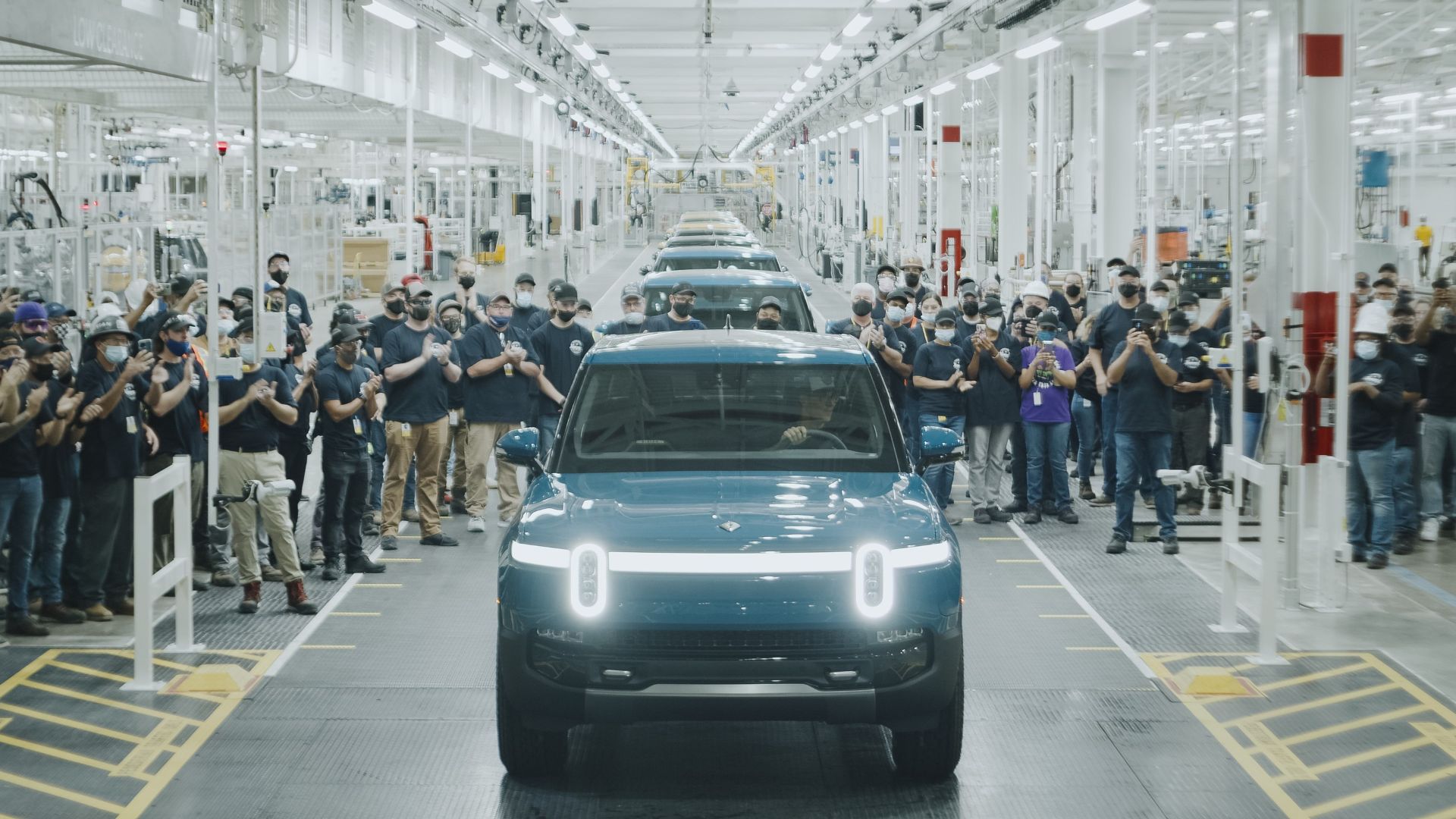
California just did something automakers almost never get from a state government: it rewrote the rulebook to help. In July, Governor Gavin Newsom signed a $3,500 EV rebate that Tesla is legally locked out of, while Rivian and Lucid can claim it on trucks and sedans costing well into six figures. It was about as close to a custom-fitted incentive as a legislature has handed a single struggling automaker in its own back yard. And Rivian’s home state still did not buy the trucks.
Rivian registered 3,970 electric vehicles in California through the first half of 2026, down 28.3% from 5,540 a year earlier. Among the state’s 30 best-selling brands, only Dodge fell faster. That is an odd neighborhood for a company that sells nothing but EVs to be standing in, closer to a brand that sells almost none.
The second quarter was worse than the first. Rivian delivered 1,759 vehicles in California in Q2, a 34% drop from a year earlier, even after regulators revised the prior quarter’s figures upward. The trend did not moderate. It accelerated in the wrong direction.
The R1S, once Rivian’s flagship and a genuine driveway status symbol from Marin to Malibu, ranked 25th among California’s top 25 best-selling hybrid, EV and plug-in hybrid models in the first half. Barely clearing a list built for the top 25 says plenty about how far the vehicle has drifted from its own launch hype.
Some of that is timing. R2 customer deliveries only began June 9, leaving the cheaper, higher-volume model roughly three weeks to register before the books closed on the half. Rivian has told the EPA it expects 5,000 California R2 deliveries in 2026 alone, out of a company-wide target of 20,000 to 25,000 units. Having just raised full-year guidance to 65,000-70,000 deliveries, Rivian now needs about 45,000 vehicles out the door company-wide in the second half, more than double what it managed in the first. R2 is not a side project anymore. It is the company.
Here is the detail that matters more than the 28.3%. Rivian did not have to rely on demand alone to move R1 trucks in California this year. Sacramento built it a shortcut. MyFirstEV pays qualifying buyers up to $3,500 at the point of sale, but caps out most EVs priced above $50,000. The law carves out one exception: a zero-emission vehicle maker headquartered in California, as of a specific frozen date, qualifies regardless of price. That description fits exactly two companies anywhere. Tesla, which builds more cars and employs more Californians than Rivian and Lucid combined, does not qualify, because its corporate address now says Austin.
A rebate can lower a sticker price. It can’t manufacture desire.
Rivian had a price advantage over Tesla in its own back yard that no other rival on this list could claim, and it still lost ground faster than Tesla did. Tesla’s California registrations fell 6.5% over the same period, yet its share of the state’s ZEV market climbed to 56.7% from 45.6%, up more than 11 points, because everyone else bled volume even faster. Lucid, facing the identical expired federal tax credit, grew registrations 22.7% behind its Gravity SUV ramp. If a lapsed tax credit alone explained Rivian’s collapse, Lucid should have collapsed too. It didn’t. That’s the tell.
There’s a second story buried in Rivian’s own financial filings. Rivian doesn’t only sell trucks, it sells regulatory credits, the surplus emissions and ZEV compliance credits that laggard automakers buy to satisfy state mandates without building their own EVs. It’s a high-margin business that scales directly with production volume. Rivian’s first-quarter 2026 10-Q reported regulatory credit revenue falling roughly $100 million year over year. A California sales slump doesn’t just mean quieter showrooms. It thins out the exact credit pool that gasoline-heavy automakers go shopping in.
Rivian is also about to get fresh company in the segment R2 was built to dominate. Volvo’s EX60, a direct size-and-price rival to the R2, just opened U.S. orders after Volvo secured special federal clearance to keep selling under the government’s Connected Vehicle Rule. Its corporate sibling, Polestar, was not so lucky. Polestar confirmed this month it will not appeal a ruling that effectively bars its 2027 model-year vehicles from the U.S. altogether. Two brands under one parent company, opposite outcomes, decided largely by how each one’s software and data pipeline is built. R2 was supposed to face a thinning field. Instead, it’s about to face a new one.
Zoom out and the pattern holds. California’s overall ZEV registrations fell 24.8% in the first half as the federal tax credit’s expiration rippled through the market, yet the state’s zero-emission share of new car sales still hit 19.1% in the second quarter, the highest ever recorded without a federal subsidy propping it up. California’s EV share of new car sales still triples the national rate. Whatever happens to Rivian here previews what happens to Rivian everywhere else.
None of this means Rivian is finished. R2 is a real, lower-priced product with real reservations behind it, and raising delivery guidance is not usually the language of a company bracing for collapse. It also hasn’t stopped Rivian from opening new retail space in the state, including a converted Sacramento showroom, even as registrations fall. But the company now has roughly five months to prove R2 is a vehicle Californians actually want, not just one they’ve been legally incentivized to consider. Its own back yard, with a rebate written in its favor, already answered that question for the R1 era. Not the way Irvine hoped.
Related Articles
- Survey Finds Women Cooler On Electric Cars
- Why This Uber Rider Felt He Had to Film His Own Driver Asleep at 65 MPH