
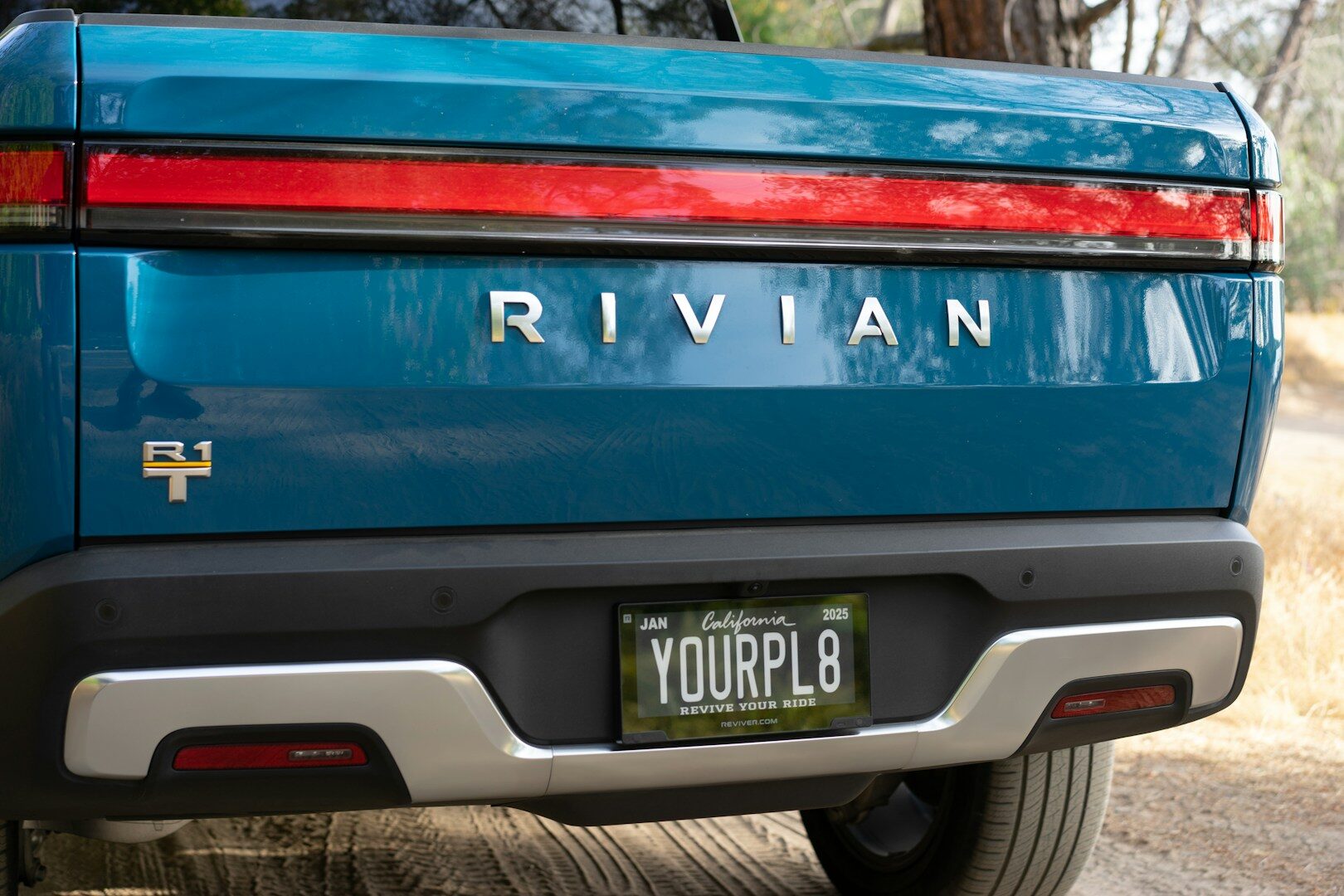
The building where Northern California nerds once wandered fluorescent-lit aisles hunting for hard drives and discount motherboards is about to get a second life with a very different kind of hardware. According to a press release from Sacramento Councilmember Lisa Kaplan’s office, Rivian has signed a long-term lease for roughly 60,000 square feet at 4100 Northgate Boulevard — the carcass of a former Fry’s Electronics — and plans to turn it into a combined showroom, delivery, and service center for District 1.
If you spent any time in Sacramento in the 2000s, you know the building. Fry’s, the Silicon Valley institution famous for theming its stores like Vegas casinos, shut its doors nationwide in early 2021, leaving big-box husks scattered across the West. These stores are a specific kind of real estate headache: enormous single-tenant floorplates with acres of parking and not much natural demand from conventional retail. That’s exactly why they keep getting snapped up by EV makers, who need the square footage, the ceiling height, and the parking lot far more than a grocery chain does.
Here’s the part that matters if you own a Rivian or are thinking about one. Per the release, this isn’t a warehouse or a glorified delivery depot. It’s designed as a customer-facing destination with a large showroom, exterior demonstration stalls, and — the number that should get owners’ attention — more than 15 vehicle lifts for service and inspections. Fifteen-plus lifts under one roof is a genuine service operation, not a token stall bolted onto a sales floor. For a brand whose owners have historically had to travel long distances or wait on mobile service techs, concentrated lift capacity is the difference between a same-week appointment and a two-hour drive to the Bay Area.
The timing lines up with Rivian’s product cycle. The release quotes Rivian’s Director of Commercial Facilities Real Estate, Tommy Carrillo, tying the expansion to the recent launch of the R2, the company’s new five-passenger midsize SUV. That’s the crux of it. The R2, which Rivian introduced with full trims and pricing in March 2026, is the company’s play for actual volume — a mid-size electric SUV starting under $45,000, a world away from the $70K-and-up R1 lineup. Cheaper cars mean more of them on the road, and more cars on the road means you’d better have somewhere to fix them. A service footprint expansion is the unglamorous but necessary tax on going mainstream.
There’s also a supply-chain logic here that’s easy to miss. The release notes Rivian opened a 480,000-square-foot parts distribution center at Metro Air Park in late 2025. Put a massive regional parts hub and a 15-plus-lift service center within the same metro and you’ve got the makings of fast turnaround on repairs — parts don’t have to be trucked in from out of state while your vehicle sits on a lift. For owners, parts availability is quietly one of the biggest determinants of how painful a repair actually is, and co-locating distribution with service is the kind of infrastructure move that pays off in shorter downtime.
A few practical takeaways for buyers and owners. First, on service: a factory-owned center changes the ownership math versus the mobile-and-remote model many EV startups lean on, particularly for warranty and collision-adjacent work that needs a lift. Second, on insurance: EVs like Rivians carry higher repair costs and specialized labor requirements, and a nearby certified service point can matter for how efficiently claims get handled — repair networks and parts access feed directly into premiums and repairability ratings. Third, on the used market: local service and parts infrastructure tends to firm up regional resale value, because buyers are more comfortable with a vehicle they know they can get serviced without a road trip.
As for jobs and the civic angle, the city says the facility will bring positions across management, service, sales, and customer service, and Kaplan’s office frames it as an economic-development win for the Northgate corridor. The release states Rivian selected the site after a market review of customer demand in the region, and the center is expected to open in the third quarter of 2027.
The bigger picture: Rivian is doing what every ambitious automaker eventually has to do, which is build out the boring back half of the business — the lifts, the parts, the showrooms — that turns a cult product into a car you can actually live with. Repurposing a dead Fry’s to do it is almost poetic. One era’s temple of consumer electronics becomes the next era’s place to buy and service a rolling computer with wheels.