
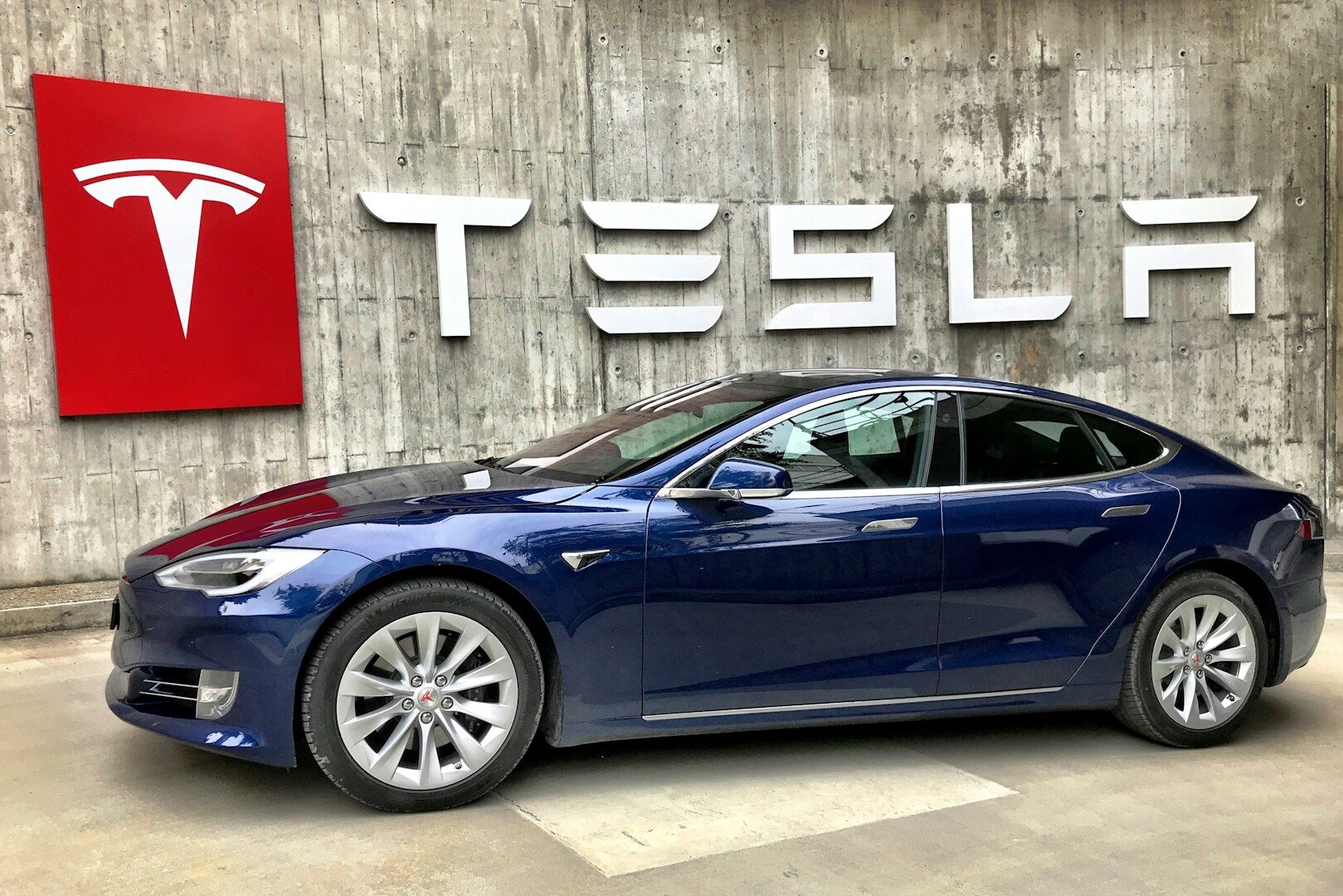
California’s newest electric vehicle rebate is worth $3,500. The provision buried in its bill text anticipating a lawsuit is worth paying much closer attention to. On July 13, Governor Gavin Newsom signed Senate Bill 168, creating a program called MyFirstEV that hands first-time buyers a discount at the point of sale on a new electric vehicle. Rivian and Lucid can apply that discount to their most expensive trucks and sedans. Tesla, the company that sells close to half of every EV registered in California, cannot. The reason has nothing to do with batteries, range, or safety. It has to do with a corporate mailing address, and a date on a calendar that Sacramento chose with obvious intent.
The mechanics are straightforward enough. MyFirstEV pays $3,500 toward a new EV and $1,750 toward a used one, funded by roughly $270 million split between the state and participating automakers. Buyers have to be purchasing an EV for the first time, and the money comes off the sticker at the dealership rather than showing up as a tax credit months later. The timing is not a coincidence, since the federal EV tax credit expired last year and Sacramento is explicitly building MyFirstEV to fill that hole. California has tried this kind of promise before and fumbled it; Governor Newsom pledged a state EV tax credit back in 2025 that never actually materialized. This time, the money is real. The eligibility rules are where things get interesting.
Under the new law, any new EV priced above $50,000 is generally locked out of the program. That would seem to exclude most of what Rivian and Lucid sell. Except the bill adds a specific exemption: a California-headquartered zero-emission vehicle company gets the incentive regardless of price. That phrase describes exactly two automakers. Rivian is headquartered in Irvine. Lucid is headquartered in Newark, California. Both build nothing but electric vehicles, which satisfies the other half of the test. Tesla fails on a technicality that has nothing to do with engineering: it moved its corporate headquarters to Austin in 2021, even as it kept building Model 3s and Model Ys in Fremont and running major engineering operations out of Palo Alto. Under this law, that distinction is everything.
Here is the detail almost every recap of this bill glosses over. The statute does not simply say a company must be headquartered in California right now. It defines headquarters as the location “from where the corporation is managed as of January 1, 2026.” That is a frozen date, not a moving target. Even if Tesla decided tomorrow to move its US headquarters back to California, that decision would not matter for purposes of this program, because the law does not ask where a company is headquartered. It asks where a company was headquartered on a single day that had already passed before the ink on the bill was dry. Through the program’s scheduled sunset in 2031, that snapshot cannot change.
Very few disqualification clauses get written with that kind of precision.
Strip away the legal language and look at where the actual factories and paychecks are. Tesla still assembles the Model 3 and Model Y in Fremont, and much of its engineering staff works out of Palo Alto, real, current, verifiable California manufacturing and payroll. Rivian, meanwhile, is pouring its next phase of growth into a plant in Georgia, not California. None of that matters under SB 168, because the bill was never actually testing for factories or jobs. It was testing for a corporate registry entry. A company can build every car in Ohio and still qualify, as long as its executives keep their offices in California. A company can build every car in Fremont and still get shut out, because its letterhead says Texas.
Now the part that should make any junior legislative staffer nervous. Section 43215 includes its own severability clause, aimed with unusual specificity directly at the headquarters exemption. If a court someday rules that giving unlimited-price incentives to California-headquartered companies while capping every other automaker at $50,000 is unconstitutional, special-interest legislation, or an equal-protection problem, the rest of the rebate program survives intact regardless. Lawmakers do not typically write a legal escape hatch around a single two-sentence carve-out unless they already suspect that exact carve-out is the part likeliest to get challenged in court.
Sacramento built the exemption and then quietly built the parachute for when it fails.
None of this is charity toward Rivian and Lucid. Both companies need the sales badly. Lucid just cut roughly 1,500 jobs as its cash burn reportedly climbed past $3.8 billion. Rivian cut hundreds of positions within days of launching the R2, the vehicle supposed to be its turnaround story. The statute also requires participating automakers to match a portion of every incentive dollar, meaning Rivian and Lucid do not just receive a marketing advantage, they take on a real per-vehicle cost obligation at the exact moment both companies are trying to conserve cash. Call it a sales boost with a co-pay attached.
Two more details deserve attention before anyone assumes this is simply free money. The law excludes any vehicle with a curb weight above 8,500 pounds, a quiet ceiling that keeps the heaviest electric trucks and SUVs out of the program no matter who builds them. And buyers who take the rebate cannot resell or register the vehicle out of state for at least four years, an anti-arbitrage rule aimed at people who might otherwise buy a subsidized EV in California and immediately flip it somewhere else for profit. Rebate stories rarely mention either provision, but both shape who actually benefits in practice.
With the federal EV tax credit gone, states are now the only lever left for demand-side EV incentives, and California just demonstrated how that lever can be shaped around specific corporate registries rather than in-state production, jobs, or emissions reduced. Tesla has already lost its title as the world’s top-selling EV brand once this year. Losing preferential treatment in its former home state is a smaller wound, but it is the same pattern: size and history no longer guarantee favorable treatment once policy gets written narrowly enough to target it. If other states follow this template to prop up EV makers headquartered within their borders, expect more incentive programs built around a company’s mailing address instead of its factory floor.
This was never really a story about a $3,500 rebate. It is a story about a legislature turning a company’s own corporate history against it, freezing that history into statute on a specific date, and quietly building a legal contingency plan in case a court someday notices. Tesla builds more cars in California, and employs more Californians, than Rivian and Lucid combined. None of that counts under SB 168. Only the address on the letterhead counts, and only the address as it stood on a day that had already come and gone.