
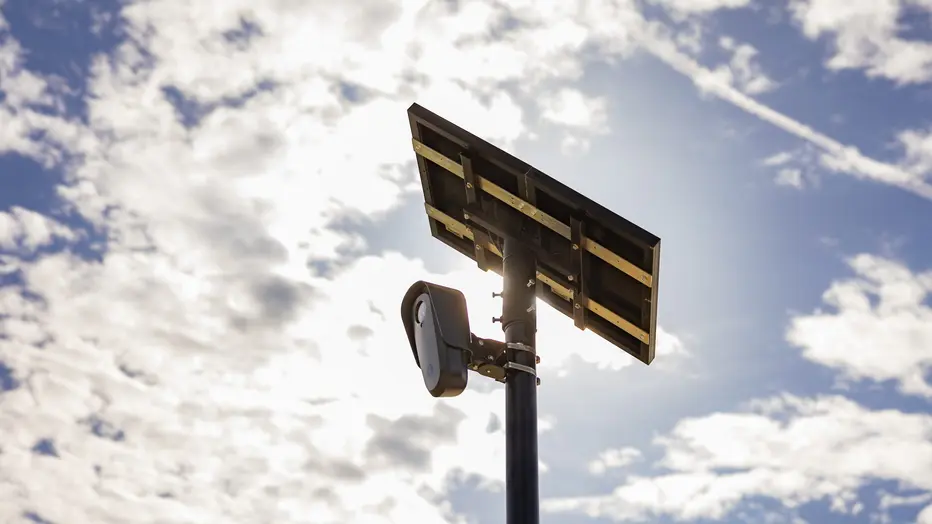
In the summer of 2024, a Roseville, California, police officer called a driver to deliver an odd apology. His car kept getting flagged as stolen. Not because it was stolen. Because a camera could not tell an 8 from a 9.
That mix-up happened at least six times. Each time, a Flock Safety camera, one node in a network that now blankets more than 6,000 American communities, decided an ordinary sedan was linked to a felony. The driver removed his license plate frame, thinking that might be the problem. The false alerts kept coming anyway.
That anecdote is buried inside a Business Insider investigation built on public records, internal emails, and a police department’s own data. The headline number is worse than the anecdote: 71 percent. That is the share of stolen-or-felony-vehicle alerts Flock sent Roseville police in 2023 and 2024 that turned out to be wrong, according to the department’s internal review of 1,427 alerts.
Flip a coin. You would do better.
This is not really a story about one buggy camera vendor in one Sacramento suburb. It is a story about what happens when a piece of hardware nobody thinks about, the stamped aluminum plate bolted to your bumper, gets handed a new job by a private company, without the testing rigor the rest of the auto industry has spent decades building.
What Roseville Actually Found
Flock markets its cameras as reading license plate characters correctly more than 96 percent of the time, in optimal conditions. Roseville is not optimal conditions, and the company says so itself. A Flock spokeswoman described the city’s setup as a particularly unique deployment: cameras configured to capture only the backs of vehicles, mounted higher and farther away than the company recommends, running on older hardware, all done at the city’s request to avoid capturing faces or other personal details.
The gap between marketing and reality shows up in the department’s internal traffic. In April 2025, a supervisor for the department’s real-time crime center told Flock that 16 of the 17 license plates flagged the previous week were wrong, some of them what she called blatant misreads, like mistaking a 3 for a 2. A lieutenant copied on the email replied with one word: Ouch!
Blame the Plate Frame
In 2024, Flock shared its own root-cause analysis with Roseville. Vehicles far from a camera produced blurry images. Trees and license plate frames cut off characters. And the software itself confused letters and numbers that look alike from a distance: an N read as a V, a 1 read as a 4, an E read as an F. At one point Flock’s product director for machine learning suggested officers ask drivers to remove their license plate frames, since frames made it very difficult for the machine vision to tell an E from an F. Roseville declined.
Here is the part worth sitting with. Nearly every new car in America leaves the dealership wearing a plate frame, usually free advertising for the dealer. California has actually anticipated the electronic-reading problem in law: under Vehicle Code 5201.1, selling any product that obscures a plate from visual or electronic capture is a $1,000-per-item violation, a section the legislature just amended effective January 1, 2026, specifically to address electronic reading. Lawmakers saw this coming. The cameras still fail on plates that are perfectly legal.
Nobody Outside the Company Gets to Check Its Homework
Roseville is not the first outside party to catch Flock overstating its own accuracy. In 2021, the independent testing outlet IPVM evaluated Flock’s readers and found the cameras misidentified a vehicle’s state about one time in ten, and regularly misclassified make and model. IPVM has tested every major competitor to Flock. It has spent years trying to buy a Flock camera to test again anyway, and says the company has refused to sell it one, even at full price.
Car buyers do not have to take an automaker’s word on crash safety. The IIHS and NHTSA crash-test every mainstream vehicle sold in America, independent of the manufacturer, and publish the results. A camera network that now decides which cars get pulled over answers to no equivalent body. The closest thing on record is a company that, by its own critics’ account, will sell its product to more than 5,000 police departments but will not sell one camera to the lab built to check its claims.
The Law Hasn’t Caught Up to the Cameras
None of Roseville’s bad alerts turned into a traffic stop or an arrest, according to a department spokesman, because department policy requires an officer to independently verify a plate or have separate reasonable suspicion before pulling anyone over. That is a department policy choice, not a state requirement. Montana, Virginia, Washington, and Kentucky have all passed laws forcing that same verification step. California has not.
California Assemblymember Josh Lowenthal called the Roseville numbers disturbing and said the state needs a review of license-plate-reader reliability. If the data is flawed, he said, so too will be our justice system. He is right, and the reverse is just as true elsewhere: departments that do not build in a human double-check are trusting a coin flip with a badge and a gun attached.
When the Double-Check Fails, Someone Pays For It
Roseville got lucky, in a narrow sense. Other departments have not been as careful. In Toledo, Ohio, a Flock camera misread a 7 as a 2 on driver Brandon Upchurch’s plate. He was tracked down and mauled by a police dog. He said he lost his job and his home afterward, and later settled a lawsuit against the city and the officer for $35,000. Business Insider has documented at least a dozen similar cases nationwide, where a misread, or an officer’s failure to double-check one, ended in a driver stopped at gunpoint or held in jail.
Scale is what makes this worth watching closely. Flock is privately valued at $8.4 billion, operates in more than 6,000 communities, and its cameras log more than 20 billion vehicle reads a month. That is not a pilot program anymore. It is quietly becoming one of the largest vehicle-identification systems in the country, built by a company that, on its own numbers, gets the one job that system has wrong far too often.
That scale is also why the backlash is spreading faster than the fixes. LAPD dropped Flock’s network entirely, and small towns across the country, including a handful in Connecticut, have reached the same conclusion for their own reasons. Other communities have paused or canceled contracts over data sharing with federal immigration authorities and general concerns about mass surveillance. Roseville itself keeps renewing, arguing the cameras still help close cases that might otherwise go cold, which may be true and does not resolve the accuracy problem. Flock is not even the only private plate-reading network drawing scrutiny. A separate tow-truck-mounted system has scanned billions of plates nationwide and recently won court approval in California to keep doing it.
What To Remember Here
A license plate has exactly one job: identify the car attached to it. In Roseville, the machine reading that plate got the job wrong more often than it got it right, and it still has a multibillion-dollar valuation, a five-figure customer list, and a seat in thousands of patrol cars. Cars get independently crash-tested before anyone trusts them with a family. The system now deciding who gets pulled over on the way home has never had to clear that bar, and until it does, the plate on your bumper is being graded by an examiner nobody else is allowed to audit.