
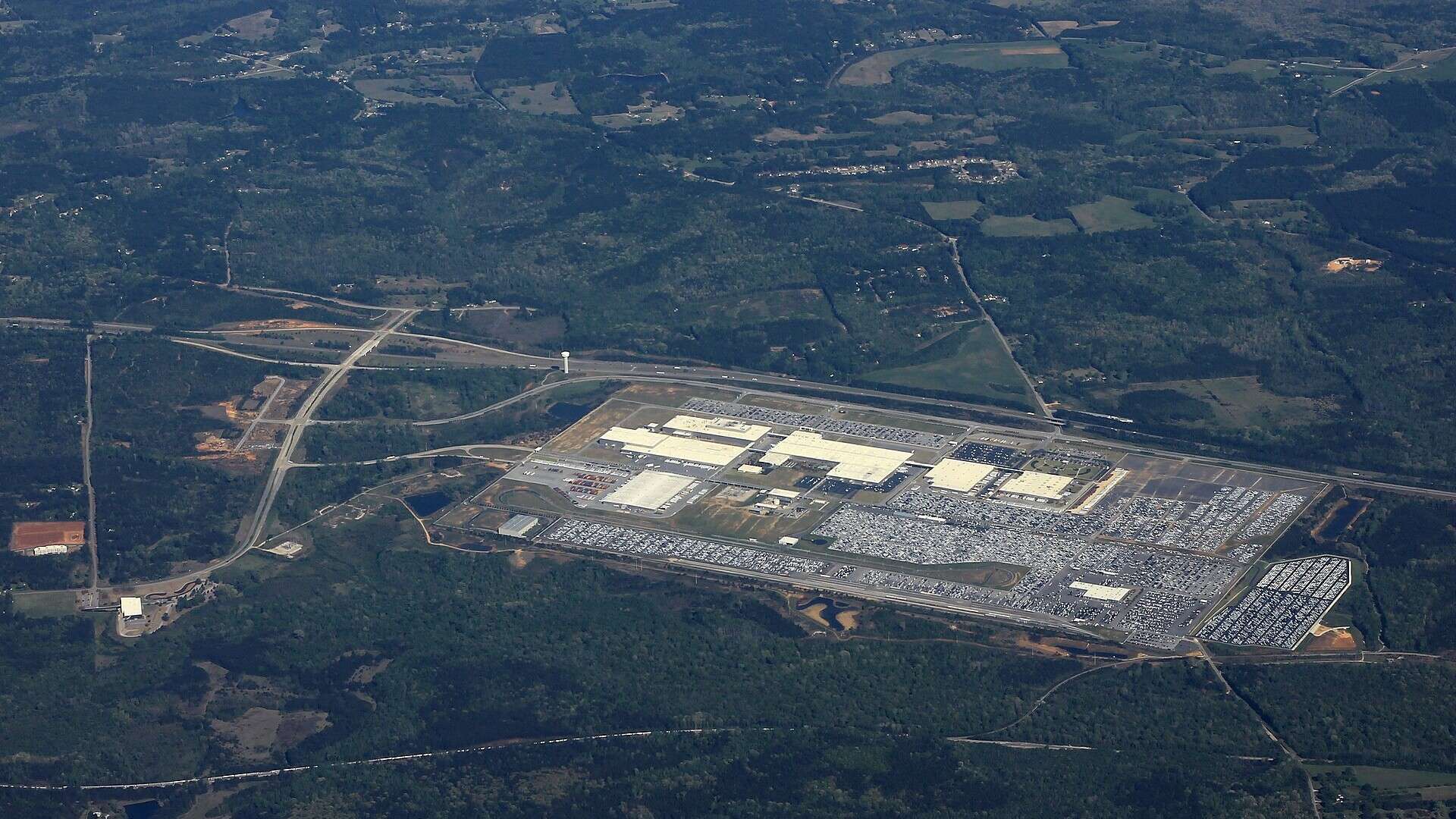
Hyundai Transys will spend nearly $560 million to expand its transmission complex in West Point, Georgia, and the product it is making room for is the part Hyundai’s own warranty files under hybrid system components: an automatic transmission with the electric drive motor built in.
Gov. Brian Kemp’s office announced the project on Oct. 8. The plan upgrades the two existing plants at 6801 Kia Parkway and adds a third, with 320 new jobs on top of the roughly 1,250 that Hyundai Transys already supports at the site. The state’s release says the work will add production capacity for electrified powertrains for hybrid vehicles. West Point Mayor Steve Tramell was more direct, calling it a “state-of-the-art hybrid transmission manufacturing facility.” Hiring covers administrative, supervisory and production positions.
The announcement leaves out the numbers that would let anyone size the project: no production start date, no annual unit capacity, no list of the vehicles these transmissions will go into, and no figure for state or local incentives. Kemp said the plant will “allow Hyundai and Kia to grow their already impressive capacity here in Georgia,” which tells you who the customers are without telling you how many units they will get.
My read is that this expansion matters more to Hyundai’s U.S. plans than its dollar figure suggests. Assembly plants can start building hybrids quickly. The supply of hybrid transmissions decides how many they can build and how much of each one is American-made, and that is the number Hyundai has promised investors it will raise.
A gearbox with a motor inside
The hybrid transmissions Hyundai Transys supplies to Hyundai and Kia don’t use the planetary power-split design Toyota made famous. They are conventional stepped automatics that the company calls TMED, for transmission-mounted electric device. According to the company’s hybrid drive system product page, the first-generation TMED-I is a front-drive six-speed automatic with the torque converter removed. In its place sit an engine clutch, a torsion damper and the drive motor. The engine clutch lets the car run on electricity alone with the engine disconnected, then closes to add gasoline power, while the six gears handle highway speeds the way they would in any automatic.
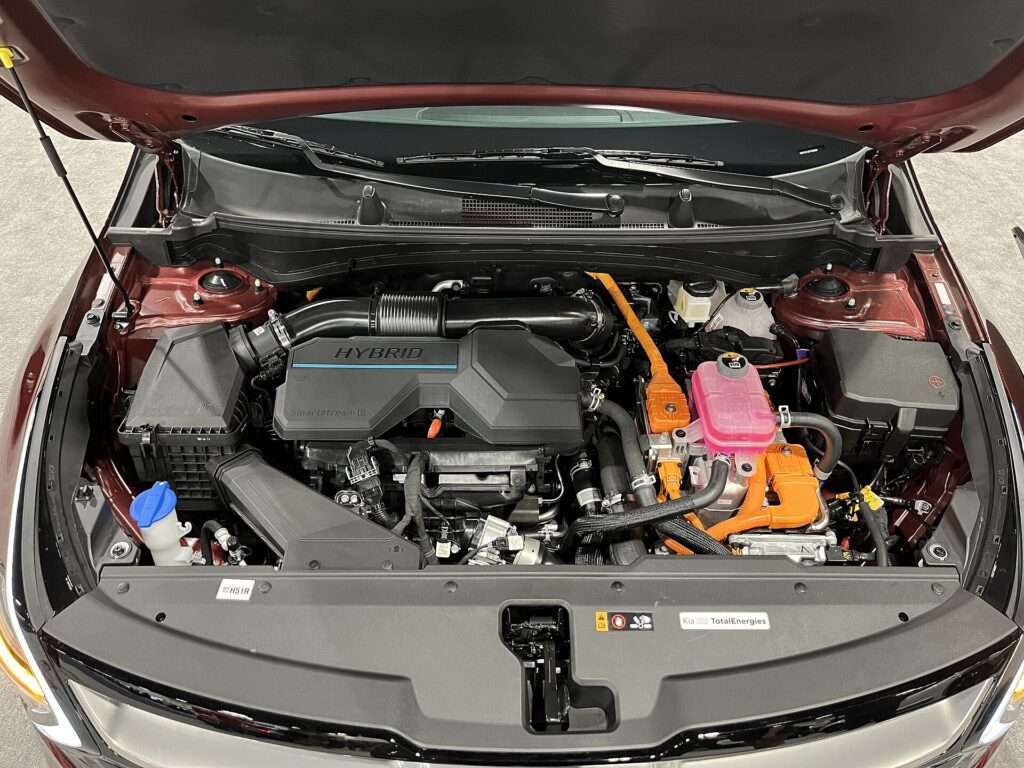
The newer TMED-II, which Hyundai said in its September 2025 investor presentation would be used in the new Palisade Hybrid, adds a second motor. Engineers label hybrid motors by position: P0 is driven by the accessory belt, P1 sits on the engine’s crankshaft, and P2 sits between the engine clutch and the gearbox. Hyundai Transys describes TMED-II as a P1+P2 layout with the inverter integrated into the unit, replacing the earlier P0+P2 arrangement, and says it improves both power and fuel economy. Mounting the second motor on the crankshaft instead of driving it through the belt lets it start the engine and generate electricity without the belt’s slip and load limits.
That design has a consequence at the service counter. Hyundai’s U.S. warranty page lists “Automatic Transmission (Including Traction Motor)” as one of four items under its 10-year/100,000-mile hybrid system components coverage, next to the battery, the hybrid starter/generator and the power control unit. On Hyundai’s own paperwork, the motor that moves the car is part of the transmission. A motor fault becomes a transmission job, and for the first decade or 100,000 miles Hyundai pays for it. The company’s own table shows the same term for subsequent owners. Hyundai therefore has a direct financial stake in how well the West Point plant builds these units, because every defect lands on its warranty bill for ten years.
More money per job than the last West Point expansion
Hyundai Transys has expanded in West Point before. In December 2020, the governor’s office announced that the company would invest more than $240 million in a 620,000-square-foot plant on the Kia campus to build eight-speed transmissions, with 678 jobs. By The Auto Wire’s math, that works out to about $355,000 of investment per new job. This time the figure is about $1.75 million per new job, roughly five times as much.
The comparison isn’t perfectly clean, since part of the new money upgrades the two plants already standing. But the direction fits the product. A hybrid transmission is a gearbox plus an electric machine, and in the TMED-II, two machines and an inverter. Each unit needs wound stators, magnets, high-voltage connections and end-of-line electrical testing on top of the gear and clutch work a conventional automatic requires. That work leans on automated equipment, so the payroll grows more slowly than the capital budget. Tramell’s statement listed the retention of more than 1,200 existing jobs ahead of the more than 300 new ones. That order suggests the expansion is also about keeping the existing plants busy as the vehicles they supply shift toward hybrids.
Hyundai’s 80 percent parts target needs this plant
Hyundai’s targets explain the timing. At its 2026 CEO Investor Day on Aug. 26, the company said North America will offer more than 10 hybrid models by 2030, “with hybrids reaching a 50-percent sales mix,” and that those hybrids will be built at Hyundai Motor Manufacturing Alabama and the Metaplant in Ellabell, Georgia. The same presentation said Hyundai is raising its 2030 North American local parts sourcing target from 60 percent to 80 percent, and it credited localization with half a percentage point of a planned three-point cut in its cost-of-sales ratio.
Assembly is already moving. Kia’s West Point plant, which shares the Kia Parkway campus with Hyundai Transys, started building the 2027 Telluride HEV on Feb. 24, according to Kia’s announcement of the milestone, which described it as the first hybrid assembled in Georgia and Kia’s first hybrid assembled in the U.S. Hyundai’s hybrids are already pulling sales away from Ford, and the company says cumulative North American hybrid sales have passed one million.
An automaker can’t reach 80 percent local content on hybrids while importing the transmission, which is one of the most valuable parts in the car and, in this design, also holds the drive motor. Tariffs add to the pressure. A Federal Register notice published Dec. 4, 2025 (90 FR 55964) set a combined 15 percent rate on Korean auto parts whose regular duty is below that level, for parts entered on or after Nov. 1, 2025. A finished transmission shipped from Korea pays that rate at the border. One built on Kia Parkway doesn’t, although any imported components inside it still can. In its 2025 investor presentation, Hyundai lowered its 2025 operating margin target, citing the impact of newly imposed U.S. tariffs.
The group has used the same reasoning upstream, most visibly with its Louisiana steel mill. The risk on the other side was clear in August, when a strike in Korea cut Hyundai’s domestic output. Every major component that comes from across the Pacific is a supply line that a labor dispute, a shipping delay or a tariff change can interrupt.
Where buyers will see it: the “Transmission” line on the window sticker
Federal labeling rules will make this investment visible to anyone shopping for a new car. Under the American Automobile Labeling Act regulations at 49 CFR Part 583, the parts-content label on a new car’s window sticker must state the country of origin of the engine and, separately, of the transmission, along with the percentage of U.S. and Canadian parts content and the final assembly point. Any country other than the U.S. and Canada supplying at least 15 percent of the content must be named, up to two.
That gives buyers their own way to check Hyundai’s localization claims. Read the “Transmission” line and the parts-content percentage on a Georgia- or Alabama-built Hyundai or Kia hybrid today, then read them again on the same model after the third West Point plant is running. If the plant is doing what the state and Hyundai say it will, those lines will change.
What Hyundai Transys still hasn’t disclosed
Three disclosures will show how much this expansion changes. The first is capacity: a unit count would show whether West Point can supply a meaningful share of a 10-model North American hybrid lineup or just the vehicles assembled next door. The second is the product: whether the third plant builds TMED-II units, the version Hyundai introduced with the new Palisade Hybrid. The third is timing. Hyundai has given investors 2030 targets, and a transmission plant needs to reach full volume before the assembly plants it supplies.
The state also hasn’t disclosed incentives. Georgia Quick Start, the state’s workforce training program, is named as a partner, which usually means the state will train the new hires. Whether there are tax abatements or other incentives, and what they’re worth, will have to come from public records rather than the press release.
Owners will feel the result over the next decade. A hybrid whose drive motor lives inside the transmission is only as cheap to own as that transmission is durable, and Hyundai has bet ten years of warranty exposure on it. The company is now moving those units closer to the plants that use them.
When you shop for a hybrid, would a “Transmission: USA” line on the window sticker sway you toward one brand over another, or do price and a 10-year warranty matter more than where the gearbox was built?