
Hyundai’s Home Market Just Cratered, But That’s Not the Number American Buyers Should Care About
Hyundai moved 288,574 vehicles worldwide in August, down 14.2 percent year over year, and the company is not being coy about why. In its own release, Hyundai pinned the month on production disruption from the union’s strike plus customers sitting on their hands waiting for new models. Domestic sales fell 41.1 percent to 34,333 units. Overseas sales slipped 8.5 percent to 254,241.
Run the arithmetic and the shape of the damage gets clearer than the headline suggests. Back out those percentages and Hyundai’s home market shed roughly 24,000 units year over year while everything outside Korea gave up about 23,600. So a market that supplied barely 17 percent of Hyundai’s volume a year ago produced right around half of the entire global decline. That is what a plant stoppage looks like in a spreadsheet: concentrated, sudden, and geographically stuck to the place the wrenches stopped turning.
Related Articles
- A Minnesota Dealer Faked ‘Certified’ Used Cars for Years — Then Told the State He’s Too Broke to Pay Victims Back
- An Atlanta Woman Stole $10 Million From Amazon for a Lamborghini — But the Dodge Durango Is the Real Story
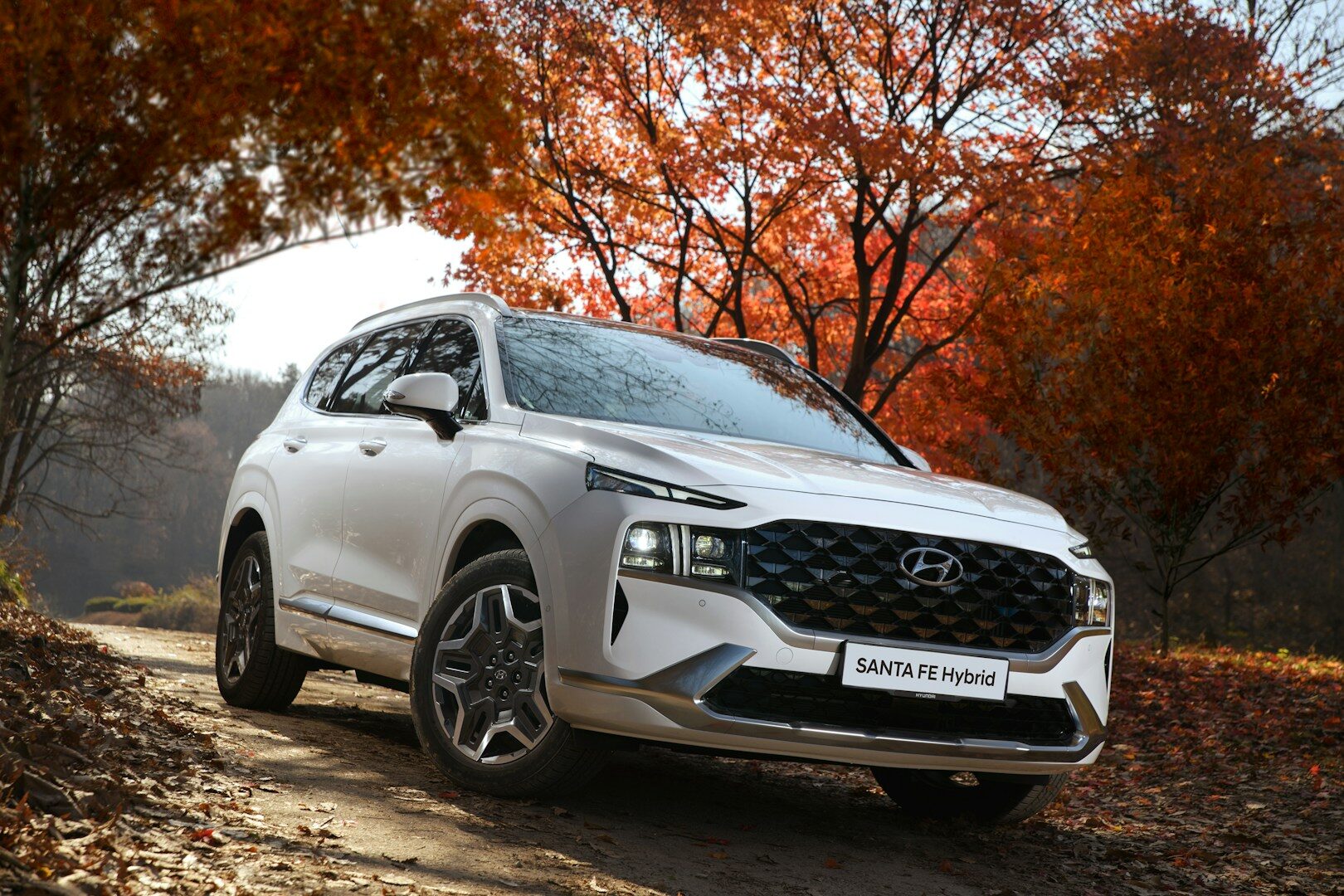
The model-level detail from Hyundai’s release tells you which lines went quiet. The Grandeur led domestic sedans at 5,931 units, Santa Fe topped the RV column at 3,596, Genesis managed 4,545 across G80, GV70 and GV80, and the Porter — the workhorse light truck that is essentially Korea’s F-150 in social function — did 4,224. Those are Ulsan, Asan and Jeonju products. When 39,000-odd union members walk, those numbers go with them.
The comparison that actually stings
Kia, which shares a corporate parent and roughly the same supplier base, sold 266,675 units globally in August, up 5.0 percent. Its domestic tally of 40,213 was down 7.6 percent, which Kia attributed to fewer working days over the summer holiday, not to labor action. Overseas, Kia grew 7.4 percent to 225,413.
Do the subtraction. Kia outsold its considerably larger parent brand in their shared home market by 5,880 units. The global gap between the two narrowed to under 22,000 vehicles. For a company that has spent decades as the definitionally bigger sibling, that is not a rounding error, and it is entirely self-inflicted through the labor calendar rather than through anything a customer chose.
Now the part nobody framed correctly
While Korea was down 41 percent, Hyundai Motor America reported 86,977 total sales, off just 2 percent, with year-to-date volume of 620,025 running 2 percent ahead of last year. The U.S. arm sold two and a half times what Hyundai’s entire domestic Korean market did.
More to the point, the American mix looked nothing like a supply-constrained company. Tucson hit 21,197 (+18 percent) and Santa Fe 13,512 (+5 percent), both best-ever August results. Elantra rose 16 percent, Sonata 44 percent. Hybrids set an August record at 33 percent growth and 29 percent of total volume, with electrified vehicles at 34 percent.
The ugly numbers in that release are all electric, and they are ugly. IONIQ 5 fell 51 percent to 3,818. IONIQ 9 dropped 42 percent to 589. IONIQ 6 sold 28 units — not 28 hundred, twenty-eight — a 97 percent collapse.
Here is why conflating that with the strike is wrong: the IONIQ 5 and IONIQ 9 sold in the United States are not built in Ulsan. Hyundai’s Georgia Metaplant states plainly on its own site that it produces all IONIQ 5 models except the N, plus the IONIQ 9 and the Kia Sportage Hybrid, for the U.S. and Canadian markets. Ellabell was not on strike. Hyundai North America CEO Randy Parker attributed the comparison problem to an EV pull-ahead and to Labor Day landing inside last year’s August sales month. Translation: buyers front-loaded electric purchases into an earlier incentive window, and the hangover is now showing up as a nine-tenths drop on a slow-selling sedan.
Two separate stories, two separate continents, one press cycle.
What this means if you’re shopping
The practical question for an American buyer is not “was Hyundai on strike” but “where was this specific car assembled.” That is knowable before you sign anything, and it is federal law that you be told. Under the American Automobile Labeling Act and its implementing rule at 49 CFR 583.5, every new passenger vehicle carries a label listing the final assembly point by city, state and country, along with engine and transmission country of origin and U.S./Canadian parts content. It can live on the Monroney sticker or on its own label, but it has to be readable from outside the car with the doors shut. Walk the lot and read it.
If the final assembly point says Ellabell, Georgia or Montgomery, Alabama, an Ulsan work stoppage has essentially nothing to do with that vehicle’s availability or its dealer’s willingness to deal. If it says Korea — and Palisade, which fell 18 percent in the U.S. in August, is worth checking on this point — you are looking at a pipeline that just lost weeks of output and will spend the fall refilling. Constrained supply is the natural enemy of discounting. Expect thinner incentives on Korea-sourced trims through Q4 and better leverage on domestically assembled ones.
The counterintuitive read on those EV numbers: an IONIQ 6 that sold 28 copies nationally in a month is a car with enormous dealer inventory pressure and no strike excuse. If you actually want one, this is the buying environment you wait years for.
The structural story underneath
Hyundai has been building its way out of exactly this exposure. Hyundai Motor America notes the group is investing $26 billion in the United States from 2025 through 2028, across Alabama, the Metaplant and its R&D operations. Every unit that migrates from Ulsan to Georgia is a unit insulated from Korean labor cycles — and, not incidentally, from import tariffs.
That is the real lesson of August. A decade ago, a 60-hour walkout in Ulsan would have been a genuine American supply crisis. This year it was a Korean domestic-market event that barely scratched a month in which Hyundai’s U.S. hybrid business set records. Hyundai’s own first-half results showed North America at 595,457 units, the region’s best first half ever, with global hybrid sales up 25 percent to 353,668. The center of gravity has moved.
The union and the company have since settled. The Hyundai branch of the Korean Metal Workers’ Union announced that members ratified this year’s tentative agreement with 61.55 percent support, on turnout of 31,166 of 39,638 eligible members — a thin margin that tells you plenty about how the rank and file felt about the package. The terms, as announced by both sides, include a 100,000-won monthly base pay increase, a performance bonus of 400 percent of monthly salary plus 12.7 million won, 15 shares of company stock, and 500,000 won in welfare points, with a retirement-age extension from 60 to 65 contingent on Korean law changing first.
Related Articles
- Ford’s F-150 V8 Has Had a Drinking Problem Since 2018 — And It Never Once Triggered a Recall
- Clark Howard Just Killed His Famous Car-Repair Rule — And Blamed the Wrong Culprit
Note that Hyundai has not published its own production-loss figure. Various unattributed industry estimates have circulated; the company itself has stayed quiet on the number, which is a reasonable thing to notice before anyone treats those estimates as fact.
What is verifiable is the permanent part. Base pay increases do not expire. Neither does a retirement-age commitment. Hyundai’s Korean labor cost structure is now measurably higher going into a period when the company is simultaneously funding a $26 billion North American build-out. Those costs have to be recovered somewhere, and “somewhere” historically means the transaction price on the window sticker eighteen months from now.
Hyundai says it plans to claw back share with the New Grandeur and the redesigned Avante at home. Fine. But the more interesting question for anyone reading this in a North American zip code is how quickly Ellabell and Montgomery can absorb models that still come across the Pacific. Because on this month’s evidence, the answer to a Korean strike is increasingly a Georgia parking lot.