
For the better part of two decades, if a mechanic’s estimate crossed half of what your car was worth, consumer advocate Clark Howard had one instruction: walk away. That “50% rule” became one of the most repeated pieces of car-ownership folklore in America, dispensed on his radio show and printed on his own website, then passed along by relatives who’d never opened a hood but trusted the math anyway. Last week, on his Friday “Clark Stinks” segment, Howard quietly retired it, saying “my 50% rule was not accurate” and shifting to a new standard: repair a car up to its full current value, not half of it.
That is a real change with real money behind it. On an $8,000 car, the old rule wrote off a $4,500 transmission job. The new one approves it. But the more interesting story here isn’t the rule itself, it’s the reason Howard gave for scrapping it, because the government’s own inflation data suggests he named the wrong culprit entirely.
Howard Named the Wrong Suspect
Howard blamed expensive new vehicles for the flip. The Bureau of Labor Statistics disagrees with him. Its seasonally adjusted index for new vehicle prices sat at 178.81 in July 2026, up a mere 0.3% from a year earlier, and still below the 179.465 peak that same index hit back in March. New cars, by the government’s own measure, have essentially stopped getting more expensive.
Repair costs are a different animal entirely. The BLS index for motor vehicle maintenance and repair hit 460.19 in July 2026, an all-time high in a series that stretches back decades, up roughly 4.1% in a single year. Line those two numbers up and Howard’s own logic flips on him: it was never the showroom making his old rule obsolete. It was the service bay.
Where the Money Actually Went
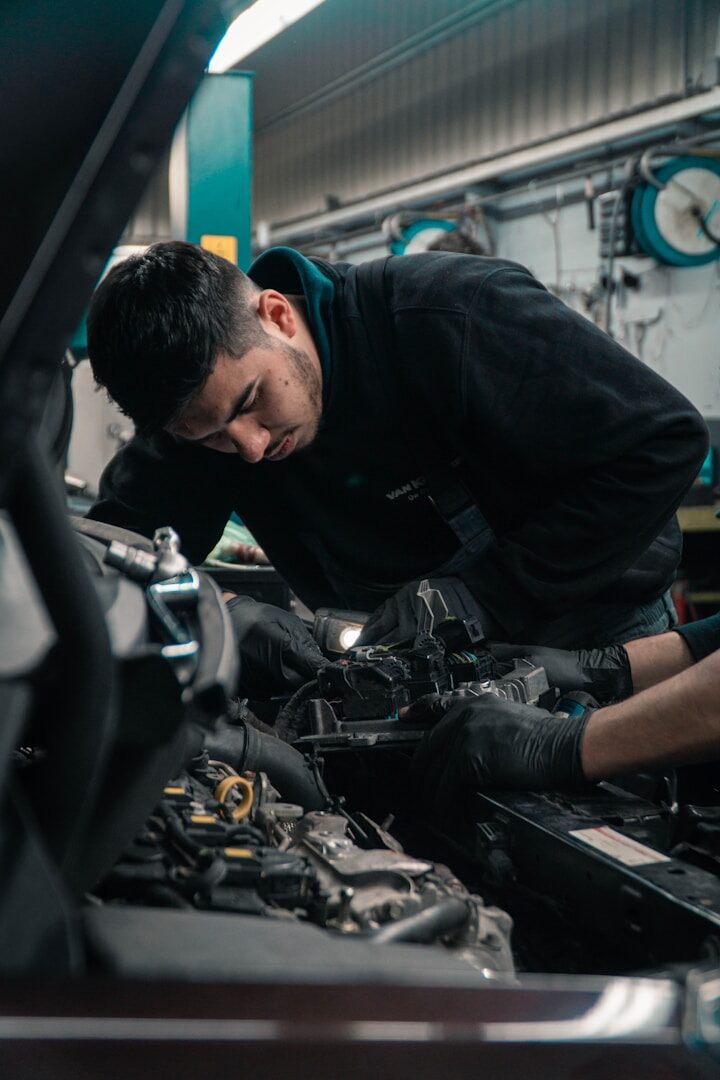
Here’s the part that should interest anyone who actually turns a wrench, or pays someone who does: the labor behind that repair spike is getting more expensive because there isn’t enough of it. The government’s Occupational Outlook Handbook pegs median pay for an automotive service technician at $50,620 a year as of 2025, a little over $24 an hour to diagnose a modern car’s electronics, calibrate driver-assist sensors, and in a growing number of shops, work safely around high-voltage EV components. The BLS projects roughly 66,200 job openings a year for the trade over the next decade, driven mostly by workers retiring or transferring out, not by the industry expanding.
Ask any independent shop owner why they can’t get you in until next Thursday, and this is the answer underneath the answer. Modern cars require more specialized skill than they used to, and the pay hasn’t risen enough to pull people into the trade fast enough to match demand. That’s a wage-and-training bottleneck, not a parts problem. Chips, sensors, and software have made cars harder to diagnose, but the real constraint is finding someone qualified enough, and willing enough at that pay, to do the diagnosing. When shop capacity is tight and demand isn’t, hourly labor rates climb, and that shows up directly in the CPI line Howard should have checked first.
The Insurance Industry Already Knew This
There’s a wrinkle here Howard’s segment skipped entirely, and it’s one insurers have priced into their math for years. States set total-loss thresholds, a percentage of a car’s actual cash value that, once a repair estimate crosses it, lets an insurer write the car off instead of fixing it, and plenty of insurers already lean closer to a vehicle’s full value than to half of it before pulling that trigger. Howard’s new rule doesn’t just track Consumer Reports. It tracks what claims adjusters have been doing for years. My own fight with an insurer over a totaled Dodge Charger Scat Pack is a good example of how fast that repair-or-replace math turns adversarial once real money is on the table.
What This Means If You Keep Old Cars
None of this is abstract for anyone who keeps a car past the point a dealer wants it back. The math in Howard’s own example holds up: spending $3,000 a year to keep a paid-off $6,000 car running beats financing a $25,000 replacement almost every time, even before you count the technician shortage that’s about to make your appointment take longer. What a surprise repair bill actually looks like reads very differently once you’re staring at the invoice instead of the theory, and the shops handling those jobs are exactly the ones stretched thinnest right now.
It also reframes something enthusiasts already understood instinctively about salvage culture. Every one of the wrecked Hellcats sitting on Copart waiting for a rebuilder got there because an insurer ran this exact repair-to-value math and decided the number didn’t work. As that threshold creeps toward full value industry-wide, more cars that would have been totaled five years ago are worth saving, if you can find someone with the skill and the open bay to do it.
That’s the sentence worth remembering here: the 50% rule didn’t die because new cars got expensive. It died because the person who fixes your old one got harder to find, and harder to afford. Howard buried the right rule. He just aimed the eulogy at the wrong culprit.