
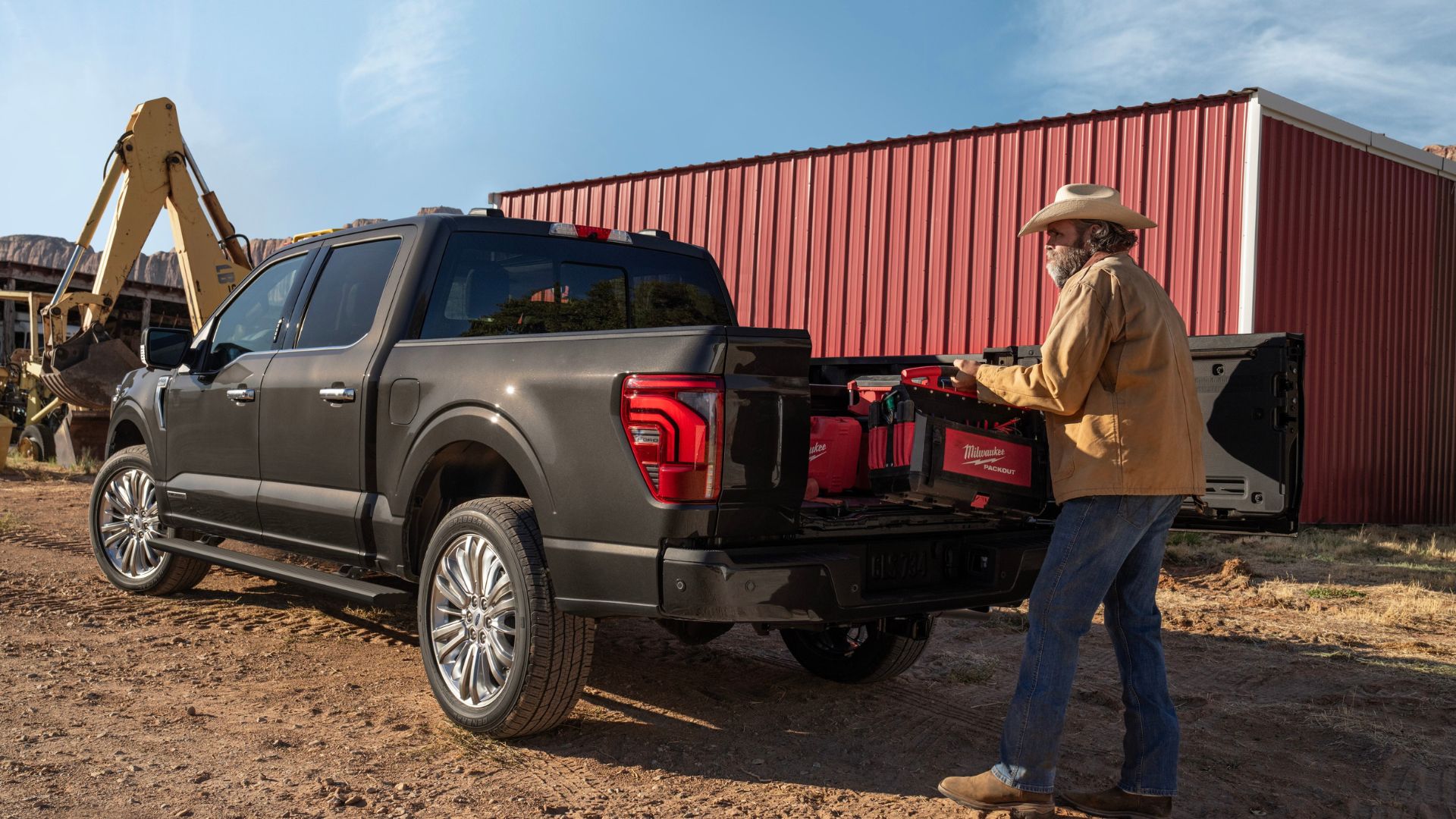
A federal judge in Michigan just let a class-action lawsuit over oil-hungry F-150s keep moving toward trial, and most of the coverage is treating it like a story about bad piston rings. It isn’t, really. The interesting part isn’t that a truck engine burns oil. It’s that Ford, according to the court, may have known about it before the trucks ever reached a driveway — and none of that knowledge had to travel further than a technical service bulletin buried inside a dealer’s service system.
No recall. No letter to owners. No entry in NHTSA’s database that a used-truck shopper could search by VIN years later. Just a lawsuit, filed back in 2021, that took roughly five years to reach a judge willing to say a jury could reasonably conclude Ford knew.
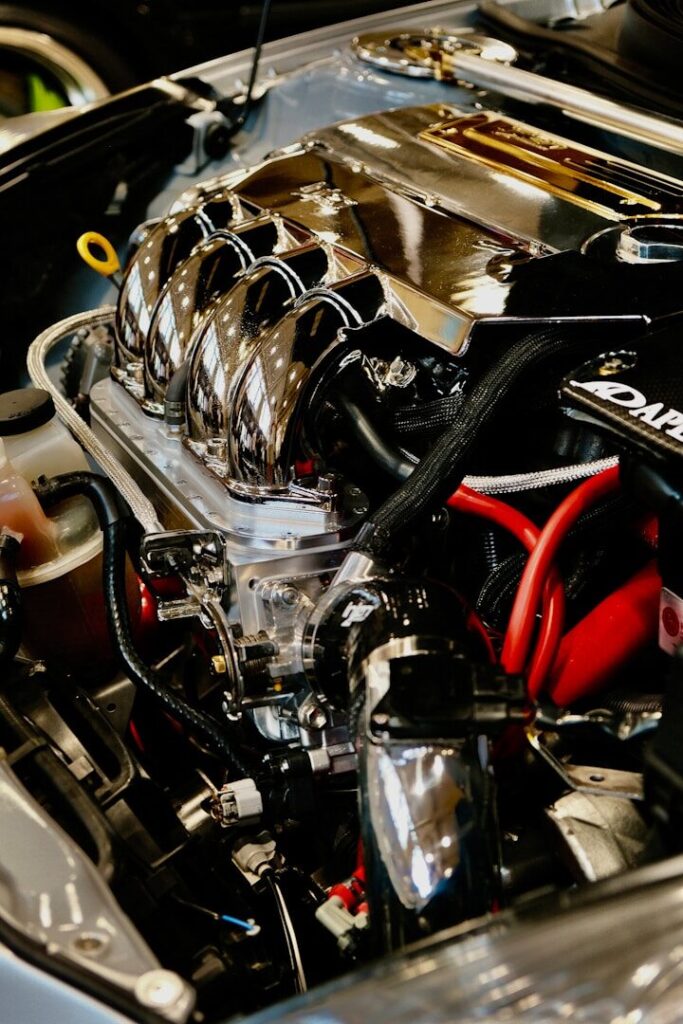
That gap — between what Ford allegedly knew and what Ford was ever required to tell anyone — is the actual story.
Buyer’s guide: Best Accessories for Ford F-150 Owners
Here’s what happened, stripped of the legal filler. The case, Lyman et al. v. Ford Motor Company, centers on 2018-2020 F-150s built with the third-generation 5.0-liter Coyote V8. Owners allege the engine burns oil at a rate well beyond what’s normal, forcing them to top off between scheduled changes or risk running low. Ford has never seriously disputed that these trucks consume oil faster than expected. What it disputes is how much that should matter legally, and it just lost part of that argument. The judge dismissed several counts, including claims under the Magnuson-Moss Warranty Act along with express-warranty, implied-warranty, and negligent-misrepresentation claims, but let fraud-based concealment claims proceed on the theory that Ford had internal knowledge of the issue before the trucks were sold or leased.
That distinction is bigger than it sounds. A warranty claim argues you promised something in writing and didn’t deliver it; those are relatively easy to dismiss if the fine print was technically honored. A concealment claim argues something harder to prove: that a company knew something material and chose not to disclose it. Letting the warranty claims die while the concealment claims live means the court looked past the owner’s manual and into Ford’s own internal record, and decided a jury could reasonably find Ford sat on something it should have shared.
So what did Ford allegedly know? By its own account, engineers traced the cause back to 2019, to a fuel-saving strategy called deceleration fuel shutoff, or DFSO. When a driver lifts off the throttle and the truck coasts or engine-brakes, the computer cuts fuel delivery entirely to save gas, a genuinely useful trick for fuel economy. The side effect on some of these engines is that cutting fuel during deceleration can spike intake-manifold vacuum high enough to pull oil past the piston rings and into the combustion chamber, where it burns alongside whatever fuel happens to be present.
Sit with that for a second, because it’s not the failure mode most people picture. There’s no puddle under the truck and no gasket to blame. The oil isn’t leaking, it’s being drawn into the engine and incinerated, a little at a time, every time the truck coasts to a stop sign. An owner can do everything by the book and still watch the dipstick drop between changes, because this isn’t a maintenance failure. It’s the byproduct of software written to make the truck look better on a fuel-economy test.
That’s worth remembering next time an automaker brags about a calibration update improving fuel economy. Cutting fuel during deceleration is one of the cheapest ways to nudge EPA numbers upward without touching a single mechanical part, and Ford is far from the only manufacturer leaning on DFSO strategies to get there. Nobody puts that trade-off on a window sticker. It shows up years later, in a class-action complaint.
The bigger surprise is why none of this ever became a recall, and it’s the part owners consistently get wrong. NHTSA doesn’t force a recall because a car is expensive or annoying to maintain. The legal trigger is a defect that creates an unreasonable risk to motor vehicle safety or a failure to meet a federal safety standard. Burning oil faster than expected is a cost and durability problem long before it’s a safety problem, which is exactly why oil-consumption complaints almost never clear NHTSA’s bar on their own, no matter how many owners are affected or how early the automaker knew. Ford was legally free to handle this through service bulletins, case-by-case goodwill coverage, and silence. For years, it did.
Compare that to what an actual recall looks like. Ford just recalled 148,663 Mustangs over a wiring fault that can knock out the engine and headlights at the same time, a defect serious enough to trigger a public NHTSA filing, a nationwide owner notification, and a firm repair timeline. That’s the difference between a defect NHTSA cares about and one it doesn’t: publicity. A recall is a company admitting a problem out loud. A technical service bulletin is the same admission whispered to whichever dealer happens to be listening.
This isn’t an abstract problem for Ford, either. The company currently leads every automaker in the U.S. in recall volume, and it’s operating under heightened federal scrutiny after a $165 million fine, the second-largest in NHTSA history, for waiting too long to recall roughly 600,000 vehicles over a rearview-camera defect and then giving regulators inaccurate data about it. Ford recently hired a 13-year NHTSA veteran as its new chief auto safety officer specifically to get ahead of that pattern. None of which changes the fact that the oil-consumption defect at the center of this lawsuit never had to become another recall on that pile, because burning oil, however well-documented internally, doesn’t clear the same legal bar as a malfunctioning rearview camera. Ford is being punished for being slow on the recalls that count. A defect that doesn’t legally count just sails through.
There’s a third detail in this case worth sitting with: Ford reportedly maintains an internal engineering benchmark requiring its engines to go at least 10,000 miles per quart of oil under lab conditions. Plaintiffs are using that number as evidence Ford had a standard its own trucks failed to meet. Ford’s response is that the figure is a laboratory durability target, not a real-world promise to customers, and that’s a fair technical distinction, since automakers write internal specs for controlled dynamometer testing all the time, never intending them for an owner’s manual. But the defense also reveals something uncomfortable about how modern vehicles get engineered: manufacturers generate enormous amounts of internal data quantifying exactly how well their own products are supposed to perform, and none of it is visible to a customer until a lawsuit forces it into daylight. The spec existed the entire time. It just wasn’t yours to see until discovery made it public.
None of this is unique to the third-generation Coyote, for what it’s worth. Ford has spent the years since reworking the engine, the current fourth-generation 5.0-liter adds cylinder deactivation, and the same architecture now spans everything from a base V8 wedged between two EcoBoost V6 options to the 720-horsepower supercharged unit in the Raptor R. That same family of engines has already generated its own separate recall, when Ford had to fix dealer-installed supercharger kits on more than a thousand Mustangs. It’s a reminder of how much engineering runway one engine family can have, and how quietly a mid-cycle fix can get folded into the next generation without ever being called a correction.
If you own one of the affected trucks, the lawsuit itself won’t refill your crankcase. What it does is put Ford’s own internal timeline on the record, under oath, and that timeline appears to predate a lot of the trucks currently driving around with this exact symptom. That’s leverage worth having at a dealership counter even outside the class action. Telling a service advisor this matches a documented issue Ford has known about since 2019 is a very different conversation than my truck just seems to drink oil. If you’re shopping the used market for a 2018-2020 F-150 with the 5.0-liter V8, run the VIN through NHTSA’s own recall search before you buy, and don’t be reassured when it comes back clean, because this particular defect was never required to show up there in the first place.
The number worth remembering from all of this isn’t 10,000 miles per quart, and it isn’t the size of the class. It’s zero, as in zero recalls, zero NHTSA safety filings, zero mandatory notice to owners, for a defect a federal judge now says Ford may have known about before it ever sold the trucks. A recall feels like the worst-case outcome for an automaker. In cases like this one, it’s actually the more honest outcome. The quiet fix is the one that costs owners money and never shows up in the paperwork.