
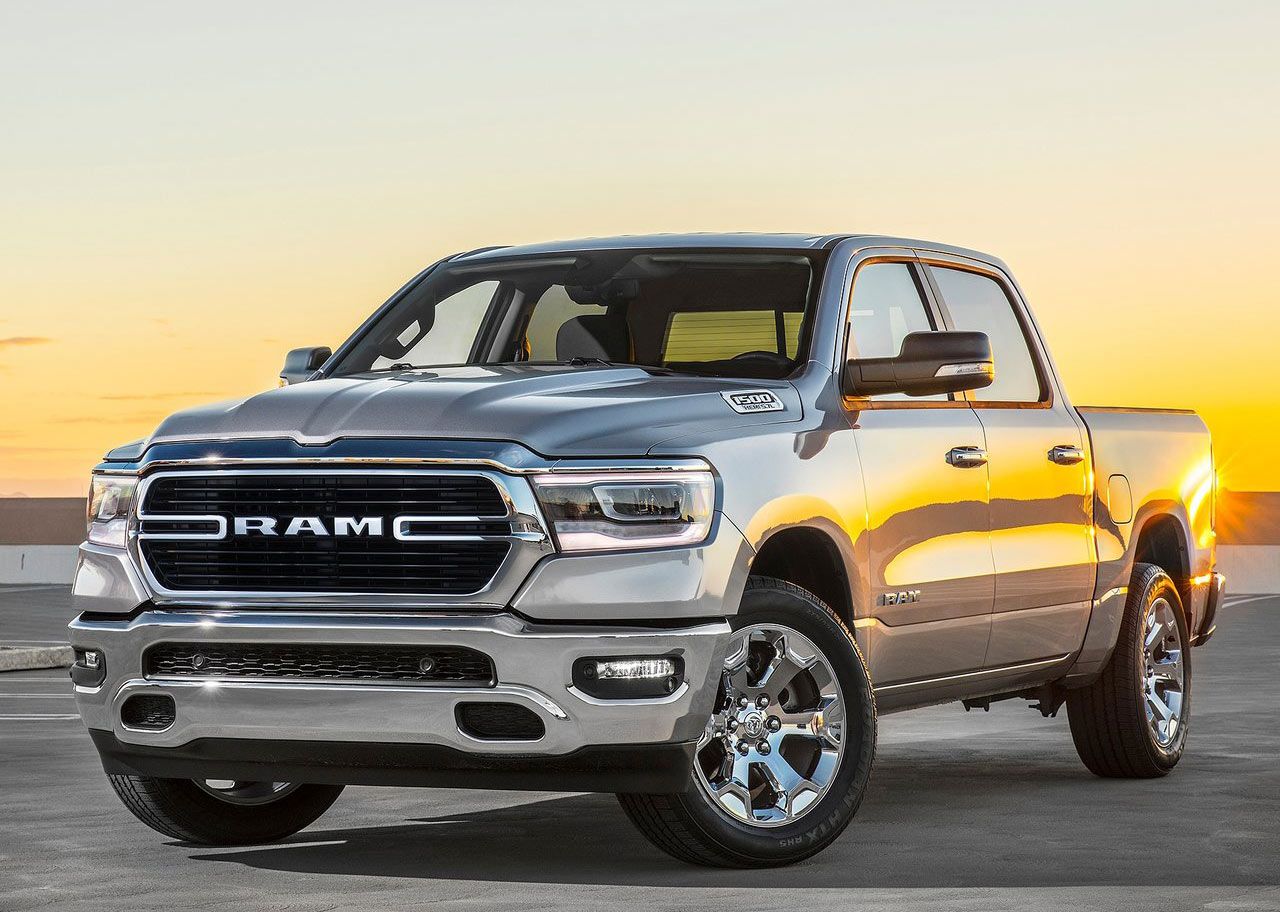
A Dodge Ram 1500 in New York spent 105 days in the shop under warranty. Nobody at Chrysler wrote down that those 105 days should have pushed the truck’s coverage back by 105 days, too. Seven states have laws that say they should have. A federal judge in Detroit just made sure the country won’t find out this year whether that failure was illegal.
This case reads, on the surface, like a clean win for Stellantis’s legacy Chrysler brand: warranty class action, dismissed. It isn’t a clean win, not really. Judge Brandy McMillion didn’t rule that FCA US LLC’s warranty math was fine. She ruled that the thirteen people who sued over it hadn’t been hurt badly enough, yet, to ask a court to check the math at all.
Here’s what actually happened, and why the difference matters.
The lawsuit, Williams v. Fiat Chrysler Automobiles, was filed in federal court in October 2025 on behalf of Chrysler, Dodge, Jeep and Ram owners in California, Connecticut, Massachusetts, Michigan, New York, New Jersey and Rhode Island. The claim: each of those states requires an automaker to extend, or “toll,” a vehicle’s warranty for every day it sits in the shop getting a covered repair. FCA, the plaintiffs argued, systematically didn’t do that, and never told anyone it wasn’t happening.
If you’ve never heard of warranty tolling, you’re not alone, and that’s the point. Most owners assume a factory warranty runs on a fixed calendar: three years or 36,000 miles, full stop. In reality, several states treat coverage more like a gym membership frozen while you’re away. The clock is supposed to stop while the vehicle is in the shop for a covered repair, then restart once you get it back. California’s Song-Beverly Act works this way. So do used-car lemon laws in New York, New Jersey and Massachusetts, plus separate statutes in Michigan, Connecticut and Rhode Island. None of that shows up on the sticker in the glovebox, and buying your Chrysler product used doesn’t erase it.
The plaintiffs who came closest to a real example were Doreen and Ashley Biasi, a New York couple who bought a used 2018 Ram 1500 ST in April 2022. Between October 2022 and February 2023, their truck spent a cumulative 105 days at the dealer under warranty repair. Nobody extended their powertrain coverage to account for that time. Months later, after the un-extended warranty had expired, the truck’s exhaust manifolds started leaking. Had FCA tolled the warranty the way the Biasis say New York law required, that repair would have been covered.
It’s a clean theory. It also turned out to be the strongest example in the entire case, and it still wasn’t enough.
FCA’s lawyers didn’t spend much time arguing that its warranty math was correct. They argued something narrower, and it worked: none of the plaintiffs, including the Biasis, had actually gone back to a dealership, asked for the exhaust manifold repair, and been turned down. They calculated that it should have been covered. They never tested it. Under Article III standing doctrine, a federal court can only hear a case where the plaintiff has already suffered a real, concrete injury, not one that might exist if a hypothetical repair request had actually been made and actually been refused. Judge McMillion agreed with FCA that a warranty problem you never bring to a service counter isn’t an injury a court can fix.
That distinction is the whole story. FCA never had to defend whether it actually complies with warranty tolling laws in any of the seven states named in the suit. The court said as much directly, ruling it didn’t need to reach “whether it should compel the parties to arbitration, or address the merits” because the case was dead on standing alone. Stellantis’s legal team walked away with a final judgment, dismissed with prejudice, without ever opening the file on how FCA calculates a tolled warranty, or whether it calculates one at all.
That’s worth sitting with. A dismissal “with prejudice” sounds crushing, and for these thirteen plaintiffs, it is. They can’t refile this claim. But it says nothing about whether FCA’s practice is legal. An owner who does drive back to a dealership, gets denied a repair they believe should have been covered under a tolled warranty, and can point to an actual invoice and an actual refusal, would be suing on entirely different footing. This case closed a door. It didn’t answer the question behind it.
There’s a second detail buried in the docket that says a lot about how automakers build legal defenses now. Alongside its warranty booklets, FCA’s motion included the Mopar app’s terms of use, the corporate website’s terms of use, and three separate versions of its privacy policy, dated 2023, 2024 and 2025, each carrying its own arbitration language. None of it ended up mattering here, because the case never got past standing. But the strategy is the point: modern arbitration clauses aren’t just buried in the sales contract you sign at the dealership anymore. They’re stacked into every app you download and every privacy-policy update you click through without reading, on the theory that if one clause doesn’t hold up, another one from a completely unrelated corner of your relationship with the brand might.
The cruelest part of this ruling is how it defines the trap. Warranty tolling only protects you if you already know it exists, do the math yourself, and walk into a dealership citing a specific statute before the clock you didn’t know was running actually expires. FCA, according to the dismissed complaint, never proactively notifies customers when a warranty has been extended. Miss that invisible window, and under this decision, you don’t just lose the repair. You lose standing to even ask a court whether you were entitled to it.
Compare that to how GM handled a coolant leak defect in the Acadia, mailing owners a warranty extension and a check without waiting to be sued. Chrysler’s approach, at least as these plaintiffs described it, was to let the calendar do the talking and let a standing defense do the rest if anyone complained. It’s the same general playbook Stellantis just ran in Iowa, where a $5.5 million judgment against a fraudulent dealer landed by default rather than by any contested finding of fact. Increasingly, the automaker’s courtroom wins aren’t vindications. They’re the other side simply failing to clear a procedural bar.
If you own a used Chrysler, Dodge, Jeep or Ram, especially something like the Ram 1500, a truck Stellantis has recalled by the millions for problems nobody caught for years, treat this case as a prompt to check your own math. Add up how many days your vehicle has spent in for warranty-covered repairs. Ask your service adviser, in writing, whether your state requires that time to be added back onto your coverage. Do it before the part fails, not after, because this ruling just confirmed that showing up after the fact isn’t enough to get a court’s attention, let alone a repair.
FCA didn’t win this case by proving its warranty math was correct. It won by proving that nobody suing them had proof they’d been shorted yet. Those are not the same victory, and owners who mistake one for the other are the only ones who actually lose something here.