
The Chevrolet BrightDrop 400 is the only vehicle in the Insurance Institute for Highway Safety’s new commercial-vehicle program that has every driver-protection feature the Institute checks for and no marginal or poor score in its crash avoidance tests. General Motors ended BrightDrop production on Oct. 21, 2025.
That leaves the people who buy cargo vans and heavy-duty pickups choosing among vehicles with clear gaps. In the second round of IIHS commercial vehicle ratings, released Oct. 8, the Institute ran seven cargo vans and four Class 3 pickups through the same vehicle-to-vehicle and pedestrian front crash prevention tests it uses on passenger cars, with the same protocols and rating requirements. Seven of the 11 rated poor in the vehicle-to-vehicle test. One, the Mercedes-Benz Sprinter 2500, rated good.
IIHS President David Harkey called the results “a wake-up call for commercial vehicle makers.” He added: “Front crash prevention is especially important for these larger, heavier vans and trucks because of the danger they pose to other road users.”
My read of the individual test sheets is that the weak scores trace back to two things: federal safety rules that sort vehicles by weight, and work-truck buyers who have not been given a reason to ask for more. IIHS is now trying to supply that reason.
Eleven vehicles, one good score with a car or motorcycle ahead
The vehicle-to-vehicle test sends the truck at a stationary passenger-car target and a motorcycle target at 31, 37 and 43 mph, with the target centered in the lane and offset to either side. A real dry van trailer is used to check the forward collision warning only. Braking accounts for two-thirds of the possible score and warnings for one-third, and a warning earns credit only if it arrives at least 2.1 seconds before the projected impact.
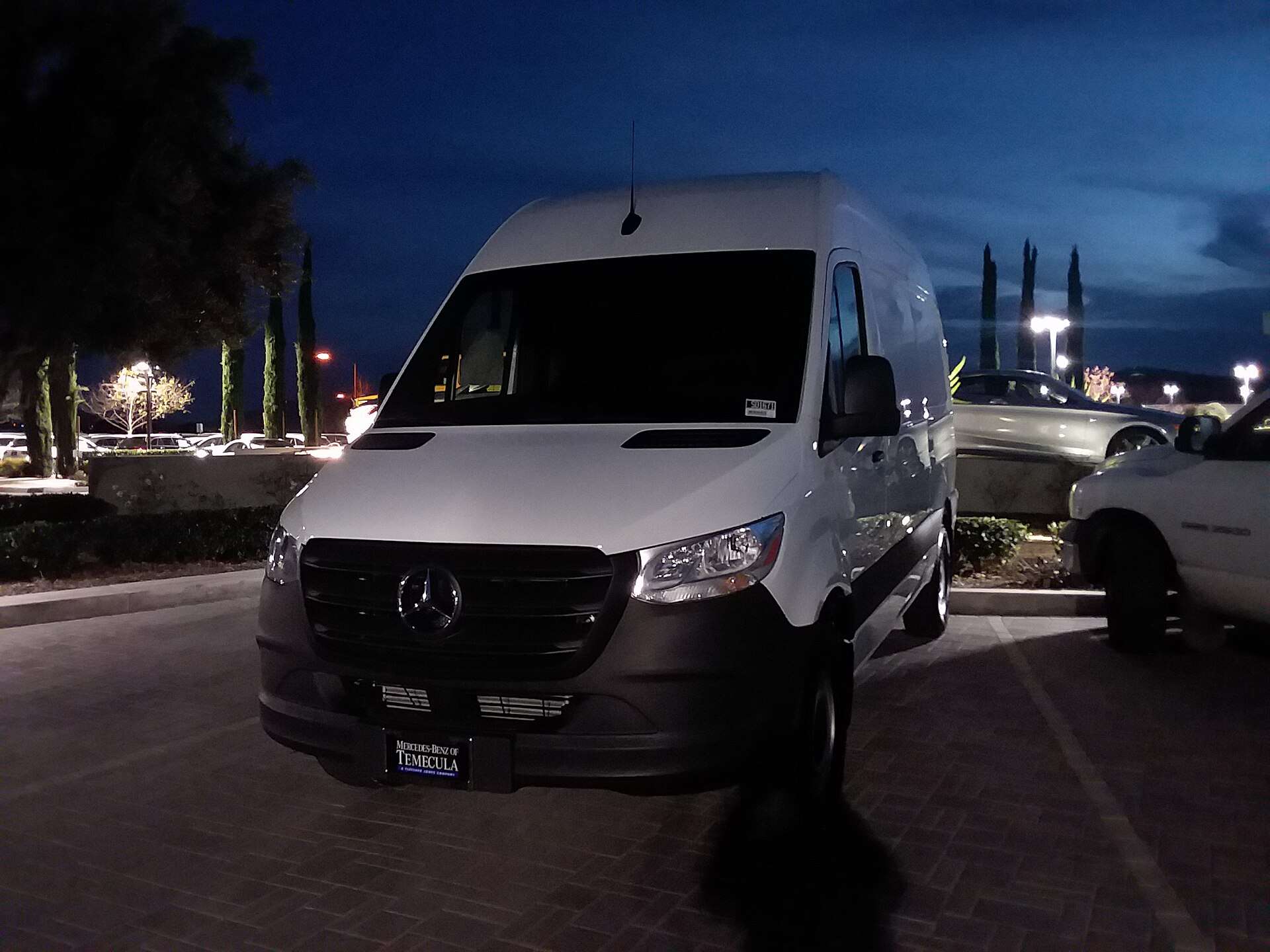
The Sprinter 2500 avoided the car target in all six runs and the motorcycle in five. In the sixth, at 43 mph with the motorcycle off-center, it slowed by 20 mph without a timely warning.
The Ford Transit T250 shows how little “standard AEB” can mean on a spec sheet. Ford lists Pre-Collision Assist with automatic emergency braking as standard on the Transit, and the van still rated poor. Against the car target it cut 27 mph at 31 mph and 23 mph in the centered 37-mph run, then did not slow at all in the offset 37-mph run or either 43-mph run. Against the motorcycle it slowed by 7 mph once and not at all in the other five runs, and it gave no timely warning in any of the six.
The Chevrolet Silverado 3500HD, also with standard AEB, slowed 12 mph in one car-target run and not at all in the other five. It managed 7 mph once against the motorcycle. IIHS applied the Silverado’s results to the mechanically related GMC Sierra 3500, which also rated poor.
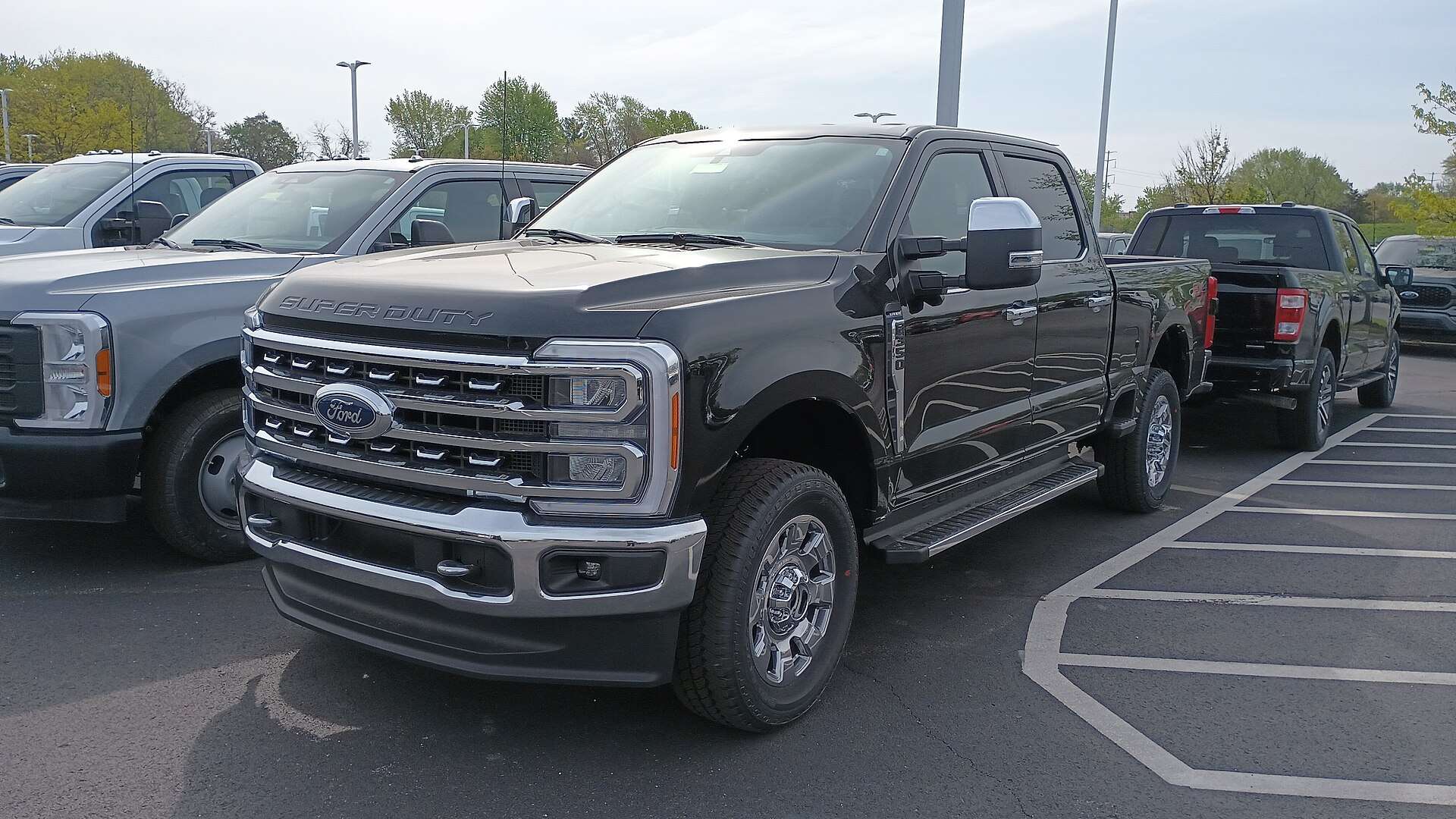
The Ford F-350 braked far better than its rating suggests. It avoided the car target in both 31-mph runs and cut speed by 21 to 29 mph in most of the motorcycle runs. It lost points because several warnings came late, and it did not slow in the 43-mph offset car run. The bigger issue for anyone buying one for a crew is on the equipment line: IIHS lists the F-350’s Collision Assist with AEB as optional, and only on the Lariat with the Premium package, the King Ranch and the Platinum. The F-350 a contractor orders for the job site is not usually a King Ranch.
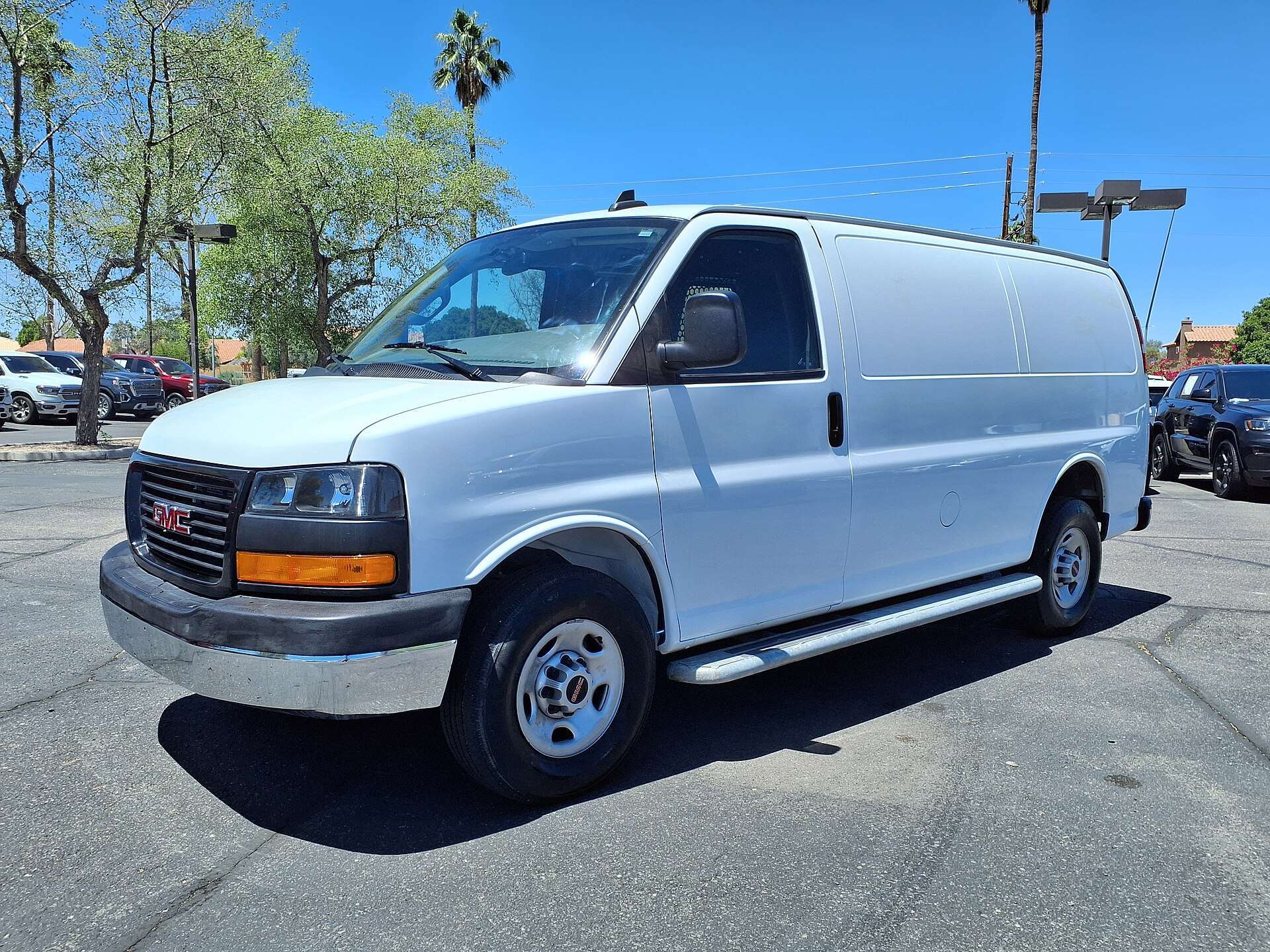
The Chevrolet Express 2500 and GMC Savana 2500 rated poor in both tests because they have no automatic emergency braking. IIHS says forward collision warning is their only available front crash system, and it is optional. The ratings cover the 2025 through 2027 model years. In IIHS’s June driver-protection evaluation, the Express was also the only vehicle missing standard seat belt force limiters.
Pedestrian tests expose a sight-line problem on tall trucks
The vehicles did better in the pedestrian test, which covers an adult or child crossing the road and an adult walking in the travel lane, in daylight and at night. The BrightDrop 400 and Rivian RCV-Delivery 500 rated good, the Sprinter acceptable, and among the pickups the F-350 and Ram 3500 rated acceptable.
Several vehicles, including the F-350 and Ram 3500, had more trouble with the child dummy crossing in daylight than with the adult at night. IIHS tied that to the child’s shorter height, the vehicles’ tall front ends and the placement of the detection sensors near the rearview mirror. In some runs the system picked up the child at a distance and then lost it as the truck closed in. A camera mounted high on the windshield looks out over the hood, and the closer a short object gets, the more of it drops below the hood line. Raising a truck only steepens that angle.
The F-350, which avoided the adult in every nighttime run below 37 mph, cut just 4 mph off a 12-mph impact with the child in daylight. The Transit reduced the same impact by 4 mph and the 25-mph child impact by 8 mph.
Headlights showed up in the scores before IIHS has rated them. IIHS runs its nighttime trials on low beams and again on high beams. The Sprinter avoided an adult walking in the lane at 25 mph with its high beams and failed to slow at all on low beams. At 37 mph on low beams, it again failed to slow, and its warning came 0.7 seconds before impact. Most of a van’s night driving happens on low beams.
Federal rules draw safety lines by weight
The pattern lines up with where the federal rules stop. Under FMVSS No. 208, the frontal-crash standard, trucks and vans with a gross vehicle weight rating of 8,500 pounds or less and an unloaded weight of 5,500 pounds or less must protect occupants without any action on their part, the requirement that put airbags in passenger vehicles. Heavier vehicles have belt-based compliance options. IIHS said in June that features as basic as airbags are not required on many commercial vehicles.
The automatic emergency braking rule works the same way. NHTSA finalized FMVSS No. 127 on April 29, 2024, for vehicles with a GVWR of 10,000 pounds or less, with compliance due in September 2029. It requires vehicles to stop and avoid a vehicle ahead at up to 62 mph and to brake for pedestrians at up to 45 mph, in daylight and darkness. A Class 3 pickup, by definition, has a GVWR of 10,001 to 14,000 pounds. Every pickup in the IIHS test sits one pound or more outside the rule.
Some vans fall inside it. Ford’s 2025 Transit specifications list the T-250 cargo van at 9,070 to 9,150 pounds GVWR, so a Transit built after the compliance date would have to clear federal tests at speeds well above the 43-mph ceiling where it failed to slow for IIHS. That date may move. NHTSA’s spring 2025 regulatory agenda listed a planned proposal to extend the rule’s lead time by two years.
For anything over 10,000 pounds, NHTSA and the Federal Motor Carrier Safety Administration proposed a heavy-vehicle AEB standard on June 22, 2023. The agencies estimated it would prevent 19,118 crashes, 155 deaths and 8,814 injuries a year. In June 2026, IIHS said U.S. regulators still do not require automatic emergency braking on commercial vehicles.
Seat belt reminders follow the same pattern. Federal rules currently require the audible signal to last only 4 to 8 seconds, with stricter rules due in 2028 for passenger vehicles and some commercial counterparts. IIHS wants a tone loud enough to hear over cabin noise that lasts at least 90 seconds or until the belt is buckled. The Sprinter’s reminder failed on both duration and volume, and the Transit’s failed on volume. Delivery drivers who climb in and out at every stop are the people a persistent chime is built for, and an IIHS study of part-time belt users found persistent reminders raised belt use by 30%.
Federal rules also sort trucks by weight for fuel economy, and manufacturers engineer to those lines. A pickup rated at 10,001 pounds and a van rated at 9,150 pounds can share a driveway and a delivery route while living under different safety obligations.
IIHS is writing for fleet managers and insurers
In 2024, 6,215 people died in crashes involving heavy- or medium-duty vehicles or light vans, 16% of U.S. roadway deaths, according to IIHS. Its June release used the 2023 figure of 6,535. IIHS says most people killed in truck crashes are other road users, not the truck’s occupants.
IIHS Vice President of Vehicle Research David Kidd laid out the strategy in a March 12 column: because so many commercial vehicles belong to large fleets, one organization’s purchasing decision can move more vehicles than any individual buyer. He also wrote that the Highway Loss Data Institute is compiling insurance loss data on commercial vehicles. Once claim costs by model exist, the price of skipping an option package can show up on a fleet’s insurance bill instead of only in a ratings table.
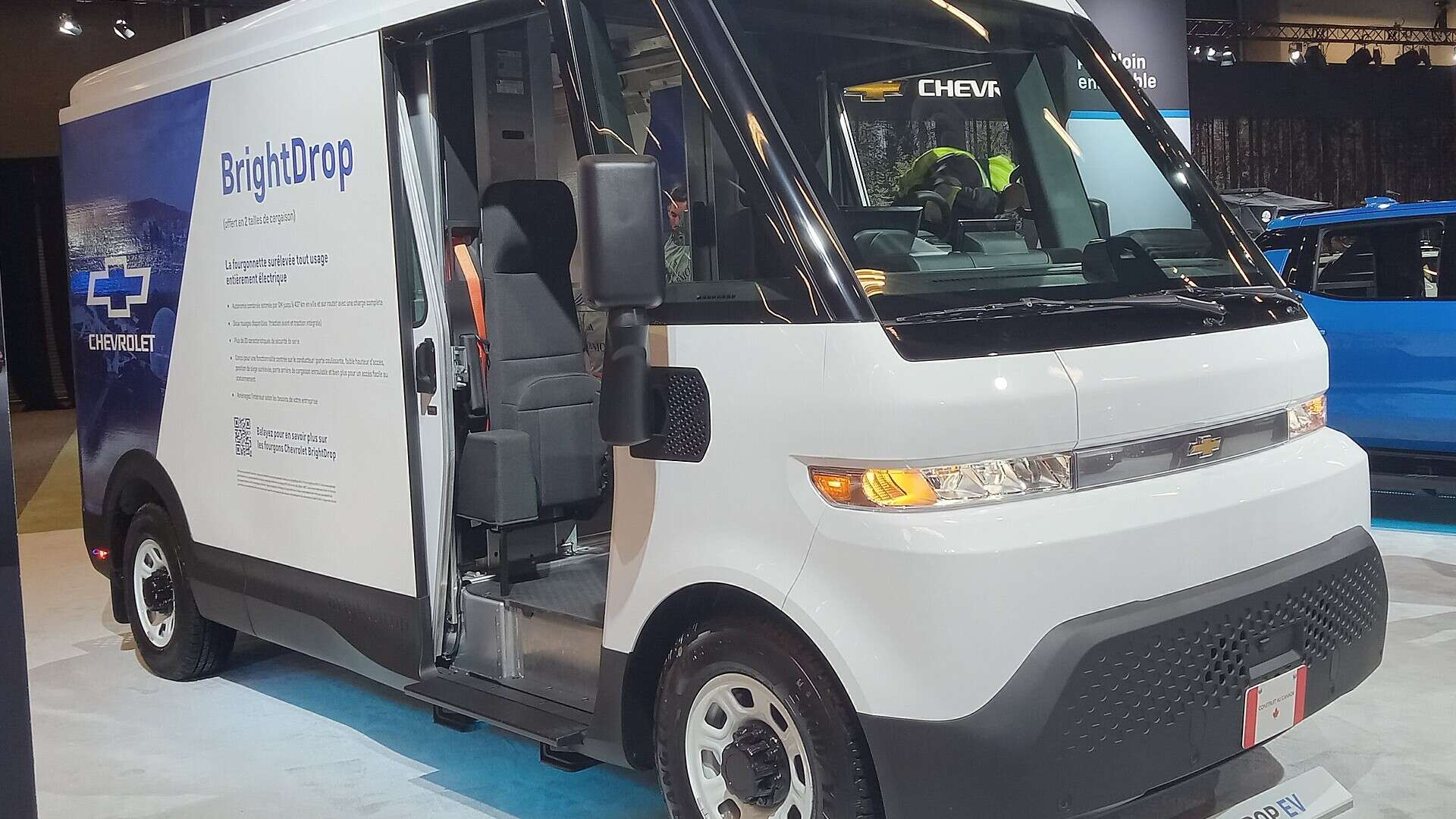
The BrightDrop shows the limit of that approach. GM said the decision to end production was “driven by market demand,” that the electric delivery-van market grew more slowly than expected, that production had been suspended since May 2025, and that the end of U.S. tax credits added pressure. A van with the most complete safety package in the test lost on cost and demand, and GM’s EV sales fell again in the third quarter of 2026. The gasoline Express and Savana, with no AEB available, carry IIHS ratings through the 2027 model year.
Small operators have their own constraints. Record diesel prices have pushed small trucking fleets toward bankruptcy court this fall, and a business in that position is unlikely to pay for a luxury trim to get AEB on a work pickup.
Headlights, rear braking and bigger trucks are next
IIHS says it will keep evaluating Class 3 vehicles through this year and next, adding headlight ratings and rear automatic emergency braking. Rear AEB matters for vans that back into loading docks and alleys all day. Testing of Class 4 through 6 trucks, with GVWRs of 14,001 to 26,000 pounds, will be phased in later.
The specific things to watch: whether Ford moves AEB onto the F-350 trims fleets buy, whether GM adds automatic braking to the Express and Savana or lets them age out, whether NHTSA extends the light-vehicle AEB deadline, and whether the heavy-vehicle proposal from 2023 ever becomes a final rule. GM is also adding a new 8.3-liter Duramax to its heavy-duty pickups, and the safety equipment on those order guides will show whether the ratings registered.
If you buy or run work trucks: has AEB ever made it onto your order sheet, or is it the first box unchecked when the quote comes back?