
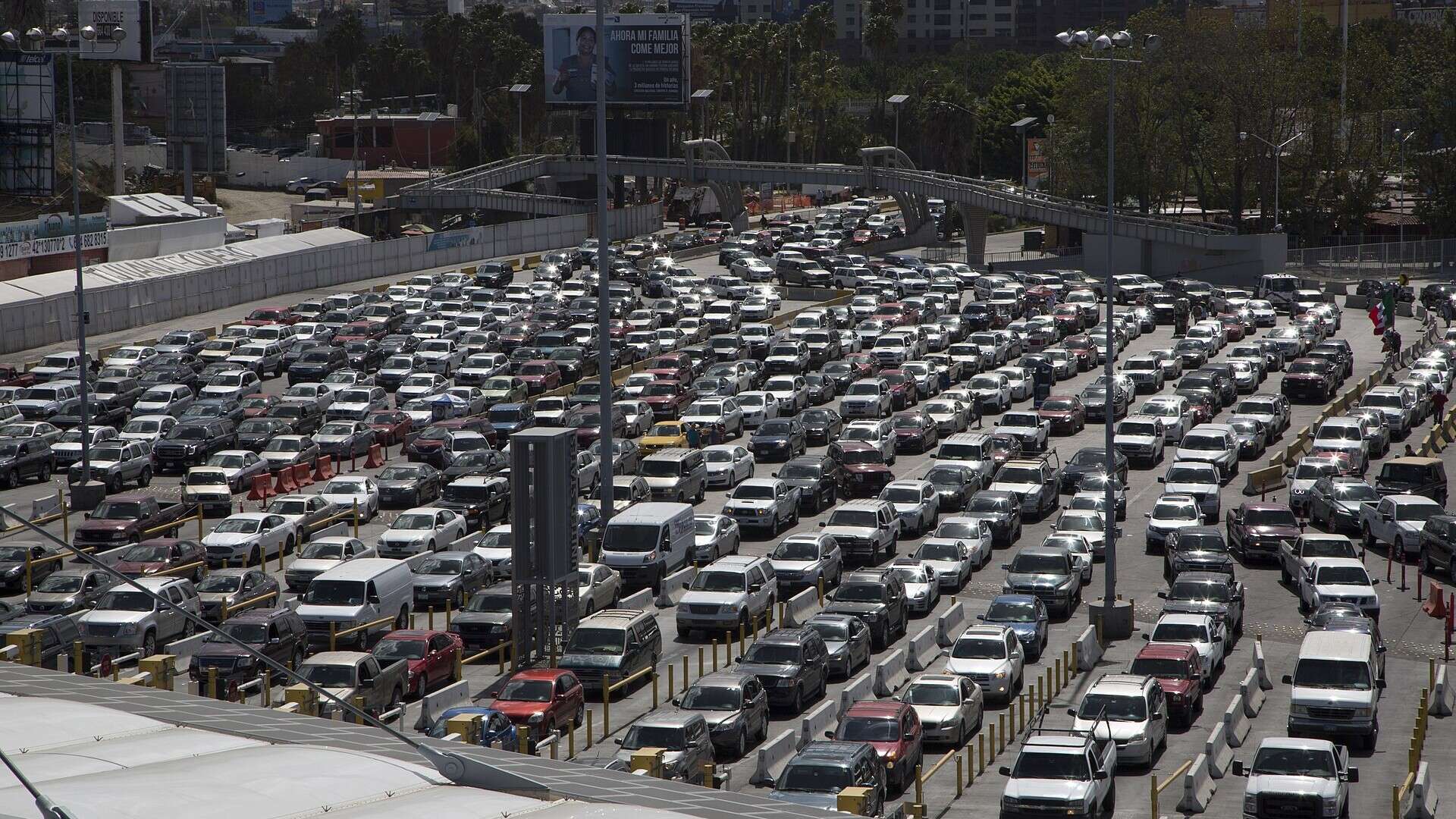
A Ram 1500 picked up at LAX can cover the roughly 135 miles to the San Ysidro Port of Entry in a few hours. Under California Vehicle Code Section 10500, the trigger for police to enter an unreturned rental into the state’s stolen-vehicle system is five days past the owner’s written demand for its return, and that demand has to go out by certified or registered mail after the rental agreement expires. Mexican cartels have built a vehicle supply line in the gap between those two clocks.
The supply line is the subject of an investigation published Oct. 12 by the Puente News Collaborative and the Los Angeles Times, reported by Steve Fisher. It follows new pickups and SUVs from airport rental counters in California and Nevada to cartel territory in Jalisco, Sinaloa and Durango. I read it alongside the statutes and the treaty that governs stolen cars on this border. Read together, the problem is a label: the law treats a rental that never comes back as a different crime from a truck taken off a driveway, and that difference follows the vehicle across the border and works against the rental company at every step.
Rams from Oakland, .50-caliber rifles in Jalisco
According to the investigation, 10 new Ram pickups were taken early this year from airports in Oakland, Los Angeles and Las Vegas and ended up in Jalisco. One was recovered with help from the Mexican army, along with .50-caliber Browning and Barrett weapons. Six Jeep Wranglers disappeared from Oakland and Las Vegas this year; four were recovered, and investigators believe they were headed for the Sinaloa cartel. In August, a 2026 Cadillac Escalade and a Ram were found hidden behind hay bales in a tractor-trailer that had been loaded in Mexicali. National Guard soldiers found them at a checkpoint.
The methods are low-tech. The reporters describe rentals made with stolen identities, people recruited on social media to rent a vehicle and leave the key inside, and renters who buy the damage waiver and then hand the car to a driver headed south. LAPD Sgt. Juvey Mejia, a member of the Task Force for Regional Auto Theft Prevention, told the reporters that renters wear masks at the kiosks because they know the car won’t be traced back to them. In Laredo, Texas, Deputy Police Chief Timothy Tubbs reported a 50% increase in rental thefts, about 10 a month. “These stolen vehicles empower the cartels,” he said.
Nobody has a reliable count. The California Highway Patrol told the reporters that about 850 vehicles stolen in California have been recovered in Mexico each year since 2023, a figure that doesn’t separate rentals from privately owned cars. The CHP’s Mexico Liaison Unit page says roughly 2,000 stolen vehicles are located in Mexico in an average year. Both numbers can only include vehicles somebody reported stolen. Kevin Carter, who runs the Texas rental-recovery firm Collateral Consultants, told the reporters that of the cases he has handled, “less than half made it onto the U.S. database.”
Why California treats an overdue rental as embezzlement
When a pickup vanishes from a driveway, the owner calls the police and the truck can go into the stolen-vehicle system that day. A rental is different because the renter drove it off the lot with the company’s permission. Under Vehicle Code Section 10855, a renter who willfully and intentionally fails to return a vehicle within five days after the agreement expires is presumed to have embezzled it. Section 10500 then sets the trigger for police: five days after a certified or registered demand letter. The investigation describes how that plays out in practice, with a company spending about three days preparing the letter, two more on certified mail, and up to nine days before police are notified.
California has already tried a shorter clock. AB 391, signed Oct. 8, 2019, cut the presumption period to 72 hours, required rental contracts to warn renters that a car kept 72 hours past its due date could be reported stolen, and said a company didn’t have to wait for the contract to expire before reporting a rental obtained by fraud. The bill carried its own expiration date. On Jan. 1, 2024, those provisions were repealed and the five-day versions of both sections became operative again. They are the versions on the books today.
Thieves who never touch a rental counter use the same delay. In a June 22, 2026, announcement of an 11-defendant indictment, Colorado Attorney General Phil Weiser’s office said a ring took pickups, trailers and UTVs from municipal airport parking lots and nearby hotels, and that owners often didn’t report the thefts until they got home days later, which allegedly helped the vehicles slip past license-plate readers. According to the indictment, many were driven or trailered to Mexico and sold to cartels. A December 2024 Denver grand jury case charged 17 people over at least 190 vehicles, mostly premium pickups, with about $9.5 million in losses; prosecutors alleged the trucks were exchanged in Mexico for cocaine and methamphetamine. An airport-lot thief has to hope the owner is on a long trip; with a rental, the Vehicle Code supplies the delay.

The tracking rules, and the 2026 border geofence
Civil Code Section 1939.23 bars a California rental company from using location data about a renter’s use of the car except in listed situations. If the vehicle hasn’t come back 24 hours after the contracted return date, the company may turn on tracking, but it must first give the renter 24 hours’ notice by phone and electronically. That puts the earliest lawful tracking for an overdue car about 48 hours after it was due. Tracking is also allowed once the renter or police report the car stolen, or once the company discovers it has been stolen and files a stolen-vehicle report. The 24-hour window is itself recent: the state Senate Public Safety Committee analysis notes that a 2018 law set it at 72 hours and AB 2741, passed in 2024, cut it to 24.
Sharky Laguana, who owns Bandago Van Rentals in San Francisco, told the reporters, “California allows criminals to take advantage of the fact that we are not allowed to see where the vehicle is until it’s too late.”
Sacramento has partly answered him. AB 1197, by Assemblymember Lisa Calderon, signed Oct. 7, 2025, lets a rental company use geofence technology to detect when a vehicle is moved outside the country without authorization in the rental agreement, or into an impound or tow yard. The American Car Rental Association sponsored it. Calderon’s statement to the Senate committee said, “Rental car fleets are easy targets, since car theft rings face limited repercussions under current law.” The Consumer Federation of California, Consumers for Auto Reliability and Safety and Oakland Privacy opposed it, arguing that it erodes the state’s privacy protections.
A geofence alert tells the company a truck has crossed at San Ysidro or Calexico. It doesn’t touch Section 10500, so for an overdue rental the trigger for a police entry is still five days after a certified letter. And the alert arrives after the truck is already in Mexico, where getting it back depends on a treaty signed in 1981.
The 1981 treaty that singles out rented vehicles
The United States and Mexico signed a convention on the recovery and return of stolen and embezzled vehicles and aircraft on Jan. 15, 1981, and it entered into force June 28, 1983, according to the State Department’s Foreign Affairs Manual. The Spanish text of Article VII defines the embezzled category, “materia de disposición ilícita,” narrowly: it applies when the act is committed by the person who rented the vehicle from a legally authorized company, or when a designated custodian uses it for an unauthorized purpose. A car taken without the owner’s consent is simply stolen.
That label matters because of Article I. The country holding the vehicle may refuse to return one in the embezzled category if its own law makes it subject to forfeiture for having been used in a crime on its territory. Before refusing, it has to weigh evidence that the rental company wasn’t complicit, and it must tell the requesting country’s embassy why. The forfeiture exception applies only to the embezzled category, which the treaty built around rentals. A Ram recovered in Jalisco alongside .50-caliber rifles fits that description.
The rest of the process isn’t quick either. Under Article II, the holding country is supposed to try to notify the other within a month of seizing a vehicle; the owner then has 45 days to file a formal request, and Article VI makes the owner pay the actual costs of return, including translating the documents, before the vehicle is handed back. A rental that crosses the border starts with a slower police report than a stolen car, and if it is caught doing cartel work, its owner has a weaker claim to get it back.
Who covers the loss, and the new key rule for renters
Laguana told the reporters that insurers don’t cover theft, so most rental agencies insure themselves. Carter said large companies often treat the losses as “a calculated risk.” A self-insured loss is a cost of running the fleet, and fleet costs are what the daily rate has to cover.
AB 1197 also changed something for ordinary renters. Under Civil Code Section 1939.03, a renter can be held responsible for theft of the car up to its fair market value if the company proves by clear and convincing evidence that the renter or authorized driver failed to exercise ordinary care. The renter is presumed to owe nothing for a theft if two conditions are met. Before the bill, the first condition could be satisfied by having the ignition key or showing it wasn’t in the car when it was stolen. Now an authorized driver has to return the key the company furnished, and must still file a police report within 24 hours of learning of the theft and cooperate with the company and police.
The change aims at the straw renter who leaves the key in the cup holder for the next driver. It also reaches an honest renter whose fob disappeared along with the truck, a point the bill’s opponents raised in committee. Anyone renting in California should keep the key on their person and, if the car is gone, get a police report filed within the day.
What California could change next
Car thefts are down in all 50 states this year, and Los Angeles is still working through a Kia and Hyundai theft wave rooted in ignitions that were easy to defeat. The rental pipeline moves on different rules. The rental industry now has a geofence that can flag a car the moment it leaves the country, while the police system still waits for a certified letter and five days. The obvious test for lawmakers is whether to bring back something like AB 391’s 72-hour reporting window, this time without a sunset clause, and whether to tie a border-crossing alert to an immediate stolen-vehicle report. The CHP could also start flagging rentals in its recovery numbers. Without that, nobody in Sacramento can tell whether the geofence law is working.
Should an overdue rental count as stolen after a day or two, even if more honest late renters get flagged? Or is California’s five-day buffer worth keeping?