
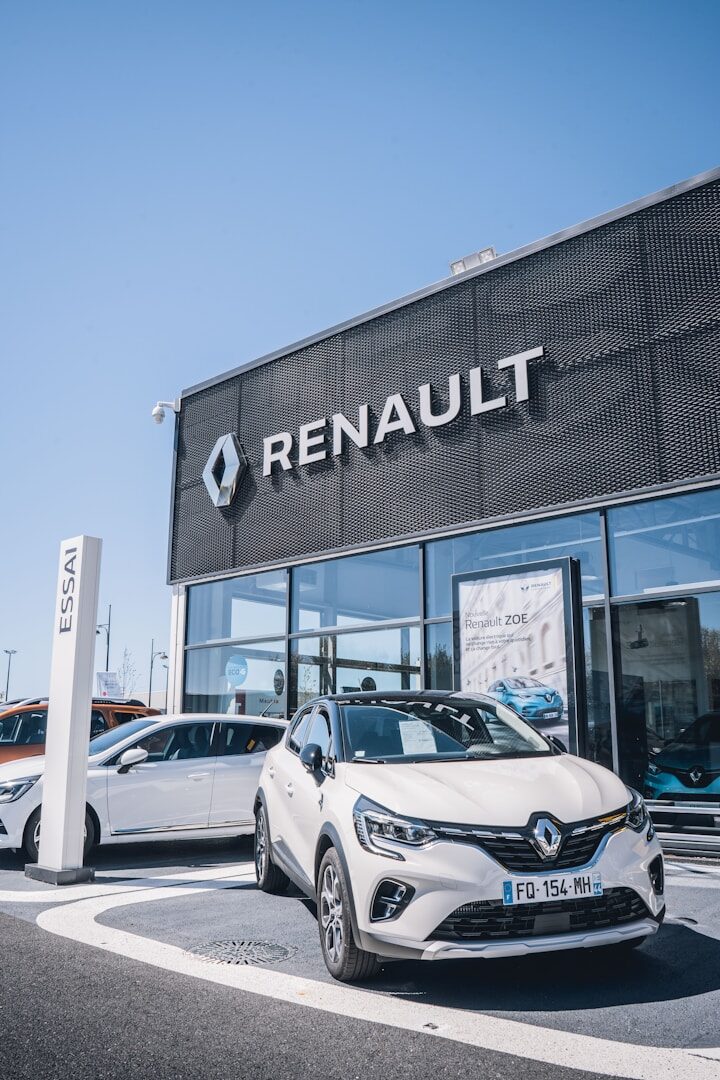
For most of the last two decades, if a Western automaker wanted to sell cars in China, the price of admission was simple: hand over your technology, accept a Chinese joint-venture partner, and settle for a minority stake in your own operation. General Motors did it. Volkswagen did it. Ford did it. Everyone grumbled, and everyone did it anyway, because the alternative was staying out of the largest car market on earth. So there’s something almost poetic about what BYD reportedly just tried to do to Renault: show up with the exact same offer, running in the opposite direction.
According to the French financial paper Les Echos, BYD approached Renault about taking an equity stake not once but twice in the last two years – the first time around 2024, the second in the autumn of 2025. Both times, Renault said no. An insider described BYD’s ask bluntly: There was a desire to take control. Not a supply deal. Not a technology-sharing agreement. Control.
The Trade BYD Was Offering
The terms, as described, make sense the moment you hear them. BYD would have given Renault access to its battery-electric and plug-in hybrid technology, along with its battery manufacturing know-how – genuinely valuable, since BYD builds its own cells and controls a meaningful chunk of its own supply chain, something almost no legacy automaker in Europe can claim. In return, BYD wanted the one thing it can’t manufacture on its own: an already-built, already-certified, already-staffed factory floor inside the European Union.
Why A Factory Beats A Ship
That request makes far more sense once you understand what’s sitting underneath it. Since late 2024, the EU has layered additional countervailing duties on top of its standard 10 percent import tariff for Chinese-built EVs, pushing the combined bill for some Chinese brands past 45 percent, part of a tariff wall the bloc built specifically to slow this exact kind of competition. BYD’s own rate landed lower than most, but it’s still enough to erase a big chunk of the price advantage that got the company noticed in Europe in the first place. Building a car in Hungary, or Turkey, or Slovakia doesn’t just soften that number, it makes the car legally European: built by European workers, sold without the tariff attached at all.
That’s the part of this story that’s easy to miss. BYD isn’t only racing to finish its new plant in Szeged, Hungary. It has already put a planned factory in Turkey on hold, and BYD Europe CEO Stella Li has said plainly that the company is now hunting for an existing site in southern Europe instead of building one from scratch. We would prefer to take over an existing plant, she said at a press event in Berlin. It’s the same hedge that pushed Thailand toward a multibillion-dollar EV investment wave: when the rules of trade get uncertain, you buy your way inside them rather than ship your way around them. Renault’s factories, whatever Renault thought of the offer, were exactly that kind of shortcut.
Renault Isn’t Actually Allergic To Chinese Money
Here’s the detail that complicates the easy version of this story: Renault is not some China-wary holdout. Geely, BYD’s biggest domestic rival, already owns 34 percent of Renault Korea Motors, picked up a stake in Renault do Brasil last year, and co-runs a joint venture called Horse Powertrain with Renault and the oil giant Aramco, building combustion engines of all things. Renault, a mid-sized manufacturer that has leaned on alliances for most of its modern history, is perfectly comfortable with Chinese capital and Chinese partners. Just not in Europe. And not with a partner that wants the wheel instead of the passenger seat.
That’s a sharper and more interesting distinction than the idea that Renault doesn’t trust China. It’s a company drawing a hard line around its home market while staying wide open everywhere else, treating Europe the way its American, Japanese, and Korean rivals treat their own backyards. Ford’s own CEO has already called Chinese competition an existential threat to legacy brands, and Renault’s twin rejections are the practical version of that same anxiety: welcome the partnership, just never hand over the deed.
The Maserati Detail Nobody’s Talking About
Buried near the bottom of the Les Echos report is a smaller, stranger thread: Stella Li has also floated buying a legacy nameplate outright, and reportedly named Maserati specifically. That’s worth sitting with. Maserati’s sales have been in free fall for years, and Stellantis has never been shy about how uncertain the brand’s future really is. If BYD can’t get a controlling stake in a healthy French automaker’s European factories, buying a wounded Italian marque and its factory outright is a far easier door to walk through, and a much cheaper one.
There’s precedent here, and it cuts in two very different directions. Geely bought Volvo from Ford in 2010, left the engineering team in Gothenburg largely alone, and poured in enough capital to help turn Volvo into one of the more respected brands in its class. SAIC bought the MG name and folded it entirely into a Chinese-built, Chinese-designed lineup wearing a British badge. Whichever European factory or brand eventually says yes to a deal like the one Renault rejected, the outcome will look like one of those two playbooks, not something comfortably in between.
What Renault’s No Actually Buys Europe
None of this makes BYD’s ambitions any less real. The company has told the world it intends to be the largest automaker on the planet within five years, and that math simply doesn’t work without a real foothold in Europe. Renault said no twice, but it’s one manufacturer, and Europe’s car industry is currently full of idle capacity, strained balance sheets, and management teams under enormous pressure to hit numbers. Nissan is shedding its own Renault stake for cash. Volkswagen, Porsche, and Honda all stumbled in the same week this summer. The next offer will come dressed differently, aimed at whichever automaker has run out of better options.
This was never really a story about a takeover bid getting turned down. It’s a story about what it now costs a Chinese automaker to get inside the walls Europe built to keep it out, and about how, for once, it’s a Western manufacturer holding the card that used to belong to Beijing: the choice to say no.