
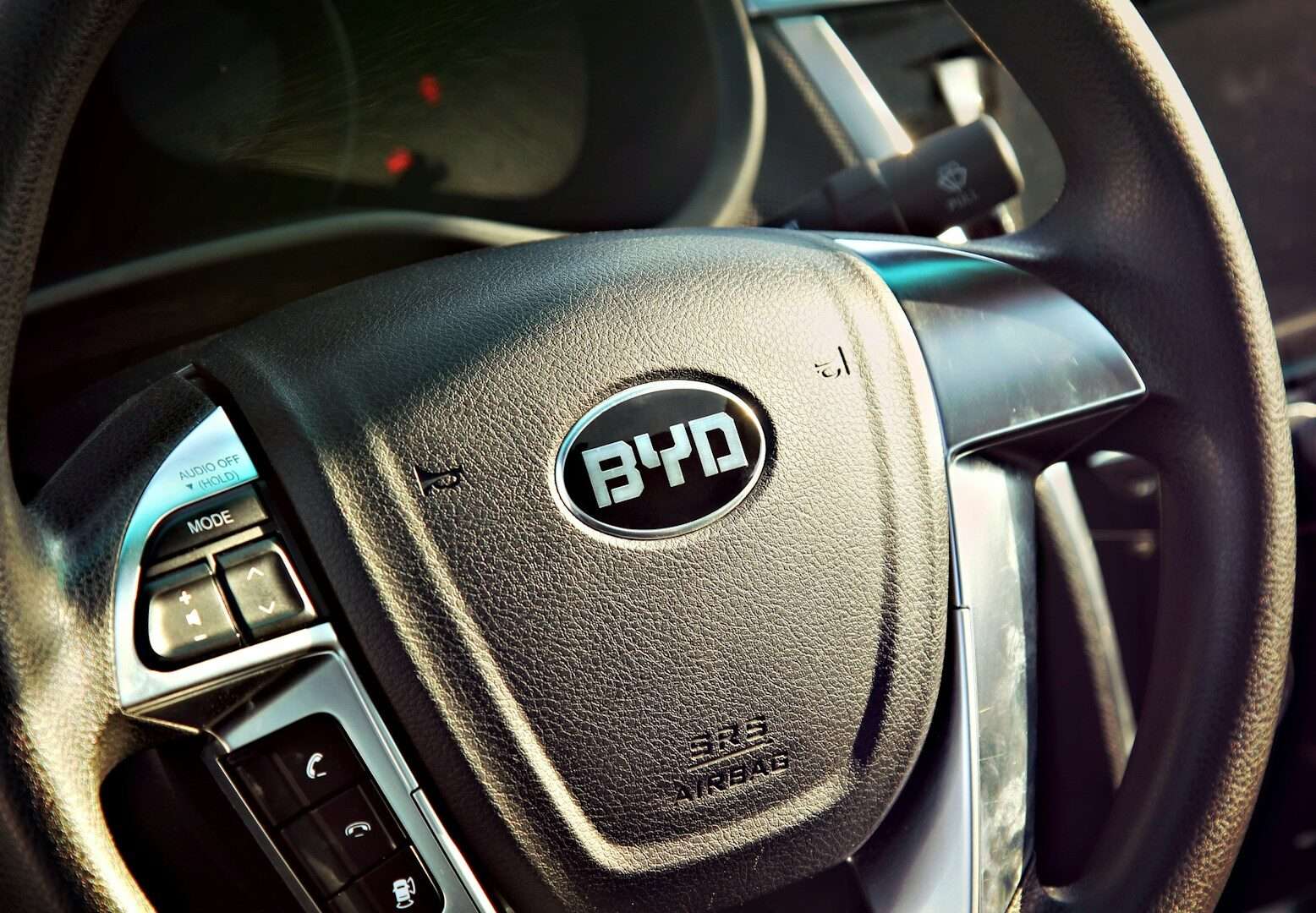
BYD just stood up in front of its own investors and announced it plans to become the biggest carmaker on the planet within five years. Not a top contender, not a strong number two, the single largest automaker in the world. That’s a massive thing to say out loud, and the company said it anyway.
The declaration came from chairman Wang Chuanfu at BYD’s annual shareholder meeting, and the timing tells you a lot. Share prices had been sliding, investors were nervous, and Wang used the moment to make one of the boldest promises in the industry, telling the room BYD would truly be the global number one in terms of scale within five years. That’s the kind of line that either ages into legend or follows a CEO around for the rest of his career.
10 Automotive Gadgets Worth Checking Out
The chairman said his piece and then went quiet. It reaffirmed the ambition to be the world’s largest automaker and declined to take further questions. So the target is loud and clear. The roadmap to get there is not.
The Numbers Don’t Make This Easy
This is where the story gets complicated. Full-year figures through the end of 2025 put BYD seventh among global automakers. It sits behind Ford, Stellantis, General Motors, Hyundai Motor Group, Volkswagen, and Toyota. Seventh is impressive for a company that was barely a blip a decade ago, but seventh is not first.
Now look at the gap. Toyota moved 11.32 million vehicles last year. BYD moved 4.6 million in 2025. To take the crown, BYD would need to more than double its own output and steal serious market share from the established giants at the same time. That’s not a stretch goal, that’s a mountain.
The growth curve, to be fair, has been steep. BYD crossed 1 million units for the first time in 2022, finishing that year at 1.88 million. Then 3.03 million in 2023. Then 4.27 million in 2024. A company climbing like that has earned the right to dream big. But doubling again from here, while everyone above you fights to stay on top, is a different kind of challenge entirely.
Strong Abroad, Slipping at Home
The most interesting tension in BYD’s story right now is geographic. Export sales jumped 65 percent from January through May compared to the same stretch a year earlier, with the strongest growth landing in Brazil, Britain, and Australia. That’s the engine Wang is counting on, and it’s clearly firing.
At the same time, the home market is cooling. Domestic sales in China slipped 20 percent, and that detail matters more than it might first appear. BYD is leaning harder on foreign buyers precisely as Chinese demand softens, which means the entire number-one ambition rests heavily on markets outside its own backyard behaving the way BYD needs them to.
Why China Is Squeezing Its Own
The domestic slowdown isn’t unique to BYD. Chinese brands across the board are feeling the pressure as EV incentives get wound back and the easy growth dries up. As volumes shrink at home, automakers are pivoting toward higher-margin products to protect their bottom lines. It’s a survival move, and it changes the shape of the whole market.
That backdrop makes Wang’s announcement feel less like pure confidence and more like a company trying to plant a flag while the ground shifts underneath it. BYD is the only Chinese automaker currently holding a top-10 global ranking, which gives it a credibility none of its domestic rivals can match. But being the best of the Chinese pack and being the best in the world are two very different mountains.
So here’s the real question hanging over all of this: is BYD making a calculated promise it has quietly mapped out behind closed doors, or did a nervous shareholder meeting just get handed a headline designed to steady a falling stock? The company set the clock itself. Five years from now, the entire industry will know whether Wang Chuanfu called his shot or talked himself into a corner.