
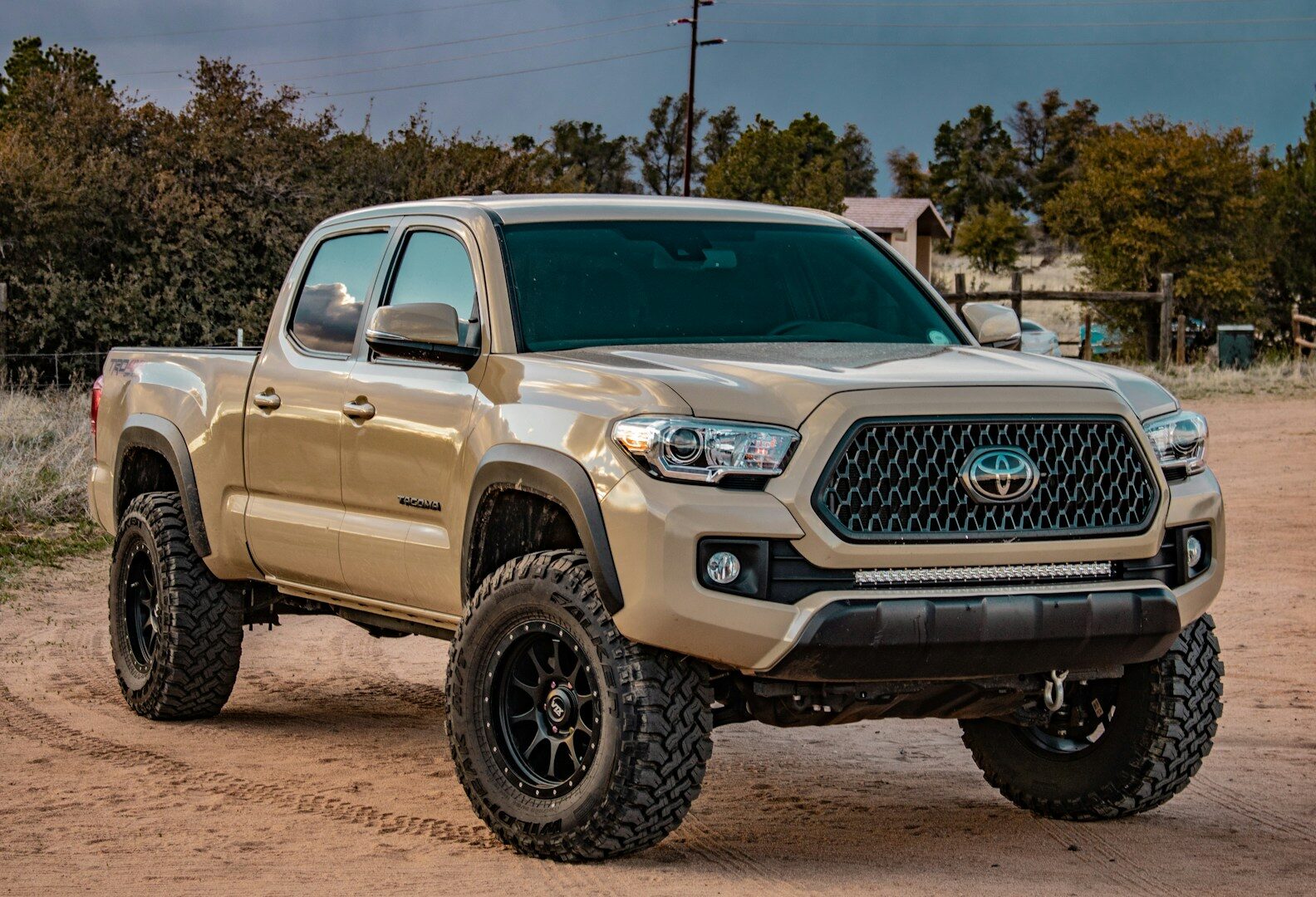
Toyota’s $3.6 billion press release out of San Antonio arrived with a governor, two U.S. senators, a lieutenant governor, a House speaker, a county judge, a mayor, and a school superintendent all lined up with quotes. That’s a lot of applause for an assembly line. Buried underneath it is a decision far bigger than 2,000 new jobs: Toyota is ending a twenty-year arrangement that let it build the Tacoma on both sides of the U.S.-Mexico border, and it is pulling that production entirely into Texas.
That should have been the headline.
The company says it will spend $3.6 billion adding a second vehicle assembly line to its Toyota Texas campus in San Antonio, growing the site by 2.5 million square feet and doubling its footprint by 2030. Toyota Motor Manufacturing Texas has built Tundras since 2006 and later added Sequoia assembly, and it is getting a new rear axle plant that starts production this fall. We covered that side of the story when the expansion first broke. What didn’t get nearly enough attention that day is the sentence describing where the Tacoma goes.
Buyer’s guide: Best Accessories for Toyota Tacoma Owners
Toyota’s own release says it will transition Tacoma production from Toyota Motor Manufacturing Baja California, its Tijuana plant, to the expanded Texas campus over roughly four years. Once that transition finishes, Tundra, Sequoia, and Tacoma will all come off the same South Texas campus, along with the axles that go under them.
Wait, really? The Tacoma has been a Mexican truck since 2004.
Toyota’s Tijuana plant has built Tacoma trucks or major Tacoma components since 2004, back when NAFTA made splitting a midsize truck’s production across the border an easy call: cheaper labor, duty-free crossing, and a supply chain nobody questioned. For two decades that arrangement was simply how the Tacoma got built, unremarkable enough that most owners never gave it a thought.
Toyota is now unwinding twenty years of that logic, and the unwinding takes four years, not four months.
Retooling a plant to build an additional model, training thousands of new workers, and relocating a supplier base does not happen on a press conference’s timeline, whatever the politicians at the podium implied about jobs coming home.
Wait, really? Toyota used its own jobs announcement to lobby Washington.
Here is the sentence worth rereading. Between the applause lines, Toyota’s release states that the company “encourages a quick resolution to USMCA” so the region can stay competitive. That is not boilerplate.
Six days before this release, the United States, Mexico, and Canada held the USMCA’s first mandatory joint review, and Washington declined to recommit to the deal in its current form, as we reported at the time. The agreement is not dead, but it no longer runs on a fixed clock, and a third round of talks over how vehicles qualify for duty-free treatment is scheduled for the week of July 20. Section 232 tariffs have added a 25 percent duty on imported vehicles and components since March 2025, discounted only for the U.S.-made share of a vehicle’s value.
Put those two facts side by side and Toyota’s Texas expansion looks less like patriotism and more like insurance. A truck built entirely in Texas does not need to win an argument about rules of origin or hope a renegotiated content formula still qualifies it for duty-free treatment. A truck split across a border that is currently being relitigated does.
Toyota did not ask Washington for a favor in that sentence. It asked Washington to stop making it guess.
Who else this touches
Bloomberg has reported that Toyota’s move is rattling more than one company’s supply chain, and it should. An entire regional economy around Tijuana grew up on the assumption that Tacoma production was a permanent fixture there. Toyota is not the only automaker with a foot on each side of the border, and if the region’s largest, most conservative manufacturer decides trade uncertainty is expensive enough to justify moving an entire model line, every other executive weighing a Mexican plant expansion is going to read that decision carefully. Nissan has already admitted that building genuinely affordable cars with fully North American content is not realistic under today’s cost structure. Toyota’s move argues the opposite problem, keeping a mid-priced truck split across an increasingly uncertain border, is not realistic either.
What it means for owners and buyers
Concentrating Tundra, Sequoia, Tacoma, and a new rear axle plant onto one South Texas campus is efficient right up until it isn’t. A hurricane, a labor dispute, or a supplier fire that used to affect one product line now touches three. It also means more of the Tacoma’s parts pipeline, engines, frames, and eventually axles, will sit inside the same tariff and regulatory zone as the finished truck, which should mean fewer of the cross-border sourcing surprises that have been driving up parts costs on vehicles with heavy foreign content.
None of that shows up in a ribbon-cutting speech.
What to remember
Strip away the politicians and the parade, and Toyota just told on itself. A company does not spend $3.6 billion and four years relocating one of its best-selling trucks because a governor asked nicely. It does that because it no longer trusts the border it has been building across for twenty years.
The jobs number was the press release. The USMCA sentence was the truth.