
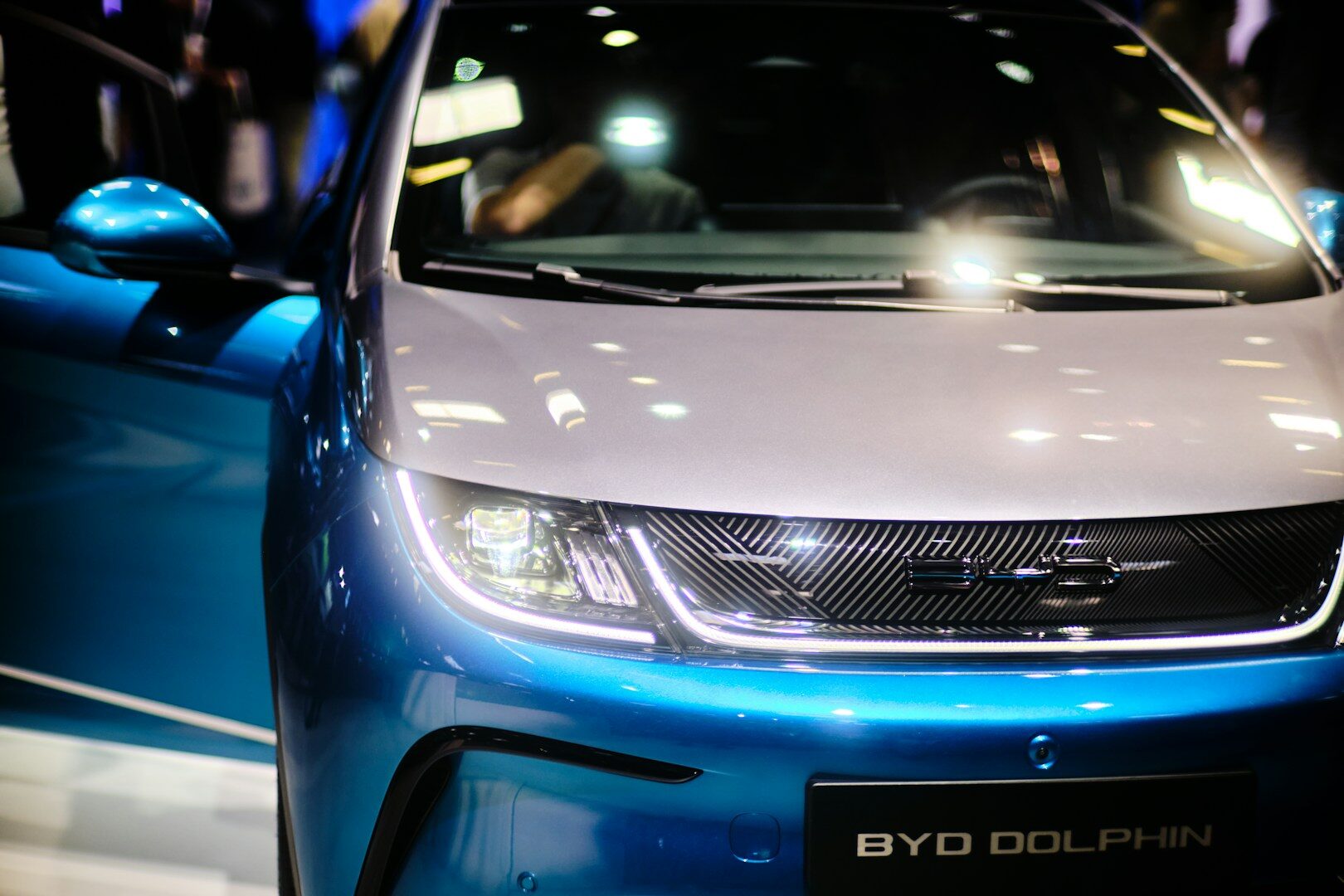
BYD wants the world to read this week’s earnings as an export success story. Look past the headline number, though, at the two figures that actually moved, and a different story shows up: a company that got tired of fighting the price war it started, and decided that making less money on fewer cars was better than the alternative.
BYD’s second-quarter net income climbed 30 percent year over year to 8.2 billion yuan, about $1.2 billion, according to figures derived from the first-half results the company filed with Hong Kong regulators on August 28. That’s the first quarterly profit increase in five quarters, snapping a stretch of declines that had lasted more than a year. Revenue for the same quarter did the opposite, slipping about 3 percent to 194.6 billion yuan, a decline nobody was projecting. The profit figure landed slightly above the average analyst estimate anyway.
The Math That Doesn’t Add Up
Sit with that pairing for a second. Profit up almost a third. Revenue down. That is not what a boom is supposed to look like on a spreadsheet. A company selling more cars into more countries is supposed to see both numbers climb together, or at least move in the same direction. BYD’s didn’t, and the gap between those two lines is the real headline here, not the word “exports.”
The only way profit rises while revenue falls is if the mix of what’s being sold changed for the better, or if the unprofitable stuff quietly stopped selling. Both look true here. BYD spent the better part of three years undercutting nearly every competitor in China on price, a war it did more than anyone else to start. That war made BYD the biggest EV brand on the planet. It also buried the company in low-margin volume. This quarter looks like BYD finally letting some of that volume go, and leaning on export orders and pricier domestic trims to fill the gap instead. Fewer units, better math.
Fewer Cars, Better Math
As The Auto Wire reported after BYD’s July sales came in, the company’s cumulative deliveries were still down more than 10 percent year-to-date even as commercial vans and trucks grew by triple digits. That split matters. Passenger cars are the low-margin battlefield where BYD cut its own throat first. Exports and commercial fleets are where the money currently lives.
BYD’s Own Paperwork Already Gave This Away
Here’s the detail almost nobody outside Hong Kong’s exchange filings will mention: unlike most global automakers, which report sales quarterly or only at earnings season, BYD voluntarily discloses its production and sales volume to regulators every single month. That habit has been quietly broadcasting the domestic slowdown in real time all year, long before Friday’s results made it official. Anyone actually reading those monthly filings watched this coming from a long way off. Friday’s earnings didn’t reveal a turnaround so much as confirm one BYD had already been documenting about itself, one filing at a time.
The Price War Didn’t End. It Just Changed Weapons
That’s also why the price war at home has started looking less like discounting and more like set dressing. As The Auto Wire covered, BYD and its rivals have been bolting karaoke machines and projector headlights onto new models instead of cutting sticker prices further, because another round of price cuts is close to financial suicide in a market this saturated. Gadgets are cheap to add. Margin is not easy to win back once it’s gone. That’s a very different fight than the one BYD picked in the first place.
Exporting Is About to Get More Expensive
None of this makes the export side simple, either. As The Auto Wire has reported, China’s new-energy exports passed its gasoline exports for the first time back in June, a milestone that had more to do with a saturated home market than an irresistible product. Governments on the receiving end have noticed. The European Commission’s countervailing duties on Chinese-built EVs run as high as 35.3 percent depending on the manufacturer, and Brazil restored a 35 percent import duty on electric and hybrid vehicles in July. The old formula, build it in China and ship it wherever there’s demand, is getting more expensive with every tariff cycle, which is why so much of the recent export growth is arriving as local factories, joint ventures, and knocked-down kits assembled abroad instead of finished cars rolling off a boat.
That shift matters beyond the balance sheet. A car company leaning harder on pricier trims and overseas assembly is also a company whose parts supply, warranty support, and repair costs start looking different country by country instead of model by model. Buyers and insurers outside China are the ones who eventually feel that shift, long after the earnings call ends.
BYD will happily let the export line take the credit for this quarter, because “we’re conquering the world” makes a better headline than “we stopped racing our own competitors to the bottom.” But the number that should stick with you from this report isn’t the one that grew. It’s the one BYD finally let shrink.