
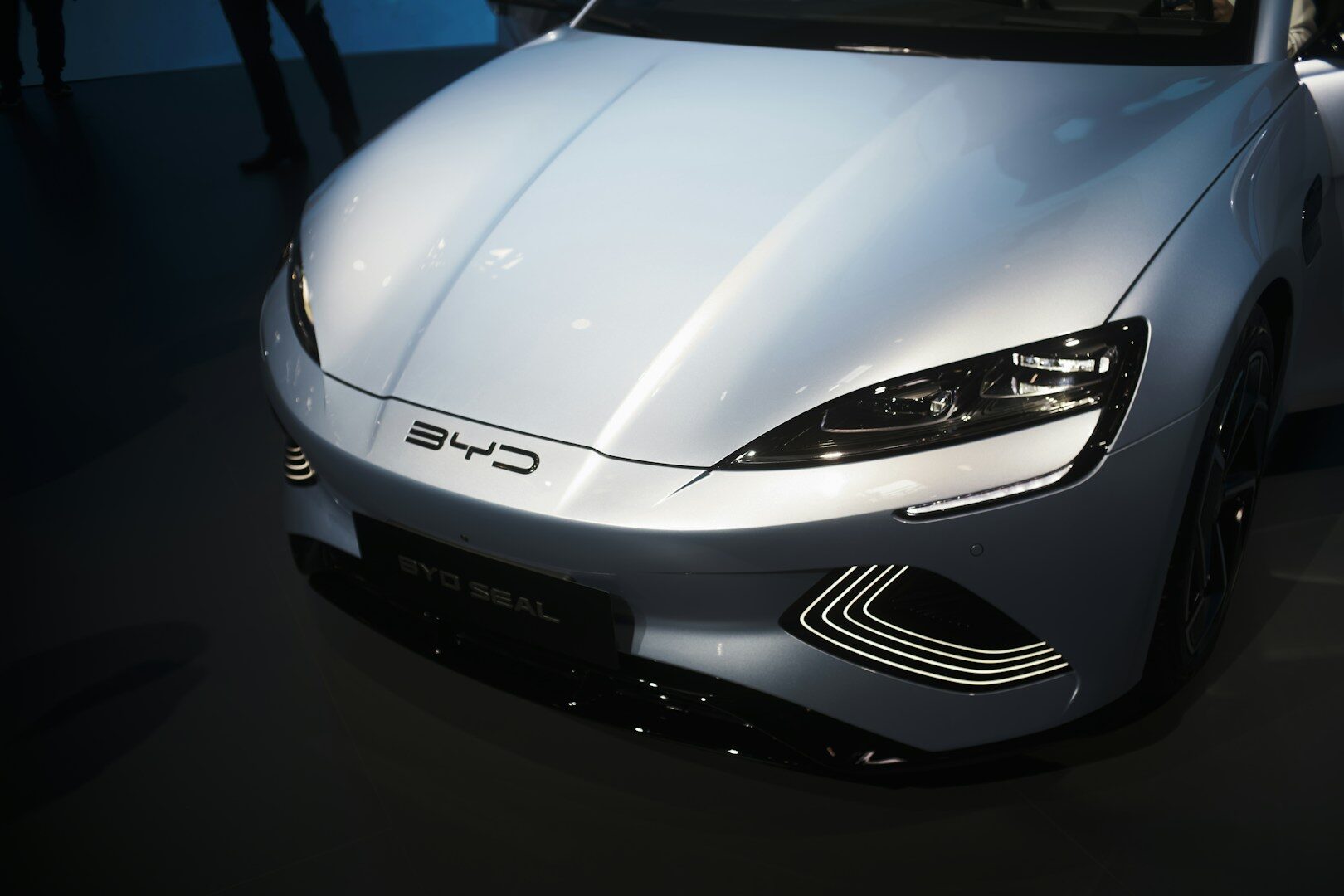
Hungary’s new government has decided it wants a look at the paperwork behind BYD’s Hungarian empire — and the timing has everything to do with who just got a business card from Shenzhen.
Prime Minister Péter Magyar told parliament on Monday that his government will examine every decision, negotiation and state commitment tied to BYD’s Hungarian investment made by Péter Szijjártó, who spent nearly twelve years as Orbán’s foreign and trade minister. Szijjártó resigned his parliamentary seat on July 15 and announced on Facebook that he’d taken an international executive post at BYD covering external relations and new business development. Magyar’s framing was that Szijjártó found work at the exact company whose Hungarian projects he’d greased with public money, diplomatic muscle and state-built infrastructure. Neither Szijjártó nor BYD has answered the conflict-of-interest charge.
Here’s the detail that makes this awkward rather than merely unseemly, and it comes from BYD itself. Look at the photo captions on the company’s own announcement of its European headquarters in May 2025. Standing behind the table: BYD chairman Wang Chuanfu, Viktor Orbán, and the governor of Guangdong. Seated, pens in hand, actually signing the thing: BYD executive vice president Stella Li and Hungary’s Minister of Foreign Affairs and Trade, Péter Szijjártó. The man whose signature is on the agreement now draws a paycheck from the party on the other side of it. That photo is going to appear in a lot of slide decks over the next year.
Related Articles
- Why Waymo’s Robotaxis Died in the Presidio — And What California Might Do About It
- California Thinks a Wedding Ring Makes You a Safer Driver
There’s a second structural wrinkle most coverage skips. HIPA, the Hungarian Investment Promotion Agency that brokered the deal, states plainly at the bottom of its own release that it was established in 2014 and is governed by the Ministry of Foreign Affairs and Trade. Szijjártó’s ministry. So the negotiating agency, the signing minister and the incentive-approving apparatus all reported up the same chain — which is precisely why an audit is straightforward to launch and miserable to defend.
What the money actually bought
HIPA’s release puts real numbers on the Budapest side: a European management centre in the Újbuda district projected to create around 2,000 high-value jobs, plus two R&D programmes — €105.1 million for an AI-based autonomous driving system that learns from real-time driving data, and €141 million for powertrain development aimed at efficiency and performance. Nearly €250 million combined, with BYD committing to register at least half of the resulting patents in Hungary and to work with a minimum of three Hungarian universities. A Strategic Cooperation Agreement between the government and BYD was signed alongside it.
That patent-registration clause is worth pausing on, because it’s the most substantive thing in the entire package. Assembly plants are portable. Patents filed by a Hungarian entity, with Hungarian co-inventors, are considerably less so. Whether BYD honors it in spirit or in the narrowest possible letter is the question any auditor should be asking, and it’s a far more interesting one than the headline subsidy figure.
The tariff math, which is the whole point
Strip away the politics and BYD’s Hungarian buildout is a tariff-engineering exercise, and a legal one. Under Regulation 2024/2754, in force from 30 October 2024, the EU imposed definitive countervailing duties on Chinese-built battery EVs for a five-year term. BYD’s rate is 17.0 percent, per the Commission’s own summary, stacked on top of the standard 10 percent MFN duty that applies to imported cars anyway. Geely got 18.8 percent, SAIC 35.3, Tesla’s Shanghai output 7.8 after requesting individual examination, non-cooperating firms 35.3.
Two nuances enthusiasts routinely get wrong. First, these are countervailing duties, not anti-dumping duties — they’re calibrated to offset the value of Chinese state subsidies, not to punish below-cost pricing. Different legal instrument, different burden of proof, different escape routes. An importer can request a refund by demonstrating its exporter’s subsidy margin is lower than the duty paid, and individual rates only apply if a properly signed commercial invoice accompanies the shipment. No invoice, highest rate.
Second, and more consequentially for what shows up in European showrooms: the measure covers vehicles propelled solely by one or more electric motors, including range-extender setups. Plug-in hybrids fall outside the product scope entirely. Read BYD’s European model page and the strategy writes itself — Seal 6 DM-i, Seal 6 DM-i Touring, Atto 2 DM-i, Sealion 5 DM-i, Seal U DM-i. That is not a coincidence of consumer demand. That is a product plan drawn around a legal definition.
Related Articles
- How Fake Bills of Sale Sank a $539K Mercedes and Corvette Export Deal in Tampa
- Honda Odyssey Airbag Petition: NHTSA Eyes 807,000 Older Minivans
A car built in Szeged sidesteps all of it, because it isn’t an import. There’s no domestic-content threshold to clear, no origin percentage to litigate — an EU-assembled vehicle is an EU vehicle. That’s the difference between a €25,000 supermini and a €30,000 one, and it’s why the Hungarian plant was always worth more to BYD than any subsidy Budapest could write a cheque for. The state money was gravy. The tariff shelter was the meal.
What it means if you’re buying one
Practically speaking, an owner’s position doesn’t change if the audit finds something. Subsidy clawbacks run between governments and companies; they don’t touch a consumer warranty, and EU type-approval isn’t retroactively voided because a minister took a job. Local assembly is genuinely good news for buyers: parts distribution shortens, right-hand and left-hand-drive variants get sorted regionally, and the Budapest centre’s stated remit includes vehicle certification and testing plus localised feature development — which in practice means European-market software calibration and, one hopes, driver assistance systems tuned for roads that aren’t in Shenzhen.
The real risk is slower and duller. Magyar said the review will extend to every subsidy, tax break, accelerated permit and environmental exemption granted to large multinationals under the previous government, and his government is weighing tighter rules on former officials moving into the private sector. Cooling-off periods for ministers are standard across most of the EU. Hungary is about to discover why.
If the audit stalls Szeged’s ramp-up, the practical consequence for European buyers is fewer sub-€25,000 electric cars on the market in 2027 than the forecasts assume. Whatever you think of how it got built, that factory was going to put competitive pressure on a segment Europe’s incumbents have spent a decade insisting can’t be made profitably. It still might. The paperwork just got interesting.