
Dakkota Integrated Systems’ plant on Van Dyke Street in Detroit is scheduled to lay off its 397 workers on Dec. 31, the largest of 11 auto-related closures and layoffs now posted on Michigan’s list of WARN notices. I added up those 11 filings. They cover 1,778 jobs, with layoff dates running from mid-August 2026 to mid-March 2027, and 1,428 of those jobs belong to companies other than General Motors, mostly parts makers.
Read side by side, the notices show how a decision made at an automaker’s sourcing desk turns into a closure at a plant that was built to serve one program, and how the federal law behind these filings decides what workers and the public get told, and when.
The 11 Michigan filings, as the state posted them
The Michigan Department of Labor and Economic Opportunity posts each notice in a standard template with the employer’s stated action, reason, layoff date, and job count. The state says the postings reflect what employers submitted. Here is what the auto-related entries say, in the employers’ own categories.
| Employer | Site | Action as filed | Reason as filed | Layoff date | Jobs |
|---|---|---|---|---|---|
| Dakkota Integrated Systems | Detroit (Van Dyke St.) | Closure | Reduced business/work | Dec. 31, 2026 | 397 |
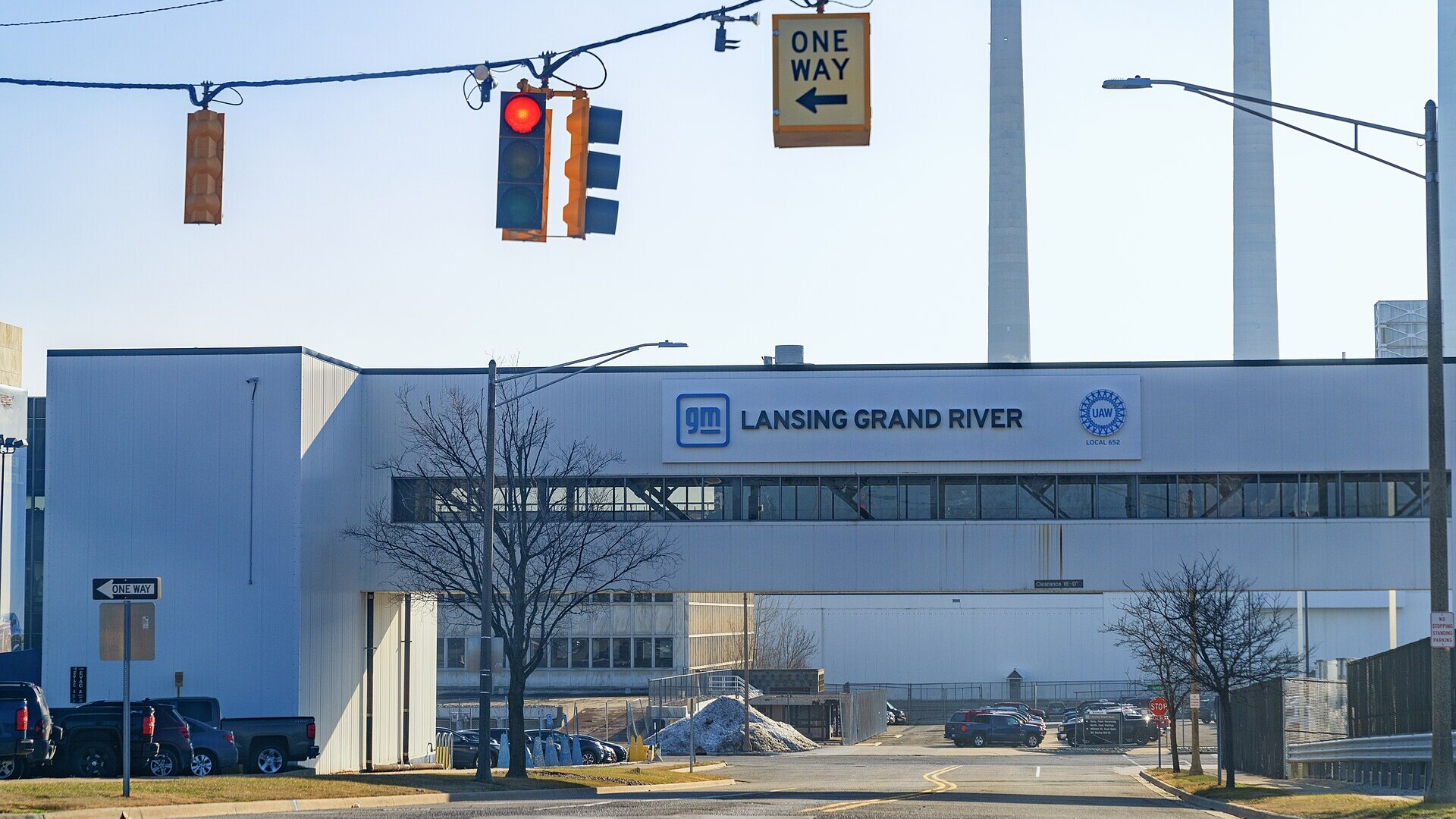
| General Motors | Lansing Grand River Assembly/Stamping and Lansing Regional Stamping | Mass layoff | Not specified | Jan. 14, 2027 | 350 |
| Detroit Chassis | Detroit (Lynch Rd.) | Temporary layoff | Reduction in work | Dec. 31, 2026 | 175 |
| J.G. Kern Enterprise | Sterling Heights | Permanent layoff | Unforeseeable business circumstances | Aug. 17, 2026 | 156 |
| Inalfa Roof Systems | Auburn Hills (two sites) | Office layoff and site closure | Not stated beyond the action | Dec. 14, 2026 | 142 |
| AUTOKINITON (Euclid Manufacturing Co.) | Detroit (Euclid Ave.) | Facility closure | Not reported | Jan. 18, 2027 (first layoffs) | 136 |
| Woodbridge Group | Lansing (Pierson Hwy.) | Temporary layoff | Loss of contract | Dec. 18, 2026 | 100 |
| ADAC Automotive | Saranac | Facility closure | Not specified | Dec. 18, 2026 to June 30, 2027 | 98 |
| Rugged Liner | Owosso (two sites) | Company closure | Not specified | March 19, 2027 | 90 |
| Dakkota Integrated Systems | Grove Road, near Lansing | Closure | Not available | Dec. 31, 2026 | 67 |
| Lear Corp. | Sterling Heights (Dobry Dr.) | Facility closure | Not reported | Nov. 9, 2026 | 67 |
Seven of the 11 entries give no business reason, listing it as “not specified,” “not reported” or “not available,” or simply restating the action. That is legal. The WARN Act requires notice of a closing or layoff, not an explanation of the business decision behind it, so the most useful part of many filings is the date and the head count.
A dash-panel plant has nowhere else to sell its dash panels
The Dakkota building on the former Kettering High School site went up as a companion to the Stellantis assembly plants a few minutes away. When the project was announced in July 2019, the company then called FCA issued a statement praising Dakkota for joining it in “putting Detroiters first.” The plant built instrument panels for the Jeep Grand Cherokee and Dodge Durango, as The Auto Wire reported in October. The state posting gives the reason for the closure only as reduced business.
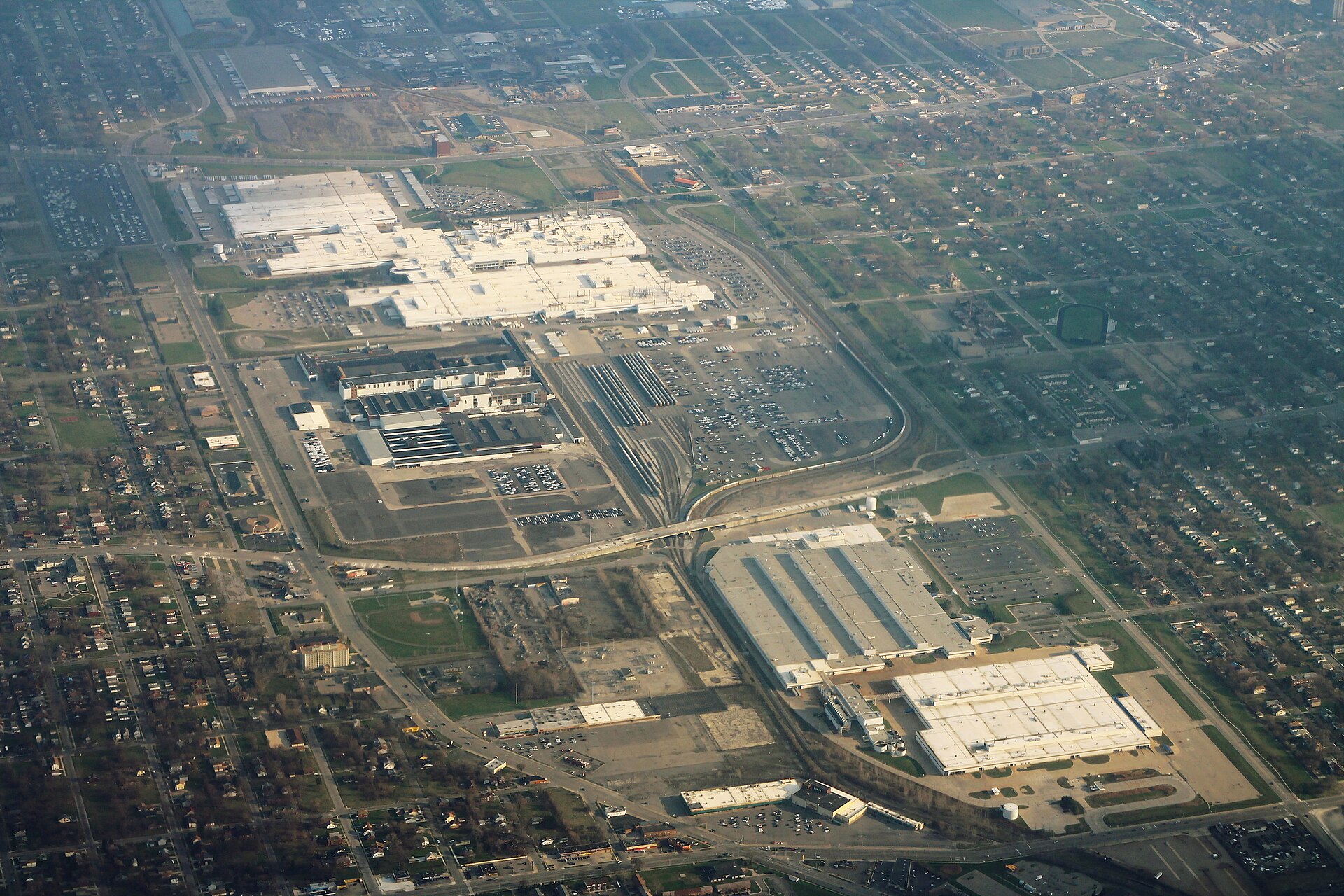
Plants like this one work on a different clock from a typical parts factory. An instrument panel is a bulky, vehicle-specific module with the wiring, vents, airbag housing and trim for one build configuration. Instead of shipping pallets of identical parts, a module plant assembles panels to the assembly line’s build order and delivers them in the sequence the bodies will arrive, often several times an hour. That is why these plants sit next door to their customer, and why they are so exposed. The tooling, the floor layout and the delivery routine are all set up for one model at one assembly plant. When the contract moves, there is rarely a second customer nearby who needs the same panel, so the building and its workforce lose their purpose at the same moment.
Dakkota also filed a separate notice for a 67-worker site on Grove Road near Lansing, closing the same day, with the reason listed as “not available.” That puts Dakkota workers in two counties, Wayne and Clinton, on the same last day.
What ‘unforeseeable business circumstances’ means on a WARN form
J.G. Kern Enterprise in Sterling Heights filed a permanent layoff of 156 workers effective Aug. 17 and checked a reason that comes straight out of federal regulation: unforeseeable business circumstances. The phrase is one of the three exceptions that let an employer give less than the standard 60 days of notice. Under the Labor Department’s rule, 20 CFR 639.9, the exception covers sudden, dramatic events outside the employer’s control, and the first example the regulation lists is “a principal client’s sudden and unexpected termination of a major contract with the employer.”
Kern’s notice does not name a customer, and I could not confirm one from a primary source, so I won’t. For a supplier with one or two big accounts, a lost contract is the event the law was written around, and it is also the one most likely to leave workers with less than two months of warning. The rule expects the employer to give as much notice as it can and to judge foreseeability the way a reasonable business in its market would, a standard that tends to get tested after the fact, not before.
Why two of the notices say ‘temporary’
Detroit Chassis filed a temporary layoff of 175 people at its Lynch Road site in Detroit starting Dec. 31. Woodbridge Group filed a temporary layoff of 100 at its plant on Pierson Highway in Eaton County, starting Dec. 18, citing a lost contract. Woodbridge’s notice does not name the customer, and nothing in the filing ties it to GM’s work in Lansing.
A company filing a WARN notice for a layoff it calls temporary looks contradictory until you read the definitions. Under 20 CFR 639.3, a layoff counts as an “employment loss” only if it runs longer than six months. A short layoff with a firm recall date does not trigger the law at all. The trouble is that a supplier waiting on a customer’s schedule rarely knows when recall will come, and if a layoff that began as short stretches past six months, it becomes an employment loss after the fact. Filing at the start removes that risk for the employer and gives workers a date on paper. For the people involved, the useful dates are June 18, 2027 for Woodbridge and June 30, 2027 for Detroit Chassis, the points at which these layoffs would cross the six-month line.
GM’s Lansing changeover and the suppliers around it
GM’s notice is the only automaker filing in the group: 350 workers at Lansing Grand River Assembly/Stamping on Townsend Street and Lansing Regional Stamping on Millett Highway, effective Jan. 14, 2027. The reason line says “not specified,” but the timing matches a product changeover GM has described in public. In July 2024, GM said it would use a $500 million Department of Energy grant and its own investment to prepare Lansing Grand River for electric vehicles. In October 2025, the company told WKAR that the CT5 would continue as “a next-generation ICE vehicle” built at the plant, and the station reported that the current CT5 was due to retire late this year.

That is the same plant that builds the CT5-V Blackwing, and the same pattern GM is following in Kansas, where it is retooling Fairfax for the gas Equinox with a layoff of undefined length. An automaker retooling between generations keeps the building, the investment and, eventually, the jobs. GM’s hourly workers are covered by layoff provisions in the UAW-GM national agreement while they wait. A supplier whose contract ended with the old car gets none of that. Its workers have whatever their own employer’s contract provides, if they have one, plus the state benefit.
Lear’s closure in the same quarter as its automation pitch
Lear’s notice covers 67 jobs at a Sterling Heights facility on Dobry Drive, effective Nov. 9, with no reason given. Ten days earlier, on Oct. 30, the seat and electrical supplier reported third-quarter results in which net income attributable to Lear rose to $136.6 million from $108.2 million a year earlier. Chief executive Ray Scott said in the release that Lear’s new complete-seat facility in Orion, Michigan, “is on track to launch early next year.” On the earnings call that day, Lear said it expects its in-house automation and digital manufacturing systems to cut conversion cost requirements by 10% to 15%, and described Orion as the model for future seat plants.
Conversion cost is the money a supplier spends turning purchased parts into a finished product: mostly labor, plus the plant’s overhead. In a seat, the foam, frames, trim covers and motors are bought in, and the customer usually knows roughly what they cost. Conversion is the slice where a supplier can make or lose money on a fixed-price contract, and it is mostly people. Lear’s filing does not connect the Sterling Heights closure to the Orion plant, and I am not connecting them either. But a seating supplier announcing a 10% to 15% target for that cost bucket is telling its investors where future margin will come from, and assembly labor is the largest piece of it.
Closures in Auburn Hills, Saranac, Detroit and Owosso
Inalfa Roof Systems filed a permanent layoff at its office on Opdyke Road and a closure of its plant on Pacific Drive, both in Auburn Hills, affecting 142 people as of Dec. 14. The Dutch-founded sunroof maker has been owned since 2011 by Beijing Hainachuan Automotive Parts, a parts subsidiary of BAIC Group, according to China Daily’s account of the deal. The notice gives no reason, and any link to ownership or trade policy would be speculation.
ADAC Automotive is closing its plant on Riverside Drive in Saranac, in Ionia County, with 98 layoffs spread from Dec. 18 to June 30, 2027. AUTOKINITON filed a closure of the Euclid Manufacturing Co. site on Euclid Avenue in Detroit, with 136 jobs and first layoffs on Jan. 18. Rugged Liner is closing two Owosso sites and 90 jobs on March 19, 2027. None of the three states a reason.
What laid-off supplier workers can draw from the state
Michigan’s maximum weekly unemployment benefit is $530 for claims filed in 2026 and rises to $614 for claims filed on or after Jan. 1, 2027, under the schedule set by Public Act 173 of 2024. Benefits run up to 26 weeks, and the state’s earlier guidance on the 2026 increase said claims filed before the new year would keep their approved rate. Not everyone gets the maximum; the amount depends on wage history. Since July, claimants have also had to complete three work-search activities a week.
That calendar lands right on top of these notices. Dakkota’s two plants and Detroit Chassis lay off on Dec. 31, Woodbridge and ADAC begin on Dec. 18, and Inalfa on Dec. 14. A worker whose last day falls in late December should ask the Unemployment Insurance Agency directly how the filing date affects the weekly rate before filing, because the difference at the top of the scale is $84 a week, or $2,184 over a full 26-week claim.
Dates to watch in 2027
Mid-June is when the Woodbridge and Detroit Chassis layoffs would pass six months; recall notices before then, or amended WARN filings after, will show whether “temporary” held up. None of the GM statements I reviewed gives a production start date for the next CT5, and the supplier awards for that car will decide which Lansing-area plants have work when Grand River restarts. And the Kettering building, put up for one customer’s dash panels, will need a new tenant whose product fits a plant laid out for sequenced modules.
If you work at one of these plants, how much warning did you actually get? Did the WARN notice tell you anything the break room hadn’t already?