
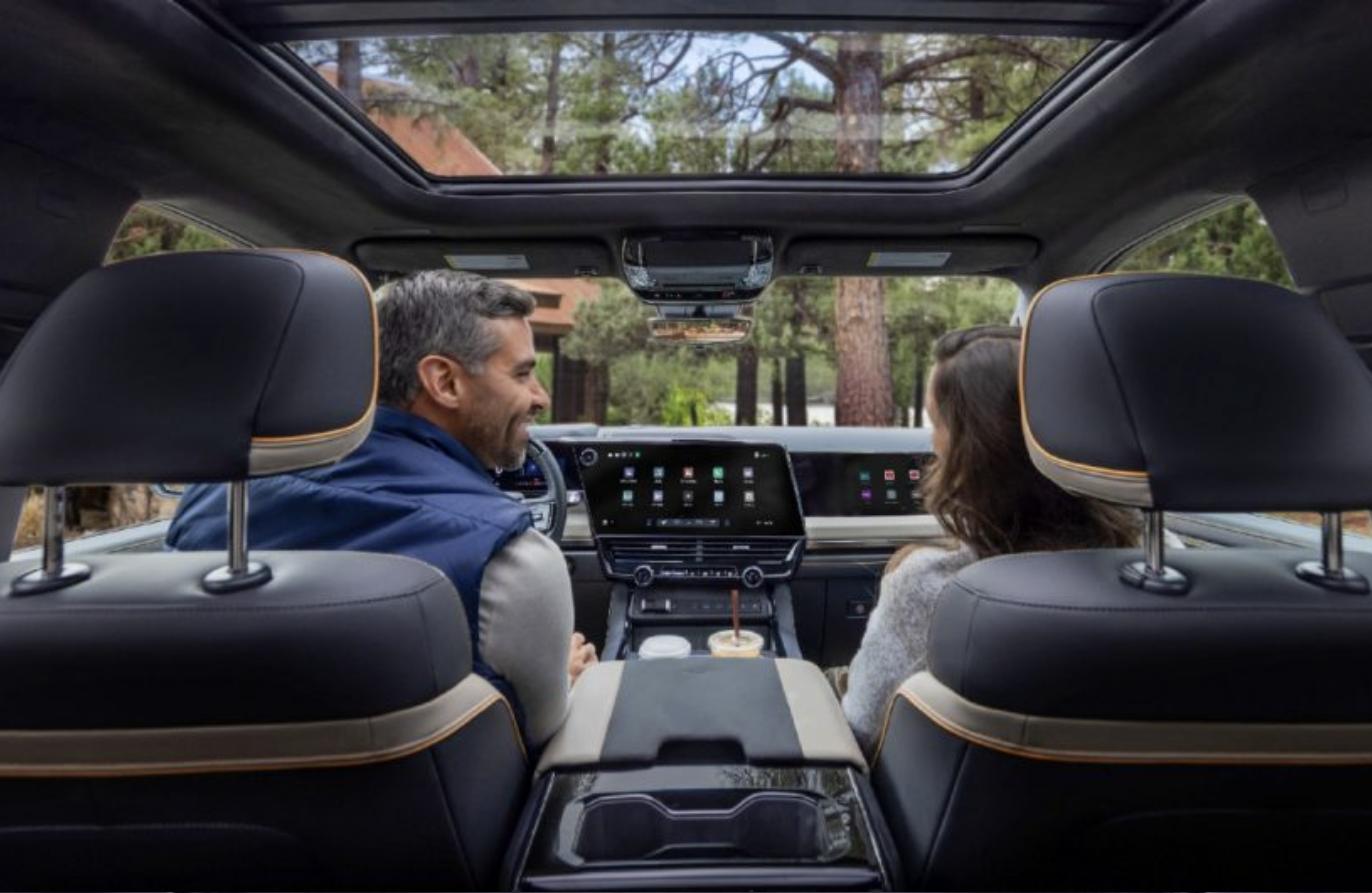
General Motors introduced a new cabin interface today, and the spec sheet is the least interesting thing about it. The GM new user interface does not debut in a Cadillac. It does not debut in an EV. It debuts in the 2027 Chevrolet Silverado and the 2027 GMC Sierra: gas and diesel pickups, one of which can be ordered with a naturally aspirated 6.6-liter V8.
The address is the story. The graphics are just what it came wrapped in.
What GM put on the screen
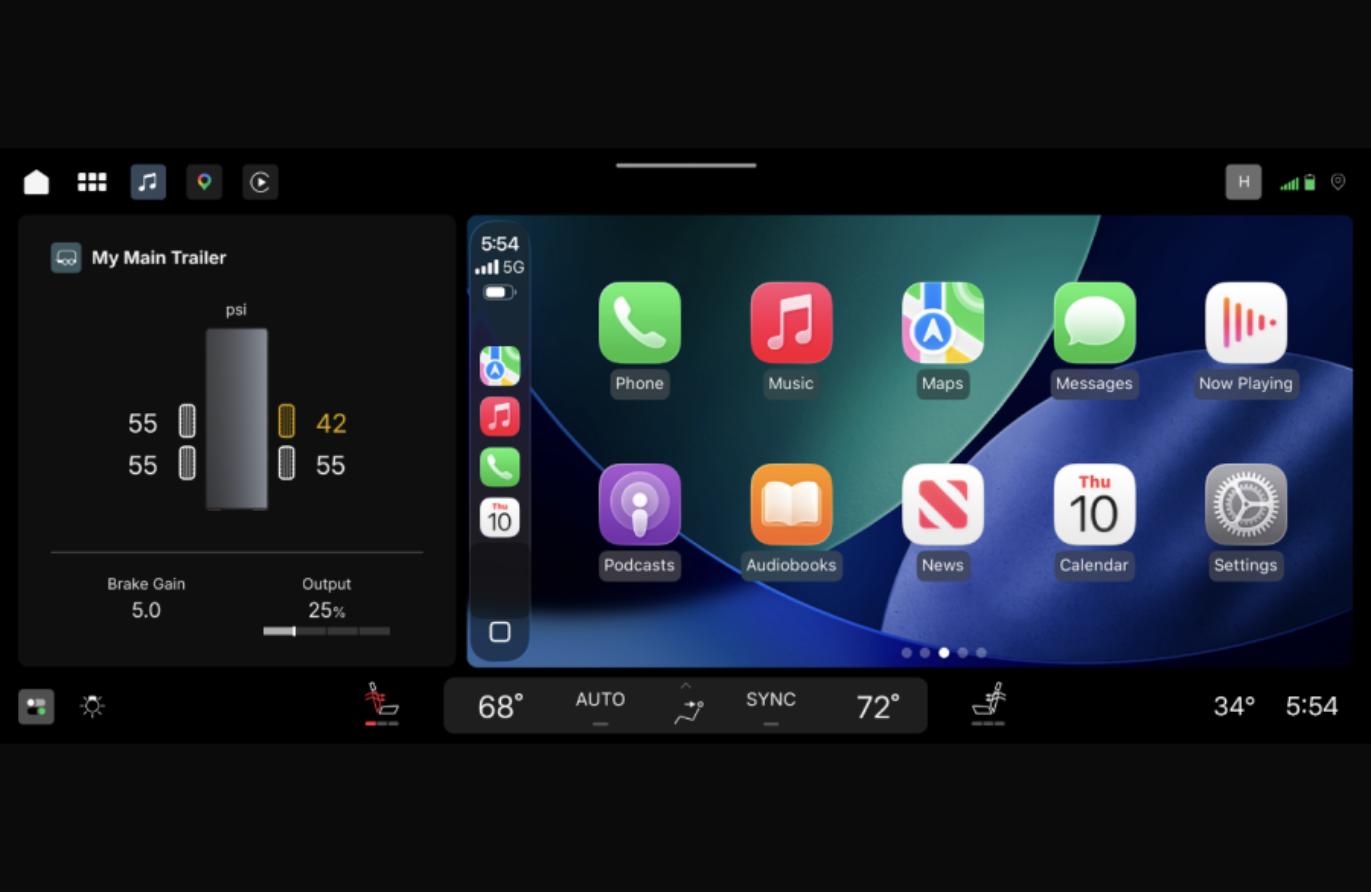
In its own announcement, GM calls the system a single scalable foundation across electric, gas and diesel-powered vehicles, arriving on the light-duty trucks before expanding across the broader portfolio. The home screen defaults to a split layout: a live map on one side, a card on the other for trailering data, fuel economy or media. The instrument cluster rearranges itself depending on what the truck is doing, with distinct views for towing, off-road and Super Cruise. Incoming calls shrink to a timer instead of swallowing the display. There is a Hitch View camera, underbody camera views, and a trailer light check you can run from your phone while standing behind the trailer instead of walking back and forth to the cab.
Buyer’s guide: Best Truck-Bed Accessories for Pickup Owners
And Apple CarPlay and Android Auto sit right in the middle of it, in a large card next to GM’s own trailering app.
Follow the volume
Software does not behave like a stamping die. A die gets cheaper per part the longer it runs. Software costs the same whether it ships on thirty thousand vehicles or 1.3 million. The engineering bill for an interface like this one, plus the validation, the over-the-air plumbing, the app partnerships and the security work, is spent before a single truck is built. The only variable left is how many vehicles you can spread it across.
Which is why it went in the trucks.
GM closed 2025 with 2.85 million U.S. sales, up 6 percent, a sixth consecutive year as the country’s full-size pickup leader, and the best combined Silverado and Sierra sales in twenty years. Nothing else in the portfolio is close. You write software once and sell it as many times as you can build it into something, and in GM’s lineup, only one thing gets built a million times.
The face is arriving a year ahead of the brain
Here is the part that did not make today’s release. Last October, GM said its centralized computing platform, the one with roughly ten times the over-the-air update capacity, a thousand times the bandwidth and up to 35 times the AI performance, debuts in 2028 on the Cadillac Escalade IQ.
The 2027 trucks are not getting that computer. They are getting the interface that is eventually supposed to run on it.
Read GM’s phrasing again. A single scalable foundation across electric, gas and diesel is not marketing filler. It is a design constraint said out loud. This interface had to be built portable, because it has to live on the electrical architecture GM ships today and then survive a hardware transplant a year or two later. That is genuine engineering discipline. It also raises a fair question for anyone signing paperwork in December: when GM promises the experience will keep evolving through over-the-air updates, how far does that promise stretch on hardware that is about to be a generation behind?
CarPlay came back where GM cannot afford to lose the argument
Chevrolet’s Equinox EV page sells Google built-in and the Gemini assistant. So does the brand’s Google built-in page. Neither one mentions Apple CarPlay or Android Auto anywhere.
Today’s truck announcement leads with both, by name, with screenshots.
Draw the line yourself. GM is willing to argue that native software beats phone projection, but it is only willing to have that argument in the EV showroom. In the truck showroom, where a buyer replaces the same nameplate every few years and will walk straight over to a Ram over a phone that will not pair, projection is not a philosophical position. It is a deal-breaker. The same fight looks very different in vehicles bought for status, whether that is CarPlay Ultra’s luxury debut or how Tesla has handled the same question. Trucks were never going to be the place GM tested a customer’s patience.
That center screen is federal safety equipment
Here is something almost nobody thinks about at the dealership. The 16.3-inch display in the middle of the dash is not just a convenience item. Under Federal Motor Vehicle Safety Standard No. 111, the rearview image has to appear within 2.0 seconds of the start of a backing event, and it has to stay visible until the driver changes the view or shifts out of reverse. That screen is regulated equipment. Miss the two seconds and the vehicle does not comply with a federal safety standard.
This is not hypothetical. In 2024, Stellantis filed a recall covering 627,758 vehicles because radio software could keep the rearview camera signal from reaching the media screen. No broken camera. No chafed wire. Software. The remedy went out over the air, which is the modern half of the story, but the legal classification never changed. It was a safety defect.
Every function GM moves onto that display is one more process competing with a federally mandated one. We have watched this pattern repeat, from a 900,000-vehicle backup camera recall to GM’s own over-the-air update that dealers had to undo by hand.
The polarized passenger screen is a legal answer, not a party trick
GM’s front passenger display streams Disney+, Hulu, YouTube, Tubi, SiriusXM and more, and GM says polarized screen technology keeps that content visible only to the passenger while the vehicle is in motion.
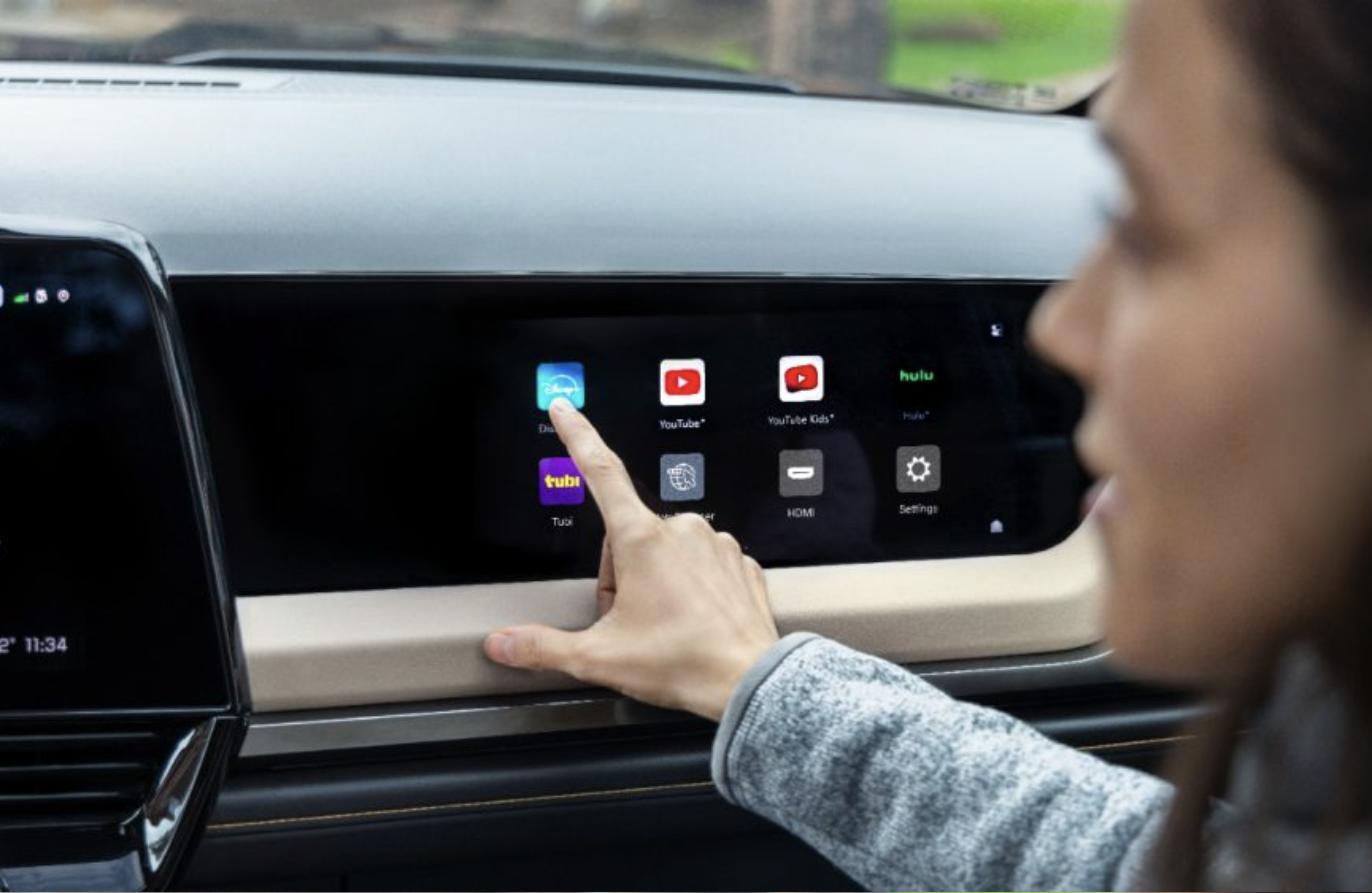
Now the part nobody says out loud. NHTSA’s Visual-Manual Driver Distraction Guidelines recommend that automakers lock out video unrelated to driving while a vehicle is moving, along with reading text and manual text entry. They also set the benchmark most in-car interfaces are quietly designed against: a task should be completable in glances of two seconds or less, totaling no more than 12 seconds away from the road.
Those guidelines are voluntary. NHTSA says so in the document itself. They do not have the force and effect of law, and no federal rule stops a manufacturer from putting a movie on your dashboard.
So look at what GM did instead of arguing about software lockouts. It solved the problem with optics. Polarization does not ask the driver to behave. It removes the driver’s ability to see the screen at all. Compliance moved from policy to physics, which is the only version of this argument that survives a deposition.
Sixty inches of glass has a second act
GM says a Sierra Denali Ultimate carries more than 60 inches of combined display: a 16.3-inch center screen, an 11.5-inch passenger screen, a 12.2-inch driver display, a 15-inch head-up display and an 8.5-inch camera mirror. On the 2027 Silverado, the 16.3-inch and 12.2-inch screens are standard across the lineup, work truck included.
Screens are not switches. A rocker switch fails on its own and gets replaced on its own. A display fails as an assembly. It is also worth stealing, which is why we have reported on an organized trade in truck touchscreens, including four stolen Ram units recovered from a single Detroit house. Sixty inches of glass in a vehicle that parks outdoors overnight is a different comprehensive-claims conversation than a truck with a radio and three knobs, and it will show up on insurance ledgers long before it shows up in a review.
The interface is also the storefront
Read the footnotes. Super Cruise requires an active plan or trial. Chevrolet includes three years of OnStar One with the new Silverado, and a subscription after that. GM told investors it was aiming at $20 billion to $25 billion in annual software and services revenue by the end of the decade, across 30 million connected vehicles.
A split home screen with a permanent card slot is not only a usability decision. It is retail floor space. We have covered GM’s subscription push, New York’s move against in-car subscription pricing, and what happened when owners started seeing pop-ups on the dash. The truck that pulls your trailer is now also a device with a billing relationship, and it arrives with a data relationship attached.
What to remember
Forget the resolution, the animations and the 3D rendering of a lane you are already driving in. The durable fact is simpler. GM did not put its most ambitious software in its most advanced vehicle. It put it in its most profitable one, a year before the computer that software was written for exists, with the phone integration its EV buyers do not get.
The pickup is not the last stop on GM’s software roadmap. It is the reason there is a roadmap to fund.
So here is the argument worth having. If the screen now holds your switches, your backup camera, your driver assistance and your subscriptions, how many years of software support should an automaker owe you before that truck becomes a used vehicle with a dead dashboard? Five years? Ten? The life of the powertrain? Put a number on it, and say why.
Would new software make you more excited about a pickup than an EV? Share your take in the comments.