
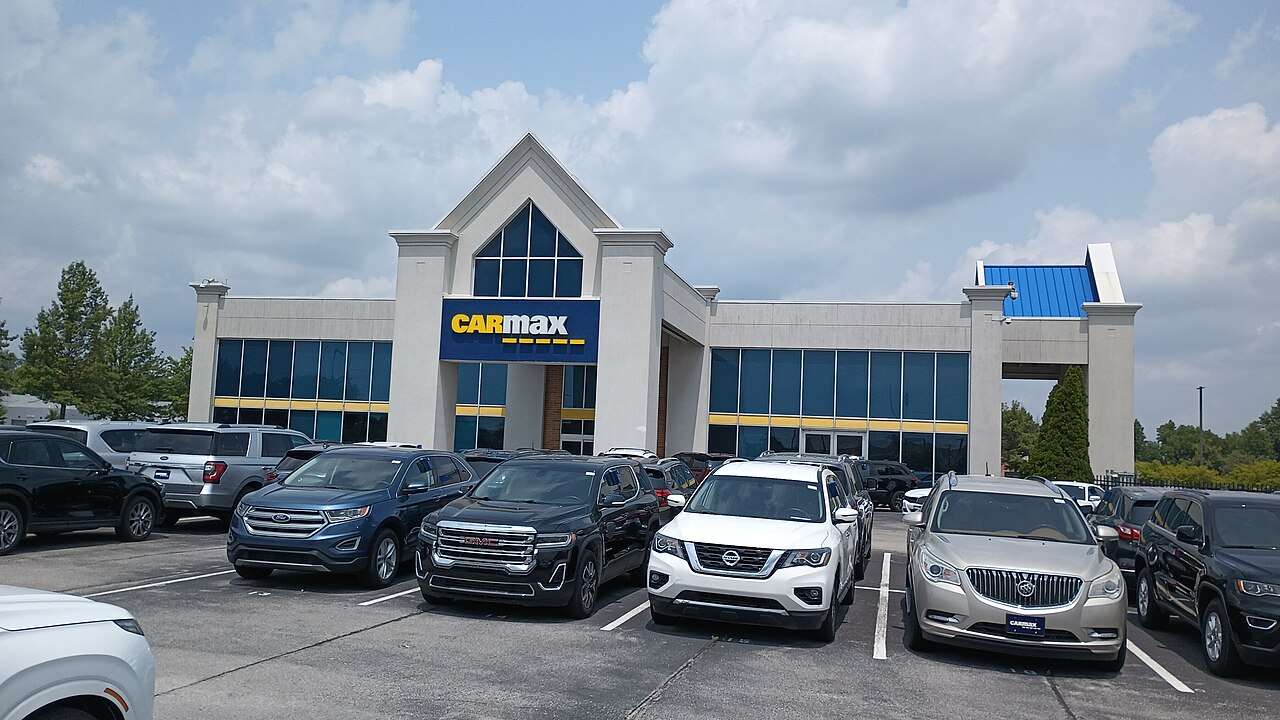
The most important CarMax number this year is not 145. It is 230.
That is how many dollars of gross profit CarMax gave up on every used car it retailed in its most recent quarter compared with a year earlier. The company’s first-quarter fiscal 2027 results put gross profit per retail used unit at $2,177, down $230 from the prior year’s all-time record, and CarMax said plainly why: “pricing actions implemented to drive an improved sales trend.”
Last week, roughly 145 corporate employees learned their jobs were gone. It is the third workforce reduction at the nation’s largest used-car retailer in about ten months.
On its own, the layoff looks like a big company trimming staff in a soft market. Next to the margin number, it looks like CarMax cutting its headquarters to pay for cheaper cars.
What CarMax actually did
In a statement provided to Richmond BizSense, the company said it had “made the difficult decision to reduce our corporate office staffing by approximately 145 associates to support our strategic priorities and operate with a leaner corporate workforce.”
About 60 of those positions were in the Richmond, Virginia, area, where CarMax is headquartered, according to that report, with technology roles hit hardest and cuts also reaching human resources, product, accounting, marketing and the company’s Edmunds subsidiary in California. The same report noted about 70 corporate openings still posted. So CarMax is reshaping which skills it pays for at headquarters, not just turning out the lights.
Cuts of this size often never show up in a state’s public layoff database. The federal WARN Act generally requires advance notice only when a mass layoff hits a single site hard enough to cross specific thresholds, and a reduction spread across a headquarters campus, satellite offices and several states can stay under them. As of this writing, the Virginia Works WARN database lists no CarMax filing. A quiet round is not the same as a small one.
Three rounds, one direction
Taken in order:
November 2025. CarMax replaced CEO Bill Nash, warned investors that comparable-store used unit sales would fall 8% to 12% for the quarter, and booked non-recurring expenses tied to the leadership change and to “Customer Experience Center workforce reductions.” Those CECs are the phone and online sales teams that guide shoppers who start their purchase away from a store. In its third-quarter report, the company called that CEC cut its “first significant step” toward at least $150 million in cost savings.
Early 2026. The fourth-quarter results included $33.9 million in restructuring charges covering compensation, benefits and occupancy costs, which is to say people and the offices they sat in. Local reporting put that round at about 230 corporate employees. In the same release, CarMax raised its savings goal to $200 million in annualized “exit rate” savings by the end of fiscal 2027, which closes at the end of February 2027.
September 2026. The 145 corporate positions announced last week.
The cumulative effect is visible in CarMax’s own annual reports, and it is bigger than the headlines suggest. According to the company’s fiscal 2025 10-K, CarMax employed 30,048 full- and part-time associates at the end of February 2025. Its fiscal 2026 10-K counted 27,796 a year later. That is 2,252 fewer people, roughly 7.5% of the workforce, and it does not include this month’s cuts.
The breakdown is more striking. CEC sales associates fell from 1,510 to 879, a drop of about 42% in a single year. In-store sales associates went from 3,537 to 2,915. A retailer whose stated goal is to sell more cars is operating with far fewer people whose job title is selling them.
The math CarMax never spells out
A used-car retailer is a spread business. It buys a vehicle, spends money reconditioning and moving it, and sells it for more. Whatever is left after overhead is profit. When the spread narrows, there are only two ways to protect earnings: sell a lot more cars, or spend a lot less running the company.
CarMax chose to narrow the spread on purpose.
In the first quarter, CarMax retailed 230,293 used vehicles. Multiply that by the $230 in per-unit gross profit it gave back and you get roughly $53 million in a single quarter. Hold that pace for a year and it lands a little north of $200 million.
That is almost exactly the size of the company’s cost-savings target.
No CarMax filing draws a line between those two figures, and the unit math is ours, not the company’s. But the first-quarter release shows the trade happening in real time: selling, general and administrative expenses fell $24.5 million, or 3.7%, to $635.2 million, “primarily driven by lower compensation and benefits costs.” Retail unit sales, meanwhile, rose only slightly, and comparable-store used unit sales slipped 0.8%. Headcount reductions are covering a meaningful slice of the margin CarMax handed to shoppers, while the payoff in volume has not yet shown up.
Every dollar CarMax pulls out of its headquarters is a dollar it can leave off the windshield.
That also explains why the cuts keep coming even as revenue grows. Net revenues rose 6.2% to $8.0 billion last quarter, helped by average retail selling prices that climbed about $1,200 per vehicle. Higher prices across the market lift revenue without lifting profit, and they do nothing to fix a thin spread. The same pressure is showing up across the resale world, from softening used-car values to Copart’s $1.9 billion bet on ACV’s inspection data.
Why the pressure became urgent
One line in the fiscal 2026 annual report shows how far investor confidence had fallen. In the fourth quarter, CarMax wrote off $141.3 million in goodwill, the entire amount it had booked from its 2021 acquisition of Edmunds and later assigned to the unit that runs its stores. The company attributed the non-cash charge to “a significant decline in market capitalization” from its falling share price, pressured results and a weaker forecast.
When CarMax tested what its core store business was worth, the answer came back lower than the value carried on its books. For a company whose brand was built on being the safe, predictable place to buy a used car, that is a remarkable admission.
The board’s response was to bring in an outsider. Keith Barr, the former InterContinental Hotels Group chief executive, took over on March 16, 2026. By June he had laid out four strategic pillars. The fourth is titled, with unusual bluntness, “Run Lean,” and it calls for lower reconditioning costs through technology and operational efficiency, a better logistics network and continued SG&A reductions. The first pillar promises to “price competitively across demand cycles.” The two are designed to work together, and last week’s layoffs are the hinge between them.
CarMax is hardly alone in treating white-collar headcount as the lever of last resort. JLR cut 300 office jobs this summer for similar breakeven reasons, and online marketplaces such as Cars.com are wringing records out of shrinking traffic.
Who wins, who loses
Shoppers are the intended winners. CarMax’s no-haggle price is set centrally, and a leaner corporate structure gives the company room to keep that number sharp without sacrificing earnings. If the strategy works, buyers comparing a CarMax sticker with a franchise dealer’s used inventory should see the gap narrow.
Sellers are a more mixed story. CarMax bought 322,000 vehicles from consumers and dealers in the first quarter, down 4.4% from a year earlier. A company squeezing its own margin has little reason to overpay for trade-ins.
The risk sits with CarMax itself, and the company has already written it down. Its own annual report warns that cost-reduction initiatives and workforce reductions “may affect our ability to attract and retain qualified personnel,” can result in lost institutional knowledge, and may cause attrition beyond the intended reduction. Cutting deeply into technology staff while another pillar of the strategy promises a smoother connection between digital shopping and the store is a tension worth watching. So is the shrinking CEC team, which is often the first human voice an online shopper reaches, including when something goes wrong, such as a title or VIN problem that surfaces after the sale.
The two numbers to watch
CarMax has promised a Strategic Update in late fall with more detail on its initiatives and milestones. When it comes, ignore the layoff count and watch two numbers side by side: gross profit per retail unit and SG&A per unit sold. If margin stabilizes while overhead keeps falling, the plan is working and the cuts should slow. If margin keeps sliding faster than costs come out, expect a fourth round.
The price of a used car has never been only about the car. At CarMax right now, part of it is being paid for by people who will never set foot on the lot.
Would a few hundred dollars off a CarMax sticker change where you shop for your next used car, or does the no-haggle experience still come down to the people behind it?