
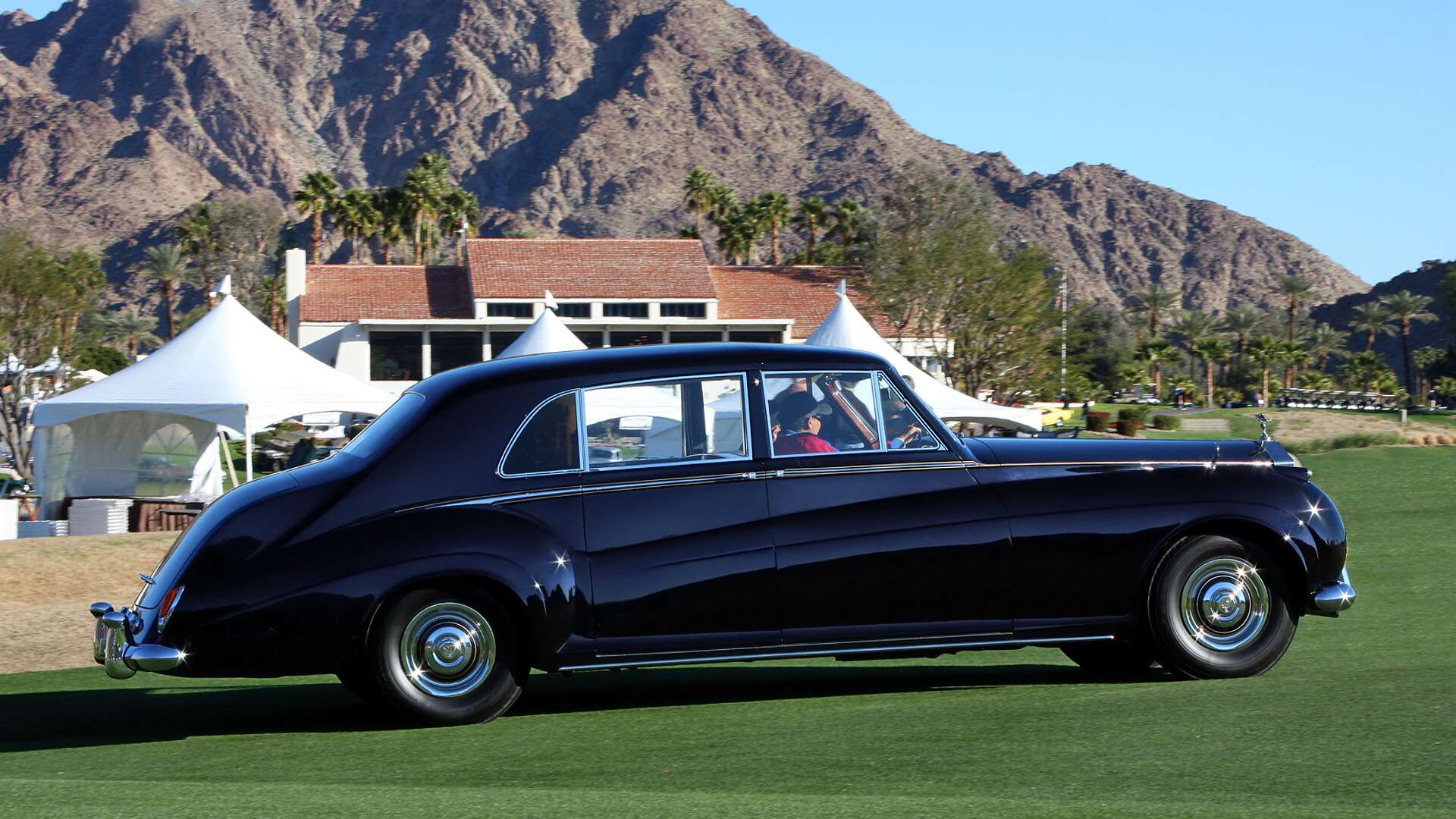
On October 16, 2021, Timothy Mark Anderson crashed his 1961 Rolls-Royce Phantom V. The front end was damaged, the car would not run, and it was towed to a farm shop. Two days later, according to the bill of sale Anderson wrote, an elderly Iowa woman owned it. She paid $186,000 for it. On November 4, Anderson sent Iowa Medicaid a document putting the car’s fair market value at $194,000.
Anderson, a 67-year-old lawyer from Garner, Iowa, was sentenced September 11 in Cedar Rapids to six months in federal prison, a $25,000 fine, $184,274.36 in restitution to Iowa Medicaid and two years of supervised release, the U.S. Attorney’s Office for the Northern District of Iowa said in a release dated September 28. He had pleaded guilty on October 30, 2025, to one count of false statement relating to a health care matter, a crime under 18 U.S.C. § 1035 that carries up to five years. U.S. District Judge Leonard T. Strand found that Anderson’s luxury-car sales to elderly Medicaid applicants were “obviously fraudulent and illegal.” Anderson remains free on bond until the Bureau of Prisons sets a surrender date.
Anderson’s scheme rested on the Medicaid car exemption, a rule that still covers every Iowa family applying for nursing-home Medicaid. An applicant can keep one car of any value, and the proof that someone in the household uses that car is mostly paperwork. For five years, Anderson sold the paperwork.
How a Rolls-Royce moved through a family without leaving the collection
Anderson’s practice in Garner offered financial, tax and estate planning, and part of that work was preparing Medicaid applications for elderly clients who needed nursing-home care. He also collected Rolls-Royces and other luxury cars. According to the government, he combined the two from 2017 to 2022.
The pattern, as the government described it, ran in three steps. Before applying for Medicaid, the elderly client “bought” one of Anderson’s cars. Later, the client “gifted” the car to the heirs. The heirs then “sold” it back to Anderson for less than the client had paid. The quotation marks are the prosecutors’. The buyers never drove the cars and, for the most part, never saw them.
On each lap, the money lands in three places. The applicant’s savings turn into a car that Medicaid doesn’t count. The heirs end up with cash from the buy-back. Anderson keeps the gap between what he was paid and what he paid to get the car back, and the car goes back into his collection, ready for the next client. The release doesn’t give buy-back prices, so how much Anderson kept on each deal isn’t public.
The case Anderson pleaded to involved a couple who, in 2021, had more than $400,000 in assets, including a 2020 Chevrolet Equinox valued at $30,000. The husband was already in a nursing home, paying without public help. The couple wanted Medicaid to cover the bills and wanted their assets to go to their heirs. In October 2021 Anderson deposited the wife’s $186,000 check into his personal savings account, signed the Phantom V’s title over to her and wrote a bill of sale stating that the car changed hands on October 18. That was two days after the crash.
The federal rule that lets one car of any value slip past Medicaid
To qualify for nursing-home Medicaid, an applicant has to be nearly broke on paper. In 2021 the federal resource limit for an individual on the SSI-based rules was $2,000, and the most a spouse living at home could keep under the federal spousal-impoverishment standards was $130,380, according to the Centers for Medicare & Medicaid Services’ 2021 table. States set their own figure within that range, and I could not confirm the number Iowa used that year. Either way, a couple with $400,000 was well over the line.
Some assets don’t count, and a car is one of them. The Social Security rule that Medicaid borrows, 20 C.F.R. § 416.1218, says: “One automobile is totally excluded regardless of value if it is used for transportation for the individual or a member of the individual’s household.” Any additional car counts at the owner’s equity. Iowa’s own eligibility manual for state caseworkers, Title 8, Chapter D, lists “One vehicle regardless of value” among excluded resources, and Iowa Legal Aid tells clients the same thing.
The exemption exists for a sensible reason. The spouse who stays home still has to drive to the pharmacy, the grocery store and the nursing home. Under the rule as written, a family that trades an old car for a new one before applying has moved money into an exempt asset at a fair price, and the rule allows that. A $186,000 Rolls-Royce clears the same rule as a $30,000 Chevy, as long as someone in the household uses it for transportation. Anderson’s buyers didn’t drive theirs.
Why the $194,000 valuation carried the scheme
The release doesn’t explain why the dollar figure mattered if the car was exempt regardless of value. Federal transfer-of-assets law points to the answer. Under 42 U.S.C. § 1396p(c), Medicaid looks back 60 months at anything an applicant or spouse disposed of for less than fair market value. Anything given away in that window buys a period of ineligibility. The state works it out by dividing the uncompensated value by the average monthly cost of private-pay nursing-home care in that state.
That’s where the valuation comes in. If the wife paid $186,000 for a car worth much less, the difference is a gift to Anderson, and a large enough gap would push back eligibility by months. A document putting the car’s fair market value at $194,000 makes the check look like a good deal for the buyer. The government said Anderson knew when he sent it that the car wasn’t worth $194,000. That knowingly false number is the crime he admitted. Nobody charged him for collecting Rolls-Royces or for using the car exemption.
Pricing a crashed, coachbuilt 1961 limousine
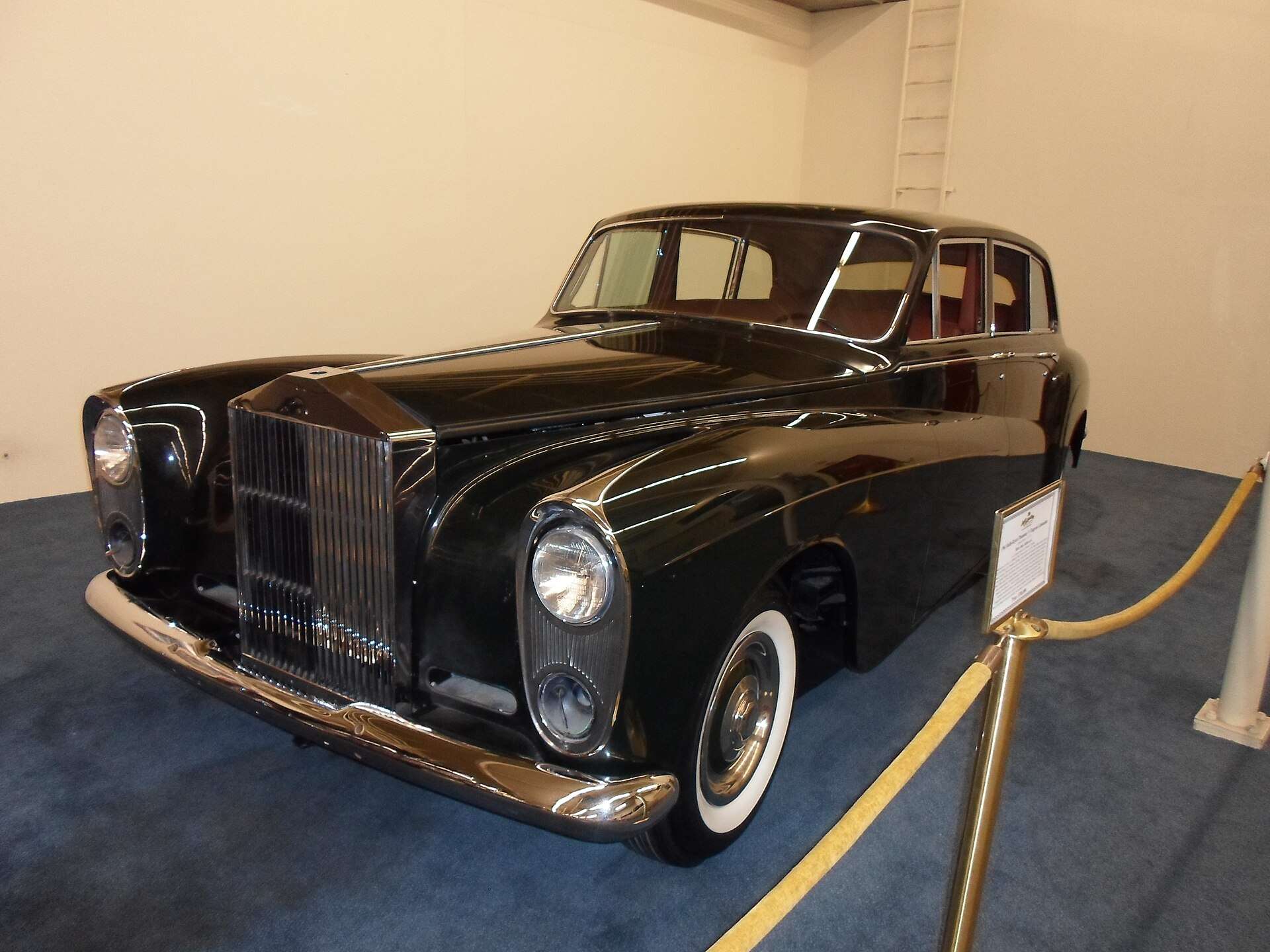
Anderson picked a hard car to put a price on. Rolls-Royce launched the Phantom V in 1959 as a limousine with bodies from its in-house coachbuilder, Park Ward, and from independents including James Young and H. J. Mulliner. Two were built for royal service with clear Perspex domes over the rear compartments. Two Phantom Vs from the same year can carry bodies from different firms. Neither the release nor any court record I could reach says what Anderson’s car was worth after the crash.
The other car in that household shows the difference. An eligibility worker can check a 2020 Equinox against any used-car pricing guide in a few minutes. There’s no comparable shortcut for a damaged, coachbuilt 1961 limousine sitting in a farm shop. The value ends up being whatever the paperwork says until someone goes and looks at the car, and on Anderson’s applications nobody did, including the people who supposedly owned it.
An expensive car whose value is hard to check is a convenient place to park money, which is part of why a crypto thief turned stolen funds into 28 supercars. A title proves who owns a car on paper. It says nothing about where the car is, what shape it’s in or whether anyone drives it. That gap also shows up in exotic-car consignment fraud.
Anderson’s law license and the Justice Department’s fraud push
He may lose his law license, too. In August, the Iowa Capital Dispatch reported that the Iowa Supreme Court Attorney Disciplinary Board was seeking a temporary suspension of his law license, and that Anderson was contesting it and asking for a hearing after his sentencing. I could not find a public ruling on that request as of this writing.
The prosecutors’ release also put the case inside a bigger story. It tied the prosecution to the Justice Department’s National Fraud Enforcement Division, announced April 7, and to President Trump’s Task Force to Eliminate Fraud, which Vice President J.D. Vance chairs. The FBI investigated, and Assistant U.S. Attorney Timothy L. Vavricek prosecuted. The federal case number is 25-CR-3053.
What happens to everyone else he filed for
The one-car exemption is still in place, and nothing in this case changes it. A family can still buy a reliable car for the spouse at home before an application, at a real price, and drive it. The lines Anderson crossed are written into the rules he worked around: the car has to be used for transportation by the applicant or someone in the household, and anything sold or given away inside the 60-month look-back has to change hands at fair value.
The government describes a pattern involving multiple elderly clients and their heirs from 2017 to 2022, but Anderson pleaded to one false statement on one application. The release doesn’t say whether Iowa Medicaid will review the other applications Anderson prepared in those years, or whether heirs who took part in the buy-backs face any consequences. Those are the next questions for Iowa Medicaid, which is run by Iowa’s Department of Health and Human Services. They also matter to any family that hired him and assumed the paperwork was clean.
Should Medicaid keep letting applicants shelter one car of any value, or is it time for a dollar cap on the exemption, even if that makes things harder for honest families replacing an old car?
Top photo: A 1961 Rolls-Royce Phantom V with James Young coachwork. This is not the car in the Anderson case. Photo: Rex Gray via Wikimedia Commons, CC BY 2.0.