
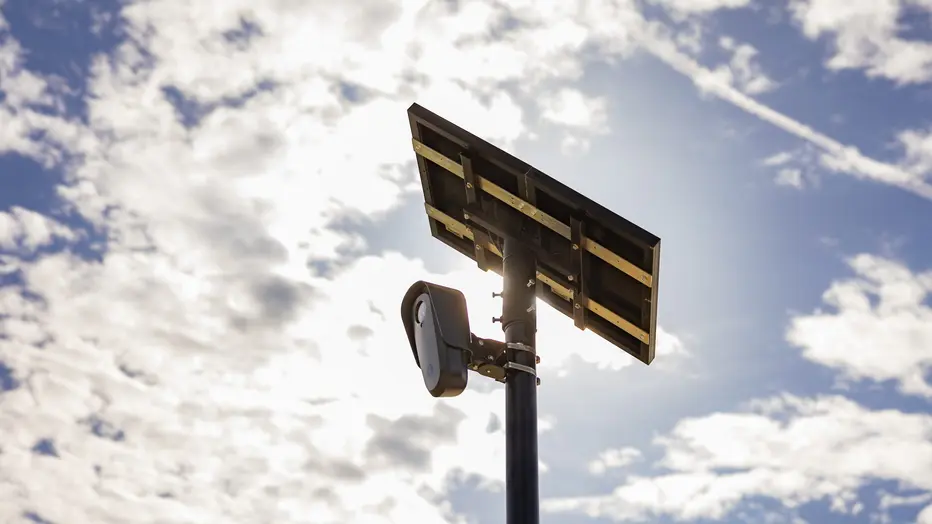
Somewhere in Albany, Georgia, a license plate reader’s own paperwork just did something eighteen other police departments couldn’t manage: it caught an officer misusing the system before a victim had to.
On July 6, the Georgia Bureau of Investigation announced the arrests of five former Albany Police Department officers, Tytianna Davis, Jade Jackson, Nicholas Richardson, Brittney Smith, and Issac Whitus, on charges of Misuse of License Plate Data and Violation of Oath of Office. Richardson faces eleven counts. Davis faces five. The rest face one or two apiece. All five were fired before the case moved forward, and it now heads to the Dougherty County District Attorney’s office.
The GBI’s release is strikingly thin on motive. It says only that the officers accessed the Albany Police Department’s Flock license plate reader system on multiple occasions and used the retained data for reasons that had nothing to do with police work. No stalking allegation. No named victim. No explanation of what five sworn officers wanted with strangers’ driving patterns. For a police surveillance scandal, that vagueness is almost unusual. It’s also the least important part of this story.
Here’s the detail worth sitting with instead: nobody had to get hurt for this to surface.
Why Getting Caught Is the Anomaly, Not the Norm
The Auto Wire has spent months tracking officers who abuse automated license plate reader networks, the Flock cameras and similar systems now bolted to poles in thousands of American towns. Our review of at least eighteen documented cases nationally turned up a grim pattern: a Milwaukee officer ran a woman he was dating through the system nearly 180 times before she looked herself up on a public audit-scraping site and found the trail. A Kansas police chief tracked an ex-girlfriend more than 160 times before resigning. An Idaho sheriff searched for his wife’s car hundreds of times before retiring quietly. Case after case, the abuse surfaced only after a frightened victim walked into a station and filed a complaint, not because a department’s own oversight flagged it first.
Albany flipped that sequence. The Albany Police Department itself requested the GBI investigation on June 25, after a routine internal audit of its Flock system turned up the pattern on its own. No victim has come forward publicly. No outside tip triggered it. A department simply opened its own log file and read what was in it.
That distinction matters more than it sounds like it should. Flock Safety’s own materials describe exactly this safeguard: “Every search is recorded and tied to a specific user,” the company states, and supervisors are able to review those records for compliance. The tooling to catch this kind of abuse has existed the entire time these systems have been sold. What’s usually missing isn’t technology. It’s a department willing to look at what the technology already recorded. Albany looked. That, not the arrests themselves, is the actual news.
A Law Built for This Exact Problem
There’s a second detail buried in the charging language that deserves more attention than it’s gotten. Georgia doesn’t prosecute this kind of abuse as generic misconduct. It has a standalone offense called Misuse of License Plate Data, distinct from the Violation of Oath of Office charge every officer also faces. That’s not a throwaway legal technicality. It means Georgia lawmakers, at some point, wrote a criminal statute specifically anticipating that people with legitimate access to license plate networks would eventually abuse that access for reasons having nothing to do with public safety. This isn’t even the charge’s debut in the state; a Coffee County deputy faced similar counts last year. Georgia built a law for a problem it correctly assumed would keep recurring. Albany is the latest proof the assumption was right.
The Bigger Point for Anyone Who Owns a Car
None of this is really about five people in Dougherty County. It’s about what happens every time any car passes a Flock camera, and increasingly, that camera doesn’t belong to a police department at all. Flock markets its hardware directly to homeowners associations, shopping centers, schools, and property managers, in addition to law enforcement, and participating agencies can choose to feed their captures into a shared regional network. Each owner sets its own retention window and its own access rules. Some purge data within days. Others hold it for weeks and let users query it without anything resembling a warrant, a legal question now working its way through the Fourth Circuit, where a Norfolk, Virginia lawsuit is being reshaped by the Supreme Court’s recent ruling on cell-phone location tracking.
That’s the arrangement most drivers never agreed to and rarely think about: a nationwide mesh of cameras logging where their car goes, owned by whoever paid for the hardware, policed only as well as that particular owner bothers to police it. Congress has floated bills that would curb these networks nationally, but until something passes, the rules remain a patchwork that changes at the county line.
What to Remember
The camera at your subdivision’s entrance, or in the parking lot at your kid’s school, is doing precisely what it was built to do: recording, storing, and waiting for someone with a login. The technology was never the safeguard. The willingness of whoever holds that login to actually check it always was. Albany just showed what it looks like on the rare occasion somebody does.