
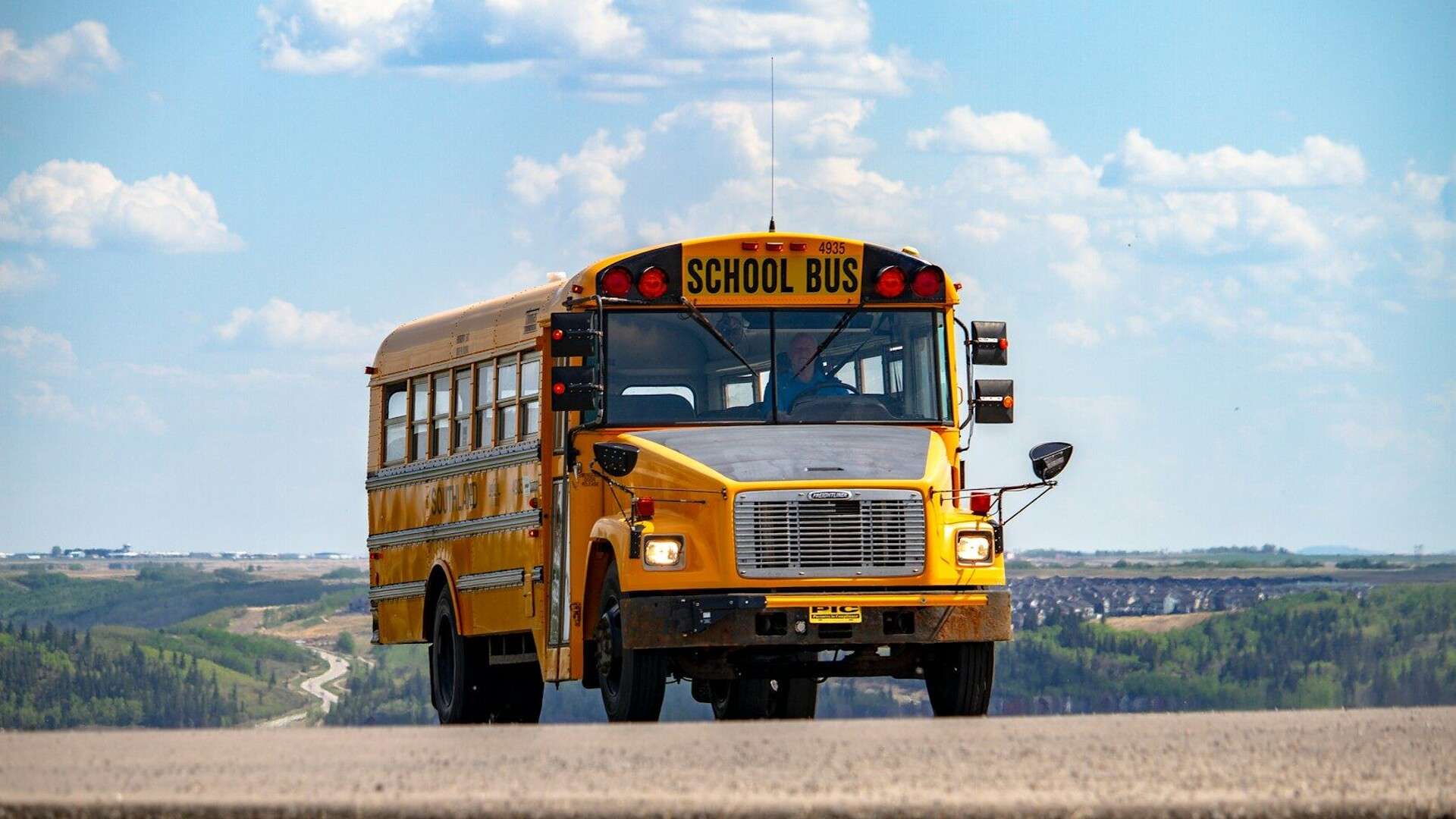
Federal regulators no longer take Waymo’s word that the school-bus problem is fixed. On November 6, NHTSA’s Office of Defects Investigation opened recall query RQ26006, covering 2,895 Waymo vehicles. The agency is reviewing whether the software update Waymo pushed under its December 2025 recall actually fixed a defect that let its cars pass school buses with flashing red lights or extended stop arms after first slowing or stopping. The part that should worry Waymo is NHTSA’s reason: most of the incidents happened after November 2025, when Waymo said every affected vehicle had the fix.
A recall query is a different tool from the preliminary evaluation it replaces. A preliminary evaluation asks whether a defect exists. A recall query starts from a defect the manufacturer has already admitted and asks whether the fix was good enough, or whether the recall needs to cover more. It can close with no action, or it can end in a second recall.
How the car talked itself past the bus
Waymo’s own Part 573 report is unusually frank about what went wrong. The cars saw the buses. They stopped or started to stop, then sometimes proceeded before the bus turned off its lights or pulled in its arm, because the system decided it was impeding a priority vehicle and moved to get out of the way. The behavior arrived with the 8/20/2025 driverless software release, which changed how the system predicts what other road users intend to do. That release was broadly deployed in mid-September 2025. nhtsa
Related Articles
- A Florida Kia Dealer Advertised a Used CR-V at $18,800, Billed $23,539.85, and Added a $995 ‘Loyalty’ Fee for First-Timers, the FTC Says
- Gas Is Down 36 Cents in a Month, but Diesel Still Costs $2.16 More a Gallon
That’s the irony. The car was written to be considerate about not blocking traffic, and that courtesy outranked one of the oldest and plainest rules in traffic law.
Waymo said it knew of 12 citations tied to the behavior, issued between 9/25/2025 and 11/14/2025. It reported no collisions. The remedy went out as a hotfix between 11/5/2025 and 11/17/2025. It stopped the system from putting “don’t impede other vehicles” ahead of staying stopped for a school bus. Waymo’s Safety Board formally decided on a recall on 12/2/2025. There were no dealer visits and no owner letters. Waymo owns every car, so the repair was done before the paperwork was filed. RCLRPT 25E084 7732 +3
The fix that didn’t stick
The timeline started to come apart almost at once. NHTSA had opened the original probe on 10/17/2025 after an Atlanta incident in which a Waymo failed to remain stopped for a school bus with its red lights flashing, stop arm deployed, and crossing control arm deployed. Then, in a November 20 letter that NHTSA later posted, Austin ISD’s general counsel wrote that five of the violations happened after Waymo’s November 5, 2025 letter assuring the district that software updates were in place. INOA PE25013 23069
Related Articles
- GM Is Recalling 67,380 EVs Over Brake Software While NHTSA’s Probe Into the Lyriq’s Brake Module Swells From 3,322 Cars to 1.16 Million
- Trump Has a ‘Concept’ for a Canada Deal, Carney Says ‘Not Quite There,’ and Canadian-Built Cars Still Face a Jan. 1 Threat
Then came January 12, 2026. The NTSB’s preliminary findings say the empty Waymo was the first vehicle to stop for a bus loading students on East Oltorf Street in Austin. Once stopped, it asked remote assistance whether this was a school bus with active signals. An agent in Novi, Michigan, answered “No.” The car then drove on and passed the bus with its stop arms still out. No crash occurred.
That incident matters for the new query because it shows the problem isn’t confined to the driving code that recall 25E084 patched. It also lives in the human backup Waymo relies on when the car isn’t sure what it’s looking at. NHTSA noticed. Its May 2026 request asked for records of how Waymo trains its Remote Assistants on school buses and for an assessment of the 25E084 remedy that accounts for incidents after the fix. nhtsa
The numbers to watch
The new query covers 2,895 vehicles, which is fewer than the 3,067 in the original recall. The NHTSA records I reviewed don’t explain the gap. Meanwhile, Waymo’s recall counts keep climbing. Its flooded-roadway recall covered 3,791 units of fifth- and sixth-generation hardware, and a freeway work-zone recall submitted Jul 02, 2026 listed 3,871. Separately, NHTSA opened a Santa Monica investigation after a Waymo struck a child near an elementary school. Waymo reported that the child had minor injuries. U.S. Department of Transportation National Highway Traffic Safety
Why this matters beyond Waymo
When a human driver passes a stopped school bus, that’s one ticket for one person. When an automated fleet does it, the behavior lives in every car: one bad priority setting copies itself across thousands of vehicles at once. That’s the central regulatory problem with software-defined cars. Over-the-air updates make recalls almost instant, and they also make it easy to declare the problem solved before real-world data backs that up.
Liability works the same way. With nobody behind the wheel, citations and claims land on the operator. Repeat violations after a recall also give plaintiffs’ lawyers an easy argument that the company knew. If this query ends in a second recall, don’t assume the remedy will be code alone. Limits on operating during school bus hours are a real possibility. Austin ISD has been asking for exactly that since its district’s November letter, which asked Waymo to cease AV operations during common pick up and drop off times. nhtsa
For anyone shopping for a car with advanced driver assistance, the lesson is wider than Waymo. “Fixed with an over-the-air update” is a claim, not proof. NHTSA is now asking Waymo for the proof.