
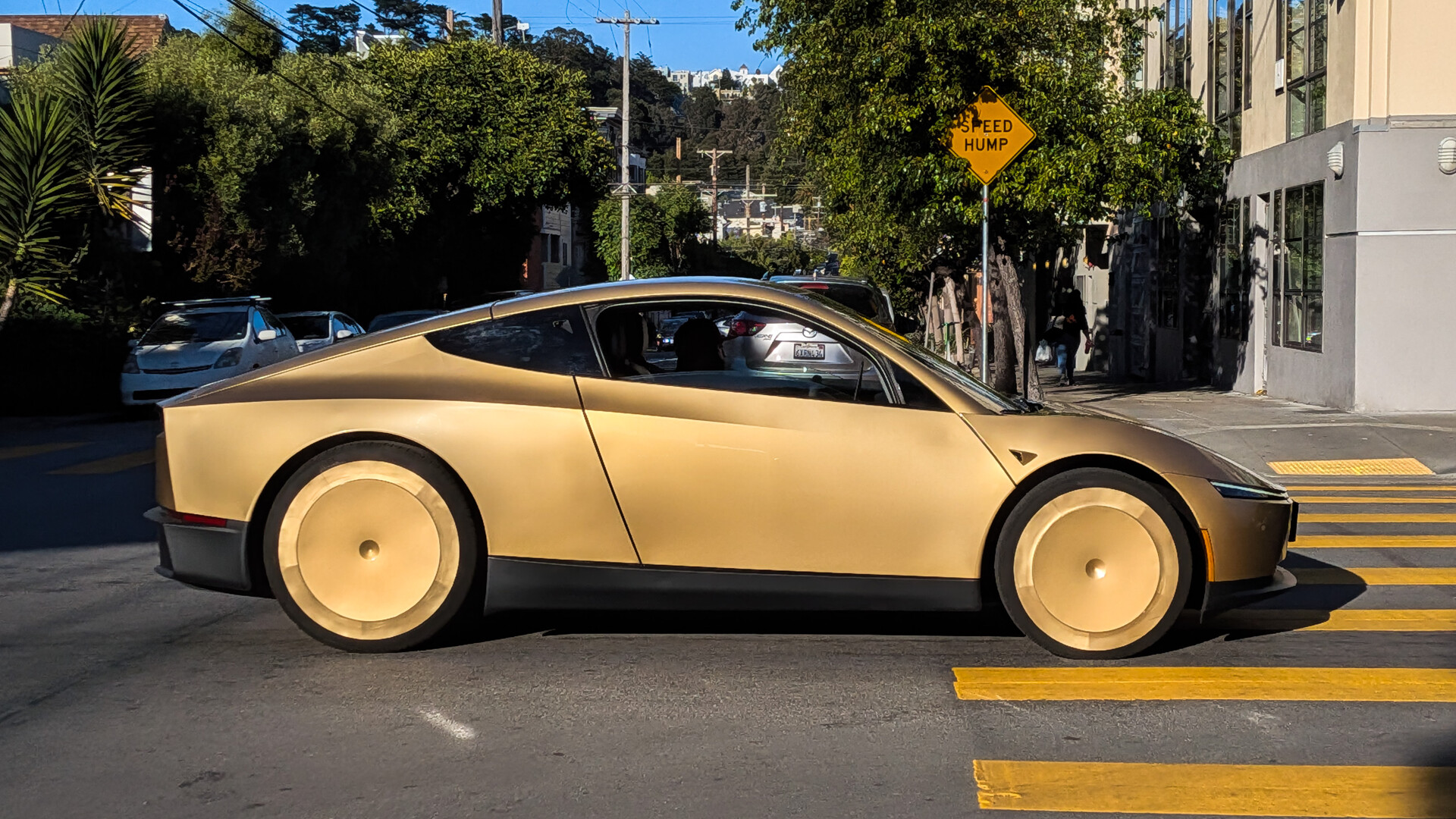
At 2:19 a.m. on a September night, a Tesla Cybercab with a test driver aboard was traveling at 53 mph on a highway in Philadelphia, Pennsylvania, when it collided with a passenger car. That comes from the crash report Tesla filed with the National Highway Traffic Safety Administration, which codes the damage to the Cybercab’s front left corner and to the other car’s rear. The other car’s airbag deployed, both vehicles were towed, and the Pennsylvania State Police is listed as the investigating agency. Whether anyone was hurt is marked unknown.
The field where Tesla is supposed to describe what happened reads, in full: [REDACTED, MAY CONTAIN CONFIDENTIAL BUSINESS INFORMATION].
I downloaded NHTSA’s Standing General Order crash data on Nov. 18 and pulled every row where the model is listed as Cybercab. There are eight. Four sit in the file for automated driving systems, and all four happened in Austin, Texas, at 5 mph or less. The other four sit in the Level 2 driver-assistance file, all from September 2026, each with a commercial or test driver listed inside the car. That second group holds the Cybercab’s fastest crash and both of its reported injuries. Tesla redacted the narrative on all four, and Tesla’s own Robotaxi safety report, which shows zero people injured over 3.1 million autonomous miles, is built in a way that leaves every one of them out.
Tesla’s zero is accurate on the terms Tesla set. Those terms exclude the Cybercab crashes that look the worst, and those happen to be the only Cybercab crashes the public isn’t allowed to read about.
Four test-driver crashes in Philadelphia, Austin, Lehi and Tampa
The Level 2 file does show this much about the four Cybercab reports:
- Philadelphia, Pennsylvania (report 13781-16881): 2:19 a.m., highway, Cybercab going straight at 53 mph, collision with a passenger car whose own movement is coded “Other, see Narrative.” The narrative is redacted. Other car’s airbag deployed, both towed, injury severity unknown.
- Austin, Texas (13781-16964): 11:57 a.m., highway, 5 mph, both the Cybercab and an SUV going straight. The highest injury is listed as minor with hospitalization. Both vehicles towed; Austin Police Department investigating.
- Lehi, Utah (13781-16524): 6:53 a.m., intersection, Cybercab making a right turn at 11 mph while an SUV went straight. The SUV’s front right met the Cybercab’s rear right, the SUV’s airbag deployed, and someone suffered a minor injury that didn’t require hospitalization. Lehi Police Department investigating.
- Tampa, Florida (13781-16583): 10:37 p.m., highway, Cybercab stopped at 0 mph when a passenger car’s front right hit its rear right. The other car’s airbag deployed. Property damage only; Florida Highway Patrol investigating.
Tesla also redacted the software version on all four reports and the answer to whether each crash happened inside the system’s operating design domain, the roads and conditions the feature is built for. On every one, Tesla checked the box saying video of the crash exists. Three of the four also list event data recorder and telematics data. None of that footage or data is described in the public file.
Why a car sold without a steering wheel lands in the driver-assist file
Tesla’s Robotaxi page describes the Cybercab with the words “No Wheel, Pedals or Driver.” NHTSA defines Level 2 systems as ones that assist while requiring the human driver to stay fully engaged in the driving task at all times. All four of these reports list Level 2 assistance as “Verified Engaged” and a driver in the vehicle. How a test driver supervises a Cybercab, and what that driver did in the seconds before each crash, is what the narrative would explain. Tesla has not said publicly, and the file doesn’t say either.
The reporting rules explain why these four made the list. Under the third amended order, in force since June 16, 2025, a company must report a Level 2 crash only if the system was in use at any point within 30 seconds of impact and the crash killed someone, struck a pedestrian or cyclist, deployed an air bag, or sent someone to a hospital for treatment. Three of the four Cybercab crashes cleared that bar because the other car’s airbag went off. Austin cleared it with a hospital trip.
The 30-second window cuts both ways. A report means the system was engaged recently, not that it caused the crash. The Tampa Cybercab was stopped when it was hit. NHTSA’s own data page warns that the reports can be incomplete or unverified and that the counts aren’t normalized for miles driven. That is the reason the narrative matters: it is the one field that would let anyone outside Tesla tell a Cybercab error from another driver’s.
How Tesla’s zero-injury robotaxi report is counted
Tesla’s safety page reports 3,112,541 miles driven autonomously as of Oct. 18, 2026, with zero people injured by a Robotaxi, zero Robotaxi airbag deployments and zero pedestrians or cyclists hit. It compares that to an estimate that human drivers covering the same Texas miles would have had about 9.1 injury collisions.
The methodology section lays out what goes in. The report counts collisions Tesla files under the order while a Robotaxi is driving autonomously with no safety monitor in the car, including when a remote operator is helping or has taken over. It excludes crashes and miles with a safety monitor aboard, and it covers Jan. 22 through Oct. 18, 2026. Injuries count only when the Robotaxi made first contact. Airbag deployments count only the Robotaxi’s own airbags.
Each of those choices is disclosed, and each one shrinks the pool. The Level 2 crashes aren’t in it at all, because they aren’t autonomous-mode crashes. Even if they were, three of the four airbag deployments belonged to the other car. Tesla’s page also describes setting aside a rider’s injury claim after a Robotaxi drove over a pothole, saying its investigation found no injury tied to the event. The NHTSA file appears to hold that event as report 13781-17015 from Dallas: a Model Y robotaxi hitting a pothole at 29 mph with two riders aboard, coded as a minor injury with hospitalization. If it is the same crash, Tesla’s report and NHTSA’s file give it different labels.
The four driverless Cybercab crashes, in Tesla’s own words
The Cybercab’s record in the automated driving file backs up Tesla’s numbers, and here Tesla let the public read the narratives. All four list no driver, and all four are in Austin:
- August (13781-16672): In a parking lot at up to 5 mph, the car drove into a large pothole filled with water. A safety monitor was aboard and no passengers, which puts this one outside Tesla’s safety report.
- September (13781-16733): Slowing to a stop at a parking-lot exit, the empty Cybercab was hit on its right side by a car backing out of the next space. The Cybercab was towed.
- September (13781-16941): Stopped in street traffic behind another car after traveling at up to 5 mph, the empty Cybercab was rear-ended by a pickup truck. Towed again.
- September (13781-17178): With one rider aboard, the car drove over a raised concrete edge in a parking lot, crossed the sidewalk and went down a curb at as much as 3 mph.
No injuries in any of the four, and in two of them another driver hit a stopped Cybercab. The other two are a robotaxi misjudging a pothole and a curb. That is a defensible record for a new car in early service, and Tesla made it checkable.
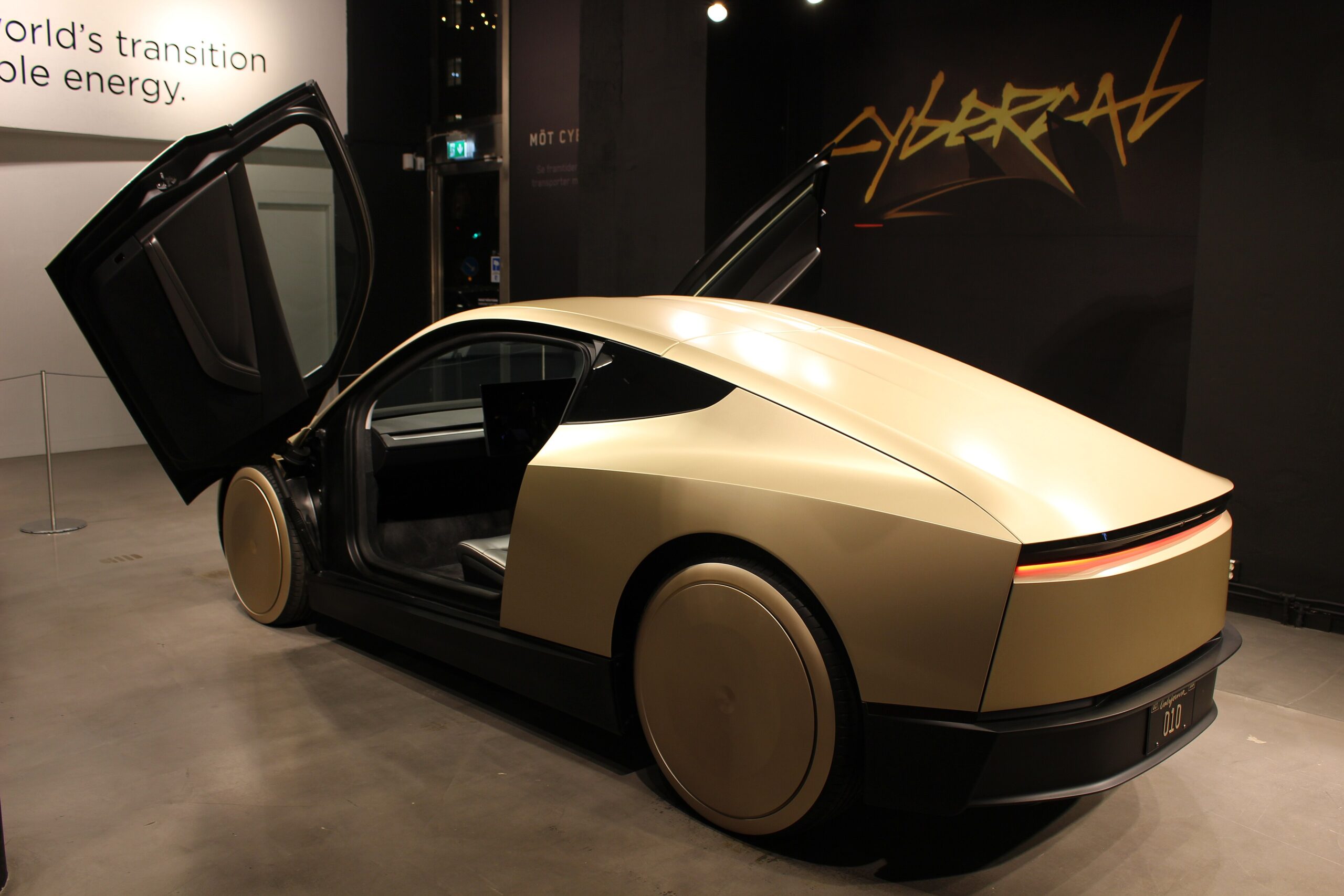

Tesla un-redacted its robotaxi reports but not its Level 2 reports
Tesla didn’t always publish those driverless narratives. Its early robotaxi reports from Austin carried the same redaction stamp, and the file now holds updated versions in which Tesla states the update reports no new incident and only removes the confidential business information. In the current file, all 43 of Tesla’s automated-driving reports, counting the newest version of each, read in plain text.
The Level 2 file went the other way. By The Auto Wire’s count, the current file holds 2,419 separate Tesla Level 2 crash reports filed since June 16, 2025. Tesla redacted the narrative on 2,418 of them; the remaining one is blank. General Motors filed 132 Level 2 reports in the same file and redacted none. Ford filed 41 and redacted none. Tesla isn’t alone in blacking out narratives, since Subaru and BMW redacted every one of theirs, but neither of those companies is running a driverless car service on public roads.
The redactions are legal. NHTSA’s data page says it withholds anything a company claims as confidential business information and is legally barred from disclosing it. The claim runs through 49 CFR Part 512, which requires a company official to sign a certificate under penalty of perjury and to explain why release would cause substantial competitive harm. Claimed material stays confidential while NHTSA’s chief counsel decides. The regulation also lets the NHTSA Administrator release claimed information in the public interest after giving the company at least 20 working days’ notice, and it allows release under a court order. The blank box is Tesla’s claim, honored in the public file; no rule requires a crash description to be withheld.
That gap matters more for the Cybercab than for a customer’s Model 3 on Autopilot. The Cybercab is the car Tesla is asking regulators and riders to trust with no human controls at all, and NHTSA has already opened an audit of how Tesla certified it as meeting federal safety standards. The test-driver crashes are the closest thing the public has to a look at how the car behaves at highway speed, and those are the four reports Tesla redacted.
If you’re the other driver
NHTSA updates the public file monthly, and Tesla’s own methodology notes that each report shows up about a month or more after it’s filed, so any Cybercab crashes from October and November haven’t surfaced yet. Tesla’s Robotaxi page says it already offers rides in Austin, Dallas, Fort Worth, Houston, Miami, Orlando, San Antonio and Tampa using a fleet of Model Y and Cybercab vehicles, so the count of eight is a floor that will keep rising with the mileage.
For the driver of the car in Philadelphia, or anyone else who ends up in a crash with a Tesla test vehicle, the federal file is not where the answers are. The police crash report from the investigating agency is a separate public record governed by state law. The video, event data and telematics Tesla listed on these reports exist, and the Part 512 rules themselves acknowledge that a court can order claimed information released. That is generally how this material comes out: in a lawsuit over who was at fault, not on NHTSA’s website. Who is liable in a Level 2 crash, where a human is supposed to be supervising, varies by state and by the facts.
Tesla will publish a play-by-play of a 3 mph curb drop and black out a 53 mph highway crash. Should an airbag deployment or a hospital trip during public-road testing make the crash narrative public automatically? Or is there a confidentiality argument here you’d actually buy?