
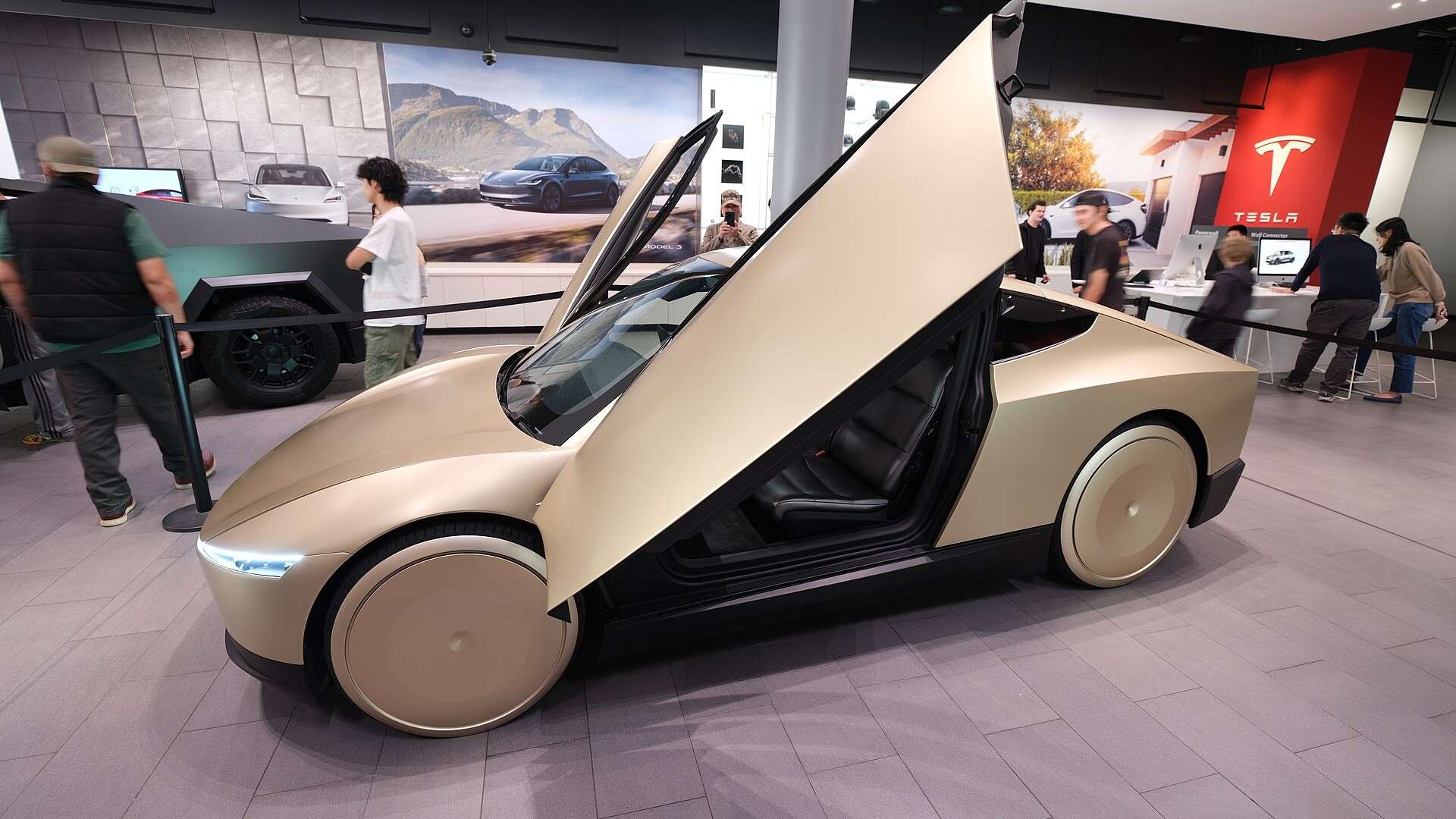
Tesla has until today, Wednesday, September 30, to explain to federal safety regulators how a two-seat car with no steering wheel, no brake pedal and no mirrors meets safety standards that call for all three. The deadline sits in a Special Order signed September 10 by NHTSA Chief Counsel Peter Simshauser, which contains 21 numbered requests. The order warns that failing to respond fully or truthfully could bring civil penalties of up to $27,874 per day, with a maximum of $139,356,994.
As of Wednesday afternoon, neither Tesla nor NHTSA had said publicly whether the company had filed its answers or asked for more time. Tesla hasn’t slowed down in the meantime: it shipped Cybercabs to Houston earlier this month, ahead of a planned second robotaxi city.
The Cybercabs carrying paying riders in Austin won’t be parked on Thursday because of it; an audit query doesn’t pull cars off the road. What depends on Tesla’s answers is how the Cybercab gets built from here. If Tesla’s self-certification holds, the Cybercab is legally a car like any other, and Gigafactory Texas can build as many as Tesla can sell. If it doesn’t, the likely route runs through a federal exemption that the statute limits to 2,500 vehicles a year. Zoox started down Tesla’s road in 2022 and finished on the exemption route, and its closed investigation file is the best available guide to where this one goes.
NHTSA’s 21 requests, standard by standard
Tesla began commercial Cybercab service in Austin on September 3, and NHTSA opened audit query AQ26002 the same day. The agency’s opening document puts the estimated population at 1,000 vehicles and describes cars without “permanently attached, conventional manual controls, such as a brake pedal, gas pedal, steering wheel, and mirrors.” Administrator Jonathan Morrison said in the agency’s announcement that “as the federal regulator, we need to ensure that all of our laws are followed.” The Auto Wire covered the opening of the audit and how self-certification works earlier this month. The Special Order is the next step, and it is far more specific.
I read all 21 requests. Most walk through the parts of the rulebook written around a driver: FMVSS No. 101 for controls and warning lights, No. 102 for the shift-position display, No. 108 for turn signals, No. 111 for mirrors and the rearview camera image, No. 126 for the stability-control warning light and No. 135 for the brake control. The brake standard is the bluntest problem. As written today, it requires the service brakes to be applied with a foot pedal, a requirement NHTSA restated in its own June 26 proposal to change it.
Two requests go after Tesla’s legal theory directly. Request 10 asks Tesla to list every standard it believes doesn’t apply to the Cybercab, including any it considers out of scope because the rule “did not when promulgated contemplate vehicles designed to perform the entire dynamic driving task without any human driver intervention,” and to say whether its certification rests on that argument. Request 21 cites NHTSA’s 2022 occupant-protection rule for the agency’s position that further changes to the 100-series standards “would likely be necessary to permit a vehicle solely operated by an ADS to be manufactured for sale” without a Part 555 exemption. It then asks Tesla to show how the Cybercab complies without one. The agency has put its own published view on the table and asked Tesla to rebut it in writing.
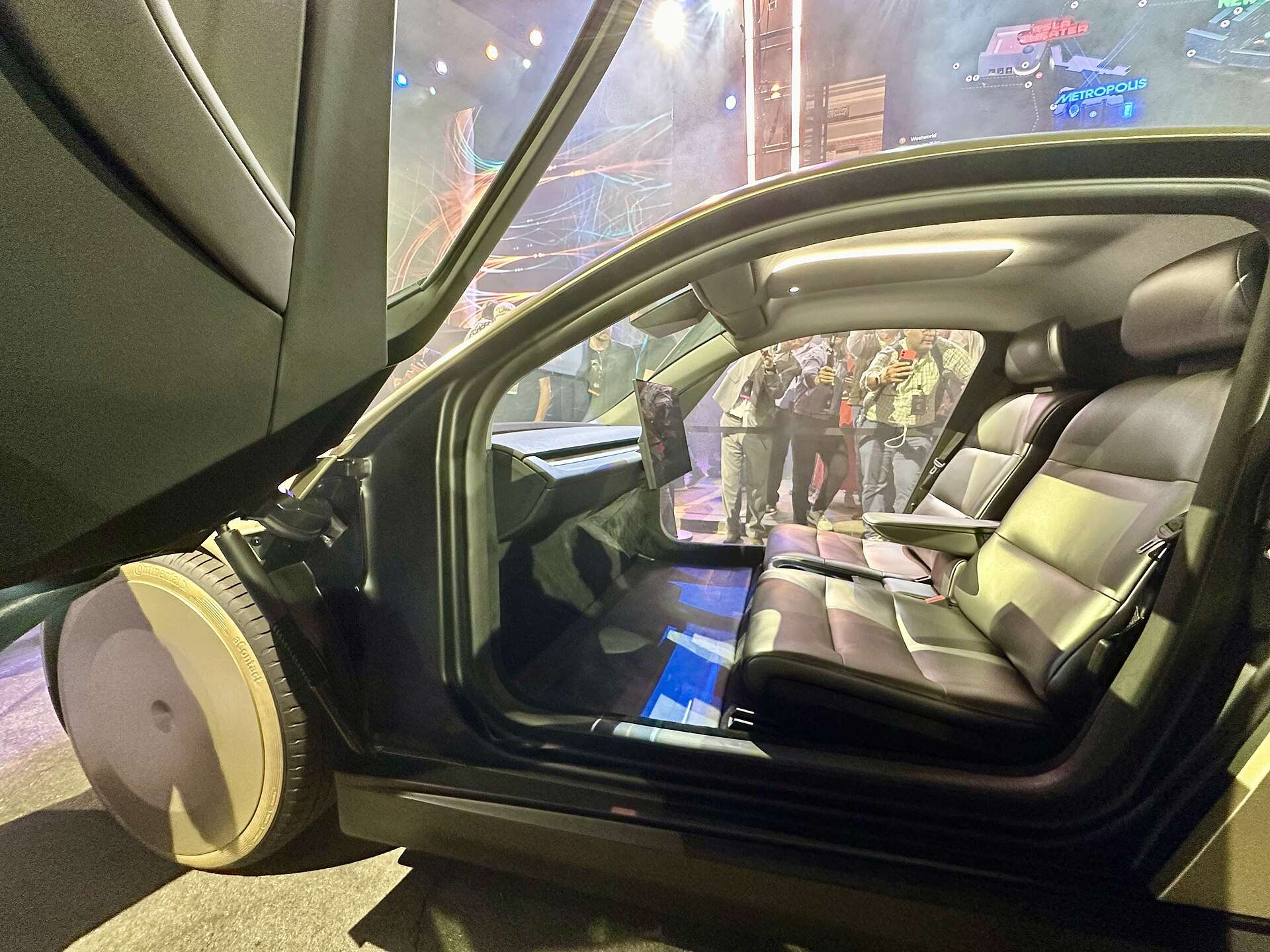
Tesla’s owner documents show how it handled some of the driver-era requirements. The Cybercab compliance guide, effective September 3, puts manual turn-signal and wiper buttons on the touchscreen, and the brake-fault warning appears there too. The rider guide dated September 22 has passengers start the trip and request a pull-over from the same screen. Request 20 asks whether any touchscreen control lets an occupant move the car, and under what limits.
Removable controls and the make-inoperative rule
Requests 5 through 7 concern removable driver controls. Request 5 reads: “Confirm whether the subject vehicles are capable of being driven by a human driver using temporarily attached human driver controls.” Request 6 asks whether temporarily installed controls were part of Tesla’s basis for certifying compliance with any standard. Request 7 asks how removing them “comports with the Safety Act’s make inoperative prohibition in 49 U.S.C. § 30122(b).” Several of the standard-by-standard requests also ask whether Tesla’s answer changes when temporary controls are installed.
Anyone who has worked a service counter knows Section 30122(b), even if not by number. It bars a manufacturer, distributor, dealer, rental company or repair business from knowingly disabling any part of a device or design element installed to meet a federal safety standard. It is the reason a shop can’t disconnect a working airbag or strip a required mirror and hand the keys back, and it applies to the automaker as much as to the independent garage down the street.
The order doesn’t say Tesla certified the Cybercab with a temporary wheel or pedals attached. It asks. But the logic of the question leaves Tesla two answers, and neither is easy. If bolt-in controls were what satisfied a standard during certification, then removing them before the car enters service looks like the manufacturer disabling compliant equipment. If Tesla certified without them, the car has to comply as riders find it, and the argument goes back to Requests 10 and 21 and the claim that driver-era rules don’t reach a driverless car.
How Zoox’s self-certification ended
Zoox made the same claim first. According to NHTSA’s closing résumé for audit query AQ23001, Zoox announced in July 2022 that it had certified its purpose-built, driverless vehicle as compliant with all applicable FMVSS. NHTSA sent Zoox a Special Order on September 6, 2022. Zoox answered on November 7, 2022, and the agency opened the audit query on March 3, 2023. In December 2024, after inspecting the vehicles, NHTSA issued Zoox a report documenting “multiple apparent noncompliances with applicable FMVSS.”
Zoox then asked for exemption relief. On August 4, 2025, NHTSA granted an exemption with conditions, including that Zoox “obscure or remove all existing statements that the purpose-built vehicle complies with or conforms to all applicable FMVSS,” and closed the audit. Zoox filed a Part 555 application for commercial use on August 22, 2025. The grant published July 31, 2026 covers portions of eight standards (Nos. 103, 104, 108, 111, 135, 201, 205 and 208), runs through July 31, 2028, and allows no more than 2,500 exempted vehicles into commercial service in any 12-month period. Each exempt Zoox carries a certification label that names every standard it is excused from and cites NHTSA Exemption No. 2026-01.
My count from the agency’s dates: 35 months from the Special Order to the closed audit, and four years from Zoox’s self-certification to a commercial exemption. The Special Order Tesla answers Wednesday is the same first step, four years later. We looked at what the exemption does and doesn’t let Zoox do earlier this month.
A 2,500-car ceiling on Tesla’s highest-volume plan
The cap is written into law. 49 U.S.C. § 30113 limits exemptions granted on safety-feature, low-emission or equivalent-overall-safety grounds to 2,500 vehicles sold in the United States in any 12-month period, for no more than two years at a time. That works out to about 48 cars a week, by The Auto Wire’s math.
Tesla has described something much larger. Its first-quarter 2026 update said: “Once in production, we expect that Cybercab will begin to replace the existing Model Y fleet and will be the largest volume vehicle in the fleet over time.” The second-quarter update reported that Cybercab production had started at Gigafactory Texas. And the annual report Tesla filed for 2025 told investors: “Our current vehicles fully comply and we expect that our vehicles in the future will fully comply with all applicable FMVSS with limited or no exemptions.” An exemption with a 2,500-car ceiling would cut against both statements.
Tesla knows the exemption process from the inside. The company, then Tesla Motors, received a temporary exemption from the advanced air bag rules for the Roadster in 2008. In 2011 it got a stability-control exemption covering 80 Roadsters, granted on the low-emission-vehicle ground. The cap never came close to binding on a low-volume sports car; on a vehicle Tesla expects to replace its Model Y robotaxi fleet, it would.
The exemption route has gotten less painful this year. NHTSA said on July 30 that it had updated its rules so vehicles built before an exemption is granted can qualify for commercial deployment, and it issued new guidance meant to simplify Part 555 applications. That would give the Cybercabs already in Austin a way to be covered after the fact. It does nothing about the 2,500-a-year limit, which only Congress can change.
NHTSA’s rewrite of the rules runs on a separate clock
Tesla’s other way out is to outlast the rulebook. NHTSA said in its September 4 announcement that it has begun work on eight rulemakings covering brake pedals, windshield wipers, lighting and rearview mirrors, among others. The brake proposal, docket NHTSA-2026-0728, would let a vehicle without manual driving controls apply its service and parking brakes through on-board systems instead of a pedal. Its comment period closed July 27. A companion proposal for the shift-position standard, No. 102, was published in March.
They are still proposals. The same announcement said, “Until that work is completed, however, existing standards remain in force.” Tesla has certified a car against the rules as they read today while NHTSA writes the version that would fit it. If final rules arrive before the audit concludes, the fight narrows to the cars built in the meantime. If the audit moves faster than the rulemaking, Tesla faces the choice Zoox made. Zoox’s audit took 29 months from opening to close, and NHTSA’s announcement promised the rule updates “in the coming months,” without a date.
After Tesla files on September 30
Don’t expect to read Tesla’s answers soon. The order lets Tesla ask NHTSA to treat parts of its response as confidential business information, so little of what Tesla files may become public. The signals will come from the agency. The first would be an inspection: NHTSA examined Zoox’s vehicles and issued its findings about 21 months after opening that audit. The second would be a Federal Register notice announcing receipt of a Tesla exemption application, the way Zoox’s appeared on September 25, 2025. The third would be any change in how Tesla describes the Cybercab’s compliance, since walking back that claim was a condition of Zoox’s first exemption.
Riders in Austin will notice none of this at the curb. Fleet operators should pay closer attention. Tesla’s Cybercab support page invites commercial fleet buyers to contact the company, and an exempt vehicle is a different asset from a certified one. Zoox’s grant sets terms on selling or transferring exempt vehicles and on modifying them, requires a label listing every standard the car is excused from, and lets Zoox build exempt vehicles only for the two years the grant runs unless NHTSA renews it. Each of those terms reaches anyone buying, financing, insuring or repairing one.
Should Tesla keep defending the Cybercab as a fully compliant car and risk a years-long audit, or take an exemption and live with 2,500 cars a year until the rules catch up?
Top photo: File photo. Photo: Dllu / Wikimedia Commons (CC BY-SA 4.0).