
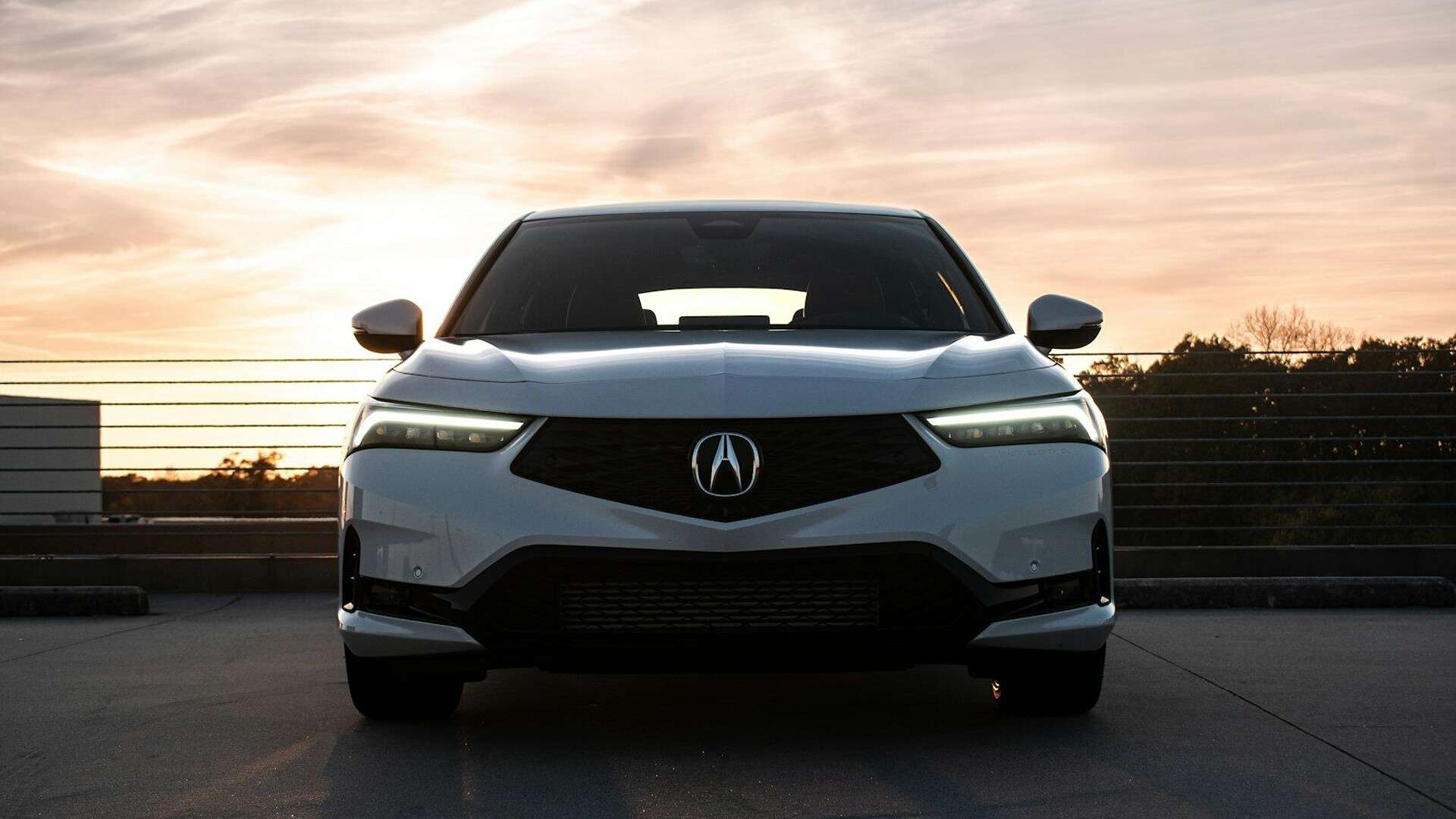
Acura’s quickest three-row SUV is taking an unpaid leave of absence. The MDX Type S won’t be built as a 2027 model, and Acura hasn’t said when, or whether, it comes back. The reason Acura gives isn’t slow sales or a recall. It’s paperwork: uncertainty over which federal emissions rules a 2027 vehicle will have to meet.
A 355-hp turbo six is getting benched not by a rule, but by not knowing which rule it’ll have to pass.
What’s actually being benched
The Type S isn’t a trim with bigger wheels. Acura’s own spec sheet shows a different engine from the regular MDX. The Type S powertrain is a DOHC 3.0-liter six with a twin-scroll turbo running 15.1 psi of boost and a 9.8:1 compression ratio. It makes 355 hp at 5,500 rpm and 354 lb-ft from 1,400 to 5,000 rpm. The standard MDX uses a SOHC 3.5-liter V6 at 11.5:1 compression, rated at 290 hp and 267 lb-ft.
Related Articles
- Arizona Driver Going the Wrong Way on I-40 Tells Troopers He Was ‘Supervisor’ of a Game Called ‘Lunatic,’ Then Gets Arrested for Endangerment
- Subaru Cut the Impreza’s Price by $2,000. Its Own Sales Numbers Explain Why.
The chassis hardware is unique too. Only the Type S gets adaptive air suspension with auto leveling, an electro-servo brake system, Brembo four-piston front calipers on 14.3-inch rotors, and 275/40R21 tires. It also weighs 4,776 pounds, stickers from $75,850, and returns 17/21/19 mpg on premium fuel.
So “pausing a trim” really means pausing an engine, a turbo system, an exhaust calibration, a suspension, and a brake package all at once.
The engine with nowhere else to go
This powertrain has a short, busy history. Honda’s Anna, Ohio plant started building the turbo 3.0 for the 2021 TLX Type S. Honda said it borrowed technology from the NSX’s twin-turbo V6, and that the engine would also power the upcoming MDX Type S. MDX Type S production began at East Liberty, Ohio, in December 2021, making it the first Acura SUV to carry the Type S badge.
Look at Acura’s current website and the TLX is gone. The current lineup shows only four models: Integra, ADX, RDX, and MDX. That makes the MDX Type S the last vehicle using this engine. When it stops, the Anna plant’s turbo six has no customer.
The rule that hasn’t finished changing
The regulation in question is Tier 4, EPA’s criteria-pollutant program (smog-forming emissions, not CO2). Under the 2024 final rule, the light-duty fleet average for NMOG+NOx drops to 15 mg/mile by 2032, half the 30 mg/mile Tier 3 level. The rule also sets a 0.5 mg/mile particulate limit that must be met on three tests, including a cold-temperature run at −7°C and the aggressive US06 cycle.
Then the ground moved. In May, EPA proposed a delay that, if finalized, would keep manufacturers on Tier 3 for model years 2027 and 2028. The Federal Register notice also pushes the new certification test protocols to MY2029. EPA says a separate Part 2 rulemaking will reconsider the whole Tier 4 program, possibly changing the standards, the phase-in schedule, and the test procedures.
As of publication, the delay is still only a proposal. So an automaker planning 2027 production today faces three possibilities: the 2024 rules as written, a two-year reprieve, or a rewritten program nobody has seen yet. For a high-volume model, you engineer for the worst case and absorb the cost. For a low-volume halo variant, you ask whether it’s worth it. Acura asked, and apparently the answer was no.
Why the turbo gets cut and the 3.5 doesn’t
On paper, the Type S isn’t dirtier than its siblings. Acura lists every 2026 MDX, Type S included, with the same CARB LEV4-ULEV70 rating. Under California’s regulations, that bin allows 0.070 g/mile of NMOG+NOx. That’s more than double the fleet average, which works only because cleaner vehicles in the lineup offset it. Fleet averaging is a team sport, and Tier 4 cuts the size of the team’s allowance in half.
The more likely problem is certification cost per car sold. Tier 4 requires PM certification testing at the test group level. A unique engine with its own turbo and exhaust hardware generally means its own test group, its own validation work, and possibly a particulate filter packaged into an exhaust built for quad tips and an active valve. The 3.5-liter spreads that cost across most of the MDX’s volume. The Type S spreads it across a sliver.
EPA’s own reasoning supports this reading. The agency now argues the 2024 standards depended on EV-adoption assumptions that didn’t come true, which made the rules harder and more expensive for manufacturers to meet. Fewer EVs in a fleet means each gas engine has to be cleaner, and the niche engines are the first ones that stop making financial sense.
This isn’t a demand problem
The MDX itself is selling well. Honda says the MDX posted its fourth straight month above 4,000 units in June, up 40% for the month and 10% for the year. Acura brand sales reached 69,715 in the first half. Earlier this year, Honda also promised MDX enhancements for the second half of 2026 and said the Integra Type S would get exterior and interior updates.
So the Type S badge survives on the brand’s smallest car while its biggest one takes a break. That’s an awkward look for a company whose tagline centers on performance.
What owners should know
Legality. Your Type S doesn’t become non-compliant. These rulemakings govern standards for new motor vehicles. A car certified under Tier 3 stays certified under Tier 3.
Warranty. Acura’s published coverage is 4 years/50,000 miles for the vehicle and 6 years/70,000 miles for the powertrain. A production pause changes none of that.
Parts and repair. The parts to watch are the Type S-only ones: air springs, the electro-servo brake system, Brembo calipers, 21-inch staggered-look rubber, and the turbo itself. None of these are shared with the 3.5-liter MDX. A pause doesn’t end parts support, but low-volume, model-specific components are usually where backorders and price increases show up first. If you plan to keep one past warranty, budget for air-suspension work the way you would on any air-sprung German SUV.
Maintenance. Every MDX calls for 91-octane premium fuel and uses Acura’s Maintenance Minder system. On a direct-injected turbo, follow the Minder’s oil prompts and don’t stretch intervals. Turbo bearings don’t reward frugality.
Recalls. Run your VIN through Acura’s recall lookup once in a while. Low-volume variants sometimes get software campaigns that don’t make headlines.
Insurance. Expect premiums to reflect repair costs rather than horsepower alone. Unique brakes, air suspension, and big wheels increase claim costs after even a moderate collision. Get a quote for the Type S specifically, not “an MDX.”
What buyers should know
For now, the 2026 models already built are the whole supply. That affects negotiating in two directions. A discontinued, low-volume performance variant often holds its value better than the volume trim, because enthusiasts eventually come looking for it. But “paused, possibly returning” is a strange position for resale: if a 2028 or 2029 Type S arrives with updated hardware, the 2026 becomes the older version, not the last one.
Related Articles
- Diesel Just Broke Its All-Time Record Three Weeks Running. Here’s Why It Hits Your Wallet Even If You Never Buy a Gallon
- 442 People Were Cited for Watching an L.A. Street Takeover. The Law Had Been Waiting Since 2002.
If you want the 355-hp MDX, buy it because you want to drive it, not as an investment. If you mainly want Type S looks, it may be worth waiting to see what the 2027 MDX lineup includes. Acura’s stated plan for later in the year is enhancements, and styling costs much less to certify than a turbo six.
The takeaway
Nothing here is illegal to sell, and there’s no confirmed return date. Acura has decided that the cost of certifying one low-volume engine is too high while the target keeps moving. If EPA finalizes the delay and Part 2 relaxes the program, the Type S could plausibly come back. If Tier 4 stays largely intact, the turbo 3.0 may be finished.
When a rule is in flux, the first engines to go aren’t the dirtiest ones. They’re the ones with too few buyers to pay for another round of certification.
Type S owners: is yours a keeper now, or are you trading it before the parts get scarce? And would you pay Type S money for a 2027 MDX that only looks the part? Tell us in the comments.
Top photo: Nikhil Mistry on Unsplash.