
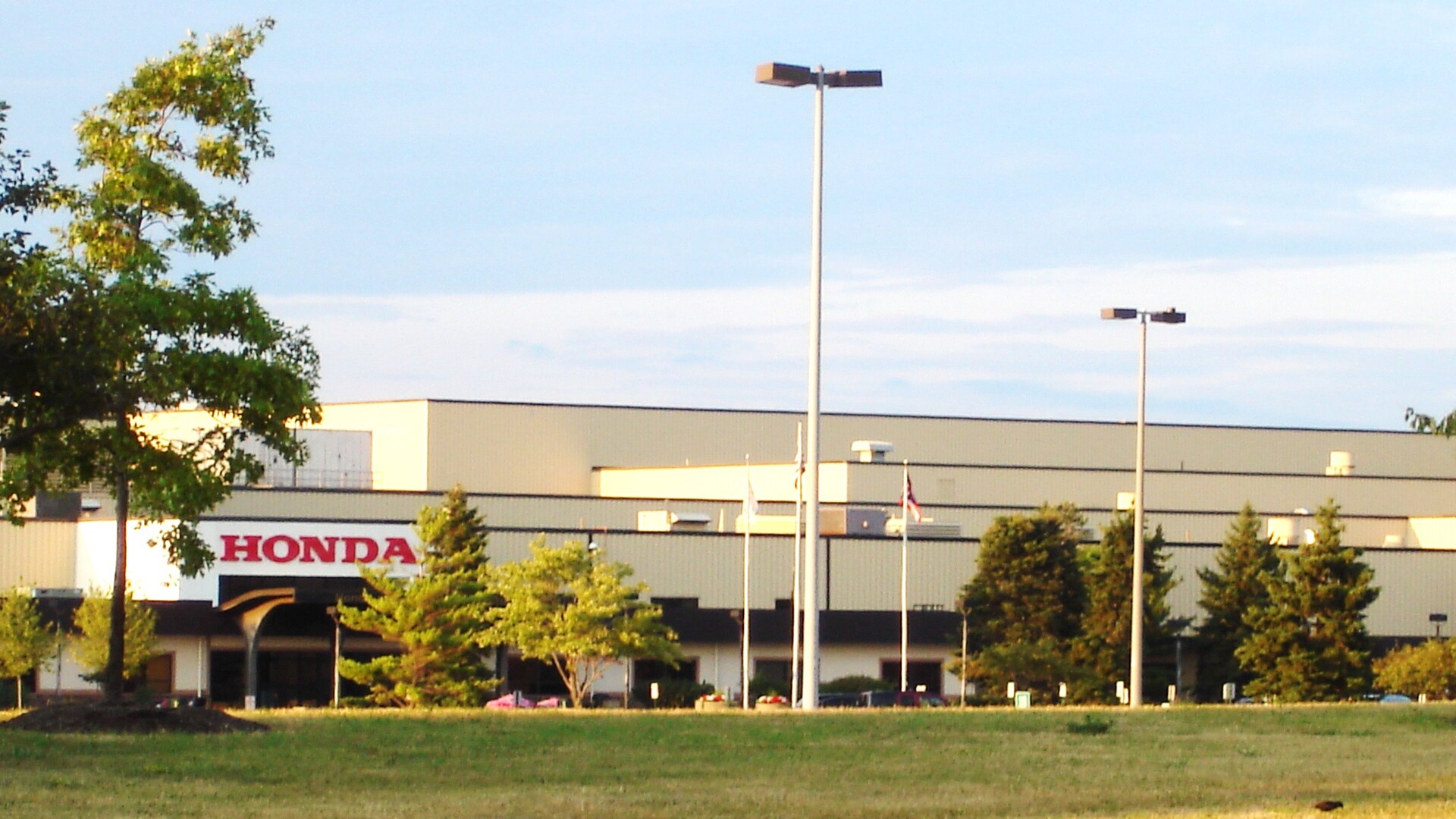
The Union County, Ohio, factory that first surfaced in an Ohio EPA application in October is now official. Honda said on Nov. 9 it will spend $3 billion on its fourth Ohio auto plant, on land between its Marysville and East Liberty plants, with production expected to start in 2029, “pending final government approvals.”
The state had signed off on its piece before the speeches in Marysville began. The Ohio Tax Credit Authority approved a tax credit for the project that morning, according to Gov. Mike DeWine’s office, which did not say what the credit is worth. The Ohio Department of Development told Columbus station WSYX that the board approved amending Honda’s existing Job Creation Tax Credit, rather than writing a new one.
That puts the hybrid plant on the same paperwork trail as the last big promise Honda made in Ohio. The most recent Honda job credit I found in the authority’s records was approved on Oct. 31, 2022, for the electric-vehicle battery plant in Fayette County and the retooling of existing Honda plants, according to the governor’s office. The meeting minutes show a 1.871% credit running 30 years, from Jan. 1, 2025, through Dec. 31, 2054, in exchange for Honda Development & Manufacturing of America creating 2,527 full-time-equivalent jobs with $117,603,200 in new annual payroll, and retaining $578,716,093 in existing payroll, by Dec. 31, 2033. One of its project sites is Allen Township in Union County, where the Marysville plant sits. The department has not published the amended agreement, so it is unconfirmed whether the Nov. 9 vote rewrote that 2022 deal or another Honda agreement, and what changed in it.
What Ohio’s 2022 EV Hub Deal Promised
Honda announced the EV hub on Oct. 11, 2022: $700 million to retool the Marysville and East Liberty auto plants and the Anna Engine Plant for electric vehicles, plus $3.5 billion with LG Energy Solution for a Fayette County battery plant that would create at least 2,200 jobs, according to JobsOhio. The governor’s office counted 327 new jobs from the retooling on top of the existing workforce.
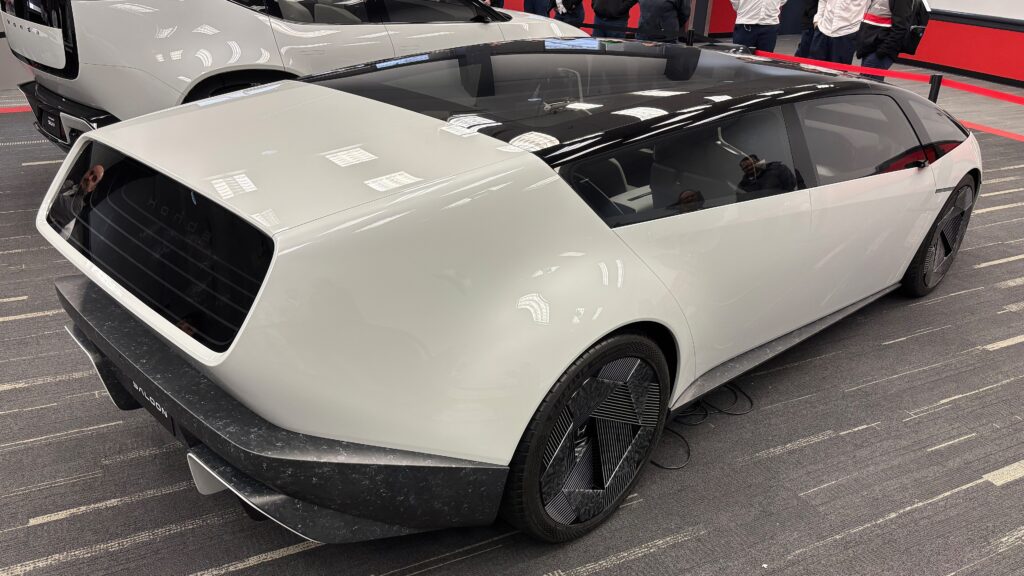
The battery plant was built. The Honda EVs it was meant to supply were not. On March 12, 2026, Honda canceled the Honda 0 SUV, Honda 0 Saloon and Acura RSX, all three planned for U.S. production, saying “the demand for EVs is declining significantly.” It estimated losses tied to the reassessment at up to ¥2.5 trillion across the current and future fiscal years.
The joint venture that runs the Jeffersonville battery plant, L-H Battery Company, announced on July 1 that it had started mass-producing cells there for grid energy-storage systems, not cars. CEO Chahun Ku said storage is part of the plant’s future “along with production of battery cells for application in hybrid-electric vehicles.” Honda’s Nov. 9 release lists that plant as one reason it picked Ohio for the new factory, describing it as able to build cells for both hybrids and EVs.

How Ohio’s Job Creation Tax Credit Pays Out
The credit is set out in Section 122.17 of the Ohio Revised Code. It equals the company’s Ohio payroll above an agreed baseline, multiplied by the percentage in its agreement. It is refundable, so if the credit is larger than the tax the company owes, the state pays the difference. Most agreements are capped at 15 years; the statute allows up to 30 for qualifying megaprojects.
At the 2022 terms, the yearly figure is small next to a $3 billion factory. By my math, 1.871% of $117,603,200 in new payroll comes to about $2.2 million a year, or roughly $66 million over 30 years before raises. The Dayton Daily News reported the credit’s estimated value at $71.3 million. Because the credit is calculated on payroll, it pays nothing for jobs that never arrive.
The statute also gives the authority room to bend. If a company falls short, the board may amend the agreement to reduce the rate or the term, and it decides any repayment at its own discretion after letting the company explain. A company that shuts down operations at the site before the credit’s term ends can be made to repay up to 100% of what it received. An amendment is how the board changes jobs, payroll, deadlines or sites in an existing deal, and the statute lets Ohio point an existing credit at the jobs Honda is now offering. Taxpayers are owed the new terms in writing, and as of Nov. 18 the department had not posted them.
JobsOhio and Union County Have Not Set Their Terms
The governor’s office put Honda’s full new commitment at 2,390 jobs and $3.38 billion, counting work at the Anna Engine Plant and the Honda Transmission Plant in Russells Point, where a transmission line is being converted into a second hybrid-system line. JobsOhio, the state’s privately run development corporation, will disclose any aid only after a final agreement is signed.
Property taxes are a separate negotiation. Union County economic developer Eric Phillips told WSYX the county is working out tax exemptions but has not received an official application from Honda, and that any abatement would apply to the new factory, not the land. “The district itself doesn’t give Honda any automatic tax abatements,” Phillips told the station.
Georgia’s handling of a similar project shows what a disclosed package looks like: its draft agreement with Audi lists $958 million in first-phase incentives and an 80% clawback. None of Ohio’s three Honda numbers is public yet.
Honda Moved Its Ohio Money From EVs to Hybrids
Honda reported first-half results the day after the Marysville event. EV-related losses took ¥484.8 billion out of operating profit for the six months through September, the Associated Press reported, yet Honda raised its full-year operating profit forecast to ¥780 billion from ¥650 billion, an increase of 20%. The company is paying for the canceled EV program and building hybrid capacity in the same state in the same year.
Capacity was already tight. As The Auto Wire reported in September, Honda had spent heavily making its existing Ohio lines flexible and still ran short of room. The new plant adds 240,000 vehicles a year and, per Honda, can build hybrid, gasoline and battery-electric models, flexibility Honda says will let it adapt as demand and electrification trends change.
What Changes for Honda Buyers Before 2029
Buyers feel this before the new plant opens. Honda said on Nov. 12 that the redesigned 2028 CR-V, due next year, will be sold only with a two-motor hybrid system. It will still be built at East Liberty, at Honda’s Indiana plant and in Alliston, Ontario, with its hybrid unit from the Russells Point transmission plant. Honda says hybrids are already more than half of CR-V sales and about 30% of Honda-brand sales. It has not announced CR-V pricing, so shoppers who chose the gas CR-V as the cheaper version do not yet know what the new entry price will be.
Gas prices are pushing the same direction: hybrids hit a record 16% of U.S. sales this fall while EV share slipped. Honda is building for that demand, with the Union County plant as the largest single piece.
What to Watch in Union County and Columbus
Three documents will show what Ohio is giving Honda: the amended tax-credit agreement from the Department of Development, the JobsOhio agreement, and Union County’s abatement terms once Honda files an application. Honda has not said which “final government approvals” are still outstanding. If the 2022 hiring deadline still applies, it falls on Dec. 31, 2033, and the new plant is not scheduled to build its first car until 2029.
When a company drops the project a 30-year tax credit was approved for, should Ohio be allowed to amend the existing deal for a new plant, or should the company have to reapply from scratch?