
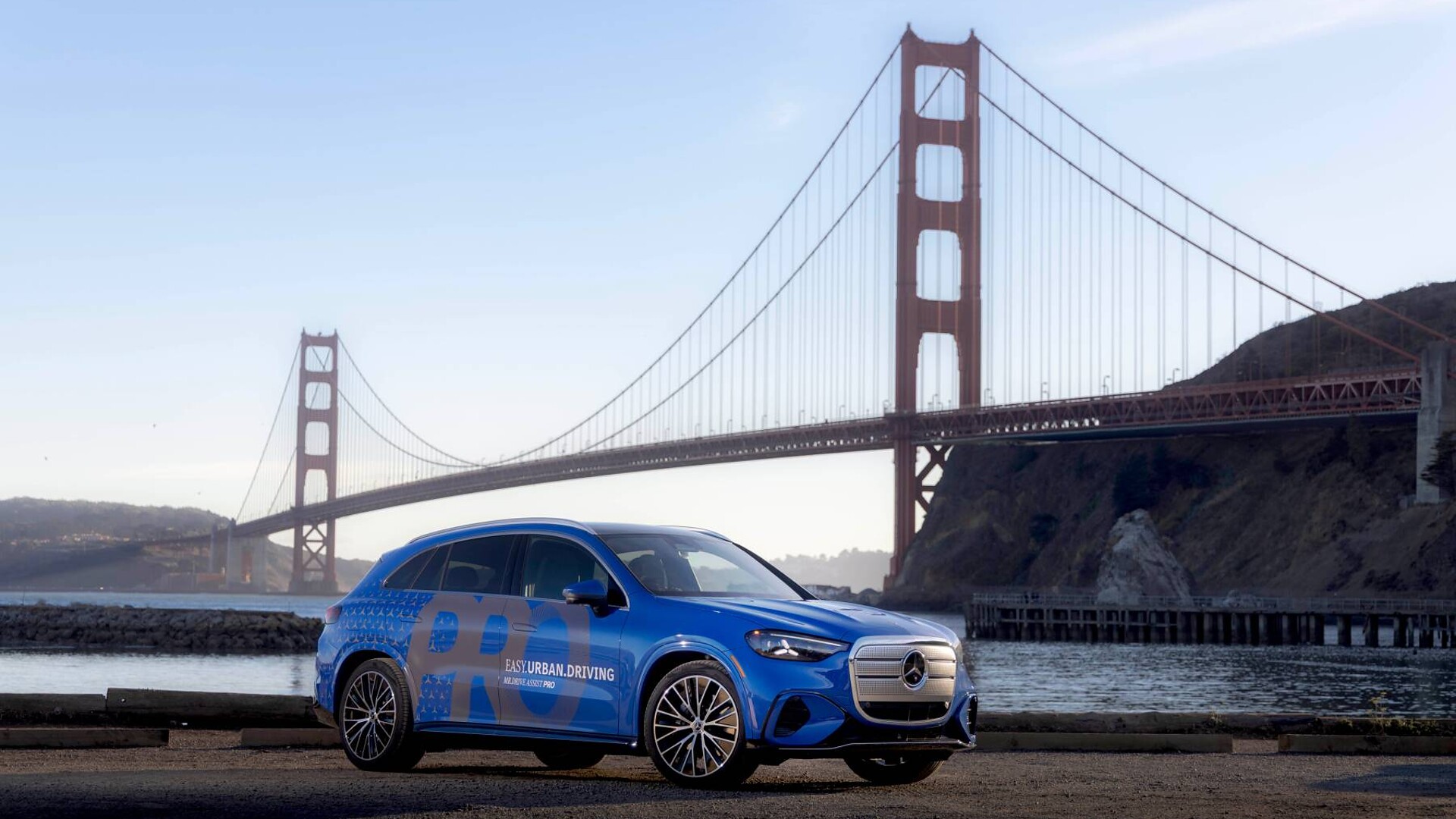
Mercedes needed a California permit to let its self-driving system go 40 mph. The new one goes 85 and needs no permit at all, because on paper you’re still the one driving.
Starting in December, select Mercedes-Benz owners and lessees in California will be invited to take their hands off the steering wheel at up to 85 mph on eligible highways and to let the car handle lane changes, turns and traffic lights along a navigation route, the German automaker’s most direct answer yet to Tesla’s Full Self-Driving (Supervised). Mercedes announced the program on Nov. 16 under a San Francisco dateline, and the fine print attached to both features puts the responsibility right back on the person in the driver’s seat.
The Mercedes-Benz USA release describes three pieces. Hands-Free Highway Assist lets drivers let go of the wheel on eligible controlled-access highways at speeds up to 85 mph, when the Digital Extra: Distance Assist DISTRONIC is active and conditions allow. Proactive Lane Change Assist starts and completes lane changes on its own, for example to pass a slower car or to line up for a highway exit. MB.DRIVE ASSIST PRO, the city-street piece, switches on with a button on the steering wheel whenever MBUX Navigation route guidance is running, and assists with leaving the highway, merging into the correct lane, turning at intersections, and braking and pulling away at traffic lights.
The Early Access Program will choose participants from owners or lessees of the 2026 and 2027 CLA Electric sedan, the 2027 GLC Electric SUV, the S-Class sedan, the GLE SUV and coupe, and the GLS SUV. Everyone else waits. Mercedes says Hands-Free Highway Assist reaches select eligible models across the U.S. in spring 2027, and ASSIST PRO begins its commercial U.S. rollout sometime in 2027.
Mercedes classifies both systems as SAE Level 2, and the release states the consequence plainly: “As an SAE Level 2 system, the driver remains responsible for the driving task, must remain attentive and be ready to take control at all times.” That puts it in the same legal category as Tesla’s system, and a step short of what GM says its eyes-off Escalade IQ will allow.
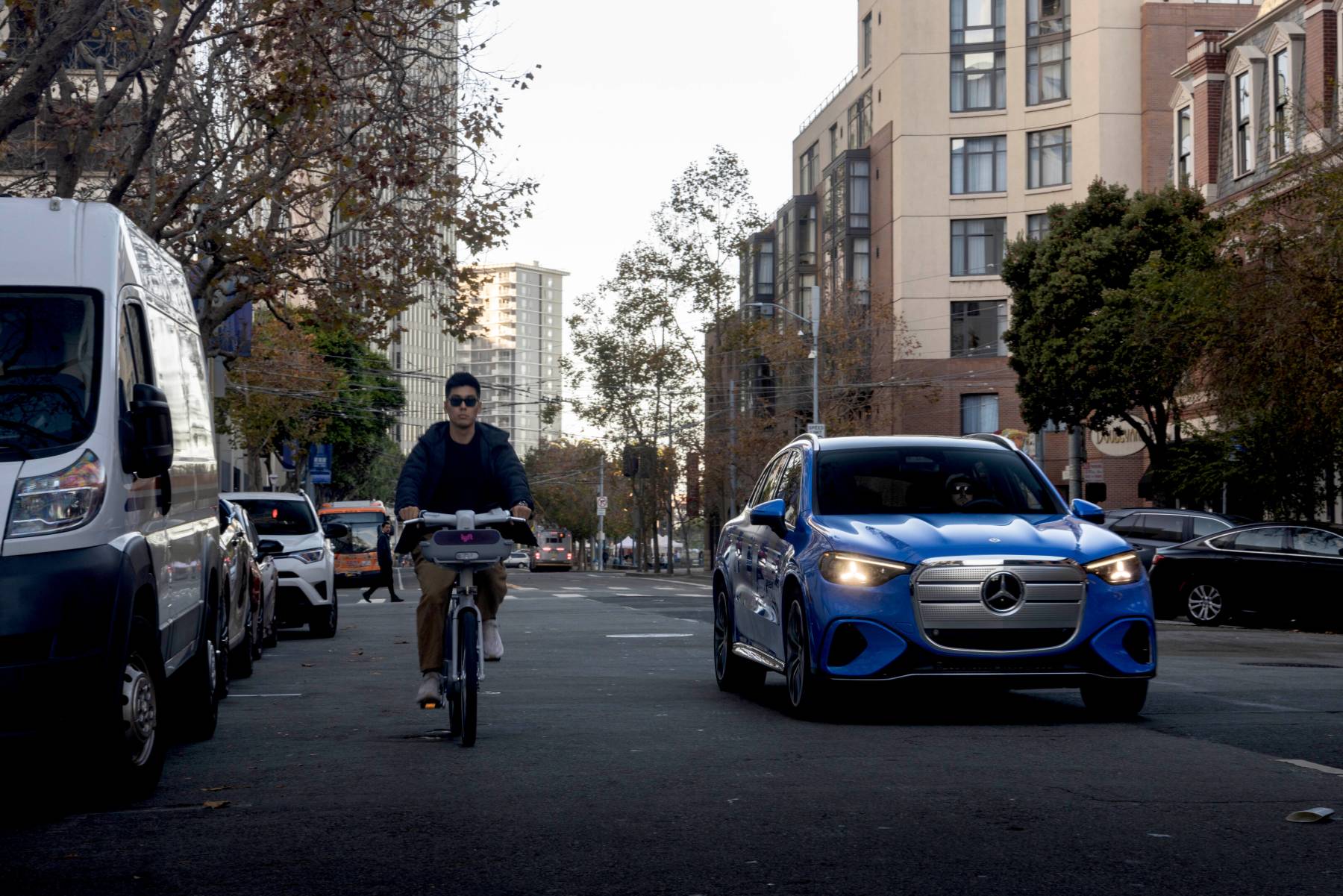
Mercedes already holds a California permit for a car that drives itself, at 40 mph
That Level 2 label decides which California rules apply, and the result runs opposite to what most drivers would guess. Mercedes-Benz Research & Development North America is one of four companies holding a California DMV permit to deploy autonomous vehicles, as of the agency’s Nov. 5 update, alongside Nuro, Waymo and Zoox. That permit covers the company’s Level 3 system, which takes over the driving task, and the DMV’s conditions for it are tight: freeways and highways in the Bay Area, Los Angeles, Sacramento and San Diego, plus Interstates 5 and 15 toward Nevada, in daylight, in decent weather, at no more than 40 mph.
The new system runs at more than twice that speed and works on city streets, and it needs no DMV permit at all. California’s autonomous-vehicle rules reach only “autonomous technology,” which Vehicle Code Section 38750 defines as technology that can drive a car without a human’s active physical control or monitoring. A Level 2 system depends on that monitoring by design, so the state treats the person behind the wheel as the driver. The 40 mph system had to clear a state permit process. The 85 mph system clears none, because the owner is still, legally, driving.
The California law that tripped up Tesla covers Mercedes too
What does apply is Vehicle Code Section 24011.5, added by SB 1398 and in force since Jan. 1, 2023. It bars a dealer or manufacturer from selling a new car with a Level 2 feature, or adding one through a software update or other upgrade, without handing the buyer or owner a distinct notice that names the feature and clearly describes its functions and limitations. California owners who receive ASSIST PRO over the air in December fall under that second clause. The same section prohibits naming or marketing a Level 2 feature in language that would lead a reasonable person to believe the car can function as an autonomous vehicle, and it makes a violation a misleading advertisement under Section 11713, the state’s dealer and manufacturer licensing statute.
Tesla found out what enforcement looks like. On Dec. 16, 2025, the California DMV adopted an administrative law judge’s finding in Case Nos. 21-02188 and 21-02189 that Tesla’s use of “autopilot” and “Full Self-Driving Capability” was misleading and violated state law. The DMV stayed the manufacturer-license suspension the judge had proposed and gave Tesla 60 days to deal with “autopilot” or face a 30-day suspension of its dealer license. On Feb. 17, 2026, the DMV said Tesla had stopped using the term in its California marketing. Tesla had already renamed its top package Full Self-Driving (Supervised).
Tesla still sells that package hard. Its Model Y order page pitches the $99-a-month subscription as driving with “minimal driver intervention,” while its support page says the system requires active driver supervision and does not make the car autonomous. Mercedes’ copy is far more guarded. Every product name ends in “Assist,” and the release says the systems support and assist the driver. Section 24011.5 also says compliance doesn’t limit a manufacturer’s or dealer’s civil liability for negligence or product defects, which matters to anyone sorting out who pays after a driver-assist crash.
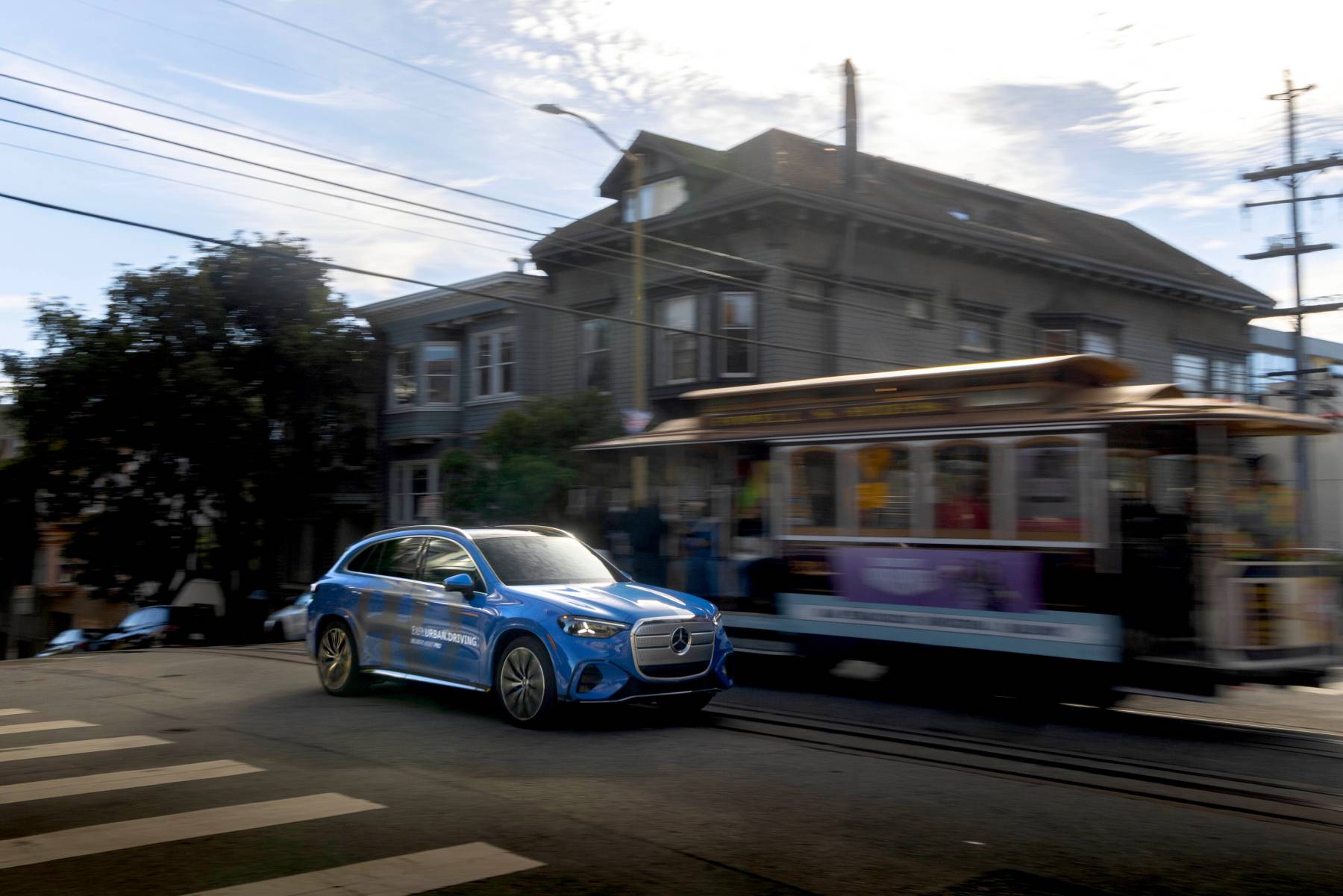
Crashes with the system engaged go to NHTSA within five days
The federal side works through reporting, not approval. Under NHTSA’s Third Amended Standing General Order 2021-01, in effect since June 16, 2025, a manufacturer must report a crash on a public U.S. road if a Level 2 system was engaged at any point from 30 seconds before the crash through its end, and the crash involved a fatality, anyone taken to a hospital for treatment, a strike on a vulnerable road user such as a pedestrian or bicyclist, or an air bag deployment. The report is due no later than five calendar days after the company learns of the crash.
Highway lane-centering systems seldom share a lane with a cyclist. ASSIST PRO is built to work through San Francisco intersections, so the vulnerable-road-user trigger is far more likely to come into play for Mercedes’ new system than for anything it has offered on the interstate. The 30-second window also means a driver who grabs the wheel a moment before impact doesn’t remove the crash from the federal count.
No U.S. price yet, and the U.S. date has already slipped
Mercedes hasn’t published a U.S. price. The release says cars with the required hardware can buy ASSIST PRO through the Mercedes-Benz Store as an over-the-air update, with subscription terms of three years, one year or one month, and that purchase options will vary by model year. That hardware, 27 sensing components including 10 cameras, five radar sensors and 12 ultrasonic sensors feeding a computer rated at up to 254 TOPS, is already installed in certain eligible 2027 vehicles, including the CLA Electric, GLE, GLS and S-Class, and Mercedes says more models get it starting with the 2028 model year. In Germany, the company’s Oct. 21 release promised a free trial month after launch. Tesla’s number to beat is $99 a month.
The schedule has moved before. On Feb. 12, 2026, Mercedes’ full-year results page listed ASSIST PRO in China first, “followed by the U.S. later in 2026.” The company’s July 28 investor presentation put Germany’s launch at the end of 2026, “following its launch in China and the U.S.” The November release moves the U.S. commercial start to 2027, and the October German release says orders there open in the first half of 2027. China has had the system since the new CLA launched at the end of 2025. For American customers, the California early-access program is what remains of the 2026 promise, and Mercedes chooses who gets in.
What California’s early-access owners get in December
Invitations start in December. Under Section 24011.5, each participant who gets the features by update is owed a written notice naming them and describing their limits, and that notice will be the clearest statement of what Mercedes says the system can’t do. The company says model availability and pricing will be announced before each market launch, with hands-free highway driving reaching a wider pool of U.S. owners in spring 2027. Any qualifying crash with either system engaged, during the trial or after, lands in NHTSA’s crash-reporting file.
The 40 mph system had to earn a state permit. The 85 mph city-street system didn’t. Should a Level 2 system that turns through San Francisco intersections answer to the DMV, or is “the owner’s still responsible” good enough for you?