
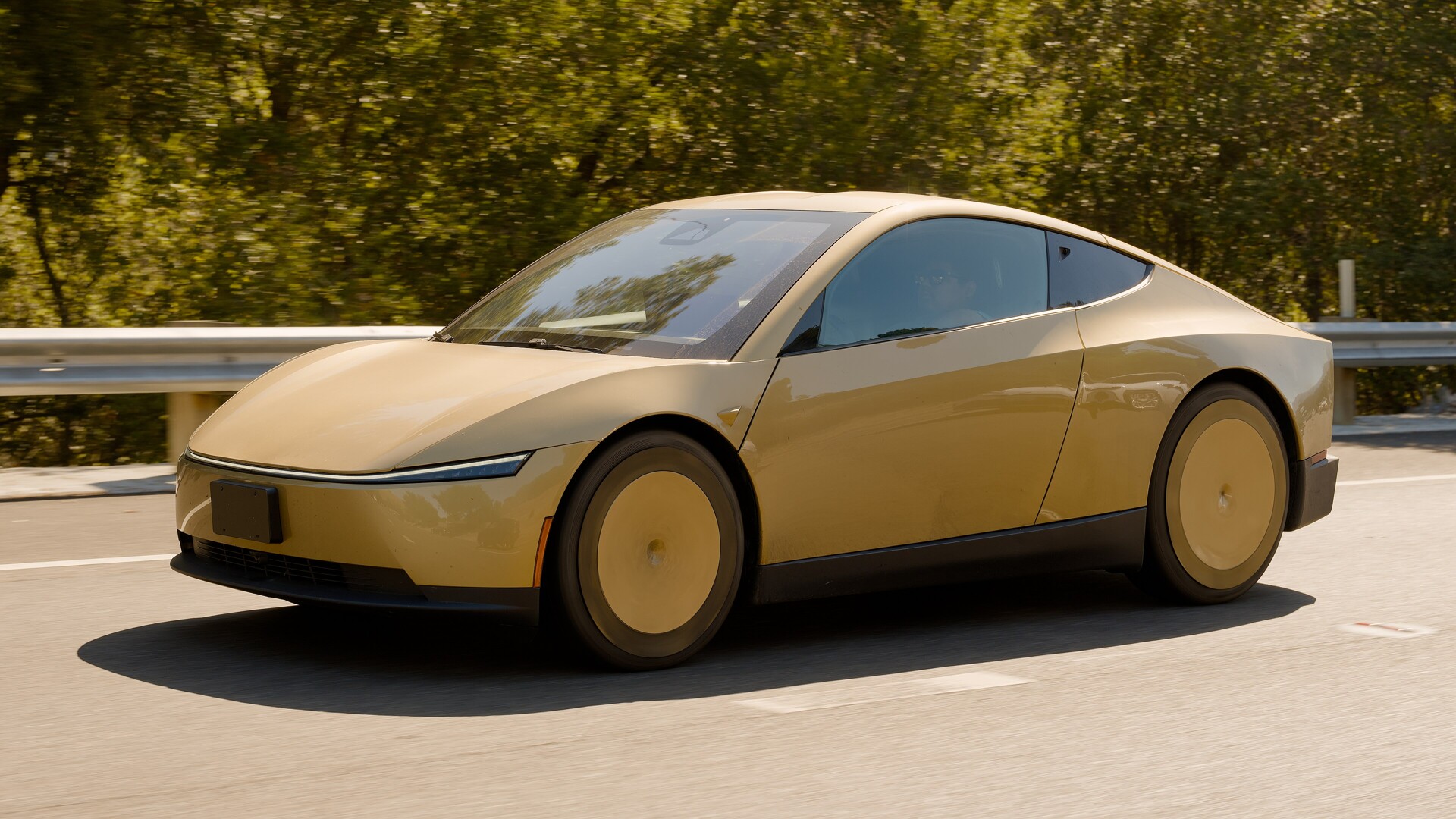
Tesla began inviting select customers on Nov. 13 to order a Cybercab, the two-seat robotaxi it has run in Austin since September, for personal use at $29,990 in Texas. The order page Tesla’s Robotaxi account posted on X that evening lists a second charge under the price: an Autonomy Subscription at $299 a month, with one month included and a note that the subscription and regular maintenance are “required to operate.”
About seven hours later, Elon Musk said that number was wrong. At 1:38 a.m. Eastern on Nov. 14, he replied to YouTuber Marques Brownlee, who had posted a rundown of the order page’s conditions. Musk wrote: “It will be available nationwide, as we receive regulatory approval. But the monthly fee is too high. Should match the cost of Tesla FSD and connectivity for other models, which is more like ~$115/month.” His post set no new price and no date.
That leaves the first private buyers signing up for a car whose running cost Tesla sets month to month, at a rate the company’s own CEO has called too high, in a state whose law sends the car’s traffic tickets to the owner. The $29,990 buys the hardware. Moving it is a separate purchase, renewed every month.
What Tesla’s order page and invitation spell out
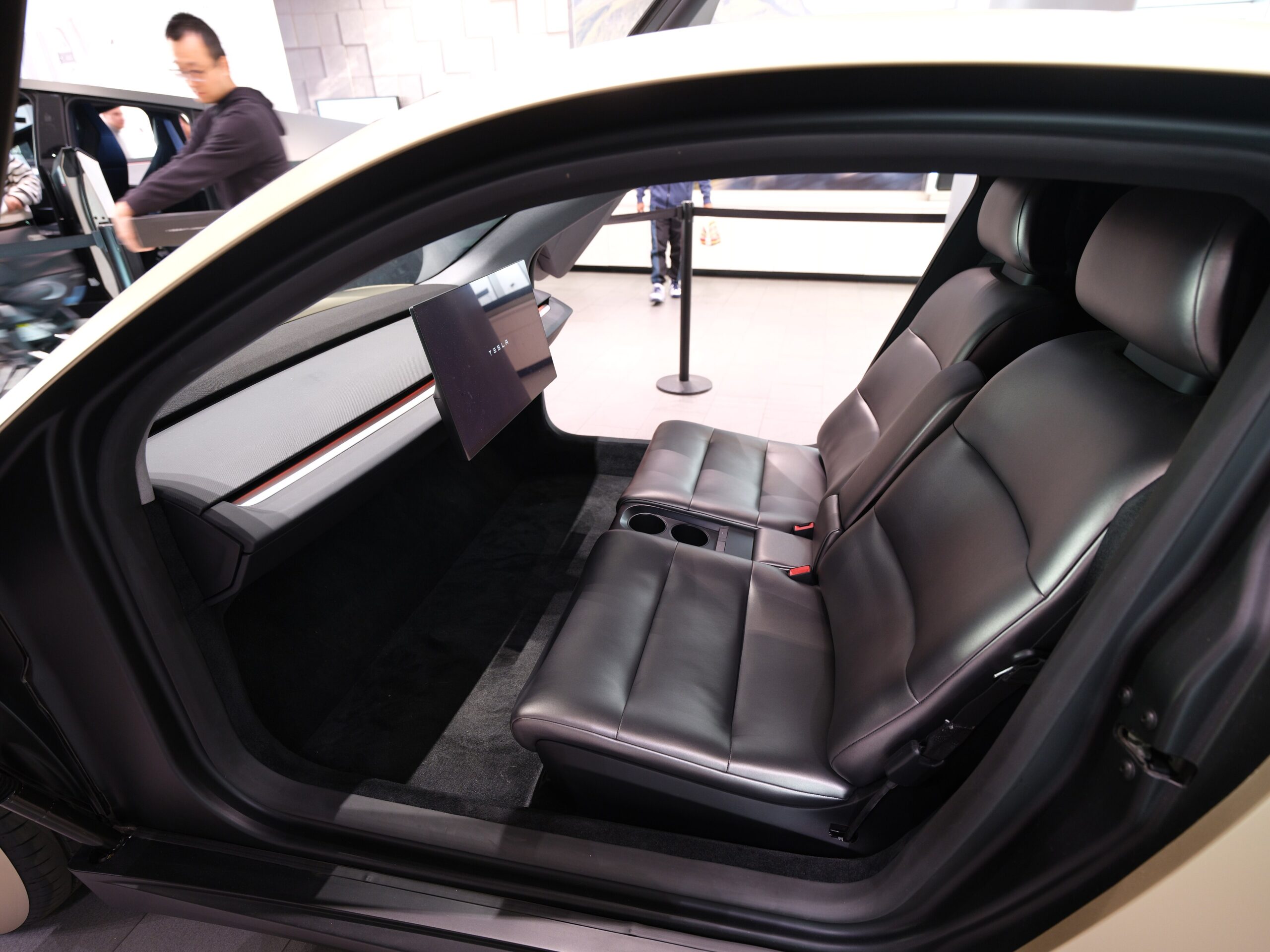
The invitation Tesla posted in the same thread describes seating for two, a 21-inch center touchscreen and 20.1 cubic feet of cargo space, under the heading “Early Access, Limited Release.” Its footnote reads: “Only available in supported service areas. Subscription required for operation. Terms apply.”
The order page adds that the $299 excludes taxes and is billed separately each month until canceled. Due at order is a $1,000 deposit the page labels non-refundable, against an estimated delivery in December 2026.
Brownlee’s post filled in what the screenshots left out: orders are invite-only, the buyer must accept delivery in one of a handful of Texas cities, the car operates only inside Tesla’s existing geofenced areas, and each customer gets one vehicle. His screenshot of the delivery menu shows five choices: Austin, Dallas, Houston, San Antonio and Fort Worth. Tesla’s Robotaxi page says paid rides also run in Miami, Orlando and Tampa, but no Florida city appears on that menu.
Placing an order, the page says, means agreeing to a Cybercab Order Agreement and an Autonomy Subscription Agreement. Neither is listed on Tesla’s public legal page, so the terms that govern price changes, cancellation and resale can’t be checked against a document Tesla has published for everyone. Invitees can read them before paying the deposit.

Five years of Cybercab payments at $299, and at Musk’s $115
The math here is The Auto Wire’s, built from prices Tesla and Toyota publish. With the first month free, five years of ownership means 59 billed months. At $299, that’s $17,641 in subscription fees on top of the $29,990 price, or $47,631. At Musk’s figure of about $115, the five-year subscription bill falls to $6,785 and the total to $36,775.
| Five-year cost, before taxes and fees | Purchase price | Required monthly fees (59 months) | Total |
|---|---|---|---|
| Cybercab at $299 a month (current order page) | $29,990 | $17,641 | $47,631 |
| Cybercab at about $115 a month (Musk’s figure, not a published price) | $29,990 | $6,785 | $36,775 |
| 2027 Toyota Camry LE (base MSRP) | $29,700 | $0 | $29,700 |
Toyota lists the 2027 Camry LE at a $29,700 base MSRP, $290 less than the Cybercab, and nothing more is owed to Toyota for it to leave the driveway. The Camry burns fuel and needs a licensed driver; the Cybercab’s fee is, in effect, the price of not needing one. That trade is the whole pitch, and $299 a month is what Tesla first put on it.
None of those totals include Texas’s 6.25% motor vehicle sales tax, which adds $1,874.38 to the Cybercab’s price, or registration, insurance, charging and upkeep. Keep paying $299 and the subscription passes the price of the car itself with the 101st bill, about eight and a half years after delivery.
Musk’s benchmark lines up with what Tesla charges today. FSD (Supervised) is $99 a month and Premium Connectivity is $9.99, or $108.99 together. At $299, a Cybercab owner pays about 2.7 times what a Model 3 or Model Y owner pays for that pair, and a Model 3 whose owner cancels both still drives.
Texas law sends a driverless car’s tickets to the owner
Texas rewrote its automated-vehicle law with Senate Bill 2807, effective Sept. 1, 2025, and the result sits in Chapter 545 of the Transportation Code. Section 545.454 says that when an automated driving system is engaged, the system is the operator of the vehicle, “including for purposes of assessing compliance with applicable traffic or motor vehicle laws.” The next subsection decides who pays: the owner is issued any citation, unless the car is running under an authorization from the Texas Department of Motor Vehicles, in which case the authorization holder gets it.
That authorization, under Section 545.455(c), is for anyone moving “property or passengers in furtherance of a commercial enterprise” without a human driver. Tesla’s paid robotaxi service fits that description. A Cybercab bought for personal use and carrying its owner to work does not, as I read the statute, which means the owner’s name goes on the citation if Tesla’s software rolls through a stop sign. There is no steering wheel or brake pedal in the cabin for the owner to use instead.
Section 545.455(b) lists what any driverless car needs on Texas roads: registration and title, liability insurance or self-insurance at least at the required minimum, a recording device installed by the manufacturer, and an automated driving system that complies with federal law, “including federal motor vehicle safety standards.” Section 545.454(c) says no driver’s license is needed while the system is engaged. Other states write these rules differently, and Musk tied his “nationwide” line to getting regulators’ approval state by state.
NHTSA is reviewing how Tesla certified the car buyers are ordering
That federal-standards requirement is the one NHTSA is examining. The agency opened Audit Query AQ26002 on Sept. 3, the day Tesla began commercial Cybercab service in Austin, covering an estimated 1,000 vehicles. The opening document says Tesla certified the Cybercab as compliant with all applicable Federal Motor Vehicle Safety Standards, and that NHTSA will consider how far that certification “depended on determinations that certain FMVSS are inapplicable.” The Auto Wire has covered the audit and the Special Order that came with it.
An audit query is not a recall and doesn’t stop Tesla from taking orders. It does mean a private buyer paying a deposit in November is buying a car whose federal certification is under review by the agency that can order it fixed.
What a Texas buyer commits to before December deliveries
The $29,990 sticker lands under the $30,000 figure Musk gave when he unveiled the Cybercab in October 2024. The monthly charge is the part buyers saw for the first time on Nov. 13, and it is the part Tesla controls after the sale.
For an invitee, the first commitment is the $1,000 deposit, which the order page calls non-refundable. Until Tesla changes that page, $299 is the price attached to the order, whatever Musk posted afterward, so the bill that arrives after the free month is the one to get in writing. The two agreements govern how Tesla can change the fee and the service area. Texas requires liability coverage before the car can drive itself on a public road, so an insurance quote belongs in the math too. If the geofence limit Brownlee described holds, the car won’t take a trip that leaves Tesla’s service area.
The first test comes in December, when early owners see whether their second month bills at $299 or closer to the $115 Musk named, and in Texas, when the first citation written to a Cybercab lands in an owner’s mailbox.
If you pay $29,990 for a car outright, should its maker be allowed to make a monthly fee the condition of using it, or is that a fair price for a car that needs no driver?