
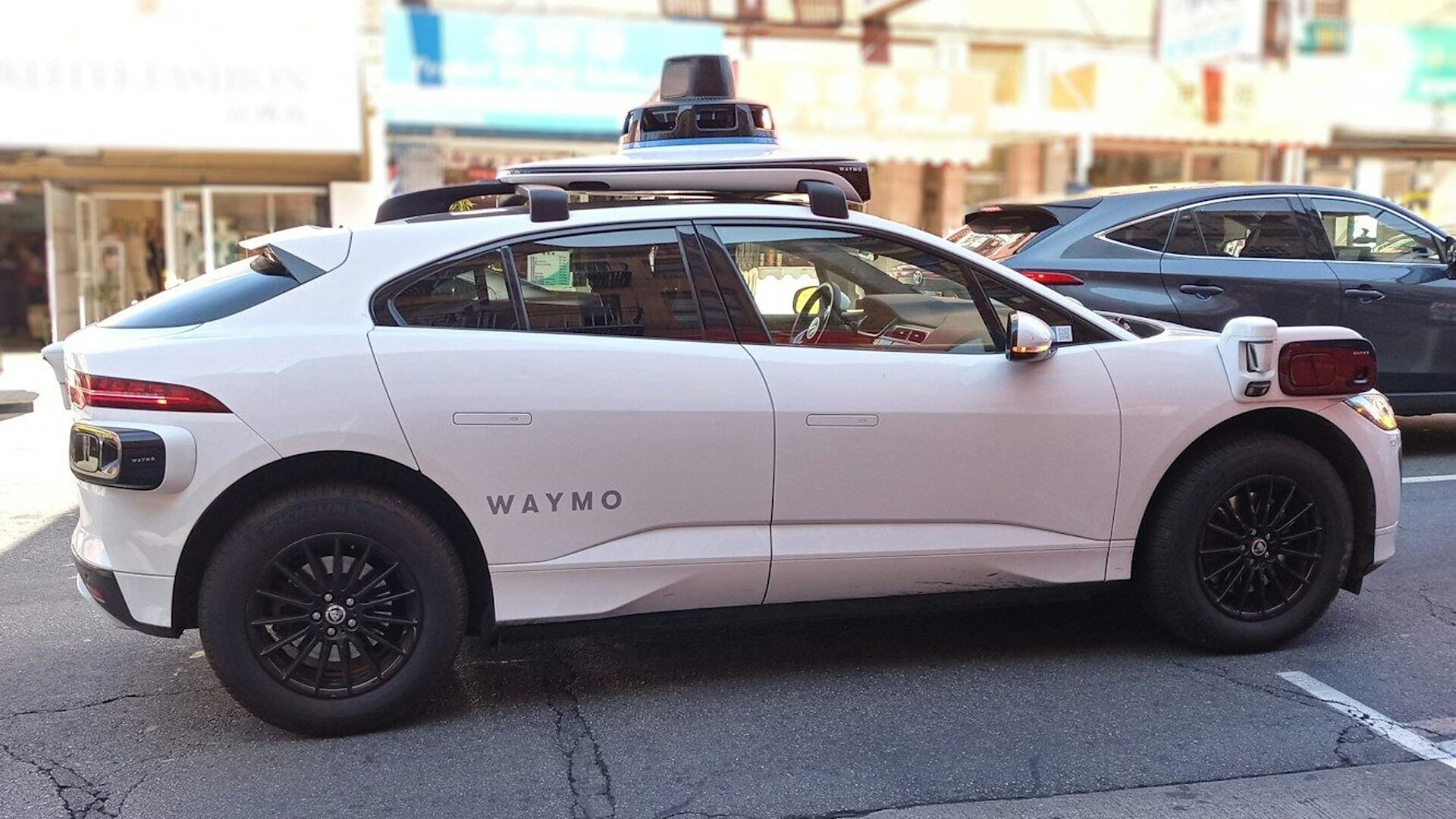
California has kicked Waymo’s driverless cars off the freeway. On Nov. 11 the DMV restricted Waymo’s deployment and driverless testing permits, barring it from running or testing without a human driver on any California freeway, and called those operations an “imminent hazard to public safety.” Waymo then went further than the state asked: a spokesperson said it has “temporarily restricted commercial freeway rides in all markets where we operate that service.” Testing continues with trained specialists behind the wheel. (Patch)
Two incidents, one pattern
The DMV pointed to two Bay Area events. In the first, three Waymo autonomous vehicles entered an active construction closure on Highway 101 near Burlingame, putting workers, equipment and other vehicles at risk. In the other, a Waymo on Interstate 280 in San Francisco tried to get around two California Highway Patrol cars that were running a traffic break. Waymo says the Highway 101 incident caused no injuries or collisions. (KTLA, Notebookcheck)
Related Articles
- Toyota’s Own Recall Filing Is the Clock Ticking in the Camry Hybrid Inverter Lawsuit
- Crashed in 2008, a Ford GT Became a 1,058-HP Galpin One-Off on Race Gas, and Boeckmann Is Selling It With No Reserve
The traffic break is the more telling failure. In a traffic break, officers weave across the lanes with their lights on and deliberately slow everyone down, opening a gap ahead of debris, a crash or a work crew. There are no cones, no signs and no change to the map. The only signal is a patrol car doing something that would look like bad driving out of context. A human driver gets it in a second. A system built to keep traffic moving can read it as a slow obstacle to get around.
The patch that didn’t stick
This has happened before. Waymo’s own federal recall filing lays out the spring incidents: in Phoenix in April, Waymo AVs “did not recognize and drove past ramp closure signs into pre-planned freeway construction zones”, and on May 18, seven Waymo AVs drove between lane-closure cones into active freeway construction in the Bay Area. Waymo’s diagnosis was blunt. The software was inappropriately prioritizing the avoidance of other freeway hazards and/or failing to recognize the construction zone. (NHTSA)
The NHTSA acknowledgment lists 3,871 potentially affected units. The remedy combined software meant to avoid entering construction zones and to detect when a vehicle is already inside one, plus additional operational protocols. Waymo began gradually restarting freeway trips in Phoenix in late July, with San Francisco, Los Angeles, Austin and Miami to follow. (NHTSA)
Now the DMV says the work-zone incursions continued despite a restriction and corrective actions after the similar May 18 incidents. The fix shipped. The problem came back. (SF Standard)
Why freeway work zones break robots
A robotaxi drives on top of a detailed prior map. A construction zone is the moment that map stops being true: the painted lane lines are still there, but the cones say something else. At 65 mph there’s very little time to settle that conflict. The “prioritizing other hazards” wording in the recall suggests the software sometimes treated a gap in the cones as a safe way out from something else. Human drivers know a closed lane is almost always the worse choice. Tune a system hard to fix one edge case and you can loosen another, which is why a recurrence after a recall worries regulators more than the first incident did.
Why California could use a scalpel
The DMV’s April 2026 rules let it impose targeted limits on AV manufacturers, including fleet size, location, speed, and weather. That’s why Waymo lost freeways but kept its surface-street business. Compare that with 2023, when the DMV suspended Cruise’s permit to operate its autonomous vehicles without a test driver present. The same rules also let law enforcement issue a “Notice of AV Noncompliance” to a manufacturer when one of its AVs commits a moving violation. That gives the CHP a formal way to put incidents like I-280 on the record. (California DMV, Yahoo News)
Related Articles
- A Chula Vista Seller Wants $35,000 for a Fiero Pretending to Be an F40, and Ferrari Has Won This Fight Before
- Illinois State Police Recovered 424 Stolen Cars in One Quarter, Up 51%, but Arrests Slipped From 25 to 22
To get freeways back, Waymo must provide sufficient evidence that its vehicles can safely detect and respond to construction zones, emergency vehicles, and other roadway situations. The DMV has given no timeline. (KTLA)
What riders and drivers should take from this
- Trips get slower. Without freeways, the airport run goes back to surface streets, the way it did during the May pause. Expect longer routes on surface streets and higher fares where trips run long. (TechCrunch, ABC7)
- The fix is fleetwide, so the pause is too. Waymo pulling freeway rides in every market amounts to admitting that Phoenix and San Francisco run the same driving logic. There’s no dealer visit involved, because Waymo owns the affected vehicles and will apply the remedy over the air. The slow part is proving the update works, not installing it. (NHTSA)
- It’s a lesson for everyday driver-assist users. Work zones and police-controlled traffic are exactly where lane-centering and hands-free systems run into the same problem: what’s painted on the road disagrees with what’s actually happening. If you own one of these systems, take over when the cones show up.
California wants proof before Waymo gets the freeway back, and it hasn’t said when. What would convince you: a clean stretch of supervised testing, or a Waymo correctly handling a CHP traffic break?