
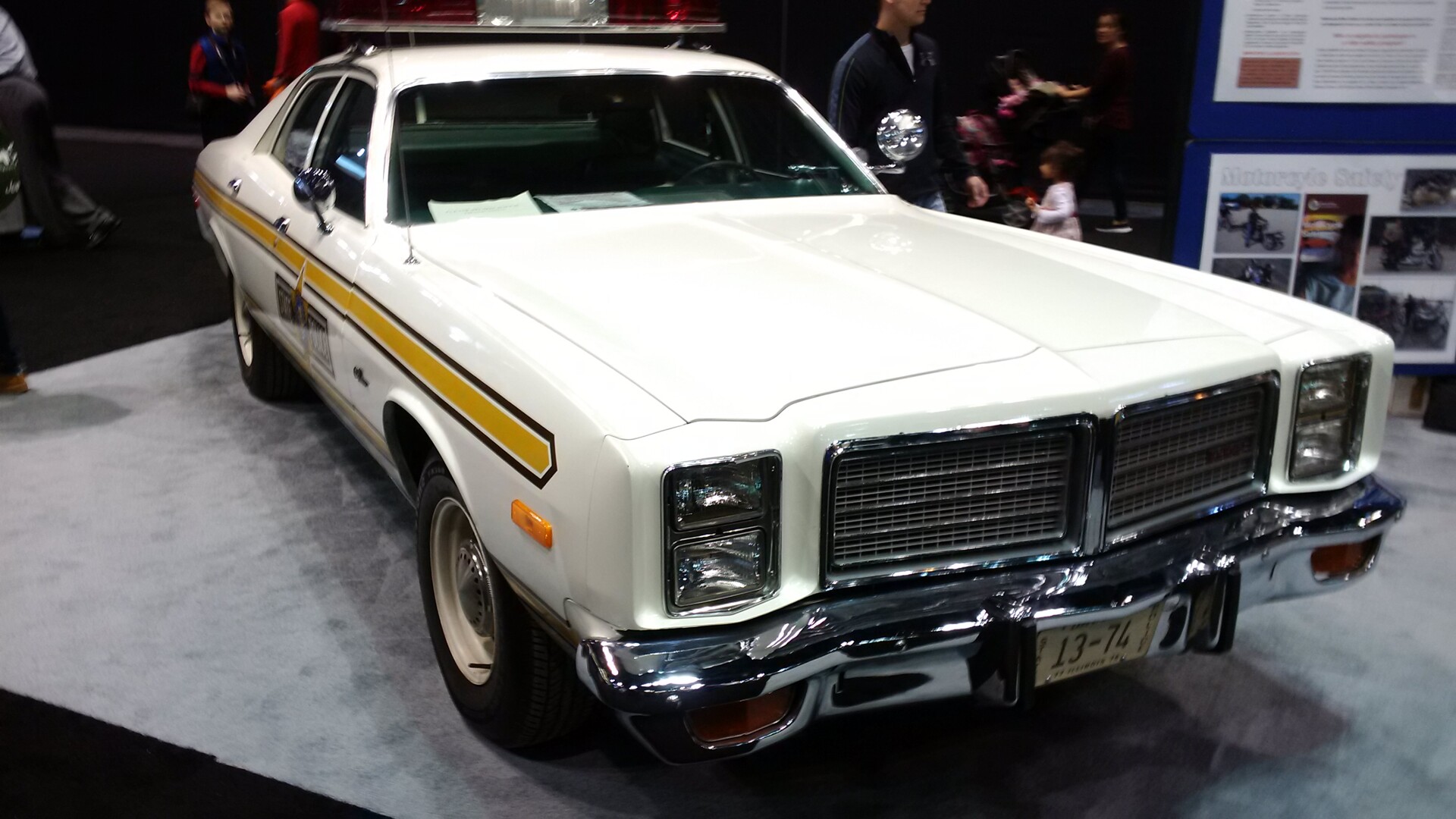
Illinois State Police said troopers recovered 424 stolen or hijacked vehicles from July through September, months after NICB’s midyear count showed vehicle thefts down in all 50 states.
Illinois State Police vehicle recoveries rose 51% from the 280 the agency reported for the same quarter of 2025. ISP’s Oct. 13 release makes no such comparison; the percentage is The Auto Wire’s arithmetic from that release and ISP’s Oct. 15, 2025 release. The arrests did not follow. The 2026 release lists 21 stolen-vehicle arrests and one hijacking arrest, 22 in all, against 21 and four, or 25, a year earlier.
Recoveries up 144, arrests down 3
| Metric | July–Sept. 2025 | July–Sept. 2026 |
|---|---|---|
| Vehicles recovered | 280 | 424 |
| Missions | 40 | 38 |
| Stolen-vehicle arrests | 21 | 21 |
| Hijacked-vehicle arrests | 4 | 1 |
| Firearms seized | 13 | 7 |
| K9 deployments | 30 | 19 |
| Air operations | 34 | 38 |
Per mission, the gap is wider: 424 recoveries across 38 missions is about 11 a mission, against 7 for 280 across 40 in 2025, by The Auto Wire’s math. The spring quarters split the same way. ISP’s July 21, 2026 release lists 342 recoveries and 20 missions for April through June, while its July 28, 2025 release listed 225 recoveries and 48 missions. Recoveries rose while missions fell by more than half. Neither release defines a recovery or says how many of the vehicles came out of the listed missions, so the count may include cars found other ways. It measures cars returned. It does not measure thieves caught.
A recovery count is not a theft count
Nationally, NICB reported that U.S. vehicle thefts fell 21% in the first half of 2026. A count of cars found can rise while thefts fall, if more of the stolen cars get found or the unit is looking harder, and ISP’s release gives no statewide theft figure to say which is happening in Illinois. ISP logged 38 air operations in the quarter, up from 34, and the kind of Illinois pursuit where a helicopter follows a stolen car is where that number shows up on video.
Three Chicago-area incidents ISP highlighted
The release describes three incidents. On Aug. 5, ISP said, a stolen Nissan crashed at Garfield and Wells, a trooper found it at Wentworth and 59th, and the driver fled and hit a tree; two occupants were arrested and a firearm was recovered. On Aug. 22, a stolen Chevrolet fled a traffic stop on I-55 at Halsted and stopped in an alley in the 7200 block of S. Union, and ISP arrested all four occupants. On Sept. 2, a Dodge that ISP linked to an aggravated vehicular hijacking fled a stop on southbound I-94 at 79th, crashed into two unoccupied vehicles, and ended with three occupants arrested and a firearm recovered.
Those incidents account for nine occupants taken into custody out of the 22 arrests ISP tallied for the quarter. The release does not say what charges were filed or how any case has resolved, and an arrest is not a conviction. Under 720 ILCS 5/18-3, taking a vehicle from a person or their immediate presence by force or threat of force is vehicular hijacking, a Class 1 felony. Section 18-4(a)(4) makes it aggravated when the offender is armed with a firearm, a Class X felony with 15 years added to the sentence. That is the category where the count fell from four arrests to one.
The $1-a-car-year assessment behind the grant
ISP credits its program to grants from the Illinois Secretary of State’s Vehicle Hijacking and Motor Vehicle Theft Prevention and Insurance Verification Council: $10 million for the first fiscal year, $677,000 in June 2024 and $637,500 in July 2025. That adds up to $11,314,500, by The Auto Wire’s sum; the release gives no total. The Council’s money comes from insurers rather than the general fund. Under 20 ILCS 4005/8(d), each insurer writing private passenger coverage may pay $1.00 or less, set by the Council, for every earned car-year of Illinois policies with physical damage coverage, and the statute bars moving that money to general revenue. It does not say whether insurers build the assessment into premiums.
The scorecard for that money is a quarterly press release. It has no prior-year column and no case outcomes, and it never says what counts as a recovery. ISP published its 2025 versions on Jan. 16, April 21, July 28 and Oct. 15. If the pattern holds, the next one covers October through December and will show whether 22 arrests was a one-quarter dip.
Should a program paid for by a per-policy insurance assessment have to report arrests and case outcomes alongside the number of cars found, or is a recovery count enough?