
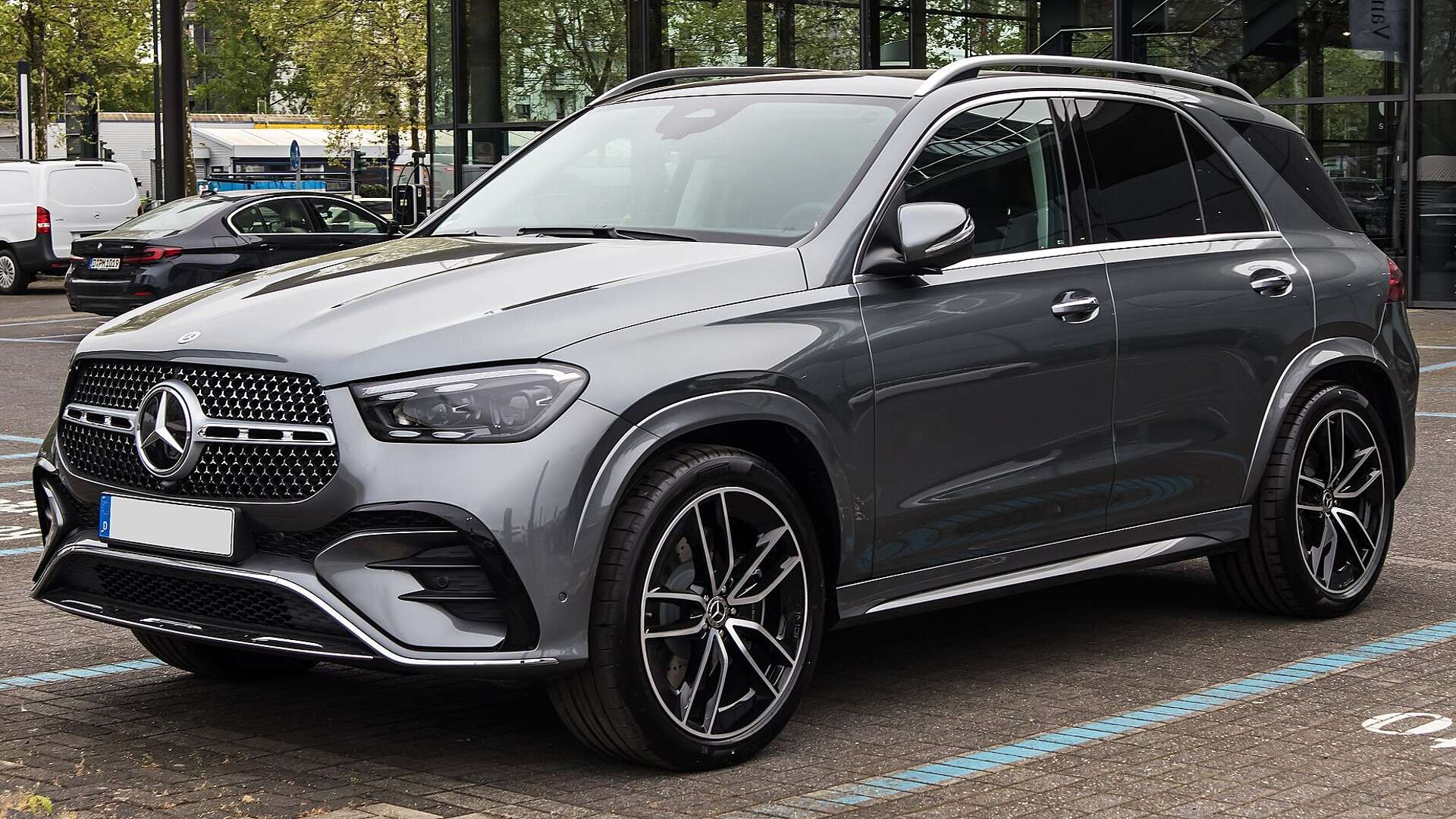
Mercedes-Benz has built SUVs in Alabama since 1995. Under a Senate bill written to keep Chinese cars off U.S. roads, that may not be enough after model year 2030, because two Chinese investors together own 19.67 percent of the company. And every share Mercedes buys back and cancels makes their slice bigger.
Mercedes-Benz bought back 3,851,805 of its own shares between Sept. 1 and Oct. 2, paying about €171 million, according to the company’s buyback disclosures. When Mercedes finished its last round of buybacks, it canceled all 107 million repurchased shares. Do that again, and every remaining owner holds a slightly larger piece of the company, including the two Chinese investors whose combined stake pulls a German automaker into a Senate bill written to keep Chinese cars off American roads.
The version of the Connected Vehicle Security Act that the Senate Commerce Committee formally reported on Sept. 22 sets a deadline for Mercedes: model year 2030. Vehicles from earlier model years would keep selling. After that, the company would need its Chinese shareholders to own less of it, which Mercedes cannot order, or a Commerce Department authorization that Congress could try to overturn.
What the committee sent to the Senate floor
Commerce Committee Chairman Ted Cruz reported S. 4429 with a full substitute text on Sept. 22, along with Senate Report 119-146. The bill sits on the Senate calendar as No. 671 and has not had a floor vote. Sen. Bernie Moreno, R-Ohio, introduced it on April 29 with Sen. Elissa Slotkin, D-Mich., and the report counts 45 more senators who signed on later. The committee approved it by voice vote on July 22, a vote The Auto Wire covered at the time.
The reported text bans the import and sale of connected vehicles made, developed, designed or supplied by a “foreign entity of concern.” For companies that make or supply connected vehicles, that label applies once people or companies tied to China, Russia, North Korea or Iran hold more than 15 percent of the equity, voting interest, board representation or other indicia of control. For software and connectivity-hardware suppliers, the line is 25 percent. The definition counts a single investor “or a combination of such individuals or entities.”
Mercedes’ own shareholder page lists BAIC Group at 9.98 percent of registered share capital and Li Shufu at 9.69 percent through Tenaciou3 Prospect Investment Limited, based on the most recent voting-rights notifications. That adds up to 19.67 percent, which The Auto Wire flagged in July. Neither holder comes near 15 percent alone.
The rule Commerce already enforces works differently. The Bureau of Industry and Security’s January 2025 connected-vehicle rule asks whether an adversary-linked person can “determine, direct, or decide important matters” at a company through “a majority or a dominant minority” of the voting interest, board seats, contracts or other means. That test is a judgment Commerce makes company by company, and I found nothing in the public record showing the department treating Mercedes as Chinese-controlled. For automakers, the bill swaps that judgment for a percentage.
A model-year 2030 runway that the April bill did not have
Section 11(d) of the substitute says the sales ban does not apply to connected vehicles from model years before 2030 made by a company that was selling passenger vehicles in the United States when the law took effect and had been building them here for at least five years. A company using the delay has to send Commerce a report every year laying out its plan to comply by 2030.
Mercedes clears both tests easily. Mercedes-Benz U.S. International says it has been in Tuscaloosa County, Alabama, since 1995, builds the GLE SUV and GLE Coupe there, employs more than 6,300 people and has invested more than $6 billion.

I compared the reported substitute with the bill as introduced. The April text banned covered vehicles flatly on and after Jan. 1, 2027, with no delay for automakers already building cars here. The committee added the runway. It ends at the same place for everyone, though, and what waits at the end of it is a new authorization process.
After 2030, Congress can challenge each authorization
Under the reported bill, Commerce can still authorize a vehicle that would otherwise be banned if it finds no undue risk of data being pulled out of the car or of the car being manipulated or operated remotely, no risk to critical infrastructure and no other national security risk. It has to send Congress the risk assessment behind each authorization, with confidential business information redacted. For any authorization issued on or after Jan. 1, 2030, there is one more condition: Congress must not enact a joint resolution of disapproval.
Authorizations Commerce has already granted under the current rule would expire on their own end date or on Jan. 1, 2030, whichever comes first. The introduced bill would have kept them alive until 2032. That shorter clock reaches the automaker the committee report cites as having received one. Volvo Cars said on May 26 that it received a specific authorization after discussions with Commerce about its governance, technology and data security. Polestar did not, and according to the committee report it then announced it would stop selling new vehicles in the United States starting with model year 2027.
A disapproval resolution has to be enacted, which means passing both chambers and either getting the president’s signature or overriding a veto. An authorization the White House wants to keep would be hard to kill that way. What the provision does guarantee is that each post-2030 authorization, and the risk assessment behind it, lands in front of Congress.
Mercedes cannot buy its way under 15 percent
A publicly traded company does not get to pick its owners. Mercedes can ask BAIC and Tenaciou3 to sell, and it can apply for authorization, but nothing in its own control moves the 19.67 percent figure down. Its usual way of returning cash to investors moves it up.
Mercedes repurchased 107 million shares for €6,803 million in its 2023 and 2024 programs, which the company describes as “almost 10% of the share capital,” and canceled all of them on Dec. 13, 2024. Its share count now stands at 962,903,703. The current program, which began Sept. 1, allows up to 58 million more shares, or up to €1 billion, through April 6, 2027.
The Auto Wire’s math, not the company’s: if the BAIC and Li Shufu holdings stay where the notifications put them and Mercedes cancels the full 58 million shares, their combined stake rises from 19.67 percent to about 20.9 percent. Canceling just the 3.85 million shares bought through Oct. 2 would lift BAIC by itself to a hair over 10 percent. Mercedes notes that its published figures come from voting-rights notifications, so actual holdings today could be different.
What Congress’s budget office and Mercedes’ lobbyists put on paper
The Congressional Budget Office estimate printed in the committee report says “few additional people would be subject to civil or criminal penalties” under S. 4429, because Commerce rules already cover Chinese and Russian connected-vehicle technology and Iran and North Korea are already under broad import bans. That estimate is about penalties and federal budgets. It does not address which automakers would land on the wrong side of the 15 percent line. The committee’s own regulatory impact section is broader, saying the bill “would affect a broader universe of businesses than the existing rule.”
Mercedes-Benz USA’s second-quarter lobbying report, filed July 20, lists “S4429/HR8730 – Connected Vehicle Security Act” among the issues it lobbied on, with contacts at the Senate, the House, the Commerce Department and the White House. The company reported $340,000 in lobbying expenses for the quarter across all issues. The filing does not say what Mercedes asked for.
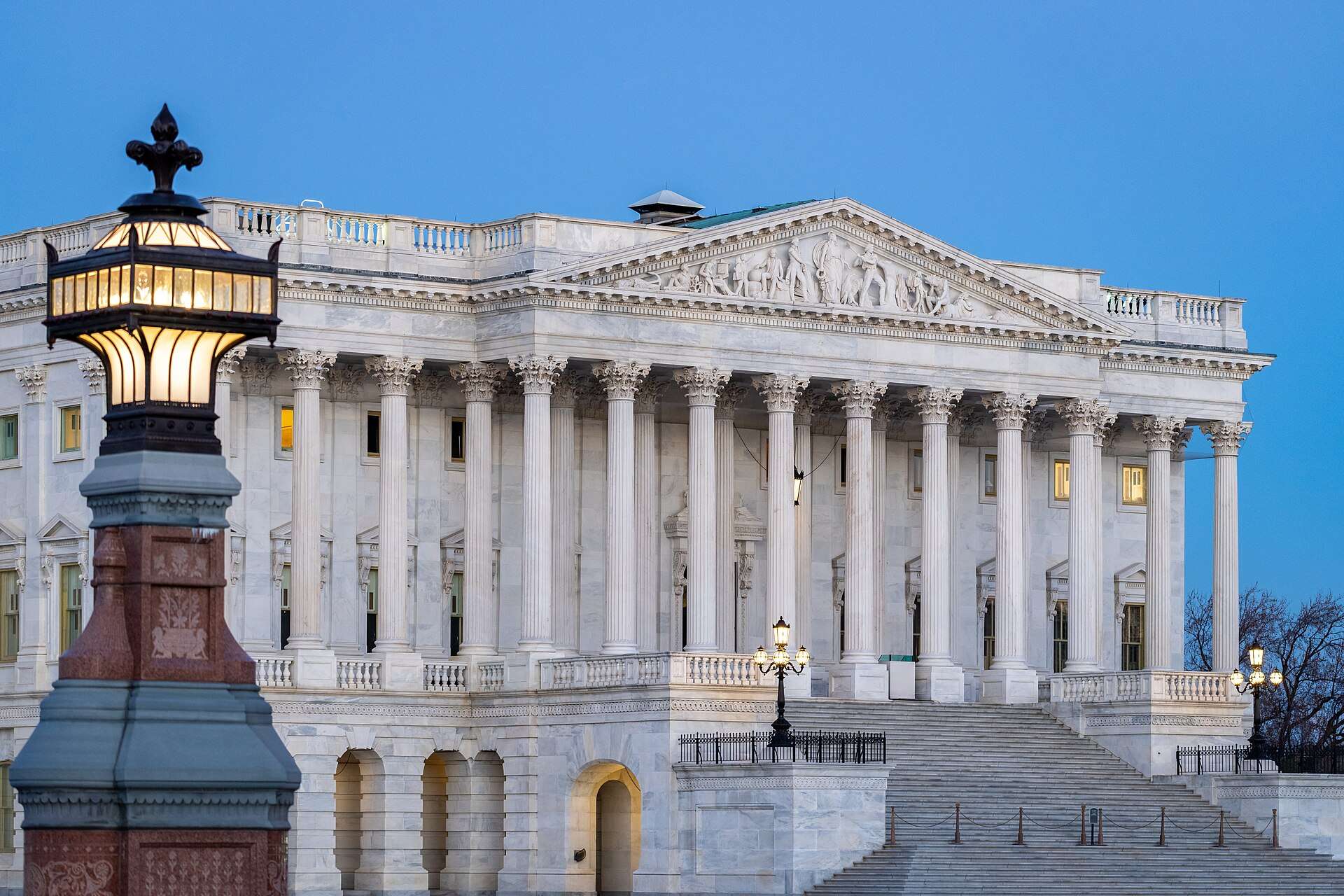
The sponsors described the bill’s target in July. “Chinese cars are surveillance packages on wheels, with the ability to collect on American citizens and transmit that data back to Beijing,” Slotkin said in Moreno’s statement after the committee vote. The text the committee reported also reaches SUVs that a German automaker assembles in Alabama.
What it means for Mercedes owners, shoppers and dealers
Current owners are largely unaffected. The bill defines “resale” to exclude a car that was already titled or registered to a consumer and driven, so selling a used GLE privately or trading one in would not count as a banned resale. Replacement connectivity hardware for vehicles from model years before 2030 is exempt when it is sold for repair or warranty work, and the reported text exempts that hardware when it is built into pre-2030 vehicles to begin with.
The hardware rules apply to every brand, not only Mercedes. Starting Jan. 1, 2030, the bill bars Chinese-made or Chinese-supplied telematics units, cellular modems, Wi-Fi and Bluetooth modules, antennas and battery-management electronics from new connected vehicles, a list that The Auto Wire has picked apart before. The ownership test is the part that singles out Mercedes, and model year 2030 is the first Mercedes lineup the runway would not cover. Automakers often start selling a model year in the calendar year before it, so the shareholder question has to be settled well before Jan. 1, 2030.
Four things will decide this. The first is Senate floor time for S. 4429; the House companion, H.R. 8730 from Reps. John Moolenaar, R-Mich., and Debbie Dingell, D-Mich., was introduced May 11 and referred to three House committees. The second is any new voting-rights notification from BAIC or Tenaciou3, which would show up on Mercedes’ investor site. The third is whether the buyback runs to its April 6 finish and whether those shares get canceled. The fourth is whether Mercedes applies for an advisory opinion or authorization once Commerce sets up the procedures, which the reported bill requires by Jan. 1, 2027.
Chinese automakers cannot build their way around the existing Commerce rule by opening American plants. Under the Senate bill, a German automaker with three decades in Alabama could still need a Commerce authorization, open to a congressional challenge, because two Chinese investors own about a fifth of it.
Two Chinese investors, neither above 10 percent, together own about a fifth of Mercedes. Should that keep an Alabama-built GLE out of U.S. showrooms?