
A South African bank took a financed car from the owner’s employed driver, sold it, and left the owner with a shortfall of about R300,000. When the National Financial Ombud Scheme investigated, the bank could produce neither a signed voluntary surrender nor a court order authorising the repossession, according to the Ombud’s October 5 media release. The motorist was substantially in arrears, and the Ombud found that did not let the bank skip the legal steps. The bank accepted the Ombud’s recommendation to write off the entire amount.
The case summaries I read do not name the bank or the motorist, and I did not find a response from the bank. The Ombud’s release also described a second case, a minibus taxi, that came out with a smaller payout for the owner.
Having the car isn’t proof the owner gave it back
Under South Africa’s National Credit Act, a borrower who hands back a financed vehicle is making a voluntary surrender and has to tell the lender in writing. The lender then has to follow prescribed steps for valuing and selling the vehicle. A lender that wants to take the vehicle on its own initiative goes down a different road: enforcement, which includes a court judgment authorising the repossession and sale, IOL reported in its coverage of the Ombud’s release.
Nerosha Maseti, the Ombud’s lead ombud for banking and credit, said a bank’s right to recover a debt and the way it goes about recovering it are two separate questions. She added that a bank having the car does not prove the owner surrendered it. In the Ombud’s account, the owner denied surrendering the car, and the bank, when asked, had no signed document and no judicial authorisation to show.
The United States works differently in most places. Under the Uniform Commercial Code as states have adopted it, a secured lender can generally repossess without going to court as long as it does not breach the peace, a rule found in UCC § 9-609. South Africa’s version puts a signed document or a judge between the lender and the driveway.
Why the paperwork decides who owes the shortfall
The R300,000 is a shortfall: what the borrower still owed after the sale price was subtracted. The Supreme Court of Appeal laid out how that number is supposed to come into existence in a May 22, 2026 judgment written by Justice Makgoka. After a surrender, the lender sends a written estimate of the vehicle’s value, sells it for the best price reasonably obtainable, credits the proceeds less reasonable expenses, and sends a written statement of the settlement value, the sale price, the net proceeds and the adjusted account. If the sale beats the balance, the lender pays the difference to the consumer. If it falls short, the consumer owes the gap.
That is why returning a car does not by itself erase a loan, a point the Ombud repeated. It is also why the missing paperwork matters so much in this case. A shortfall claim is a claim for the leftover balance of a sale the lender was entitled to make. A bank that cannot show a surrender or a court order has a hard time showing that. My reading is that the write-off follows from that gap, though the Ombud’s summary does not spell out its reasoning in those terms.
The May judgment cuts the other way on one point. In Dreyer N.O. v Standard Bank and Nedbank v Abrahams, the Supreme Court of Appeal decided that section 127(8) of the Act does not give magistrates’ courts exclusive jurisdiction over shortfall claims, so the High Court can hear them too. The court dismissed Standard Bank’s side of the appeal with costs, allowed Nedbank’s, and sent those matters back for a ruling on the merits. Banks now have more courtrooms to sue in. None of them changes what the bank has to show first.
A taxi stopped at the Zimbabwe border
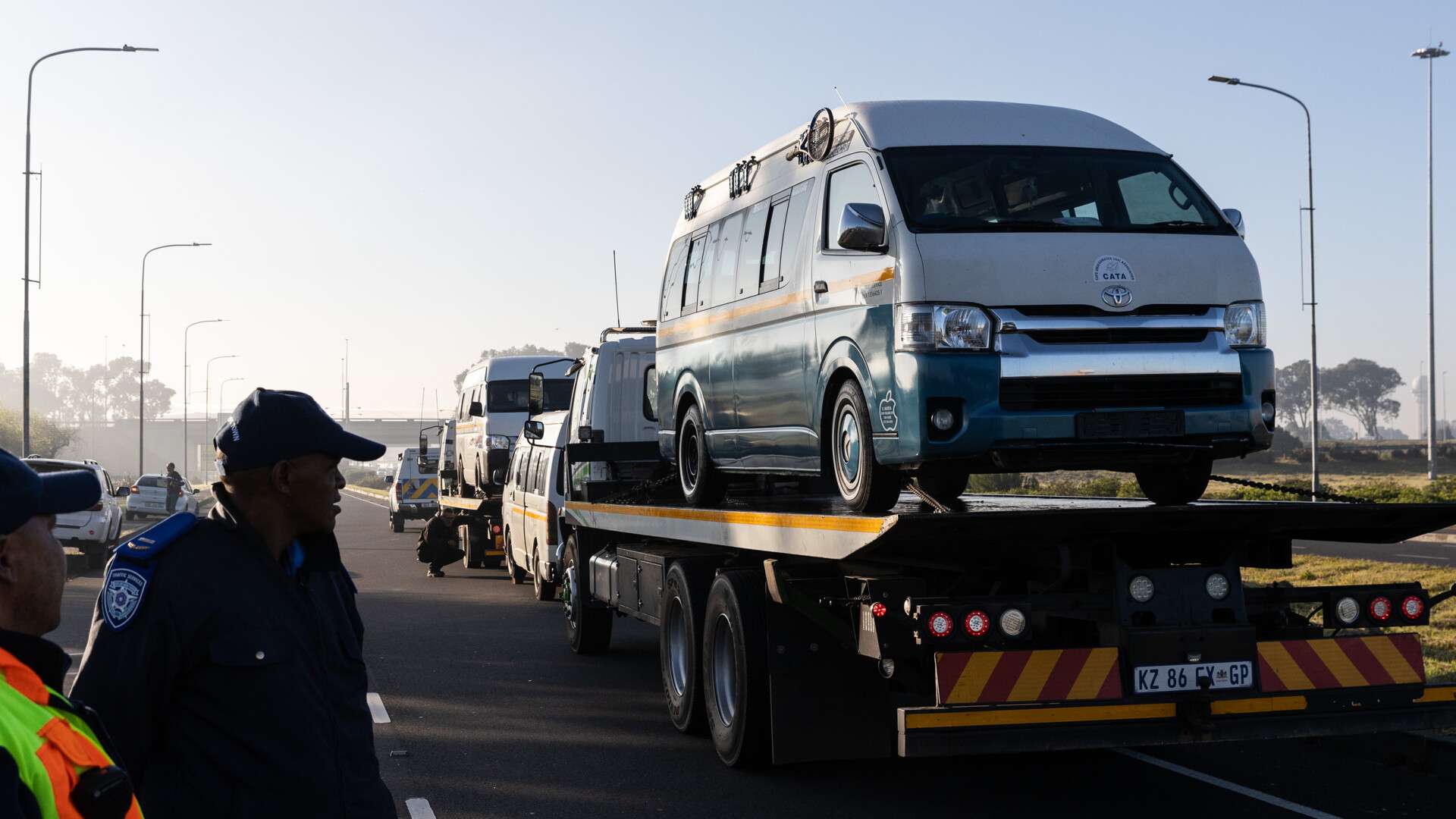
The second case involved a minibus taxi impounded at the South Africa-Zimbabwe border after a passenger was found with illegal substances. The owner and driver were cleared, according to the Ombud, but the vehicle went to the financing bank instead of back to the owner. The Ombud found the owner had breached her finance agreement by letting the taxi cross the border without complying with its terms, and also found the bank had not followed the proper legal process in holding on to it. The bank accepted a recommendation to pay her R30,000 for distress and inconvenience and to write off the legal and storage costs.
An owner who broke her contract still came out with a payment, because the bank’s route to the vehicle was wrong. In both cases the borrower was in the wrong on the contract, and in both the bank paid for its shortcuts.
Arrears are easing in South Africa
IOL, citing TransUnion, reported that 7.1% of South African vehicle-finance accounts were three months or more in arrears in the first quarter of 2026, down 0.8 percentage points from a year earlier. The Auto Wire has followed this market before, including the wave of repossessions South Africa braced for in 2023. The U.S. has its own version of the same fight over how a lender gets a car back, as in the Holmes Motors case, where a lender repossessed a deploying soldier’s car without a warrant, and in our look at what borrowers still owe after a repo.
What the Ombud tells borrowers to do
The Ombud’s advice is to contact the bank early and not ignore letters or legal notices. Before anyone hands over a vehicle, it says, the borrower should find out whether the process is a voluntary surrender or a repossession, and should not sign documents they do not understand. If someone arrives to collect the car, the Ombud recommends asking who they are, whom they represent and on what authority they want it. It also advises keeping notices, settlement figures and payment arrangements, and expecting that a balance may remain after a sale. A dispute the bank will not resolve can go to the Ombud. Rules differ by country and, in the U.S., by state, so none of this carries over to an American driveway.
The borrower was badly behind and still walked away from R300,000. Fair result for a bank that skipped the court order, or a windfall for someone who didn’t pay?