
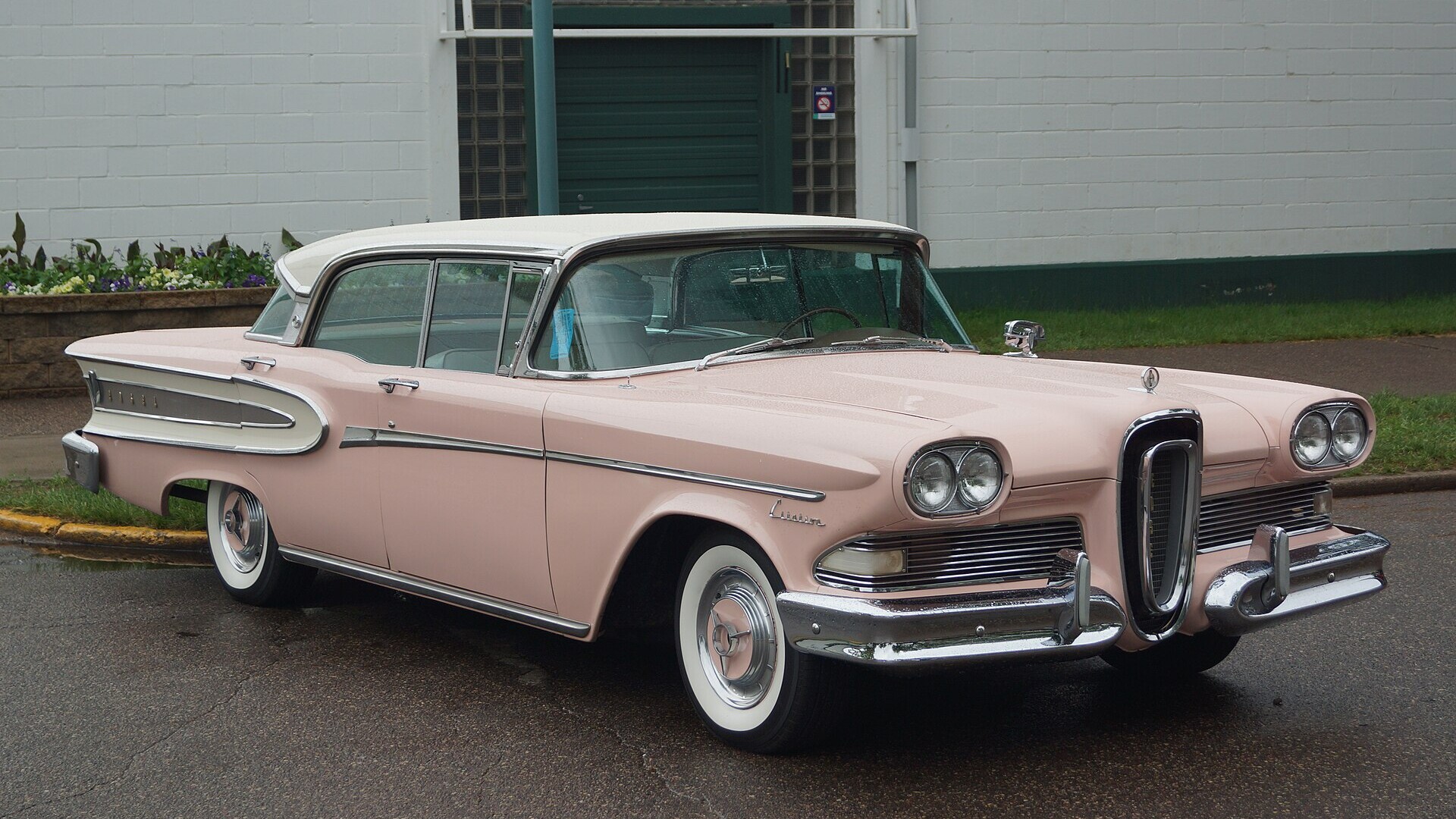
Ford’s Pinto already earned a spot on our ranking of the biggest automotive scandals, and it belongs on this list of the worst car flops for the same reason as the other seven: what sank each one was a company decision, whether about timing, money, packaging or how to answer a critic.
I built the list from the paper each car left behind: museum archives, NHTSA recall letters, an appellate opinion, a UK audit report and SEC filings. I skipped any sales figure I could not trace to a document, which is why some entries have none.
1. Chrysler Airflow (1934–1937): an aerodynamic body the factory struggled to build
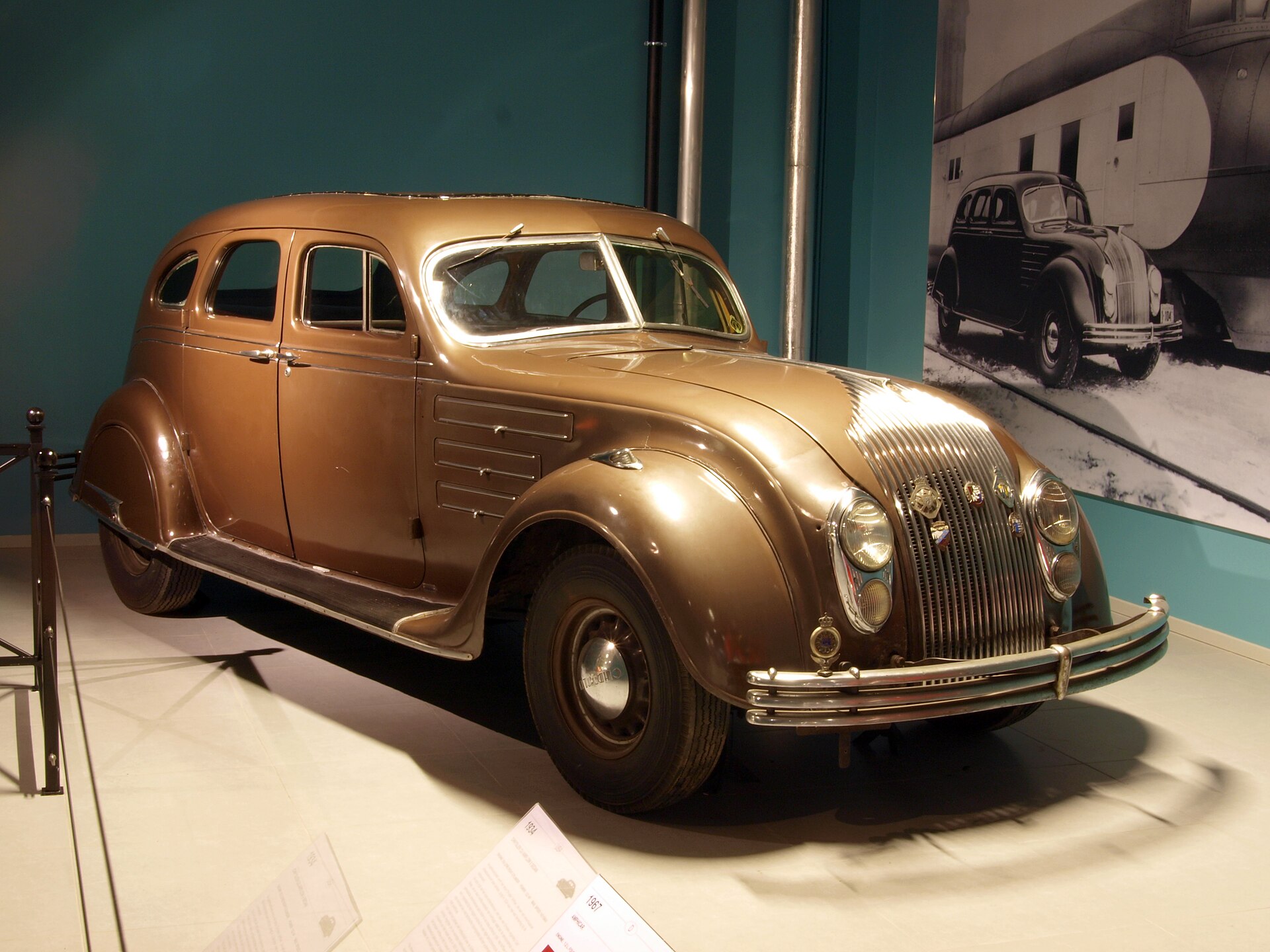
Chrysler built a wind tunnel for the Airflow, with advice from Orville Wright, according to Stellantis’ own heritage chronology. The idea came from Carl Breer, who found that conventional car shapes produced much less drag running tail first. The result was a unit-body car, meaning the panels carry structural load, and the same chronology says it posted 21.4 miles per gallon on a coast-to-coast test trip.
It still failed. The Henry Ford says the complex body caused manufacturing problems, customers balked at the unconventional look, and Chrysler canceled the Airflow after 1937. When the panels carry load, fit and weld quality become structural matters, which is a plausible source of the manufacturing trouble the museum describes. Chrysler’s own history adds that the design was soon widely copied, so the Airflow was early and Chrysler paid for it.
2. Tucker 48 (1948): 51 cars, three years of SEC scrutiny and an acquittal that came too late
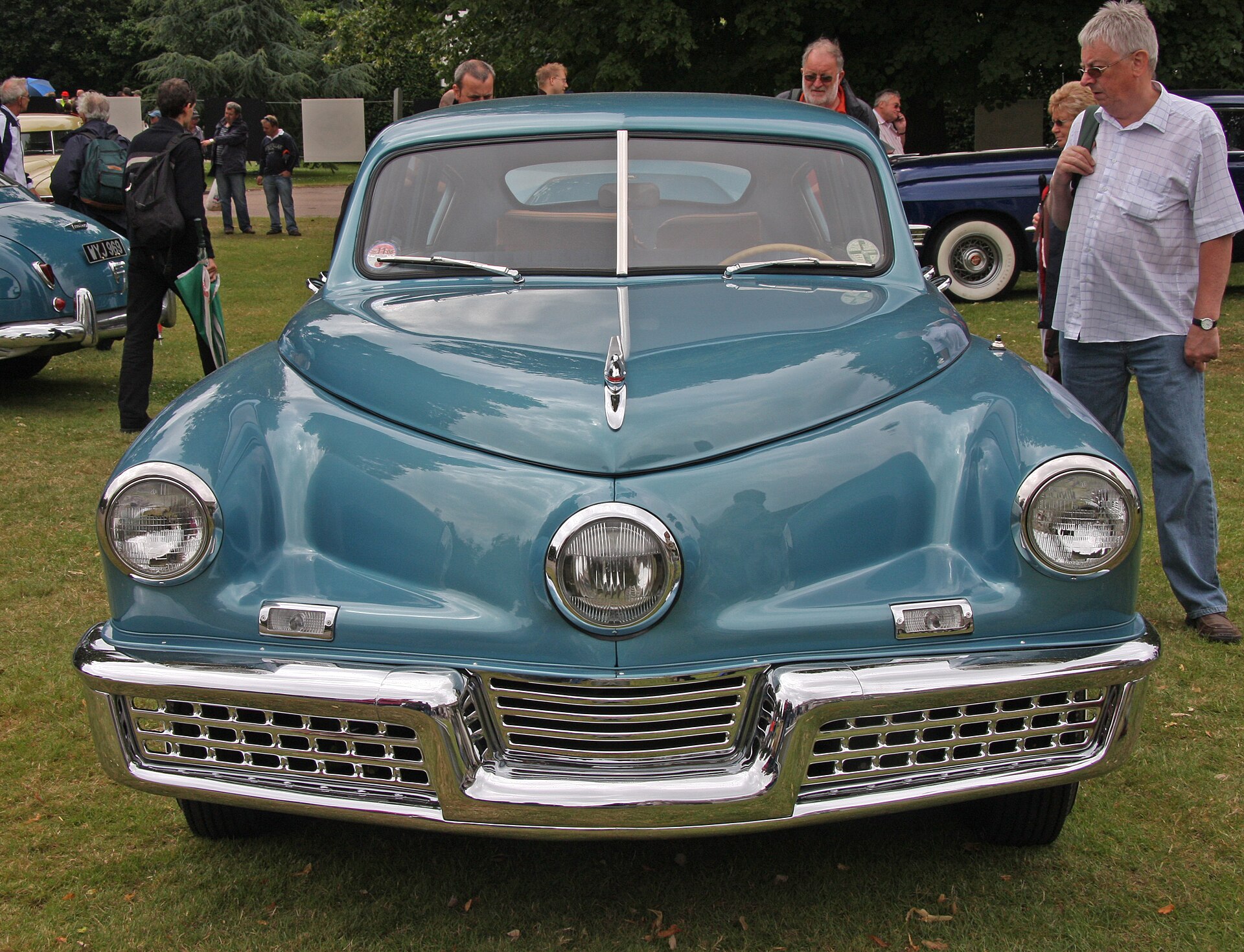
Preston Tucker raised more than $20 million, and The Henry Ford’s assessment is that he probably needed ten times that to secure the company’s future. Separately, about $6 million from dealer franchises sat in escrow until cars were delivered, according to the museum’s account of the company, which made it money a company that had delivered nothing could not spend.
The SEC began investigating the franchise sales in September 1946. A full SEC and Justice Department investigation launched on May 28, 1948; production stopped and 1,600 workers were laid off. Tucker and seven associates were indicted on 31 counts in June 1949, and on January 22, 1950 a jury found the defendants not guilty of any attempt to defraud. The company was already finished, and its remaining assets, including the cars, sold for 18 cents on the dollar. The 1948 sales brochure promised a torque-converter transmission and disc brakes, and neither reached production.
3. Edsel (1958–1960): 18 models, a recession and a compact that arrived 42 days before the exit
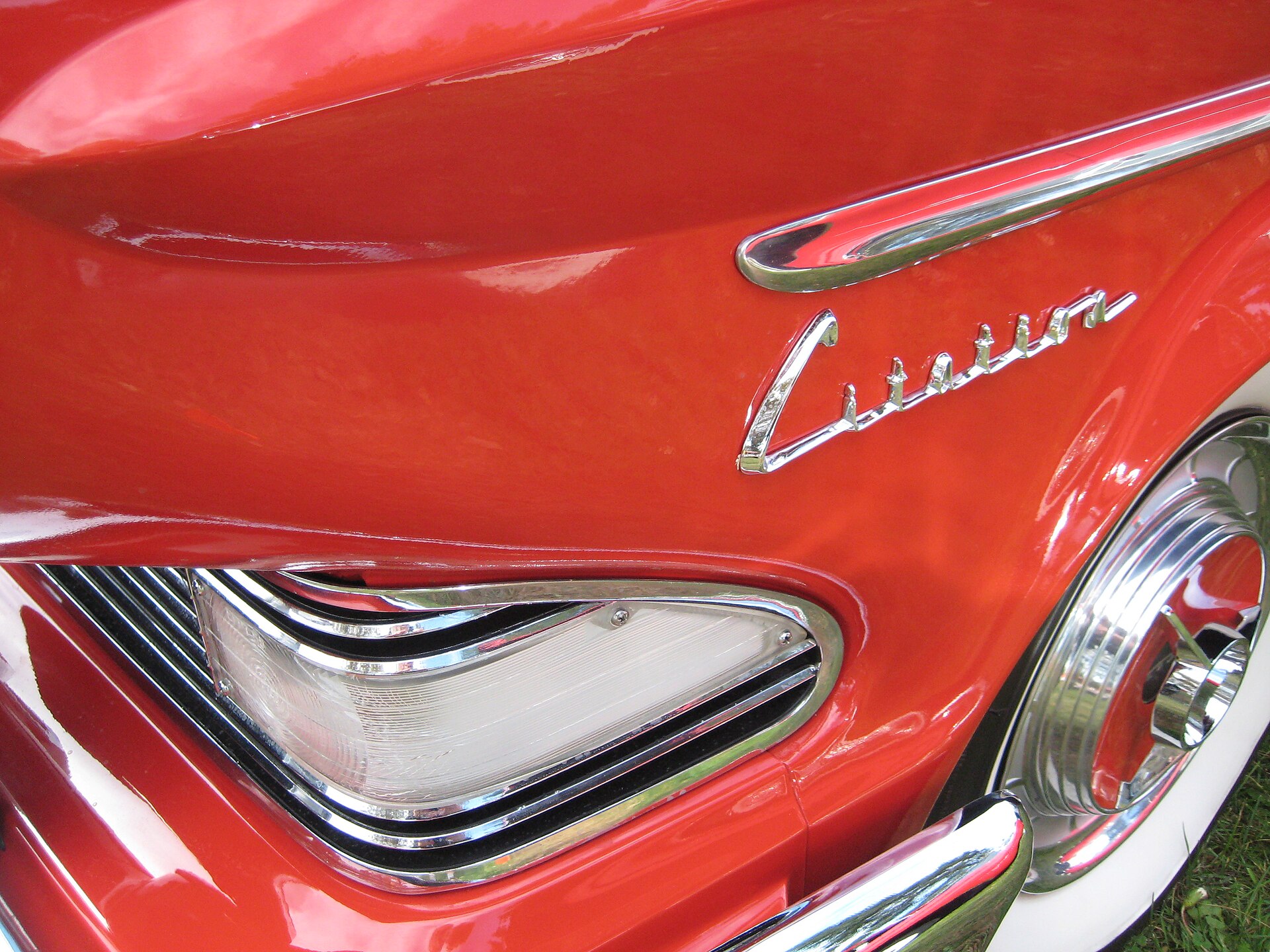
Ford announced the Edsel on November 19, 1956 and introduced it to the public on September 4, 1957, according to the chronology in The Henry Ford’s Ford advertisement collection. The museum says Ford meant it to fit between the low-priced Ford and the mid-priced Mercury, and it blames an ill-timed recession and unconventional styling, among other factors, for the poor sales. It also points at the lineup: the 1958 brochure shows 18 models, and the museum says that wealth of choice may have added to the Edsel’s early demise.
The museum’s 1958 Citation hardtop is 219 inches long and weighs 4,136 pounds, and Edsel offered 161 paint combinations. Wise guys, the museum notes, said it looked like “a Buick sucking a lemon.”
The calendar settles the rest. Ford introduced the Falcon compact on October 8, 1959 and announced it was dropping the Edsel on November 19, 1959, 42 days later. Edsel production had lasted 27 months. Ford was cancelling its large mid-price brand six weeks after introducing a compact, which shows which bet the company had already moved on to.
4. Chevrolet Corvair (1960–1963): a handling complaint that turned into federal law
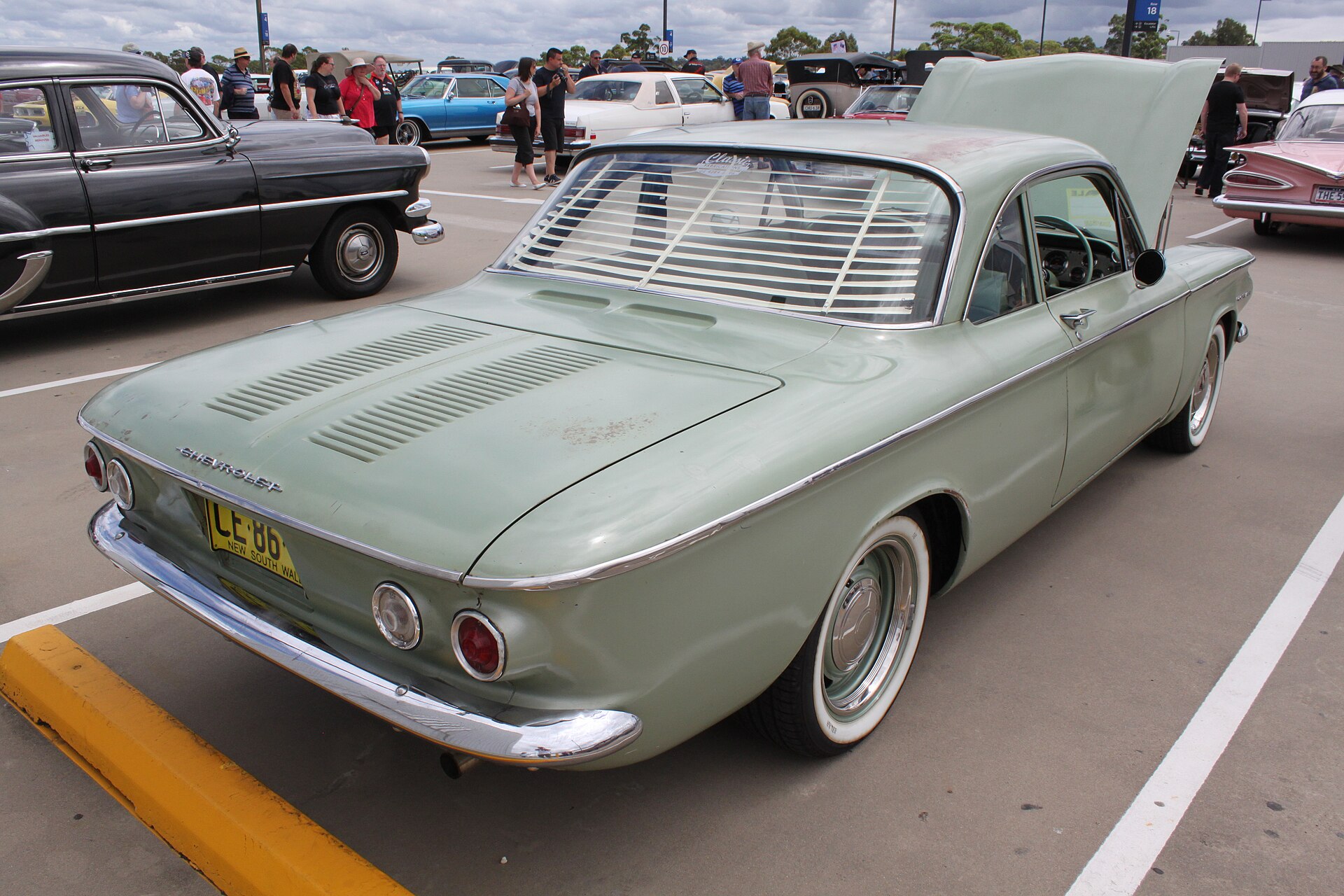
Ralph Nader’s Unsafe at Any Speed, published in November 1965, focused on the 1960–63 Corvair. As the Federal Highway Administration summarizes it, Nader argued that the car’s rear end tended to break away, leading to loss of control and rollovers. GM hired an attorney who chose Vincent Gillen Associates to look for information that could discredit Nader, and a March 1966 GM press release called it a “routine investigation.”
On March 22, 1966, GM president James Roche apologized at a Senate hearing that was broadcast live and ran about six hours. The National Traffic and Motor Vehicle Safety Act then moved fast: the Senate passed it 76–0 on June 24, the House passed its version 317–0 on August 17, and President Johnson signed it on September 9, 1966. No recorded vote on the bill went against it. Nader sued GM on November 14, 1966, and GM settled in August 1970 for $425,000 without admitting wrongdoing. The cars survive as collectibles; we covered a 1965 Corvair Corsa that came up for sale in 2023.
5. Ford Pinto (1971–1976 recall): a $125 million verdict, cut to $3.5 million, and a $15.30 fix
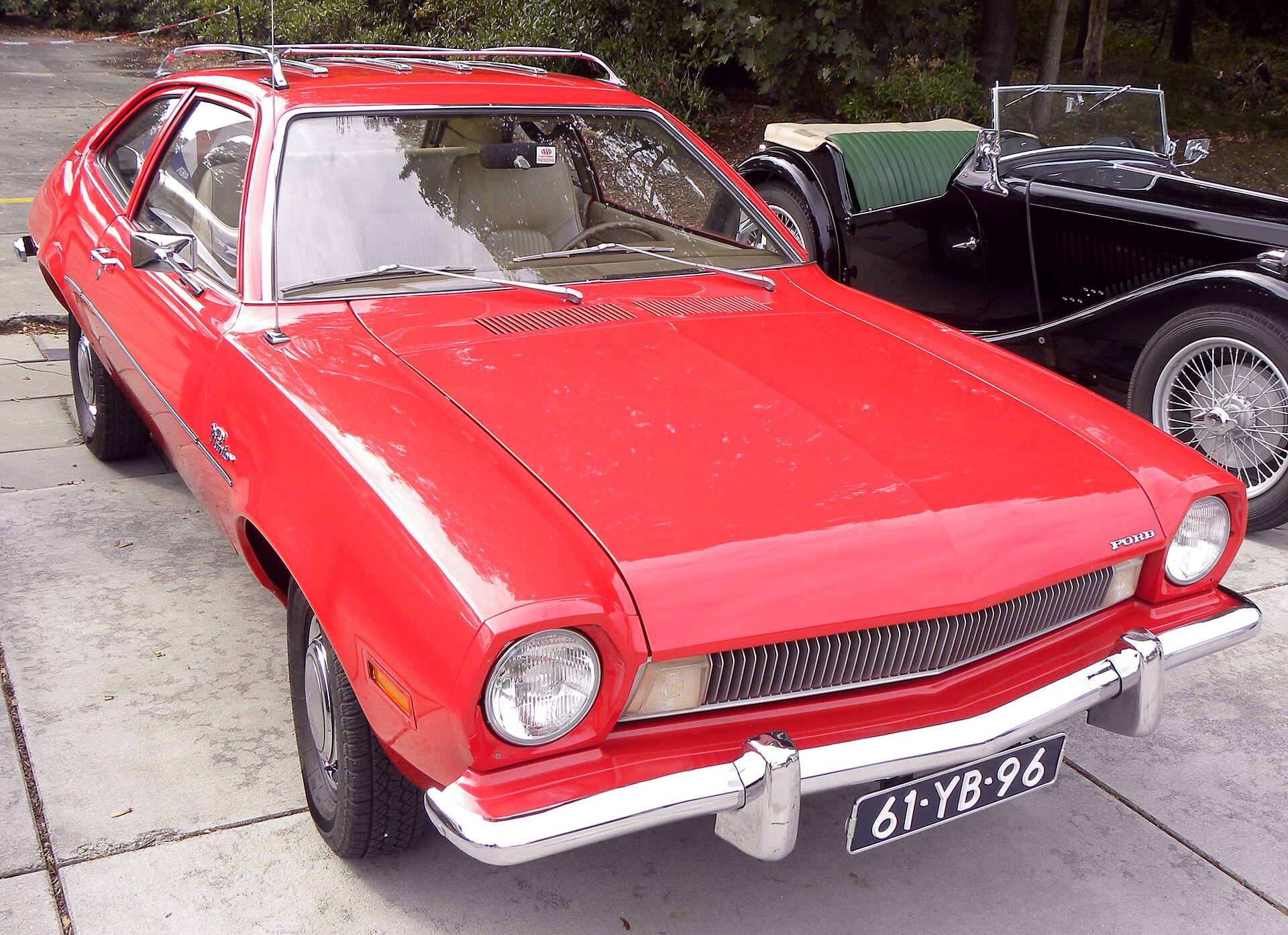
The appellate opinion in Grimshaw v. Ford Motor Co. starts with a 1972 Pinto hatchback that stalled on Interstate 15 and was rear-ended by a 1962 Galaxie that had slowed to 28–37 mph. The Pinto caught fire. Driver Lilly Gray died days later, and 13-year-old passenger Richard Grimshaw survived with severe burns. The jury awarded Grimshaw $2,516,000 in compensatory damages and $125 million in punitive damages; the trial judge cut the punitive award to $3.5 million, and the Court of Appeal affirmed on May 29, 1981.
The opinion says the Pinto’s styling put the tank behind the rear axle, leaving “9 or 10 inches” of crush space, and describes a bumper as little more than a chrome strip. On the cost side, the evidence the court recited put a package of a reinforced rear structure, smooth axle, improved bumper and added crush space at $15.30 per car, enough to make the tank safe in a 34-to-38-mph rear-end collision. A report prepared by Ford engineers for a production review meeting put the flak suit or bladder alone at $4 to $8 per car and discussed deferring such fixes to save $20.9 million. The court said the evidence supported an inference that Ford chose to defer corrective measures to save money.
The NHTSA letter dated June 15, 1978 for Campaign 293 recorded that Ford had decided to recall 1971–1976 Pintos and 1975–1976 Bobcats, excluding station wagons, and estimated 1.4 million of them in operation. Ford’s owner letter, relaying NHTSA’s determination that a safety defect existed, described an unreasonable risk of substantial fuel leakage in low-to-moderate-speed rear-end collisions. The free fix was a longer filler pipe with an improved seal plus a polyethylene shield in front of the tank.
6. DeLorean DMC-12 (1981–1982): about £77 million of public money and more than 8,000 cars
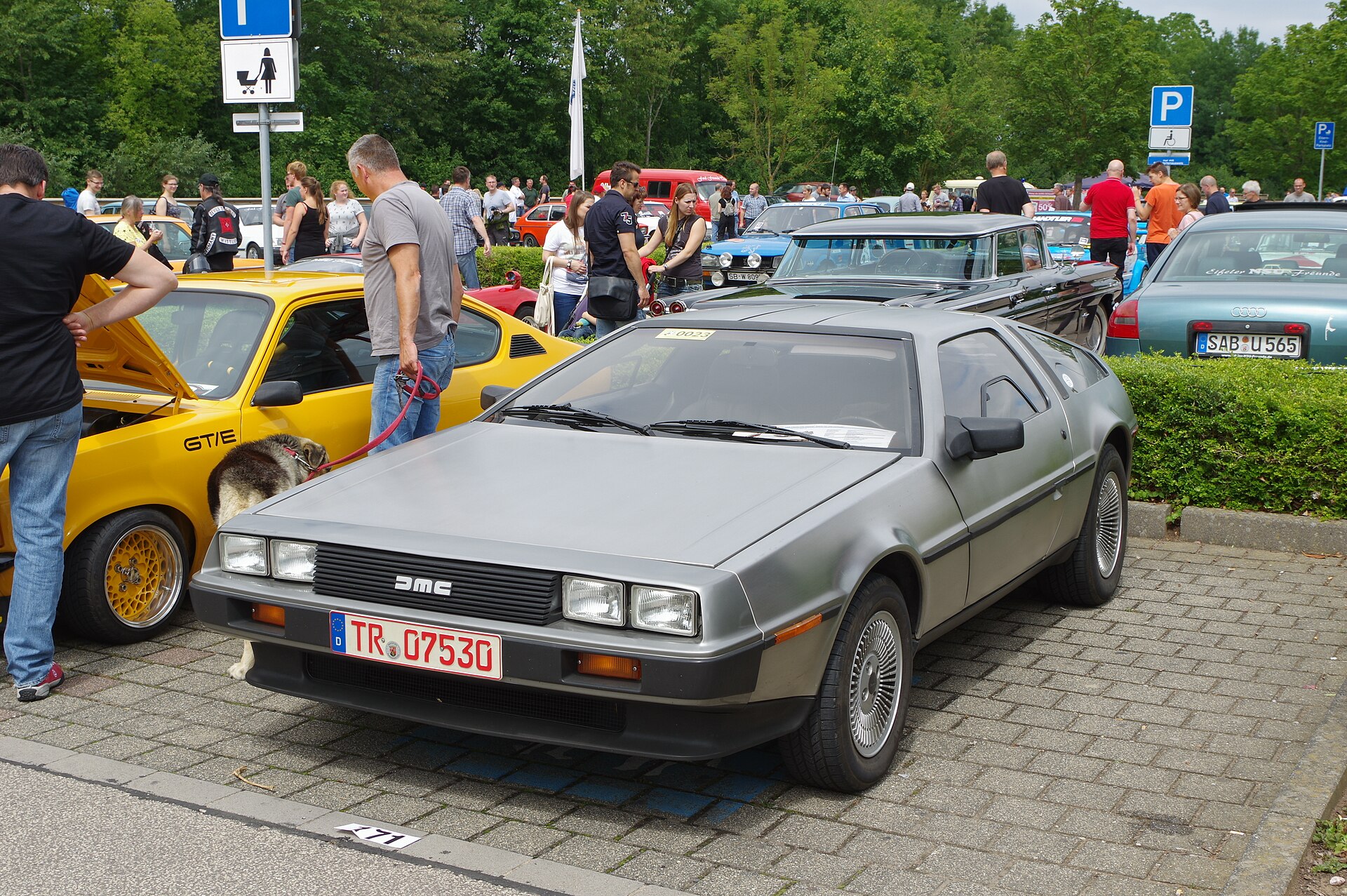
The Northern Ireland Audit Office reports that the UK government provided assistance totaling some £77 million between July 1978 and February 1982 to build the DMC-12. Full-scale production began in February 1981. The Northern Ireland company was placed in receivership on February 19, 1982, production ceased in May, and the plant closed in October. More than 8,000 cars were produced, which works out, by The Auto Wire’s math, to at most about £9,600 in public money per car. The report adds that GPD was due $17.65 million (about £8.83 million) for development work and that none of those initial sums reached Lotus.
The order of events is in the records. After receivership in February and the end of production in May, the American company DMC filed for Chapter 11 in Michigan in October 1982, and in the same month John DeLorean was indicted in Los Angeles on federal narcotics charges, according to a bankruptcy court order. The DMC-12 outlived its maker as a recognizable shape; one Reddit user mistaking one for an ordinary car made our site in 2024.
7. Pontiac Aztek (2001–2005): minivan hardware, a camping equipment list and one Marginal crash test
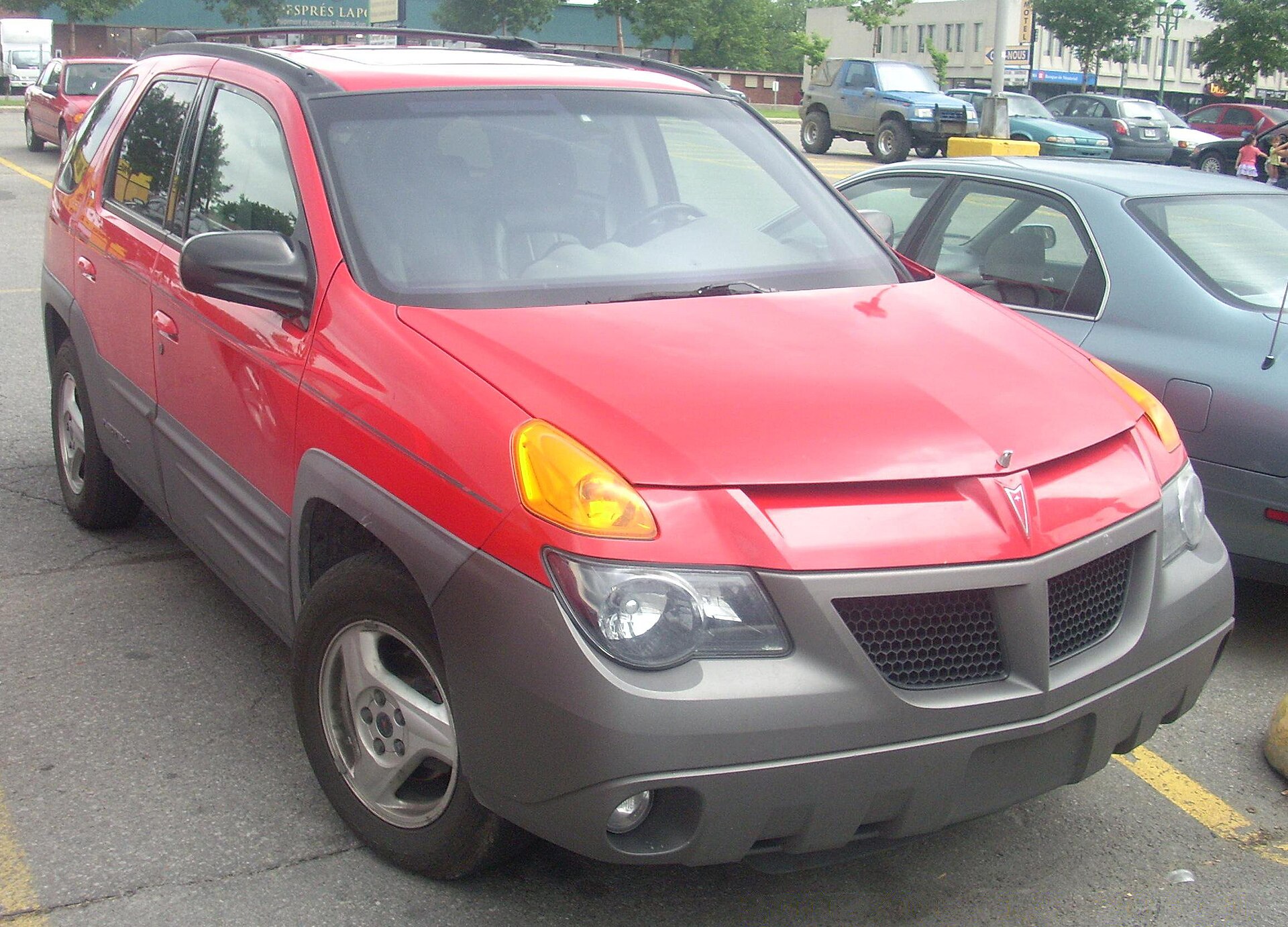
The Aztek has the thinnest paper trail on this list, so this entry sticks to what documents show. GM’s 2004 owner’s guide lists optional equipment written for a campsite: a tent, a removable console cooler, a sliding rear convenience tray, a head-up display and all-wheel drive.
Underneath, GM’s recall paperwork groups the Aztek with minivans and a Buick. Product Safety Recall 06230, for a fuel tank housing that can fracture, covered the 2001–2004 Pontiac Aztek together with the Pontiac Montana and Chevrolet Venture minivans and the 2002–2004 Buick Rendezvous, which shows the Aztek was riding on minivan-family hardware.
The IIHS rated the 2001 Aztek Marginal overall in its moderate-overlap frontal test, with an Acceptable structure and Marginal restraints and dummy movement, and says the rating applies to 2001–2005 models. IIHS lists the Aztek as discontinued after the 2005 model year, while GM still hosts a 2006 Rendezvous owner’s guide, so the Buick sibling outlived it. I found no primary-source sales figure for either, so I am not putting a number on how badly the Aztek sold.
8. Fisker Karma and Ocean (2012; 2023): two companies, one bankruptcy court and a recall that covered every car
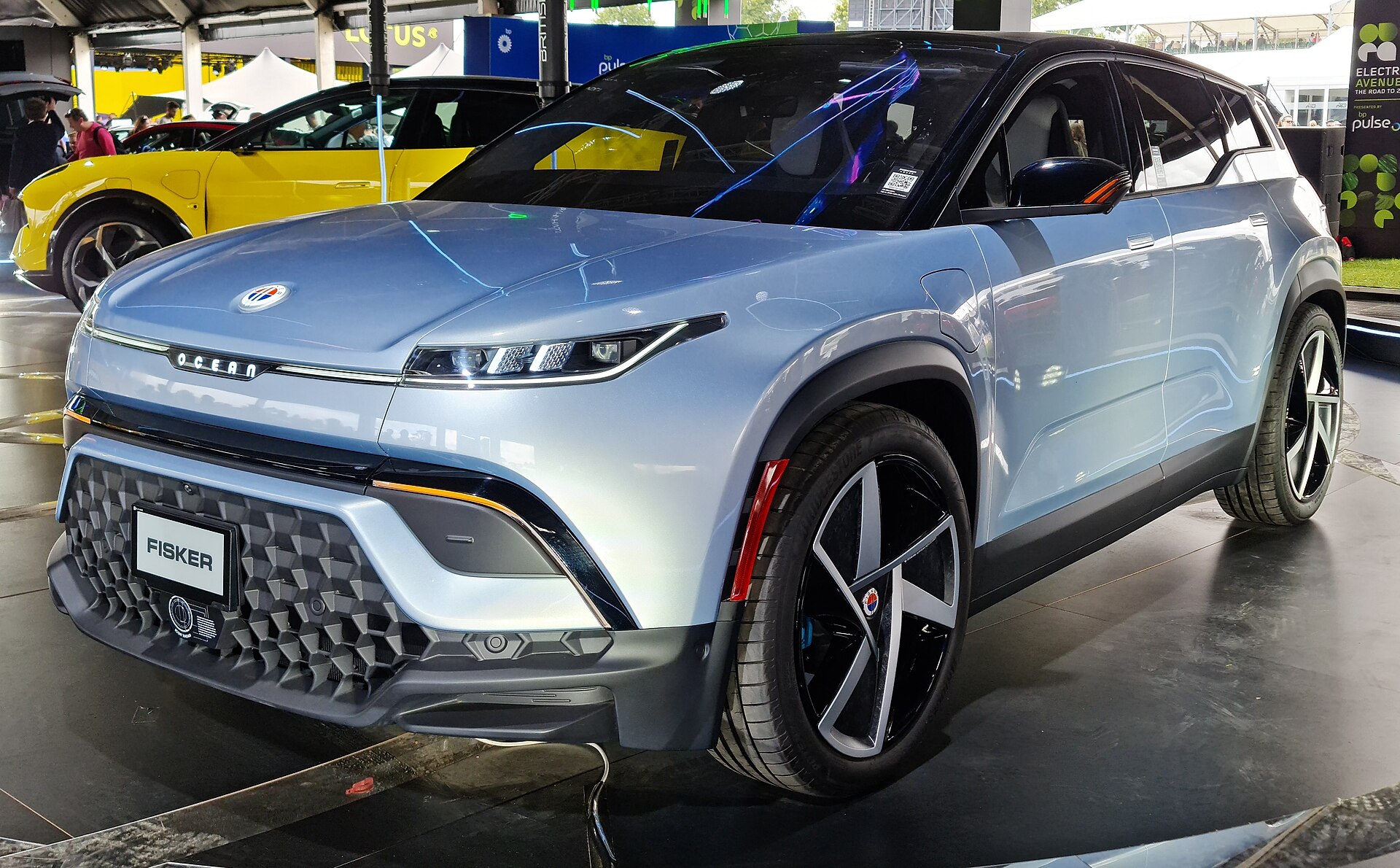
Two companies carrying the Fisker name have filed for Chapter 11 in the District of Delaware. The first, Fisker Automotive, was awarded a $529 million Department of Energy loan, GAO’s figure, and drew about $192 million of it, according to the bankruptcy court. The loan carried a milestone of selling 11,000 Karma sedans by February 2012, which Fisker did not meet. In March 2013 DOE rejected a request for access to the last $10.3 million in a reserve account, and on April 5, 2013 Fisker terminated 156 employees, leaving 53. DOE’s loan sale to Hybrid Tech Holdings closed on November 22, 2013, the day Fisker filed.
The second, Fisker Inc., filed through a subsidiary on June 17, 2024, and its other U.S. subsidiaries followed on June 19, according to its SEC filing (Case No. 24-11390). That filing says nothing about vehicles, so the best document on the car is NHTSA’s. Recall 24V-466, reported June 20, 2024, three days after the first filing, covered all 8,204 2023–2024 Ocean vehicles for exterior door handles that can stick and fail to open. A second recall, 24V-499, submitted July 2, 2024, covered all Ocean vehicles for a battery management limp mode that limits power to 8.5 kW when a communication bus drops out. Our report on Canoo’s collapse counts Fisker among the wave of EV startup failures.
What the records say about the worst car flops
Sorted by what the documents point to, timing and a hard-to-build or crowded lineup sank the Airflow and the Edsel. Money sank the Tucker, the DeLorean and both Fiskers. A company’s handling of a critic or a known weakness defines the Corvair and the Pinto, and packaging, with the thinnest evidence, is the Aztek’s story. Only the Pinto comes with a court saying the evidence supported an inference that the maker put off a known fix to save money.
Anyone shopping a used Fisker Ocean can enter the VIN in NHTSA’s recall lookup; recall 24V-466 alone covers all 8,204 of the 2023–2024 cars.
Which of the eight deserves the worst-flop title, and did the car or the company that built it earn it?