
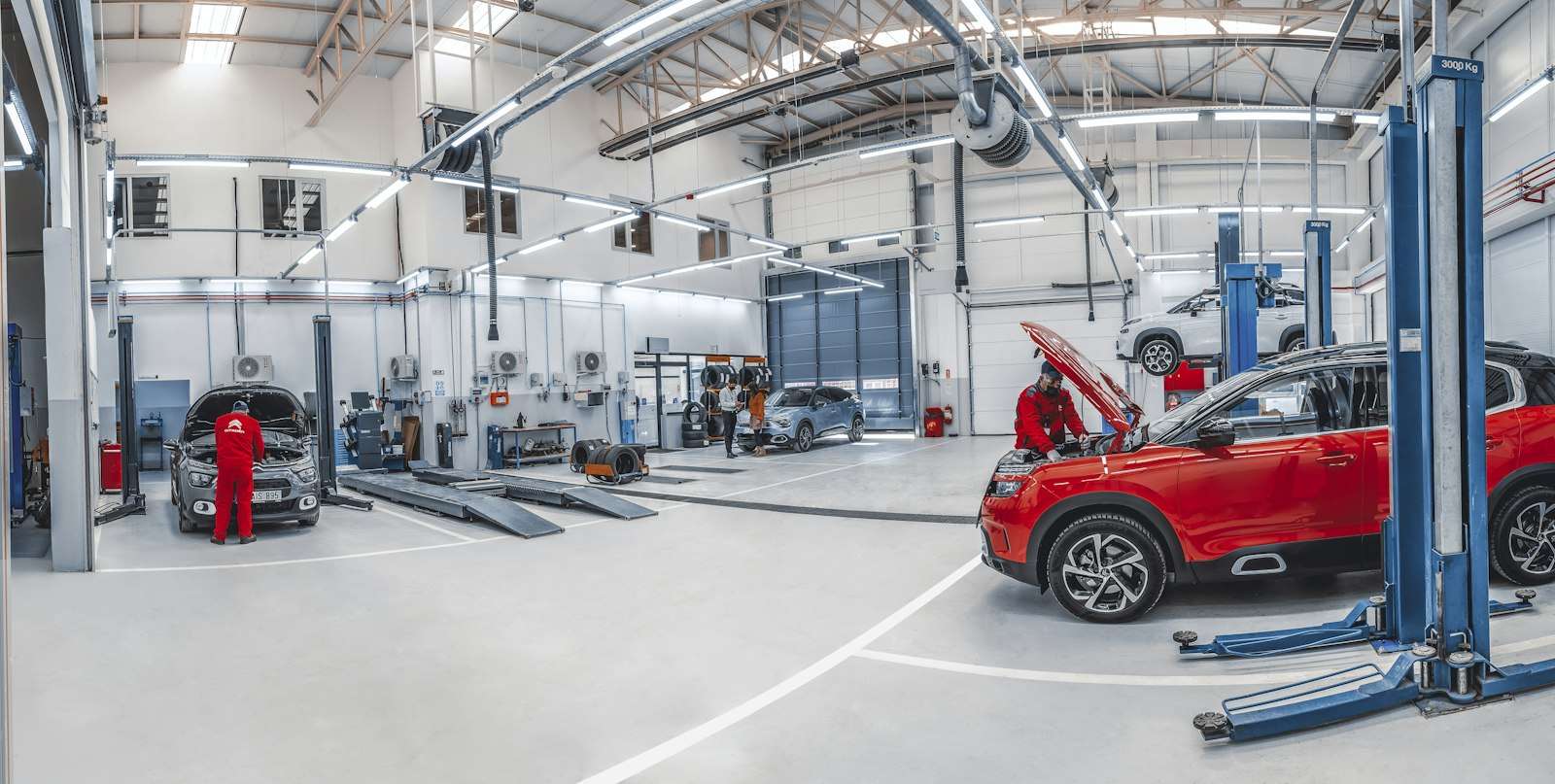
A recall repair like the airbag inflator replacement Toyota just ordered on 314,029 cars costs the owner nothing. The manufacturer pays the dealer for the parts and the technician’s time, and since April 1 a New Jersey law has let dealers use their own retail repair orders to decide what that time is worth.
On Nov. 20, Ford, Honda, Stellantis’ FCA unit and Volkswagen sued to stop it. Their complaint, filed in federal court in Trenton and described by Reuters, names the state and the New Jersey Coalition of Automotive Retailers, the dealers’ trade group, as defendants. The automakers estimate the law will move more than $375 million a year from manufacturers to dealers. That number is theirs, not the state’s, and New Jersey Attorney General Jennifer Davenport’s office declined to comment to Reuters.
I read the statute section by section. The constitutional arguments will take a judge months to sort out, but the economics are already in the text: New Jersey tied warranty pay to what dealers charge retail customers, then barred manufacturers from billing New Jersey dealers to win the money back. The one exit the law leaves open is an ordinary price increase, and that kind of increase doesn’t stop at the state line.
What New Jersey’s 2025 law requires
The statute is P.L. 2025, Chapter 140, signed by then-Gov. Phil Murphy on Sept. 11, 2025. Its short title is the Motor Vehicle Open Recall Notice and Fair Compensation Act, and the dealers’ coalition celebrated its signing the same day. It took effect April 1, 2026.
The core of it rewrites New Jersey’s warranty reimbursement section, N.J.S.A. 56:10-15. A manufacturer that has dealers perform warranty, extended-warranty, maintenance-plan, service-plan or recall work must pay for parts and labor, including diagnostic time, at the dealer’s prevailing retail price. For parts, that means the dealer’s cost, shipping included, multiplied by one plus the dealer’s average retail markup. The markup comes from the lesser of 100 consecutive customer-paid repair orders or 90 days of them, all from the prior 180 days, and a dealer can reset it twice a calendar year.
The law also has a consumer-facing piece. Registration and renewal notices from the Motor Vehicle Commission must now include an open-recall notice that points owners to NHTSA’s recall lookup, and if state funding falls short, the commission can bill manufacturers for its actual costs.
How the labor multiplier works
Manufacturers publish labor-time guides that assign a set number of hours to each warranty operation. Subsection m of the new law lets a dealer replace that guide with an “average retail labor time allowance.” The dealer totals the hours it billed retail customers in its repair-order sample, divides that by the hours the factory guide allows for the same jobs, and applies the ratio to its warranty claims. The declared figure takes effect 30 days later, and the manufacturer may audit only the sample the dealer submitted.
With round numbers (The Auto Wire’s illustration, not any dealer’s filing): a store whose sample shows retail customers billed 130 hours for work the factory guide rates at 100 hours has a multiplier of 1.3. A warranty job the guide calls 2.0 hours now pays 2.6. At a $200 retail labor rate, that claim goes from $400 to $520 before a single part is counted.
The formula has one input that the dealer controls: what it bills paying customers. The higher a store’s retail hours run against the factory guide, the more it collects on every warranty and recall job. The automakers’ complaint, as Reuters reported it, says the act “rewards dealers for charging their customers more,” and says the bills each company has received since April include hours no technician worked and rates above what comparable dealers charge.
Markups on free recall parts, and limits on price cuts
Recall parts often reach dealers at no charge. The law still requires the manufacturer to pay the dealer’s markup on them, applied to a “wholesale value” defined as the highest of four figures, which can include the price in a prior price schedule. A manufacturer also may not lower a part’s price in a way that cuts dealer pay if the change comes 60 days or less before a recall announcement, or at any point after a recall or after a warranty claim arises. It may not create a new part number for the same part to the same end. The automakers argue this blocks cheaper parts even when supply and demand would justify a price cut.
The biggest components get their own rule. For an entire engine assembly, an entire transmission assembly or an electric-vehicle propulsion battery, the manufacturer pays the dealer 30 percent of what the dealer would have paid for the part, on top of labor. On a component that would cost the dealer $15,000, that’s $4,500. Dealers also get paid labor to package and ship a failed EV battery back, the manufacturer has to supply the packaging, and a late-return charge can’t exceed the battery’s wholesale price.
A monthly payment for used cars under stop-sale
The other half of the law deals with used inventory. When a manufacturer issues a stop-sale or do-not-drive notice on a used vehicle a franchised dealer holds for sale, and parts aren’t reasonably available within 30 days of the recall notice, the manufacturer owes the dealer at least 1.5 percent of the vehicle’s average trade-in value per month. Payments start 30 days after the stop-sale notice and run until parts arrive or the dealer sells or disposes of the car, capped at the car’s total trade-in value. On a used SUV with a $25,000 trade-in value, that’s $375 a month.
Federal law already covers new cars in a dealer’s inventory. 49 U.S.C. 30116 requires the manufacturer to supply the recall parts at its own expense and pay the dealer at least 1 percent a month of the vehicle’s selling price until the defect is fixed. New Jersey’s rate is half again as high, and it reaches used cars, which are worth more to dealers now that three-year-old cars are holding record value. The complaint argues the act is preempted by federal recall law; Reuters’ account doesn’t say which provisions that claim targets.
Who ends up paying the $375 million
For the owner at the service counter, nothing changes on the invoice. Federal law requires recall remedies at no charge, and warranty work is covered under the warranty. The question is where a manufacturer finds the money.
Subsection o closes the direct route. A manufacturer may not recover these costs from New Jersey dealers through a wholesale price increase or a surcharge aimed solely at paying for the reimbursements. The same subsection allows ordinary price increases on vehicles and parts made in the normal course of business. A manufacturer can’t charge a dealer in Newark more than one in Columbus to cover this law, but it can raise prices a little for every dealer in the country. If the law stands, my expectation is that buyers well outside New Jersey will cover part of its cost.
The dealers see it the other way. Laura Perrotta, the coalition’s president, told Reuters she is confident the group will win, said manufacturers have for decades taken deep discounts on parts and labor at dealers’ expense, and said dealers cannot pass warranty and recall costs on to consumers. That holds at the service counter, where federal law and the warranty fix the owner’s price at zero. It holds less firmly at the sales desk, where the manufacturer sets the invoice.
Technicians are mentioned once. After the manufacturer pays a labor claim, the dealer must compensate its factory-certified flat-rate technicians for that work, but the law sets no amount. The automakers’ complaint says nothing obliges dealers to spend the extra money on customer service or employee pay.
Audits, chargebacks and the coalition’s standing
The law also makes it harder for a manufacturer to take money back. Warranty claims must be approved or rejected within 30 days and paid within 30 days of approval. Paid claims can’t be audited more than 12 months later unless fraud is reasonably suspected. The manufacturer carries the burden of proof when it denies or charges back a claim, a clerical error can’t justify a denial, and a chargeback the dealer challenges in time is stayed, with no bond required, until a final judgment.
Section 3 gives a dealer association standing to sue on behalf of its members under the Franchise Practices Act. That answers a 2023 federal court ruling that the coalition could not press such a claim against Mazda over a dealer incentive program. With that power now written into statute, the coalition is positioned to enforce the law against manufacturers itself, and the automakers named it alongside the state.
What happens next in the Trenton case
The complaint raises claims under the U.S. Constitution’s Commerce Clause and Takings Clause, federal recall preemption, and the New Jersey Constitution. The first thing to watch is whether the automakers ask the court to suspend the law while the case runs, and whether a judge agrees. Until then the law is in force, and dealers can keep filing claims at their declared rates.
Also watch the plaintiff list. GM, Toyota and Hyundai are not among the four companies that sued, and any that join later will show how much of the industry thinks this fight is worth paying lawyers for. For New Jersey owners, the practical change is on the service drive: if the law survives, warranty and recall work becomes some of the best-paid labor in the building, and a store that once fit it in around customer-pay jobs has a reason to book it first.
Should the price your dealer charges you for a repair set what the automaker pays for the same repair under warranty, or should the factory’s labor guide have the final word?