
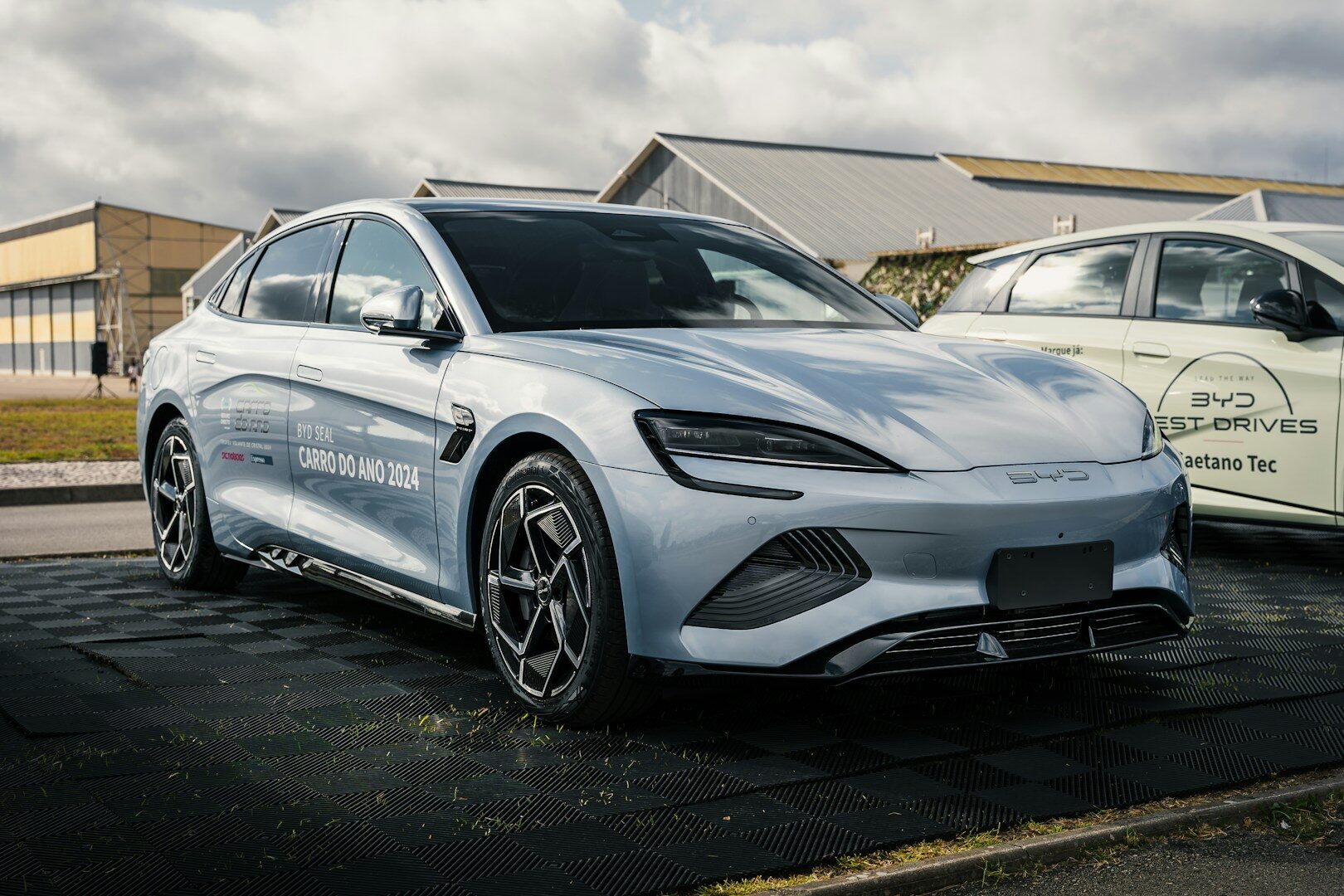
The Alliance for Automotive Innovation sent a two-page letter to congressional leadership on September 3 asking for a permanent ban on “the sale, import and manufacture of Chinese connected vehicles, hardware and software” before the 119th Congress wraps up. It went to Speaker Johnson, Majority Leader Thune, Minority Leader Jeffries and Minority Leader Schumer, signed by CEO John Bozzella.
Read the coverage and you’d think American automakers just asked Washington to slam a door that’s currently wide open. The door is mostly shut already. What the industry actually wants is for Congress to weld it, and the reason why is more interesting than the headline.
The ban that already exists
Commerce’s Bureau of Industry and Security finalized a connected-vehicle rule in January 2025 that took effect March 17, 2025. Starting with model year 2027, automakers can’t import or sell vehicles running Chinese or Russian vehicle-connectivity or automated-driving software, and manufacturers under Chinese or Russian control can’t sell connected vehicles here at all, even ones assembled in the United States. Hardware restrictions kick in with model year 2030, or January 1, 2029 for components without a model year.
Stack a 100 percent Section 301 duty on Chinese electric vehicles on top of that, effective since September 27, 2024, and you have a market that is already closed by regulation and priced out by tariff. The letter concedes as much, noting that the flood of subsidized Chinese connected vehicles hasn’t reached the U.S. yet.
Related Articles
- From a Seized Porsche to 41 Years: Feeding Our Future’s Ringleader Now Owes $240 Million
- A Banned Airbag Part Just Killed Its 11th Person — Because You Can’t Recall a Crime
So why legislate? Because a rule made by an agency can be unmade by an agency. Read the bill the Alliance is endorsing and the answer is written into the text.
What S. 4429 actually does
The Connected Vehicle Security Act of 2026, introduced April 29 by Sens. Moreno and Slotkin and advanced by Senate Commerce in July, is not a copy of the BIS rule with a statutory ribbon on it. Several provisions go considerably further, and a few of them should make anyone who works on cars sit up.
You can’t unplug your way around it. The bill defines a connected vehicle to include any car originally equipped to communicate wirelessly, “regardless of whether such capability is enabled, disabled, or removed.” Pulling the telematics module out of a Chinese-built car before importing it doesn’t launder it. Neither does installing the modem after landing. Both dodges are named and closed.
Design counts, not just assembly. The vehicle prohibition applies if the country of origin is a covered country or the vehicle is designed within one. A car engineered in Shanghai and screwed together in Mexico or Hungary is caught. Covered countries are China, Russia, North Korea and Iran.
Airbags are now connectivity hardware. This is the provision nobody’s talking about. The bill’s definition of vehicle connectivity system hardware explicitly includes “safety equipment,” and safety equipment is defined as airbags, airbag inflators and seatbelt systems. There is no engineering sense in which an inflator is a radio. Congress simply folded restraints into the connectivity bucket. From January 1, 2030, that means Chinese-origin airbags, inflators and seatbelt assemblies are prohibited from import, manufacture, sale or resale.
Anyone who lived through the Takata recall knows how concentrated and how global the inflator supply base is. This is a supply-chain earthquake dressed up as a definition, and it’s aimed at a component category that has nothing to do with data exfiltration.
Battery electronics too. The same definition sweeps in any electronic system integrated into a battery that enables or controls monitoring, management, security or external communication of battery performance. That’s the BMS. Given who currently makes cells and battery electronics at scale, that reaches a lot further into the EV supply chain than a telematics box.
The penalties have teeth. Violations draw a civil penalty of at least the greater of $1.5 million or five times the transaction value, and each day a violation continues counts as a separate violation.
And Commerce gets handcuffed. To authorize anything otherwise banned, the Secretary needs clear and convincing evidence plus a written risk assessment, must notify Congress 60 days ahead, and the authorization dies if a joint resolution of disapproval passes in that window. That is the whole ballgame. The industry watched BIS build a specific-authorization process and decided it wanted a congressional veto sitting on top of it.
The awkward sentence in the letter
Buried in Bozzella’s letter is a line asking lawmakers for a balanced policy so all Alliance member companies continue to succeed and thrive inside the U.S. That’s trade-association code, and here’s what it’s covering.
The bill bans a connected vehicle if its manufacturer is an entity in which more than 15 percent of equity, voting interest, board representation or other indicia of control is held by an entity “or combination of entities” based in a covered country. Note the plural.
Mercedes-Benz Group’s own investor relations page reports that BAIC holds 9.98 percent of voting rights, its largest single shareholder, and that Li Shufu holds a 9.69 percent equity interest through Tenaciou3 Prospect Investment. Neither clears 15 percent alone. Together they’re at 19.67 percent, and the statute counts combinations.
Mercedes is an Alliance member. So the group is simultaneously demanding the ban and asking Congress to sand down the part of it that would bar one of its own members from selling cars in America. That’s not hypocrisy so much as a trade association doing its job for a membership with conflicting interests, but it’s worth naming rather than skating past.
It’s also worth noting that in 2024 the same organization told Commerce there’s very little technology from China in today’s connected-vehicle supply chain. Both statements can be true. They point in different directions about urgency.
What it means if you own or buy cars
If you drive a China-built car already registered here, relax. The bill’s definition of “resale” specifically excludes transfers of vehicles previously titled to and used by a consumer. Your used Polestar 2, Buick Envision or Lincoln Nautilus can still change hands.
Related Articles
- Porsche Says It’ll Build You a Manual Panamera. That’s Not Generosity—It’s Marketing
- Ford Only Recalled Two Trucks For This Brake Failure. NHTSA Wants To Know About The Other 82,040.
Parts are the longer-term question. The bill preserves a repair-and-warranty exception for connected vehicle hardware serving vehicles with model years before 2030. That covers today’s fleet. It does not cover cars built after that, and given how broadly the hardware definition is written, body shops and independents should expect sourcing paperwork to become part of the job. A declaration-of-conformity regime is written into the bill.
For buyers hoping the cheap Chinese EV eventually shows up here, the honest read is that it isn’t coming, and that this letter is the industry making sure it stays that way in statute rather than at the discretion of whoever runs Commerce next. Supporters frame that as national security and industrial survival. Skeptics point out that a permanent legislative wall also permanently removes the competitive pressure that has driven prices down in Europe and Latin America, and that the airbag and battery-electronics provisions do economic work well beyond the surveillance rationale.
Both of those things are true at once. Congress has until January 3 to decide which one it’s optimizing for.
Top photo: Tiago Ferreira on Unsplash.