
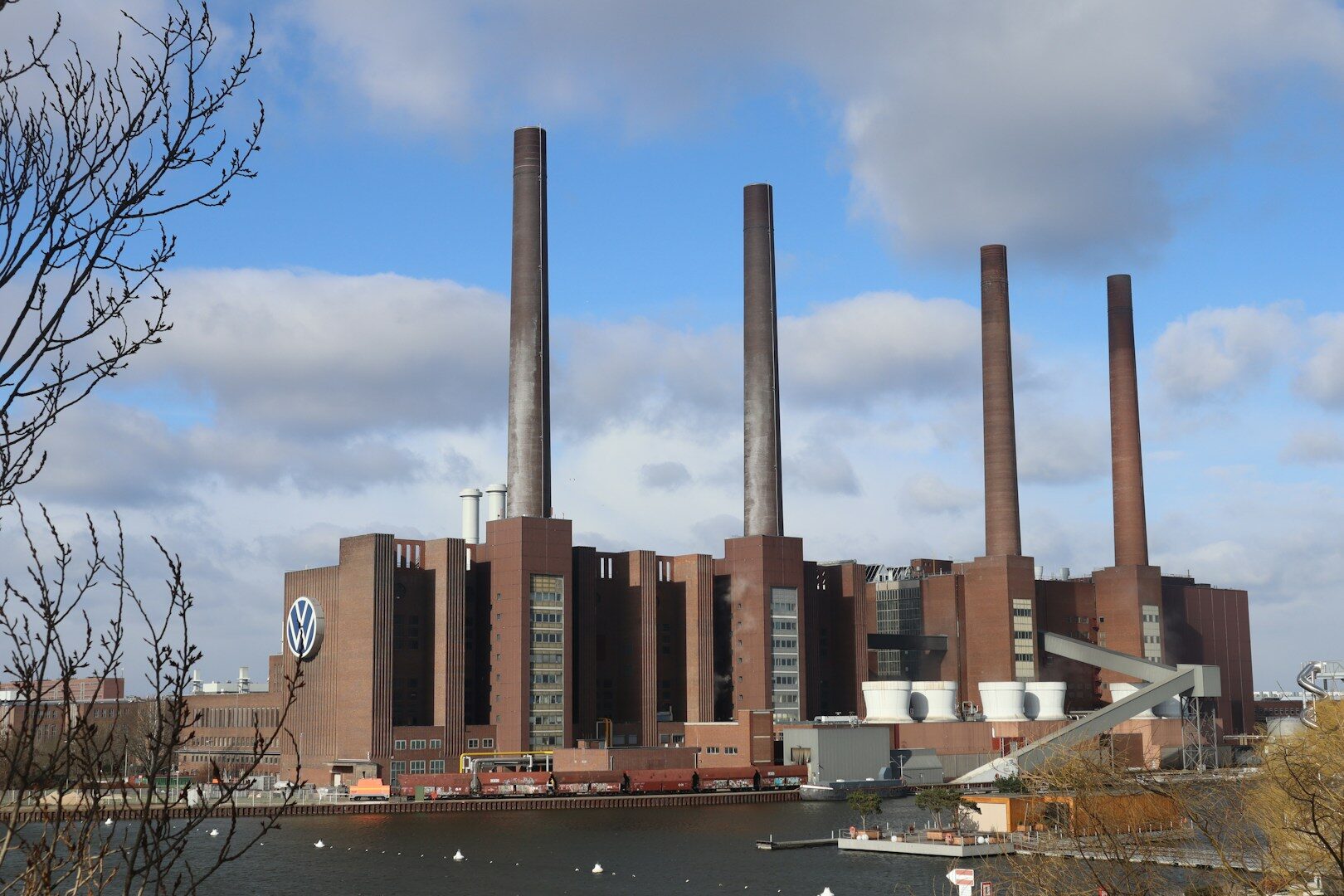
Volkswagen just agreed to sell a car factory to an Israeli investment firm so it can start making parts for European air defense systems. Read that sentence again. A company that has spent 89 years building Beetles, Golfs, and Passats is now stepping into the missile-defense supply chain. That part is genuinely strange. The stranger part is why it happened, and it has almost nothing to do with rearmament, patriotism, or Volkswagen suddenly discovering a passion for European security. It happened because nobody could figure out how to keep making money building cars there.
On Monday, Volkswagen confirmed it had agreed to sell its Osnabruck plant to the State of Lower Saxony and Aurelius Capital, a Tel Aviv-based investment firm that will hold the majority stake. The plan, still subject to regulatory approval, calls for working with Rafael Advanced Defense Systems, one of the companies behind Israel’s Iron Dome, to build components for air defense systems sold across Germany and Europe. Volkswagen CEO Oliver Blume called it “an important step towards opening up a new industrial future for the site.” Translation: the car business at this address is finished, but the factory doesn’t have to be.
The math is what makes this newsworthy beyond Osnabruck. Volkswagen had already scheduled car production at the plant to end in 2027, a decision made back in 2024, and roughly 1,800 jobs were set to disappear with it. According to VW’s works council, the new arrangement could preserve nearly 1,400 of those jobs. That’s not a rounding error. That’s most of a factory’s workforce surviving a shutdown that was supposed to be permanent.
It also lands four days after Volkswagen unveiled the most sweeping restructuring in its 89-year history, a plan that will halve its model lineup and cut another 50,000 jobs on top of the 50,000 already announced. Add it up and Volkswagen is trying to eliminate roughly 100,000 positions while fighting what its own CEO has called a mega-crisis, and Osnabruck is far from the only factory sweating. VW has already warned that four of its German plants may need to close in the 2030s as demand weakens, costs climb, and Chinese EV makers eat into markets Volkswagen once owned outright. Blume didn’t describe the Osnabruck deal as a one-off. He called it a blueprint. That word choice matters more than anything else in the press release.
So no, this isn’t really a defense story. It’s a capacity story. Volkswagen has more factory than it has customers, and Europe’s rearmament boom just showed up as the first buyer willing to pay for square footage the car business no longer needs. The company didn’t discover a mission. It found a tenant.
Here’s a detail almost nobody outside Germany fully appreciates: the State of Lower Saxony isn’t just a regional government making an industrial-policy bet. It’s also one of Volkswagen’s largest shareholders, holding roughly a fifth of the company’s voting stock and two seats on VW’s supervisory board, a legacy of the Volkswagen Act that has shaped the company’s ownership since the 1960s. So the same government body that will help own the Osnabruck plant going forward is also, in effect, one of the parties currently deciding how Volkswagen restructures itself. That isn’t corruption. It’s simply how Volkswagen has always operated, and it’s a big reason the company treats plant closures as political problems to be managed rather than pure spreadsheet decisions the way an American automaker might.
There’s a second detail here for anyone who actually likes cars. Osnabruck wasn’t always a Volkswagen plant in the ordinary sense. It began life as Karmann, the coachbuilder responsible for the Karmann Ghia and, later, the New Beetle Cabriolet and the Eos folding hardtop. Karmann even built bodies for the original Porsche Boxster under contract before financial trouble forced Volkswagen to absorb the company in 2009. In other words, this is a factory whose entire institutional skill was precision structural work, keeping a car rigid and watertight after the roof has been cut off. That turns out to be a surprisingly good foundation for defense manufacturing, which depends on the same fundamentals: tight tolerances, robotic welding and stamping, and quality-control systems that automotive suppliers already run under standards like IATF 16949, which in some respects are stricter than what many legacy defense suppliers use. A car plant doesn’t need to reinvent itself to build military hardware. It mostly just needs a new customer.
That’s the part Volkswagen isn’t saying out loud, but the deal structure makes it obvious anyway. Aurelius Capital is not a defense company or a charity. It’s a private equity firm that specializes in buying distressed industrial assets and making them profitable again. It agreed to take majority ownership of a car factory with no car business left because government-backed defense contracts, especially in a Germany raising its defense budget by a third next year to €109.7 billion ($127 billion), offer something the auto industry hasn’t given Volkswagen in years: predictable, multi-year demand at margins that don’t get undercut every quarter by a new competitor out of Shanghai.
Volkswagen isn’t the only company making this trade. Rheinmetall, Europe’s largest defense contractor, has been converting former vehicle-production sites of its own, betting that Germany’s manufacturing base, battered by years of weak demand, costly energy, and slow EV adoption, has more idle capacity than it has orders. Rearmament, in other words, is quietly becoming Germany’s industrial policy of last resort, soaking up factory space and skilled labor that the car business can no longer justify keeping on payroll.
There’s a historical wrinkle worth sitting with. Volkswagen’s own Wolfsburg plant didn’t start out building Beetles for German families. It was built to produce military vehicles, including the Kubelwagen, before the war ended and the factory pivoted to civilian cars almost by accident. Eight decades later, a Volkswagen factory is making the same trip in reverse. History doesn’t repeat, but apparently factories keep the same floor plan.
None of this changes anything about the car sitting in your driveway. Osnabruck’s convertibles are already gone from VW’s lineup, and nothing built there currently affects parts or service for owners elsewhere. What it does signal is how Volkswagen plans to survive the next decade: not by protecting every factory as a car factory, but by treating manufacturing capacity as a flexible asset that can be sold, repurposed, or handed off to whoever will pay for the machines and the people who run them. The feature nobody’s focused on here isn’t Iron Dome. It’s that Volkswagen just proved a car factory’s most valuable asset was never the cars.
Related: ZF Is Ending 120 Years of Steering Production in Lafayette. The Engineers Get to Stick Around.
Top photo: Akhil Simha on Unsplash.