
In the United States, Tesla no longer sells its driver-assist package as plain “Full Self-Driving.” The name now carries a parenthetical: Full Self-Driving (Supervised). Just before midnight on Tuesday, Oct. 13, a Tesla drove into a four-lane closure on eastbound Interstate 80 near Fairfield, Calif., and hit a California Highway Patrol cruiser with two officers inside. According to CHP, the driver, a 22-year-old Sacramento man, told investigators the car was in Full Self-Driving and he was asleep.
By his own account, then, the supervised system had no one supervising it.
Both officers were seriously injured, CHP said. The Tesla driver had minor injuries. No charges have been announced, and CHP says it is still working out which law applies to a driver who says he slept through his own crash.
The scene the Tesla drove into
The officers were on the freeway because of another crash. CHP told CBS Sacramento that about an hour earlier, a 19-year-old San Pablo man lost control of a Honda Civic west of Air Base Parkway, and a Chevrolet Tahoe then hit the Civic. He died. Officers closed four eastbound lanes with flares and cones to investigate.
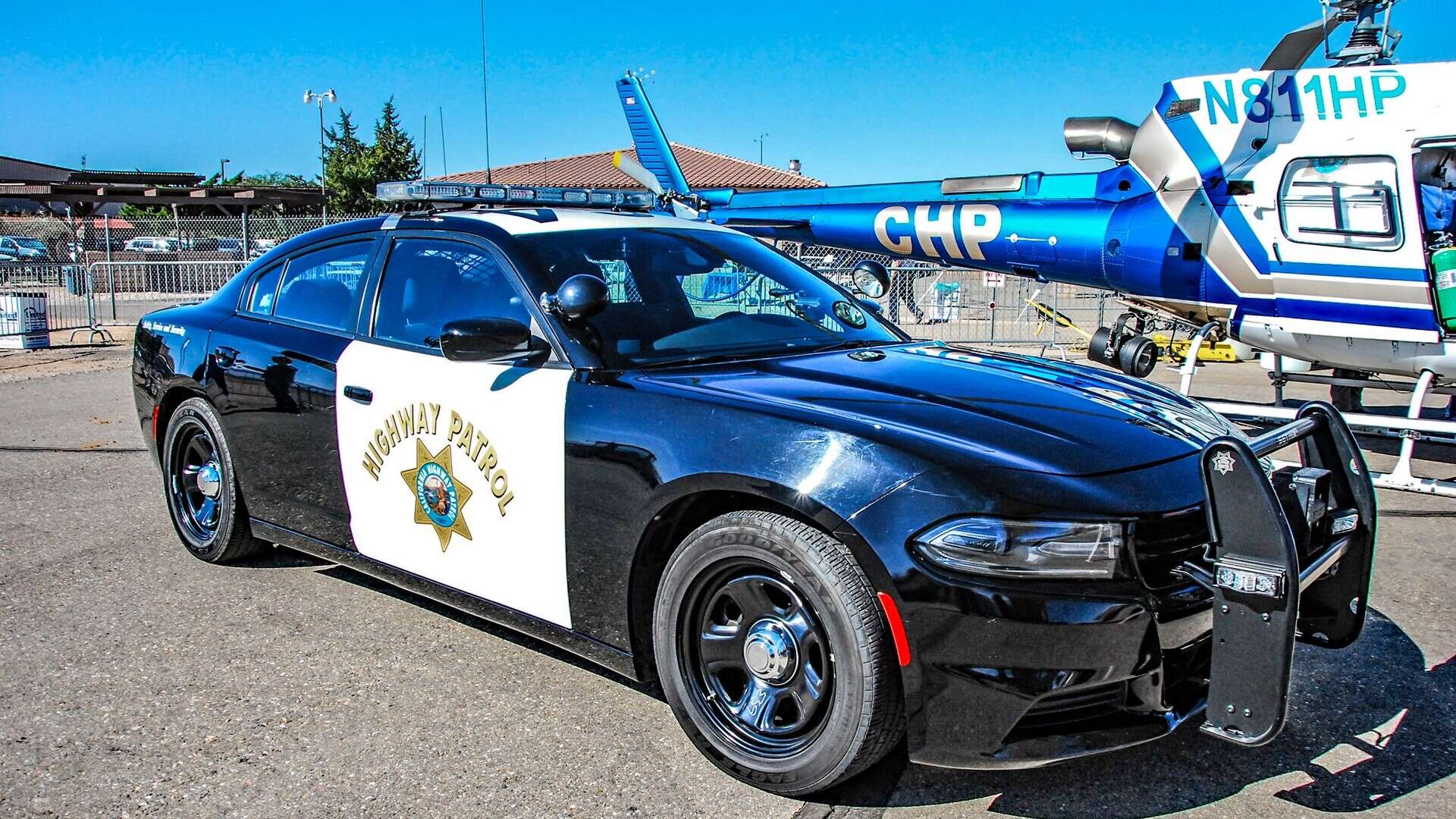
CHP says the Tesla entered that closure at freeway speed and hit the back of a Dodge Charger patrol car parked inside it. As ABC7 San Francisco reported, the agency said the car didn’t react to the flares, the cones, or the emergency lights. CHP spokesperson Sgt. Andrew Barclay told KQED that four officers were on scene. The two standing behind the cruiser got out of the way, and the two sitting inside it were hurt.
KQED also reported that investigators found the driver was not impaired, and that both injured officers were released from a Fairfield hospital the next day. CHP has not named the officers or the driver. Both crashes are still under investigation.
What the Tesla FSD crash video shows
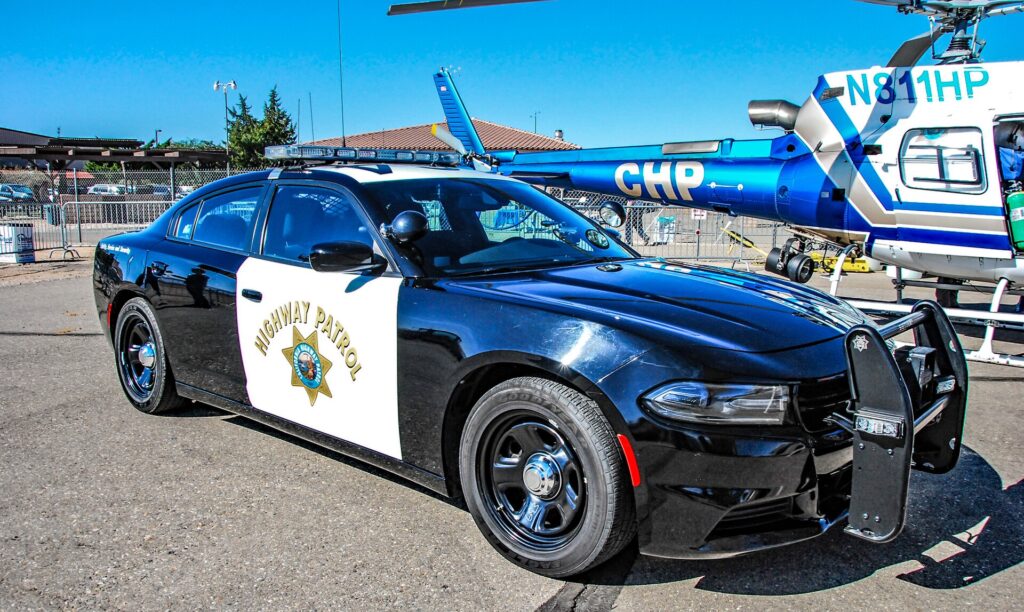
CHP posted the footage on Thursday, Oct. 15, on its Instagram account. CBS Sacramento described it as a 36-second clip from two dashcams, one on the struck patrol car and one on another vehicle at the scene, and stations that aired it describe the Tesla coming down the freeway at speed and into the back of the cruiser. What an outside camera can’t show is what was happening inside the Tesla: what its screen displayed, or whether the car ever warned its driver to take over.
That evidence is inside the car. Barclay told KQED that investigators plan to download the Tesla’s vehicle data and its onboard camera footage. For now, the claim that Full Self-Driving was on comes from the driver. That record should show whether it actually was engaged, how fast the car was going, and whether it asked its driver to take over before the impact.
CHP spent its caption explaining the product’s name
CHP’s post about the crash doubled as a consumer notice. “Despite its name, Full Self-Driving is not fully autonomous,” the agency wrote, as quoted by KMPH. “It is an SAE Level 2 driver assistance system that requires continuous driver supervision.” The post adds that “Technology does not relieve drivers of their responsibility to safely operate their vehicles.” ABC7 quoted another line, with the capital letters as CHP wrote them: “As the driver, YOU are responsible for your vehicle’s actions!”
California’s own Department of Motor Vehicles made a similar point in paperwork. In a December 2025 decision, the DMV found that Tesla’s use of “Autopilot” and “Full Self-Driving Capability” was “misleading and violates state law,” because the cars couldn’t operate autonomously when Tesla started advertising them that way in 2021, and they still can’t. By then Tesla had already moved to “Full Self-Driving (Supervised).” In February, the DMV said Tesla had dropped “Autopilot” from its California marketing, which let it avoid a 30-day suspension of its dealer and manufacturer licenses. Tesla has also dropped the Full Self-Driving name in Europe after Germany objected.
Tesla’s U.S. product page still describes the system this way: “under your supervision, Full Self-Driving (Supervised) can drive your vehicle almost anywhere.” CHP’s post amounts to a reminder that “almost” and “supervision” are carrying a lot of weight in that sentence.
Level 2 means the human is the backup plan
Under the SAE automation scale that regulators use, a Level 2 system can steer, brake, and accelerate, but the person in the driver’s seat is responsible for watching the road and taking over immediately. Federal regulators have put that in writing. When Tesla recalled about 2 million cars in December 2023 over its Autosteer feature, the recall filing described the risk as “driver misuse of the SAE Level 2 advanced driver-assistance feature,” including drivers who don’t stay ready to intervene. The fix was an over-the-air update that added more alerts and could suspend Autosteer for drivers who repeatedly ignored them.
So with a Level 2 system, the legal question is simpler than it is with a robotaxi. When a driverless car breaks the law, states are still working out who gets cited. California now sends notices with no fine to the operating company, and Texas writes up the operator when Tesla’s own robotaxis are accused of speeding through school zones. A Tesla running Full Self-Driving (Supervised) isn’t a robotaxi. It has a licensed driver, and KQED reported that CHP is holding that driver accountable, not Tesla.
What CHP hasn’t settled is the charge. Barclay told KQED that no specific law addresses sleeping while a self-driving system is operating, so investigators are looking at existing statutes. He said “everything is on the table.” CHP can also ask the DMV to revoke the driver’s license, and the DMV can act on its own.
Crash scenes have tripped up Tesla’s software before
A parked emergency vehicle behind flares is exactly the situation federal investigators studied before. In August 2021, NHTSA opened a preliminary evaluation of 11 crashes since 2018 in which Teslas on Autopilot or Traffic-Aware Cruise Control hit vehicles at first-responder scenes. The agency noted that most happened after dark and that the scenes had “first responder vehicle lights, flares, an illuminated arrow board, and road cones.” That probe became the investigation that ended in the 2023 Autosteer recall.
That earlier investigation covered Autopilot, not Full Self-Driving, and the I-80 crash hasn’t been tied to any defect. What is known so far is that the car went into a closure marked with flares, cones, and emergency lights, and that its driver says he was not awake to see any of it. The data download should show whether the software registered them.
What happens next
CHP’s Solano area office is investigating both crashes: the one that killed the 19-year-old, and the one that hurt the officers working it. Tesla did not respond to KQED’s request for comment. As of Monday, Oct. 19, The Auto Wire found no announced arrest, charges, or DMV action against the driver.
The product’s name now spells out who is supposed to be paying attention. CHP is still deciding which law covers a driver who says he wasn’t. When the driver says he was asleep, does “Supervised” in the name settle it, or was that always a disclaimer posing as a product description?