
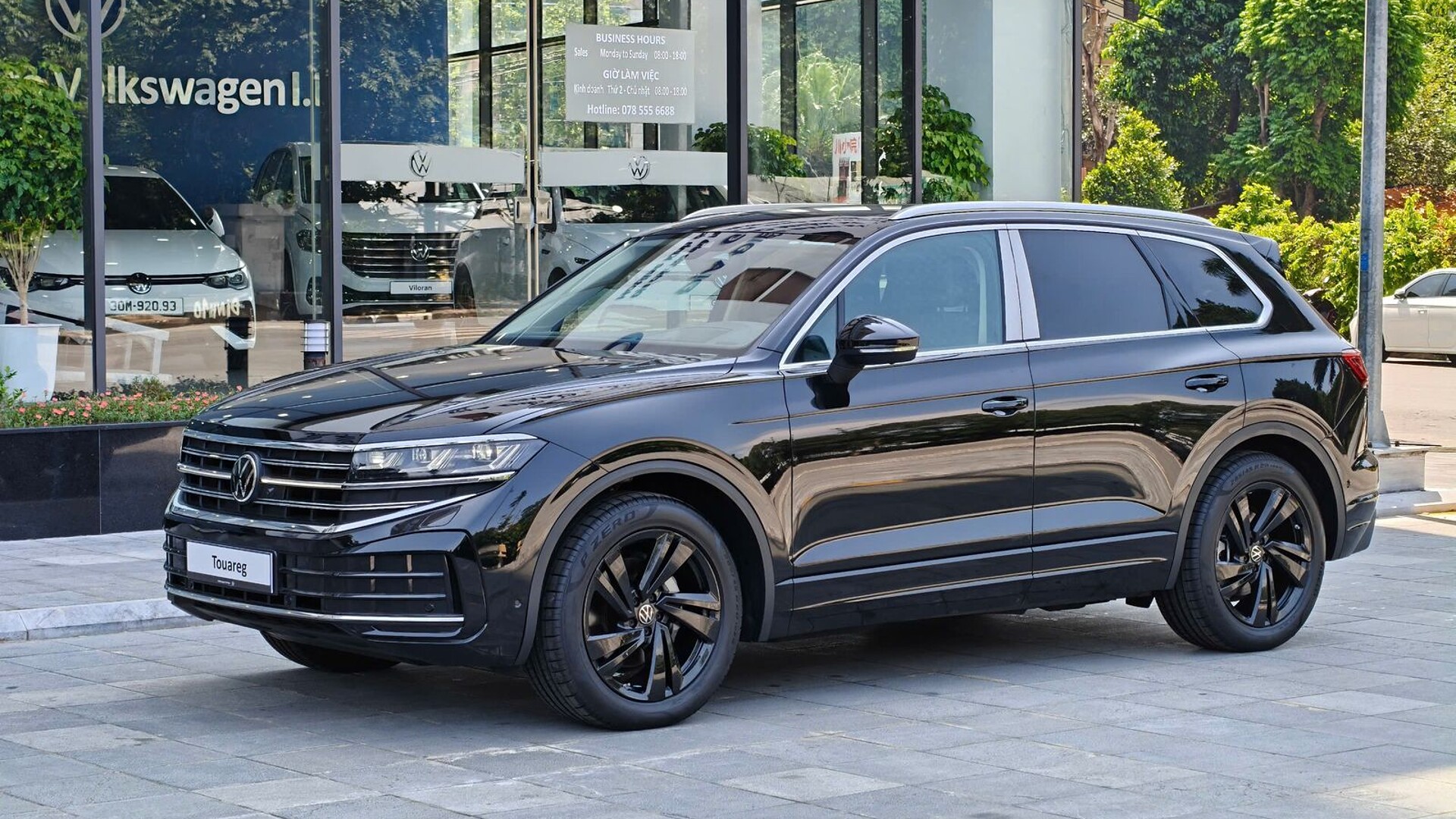
Tennessee’s Motor Vehicle Commission voted 14 to 2 on Oct. 27 to deny Scout Motors a dealer license, which keeps the Volkswagen-funded brand from running a store in the state. It does not stop a Tennessean from buying a Traveler or Terra somewhere else and registering it at the county clerk’s office. What the vote settled is narrower and, for the rest of the industry, more consequential: how Tennessee reads two words in its dealer law.
A seven-month application ends in one motion
The applicant was Scout Motor Sales, LLC, the retail company Scout set up to sell directly. At the commission’s April 28 meeting, the executive director told commissioners the application had arrived and asked how they wanted to handle it. In July, the commission held off and drafted follow-up questions for Scout to clear up what the minutes call “lingering issues,” with the application set to return on Oct. 27.
At that hearing, a lawyer for most of Tennessee’s Volkswagen dealers argued that Scout is Volkswagen under another badge. Scout’s team said no Tennessee dealer holds a Scout franchise, so there is no Scout dealer to compete with. Its representatives also acknowledged that Volkswagen AG pays for the operation. Chairman John Roberts moved to deny, citing Scout’s ownership and the statute barring a manufacturer from competing with its own franchised dealers. Fourteen of the 16 commissioners voting said yes.
I could not find minutes of the October meeting on the commission’s website, and I have not seen a written order. The date of that order sets the appeal clock described below.
What Tennessee’s statute says, and what it leaves out
The provision is Tenn. Code Ann. § 55-17-114(c)(17). It lets the commission deny a license to a manufacturer or distributor that has “Competed with a dealer in the same line-make operating under an agreement or franchise from a manufacturer or distributor in the relevant market area.”
A line-make is a brand. Volkswagen is one, Audi is another. Scout’s position is that it is a line-make nobody in Tennessee sells, so there is nothing for it to compete against. The dealers’ position is that the badge is cosmetic and the owner is what counts. The statute does not mention parent companies, subsidiaries or affiliates, which is why both readings survived all the way to a vote.
California’s franchise law is written differently. It bars a manufacturer from competing with its dealers “indirectly through an affiliate,” and a federal judge leaned on that language when she kept the California dealers’ lawsuit against Volkswagen and Scout alive. Tennessee’s text has no such phrase. The commission reached the same place without it.
The same subsection shows the legislature knows how to write exceptions for factory-owned stores. A manufacturer is not considered to be competing when it runs a dealership temporarily, when it runs a store that is for sale to a qualified independent buyer at a fair price, or when an independent operator has money at risk in the store and can reasonably expect to buy full ownership. That last carve-out describes a dealer-development program, the route automakers have long used to seat a new franchisee in an open market. There is even a grandfather clause for truck makers that had continuously run their own dealership selling trucks over 6,000 pounds gross vehicle weight for at least six years before Jan. 1, 1977.
Every one of those exceptions treats a factory store as a bridge to an independent dealer. The dealer-development language gives Scout one possible path to a Tennessee storefront, but only by creating the franchisee its business plan was built to avoid.
An appeal would be decided on the October record
Commission decisions go to court under § 55-17-116, which routes them through the state’s Uniform Administrative Procedures Act and sets venue in Davidson County. That act, at § 4-5-322, gives a losing party 60 days after the agency enters its final order to petition for review. A judge hears the case without a jury, the review is confined to the agency record, and the court can reverse a decision that violates a statute or exceeds the agency’s authority.

Two things follow from that. The 60-day window opens with a written final order, so its date is the first thing to watch. And Scout cannot add evidence in Nashville that it did not put on the record in October, which means the hearing transcript, including Scout’s own acknowledgment of Volkswagen’s money, is what a judge would read. Scout’s strongest appellate argument is textual: the General Assembly wrote “same line-make” and did not write “affiliate.”
What a Tennessee buyer gives up, and what the state still collects
Scout’s support pages tell shoppers in states that don’t allow direct sales that they can still reserve a place in line. Scout told reporters at its Blythewood, S.C., plant on Nov. 12 that about 212,000 people have placed deposits, according to the SC Daily Gazette, with customer deliveries expected in 2028. (The Auto Wire has also been tracking what Scout has and hasn’t published about the Traveler’s specs.)
A Tennessee resident who buys from a Scout entity licensed in another state still pays Tennessee. The Department of Revenue says that when an out-of-state seller collects no sales tax, the county clerk collects it at titling and registration, and when the other state’s rate is lower, the buyer owes the difference. The denial doesn’t cost the state treasury the tax on a sale. It costs the buyer a local place to see, drive and take delivery of the vehicle, and possibly early price information: Scout told commissioners a dealer license is what lets it discuss pricing with customers in a state.
Service is the bigger gap. A Traveler bought in another state still needs warranty repairs, recall work and collision parts in Tennessee. Scout has not said publicly who will do that work in a state where it holds no dealer license, and I could not find a primary document that answers the question. The Volkswagen dealers who fought the license already have the service bays and trained technicians, and their position at the hearing was that Scout belongs in their showrooms, too.
The size of the price difference is Scout’s claim, not a measurement. In comments to the Justice Department’s task force on anticompetitive regulations, Scout estimated it could cut each vehicle’s retail price by “$7-10K as compared to the typical franchise dealer approach.” Scout has not published a price for either model.
Why other automakers’ future brands are exposed
If “same line-make” means “same owner” in Tennessee, the vote reaches past Scout. Any new brand launched by a company that already has franchised dealers in the state could face the same objection from its siblings’ stores, whether the new brand sells EVs, extended-range trucks or anything else. Tesla and Rivian never ran into this provision the same way, because neither has franchised dealers of its own brand to compete with.
The forum matters as much as the text. Tennessee’s commission statute sets 17 seats and reserves a majority for licensed dealers, with others for manufacturer representatives and consumer members. Scout raised the same concern about Louisiana in its Justice Department comments, noting that 15 of that state’s 18 commission seats go to franchise dealer licensees. A fight over whether a manufacturer may compete with franchised dealers starts before a board made up mostly of franchised dealers, and any appeal is reviewed on that board’s record.
Other states have split. Colorado’s dealer board licensed Scout in December 2025. In South Carolina, where Scout is finishing its plant, a direct-sales bill died in a House committee, the Gazette reported, and would have to be filed again next year. Citing the National Conference of State Legislatures, the paper counted 18 states that expressly allow direct sales and 17 that expressly ban them.
Dates and filings that decide the next round
Nothing moves until the commission enters a written final order; that starts the 60-day clock for a petition in Davidson County. Scout might just let it run out. It can sell into Tennessee from entities licensed elsewhere without ever arguing “line-make” in a Nashville courtroom. Then there’s the Tennessee General Assembly. It convenes in January, and it’s the only body that can settle the “affiliate” question without a judge. In California, discovery in the dealers’ federal case will produce Volkswagen and Scout funding and governance records, and whatever those show about how separate the two companies are can be cited in every other state where this fight is still open.
If the closest place to buy a Scout were a Scout store in another state, would you make the trip, or would you rather your local Volkswagen dealer sell and service it?