
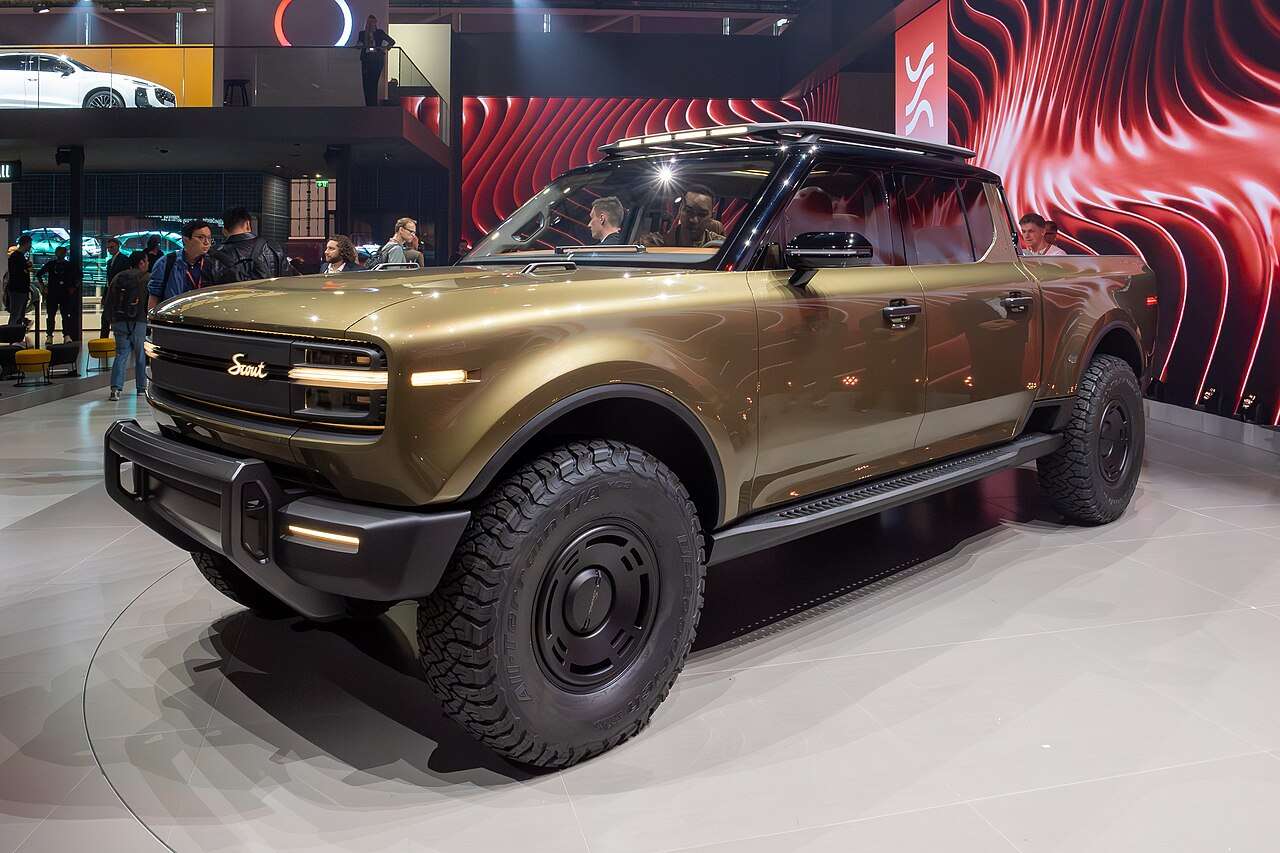
Scout Motors has published a torque figure, a charging rate and a 0-60 estimate for the Traveler SUV, and no horsepower rating, even as it fights state dealer laws over how it sells the vehicle.
Scout says on its support page on horsepower, dated April 2, 2026: “We’ll be sharing horsepower specifications as we get closer to production.” The same company says first customer deliveries are anticipated to start in 2028, according to its page on which configurations come first. None of the Scout pages I reviewed for this story carries a horsepower number for the Traveler.
What Scout has put on paper
The figure Scout does give is torque: nearly 1,000 lb-ft through electric drive units on the Traveler and the Terra pickup. A January 2025 post on the Traveler adds a preliminary estimate of 0-60 mph in as little as 3.5 seconds, an anticipated tow rating above 7,000 pounds and a payload target near 2,000 pounds. It also lists up to 350 miles of range on the battery-electric version and a target of more than 500 miles total for the Harvester range-extended version, with an expected price under $60,000.
The high-voltage architecture page says Scout plans an 800-volt system capable of charging at up to 350 kilowatts. Scout has not published a battery capacity in kilowatt-hours, a motor output, or the size of the Harvester engine.
Why 1,000 lb-ft does not convert to horsepower
Horsepower is torque multiplied by rotational speed and divided by 5,252 (with torque in lb-ft and speed in rpm). A drive unit making 1,000 lb-ft while turning 3,000 rpm is making about 571 horsepower. The same torque at 5,252 rpm is 1,000. Scout’s page does not say at what speed the torque is reached or where in the drivetrain it is measured, and that matters because a gear reduction multiplies torque while dividing speed. The same motor looks stronger in lb-ft after the gearbox than at its own shaft, with no change in power.
Electric motors also hold roughly constant torque from a standstill up to a base speed, then lose it as speed climbs. The 3.5-second estimate comes from the early part of that curve. It tells you little about how the SUV pulls at 70 mph with a trailer on the back, which is the situation a buyer who tows 7,000 pounds will care about.
A range extender that never turns the wheels
Scout says the Harvester does not mechanically drive the wheels. It is a generator that recharges the high-voltage battery, and Scout says it does not yet have specifications for it. In a layout like that, every horsepower reaching the pavement passes through the battery and inverters or comes straight from the generator, and the wheels never get help from a direct engine connection the way they do in a conventional hybrid.
Scout’s own range figures point to a second question. A battery-electric Traveler is listed at up to 350 miles, while the range-extended version is listed at about 150 miles on the battery, per Scout’s Traveler FAQ, which dates to late 2024 and which Scout calls preliminary. That implies a smaller pack in the extended-range version, though Scout has not confirmed it. This is the Auto Wire’s reasoning, not Scout’s: a smaller pack generally limits how much power can be pulled out of it, and once the battery is down to its reserve, a series hybrid can sustain only what its generator can make. A peak rating for the Traveler would be a useful number. A rating for what the extended-range version can hold on a long grade with a trailer would be a more useful one, and Scout has not said whether it will publish it.
Charging at 800 volts
The 350-kilowatt figure describes how fast the battery can take energy, not how hard the motors can pull. The voltage matters because current equals power divided by voltage. Moving 350 kilowatts at 800 volts takes about 437 amps. At 400 volts the same power needs about 875 amps, which means thicker cable and more heat in the connectors and wiring. That is the reason several manufacturers have moved their high-power platforms to 800 volts.
A schedule that has moved
Scout’s late-2024 FAQ said the start of production was anticipated in 2026. The company’s June 2026 production center update instead points to deliveries in 2028, reports the first test welding of a Traveler body at the Blythewood, South Carolina plant, and describes a $2 billion site designed for up to 200,000 vehicles a year. The newer dates are the ones that count, and they leave a long stretch in which the Traveler’s specification can still change.
The numbers to watch are a horsepower rating that comes with a stated speed and measurement point, a battery capacity for each version, and the Harvester’s output. A buyer deciding between the two Traveler versions will need all three, and Scout has so far published none of them.
Would you put a deposit on a range-extended Traveler whose engine never drives the wheels, or hold out for the battery-electric version?