
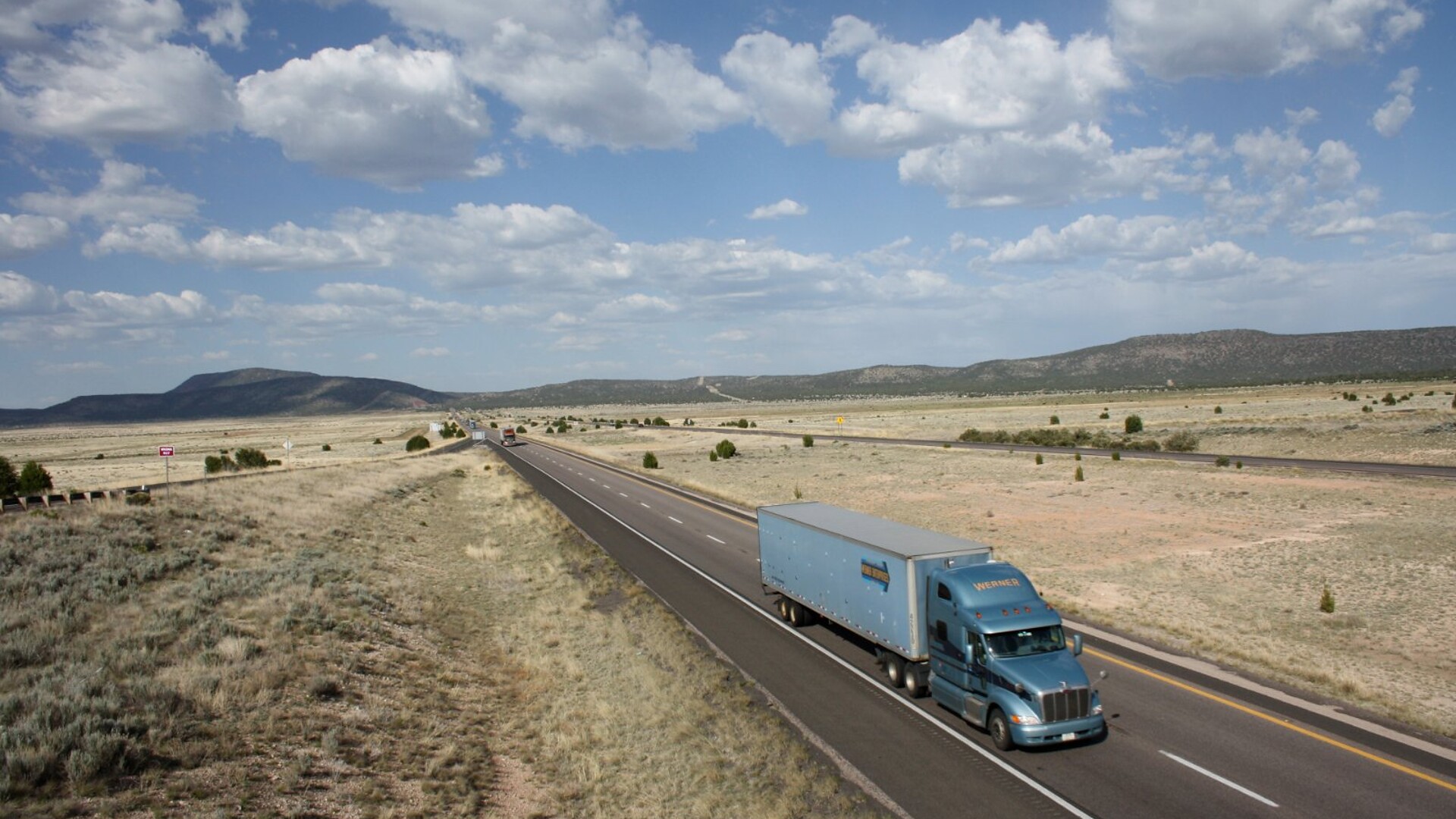
A driver who called 911 about a semi that couldn’t stay in its lane on Interstate 40 near Flagstaff, Arizona, on Thursday, Nov. 5, ended up pulling the trucker out of the cab and taking the keys, the Arizona Department of Public Safety said. Troopers who arrived said a preliminary breath test on the commercial driver read 0.301.
According to DPS, as reported by Arizona’s Family, the caller first described a tractor-trailer drifting across lanes, then called back to say it was blocking an I-40 off-ramp and that its driver was highly intoxicated. DPS said the caller forcibly removed the driver from the truck and took the keys before troopers got there. Troopers ran field sobriety tests, reported signs of impairment and found alcohol in the cab; the agency’s photo shows a can of Twisted Tea hard tea. The driver was arrested for DUI, and the truck and trailer were towed and impounded for 20 days. DPS has not named the driver or the carrier, and the charge is an allegation.
What 0.301 means, and why it isn’t the final number
DPS called the reading nearly eight times the commercial limit. The exact math is 7.5 times the federal 0.04 limit for commercial drivers and about 3.8 times the 0.08 limit for everyone else. Pick either yardstick. It isn’t close.
A roadside screening result is not the number a prosecutor takes to court. Arizona’s extreme DUI statute, A.R.S. § 28-1382, looks at alcohol concentration measured within two hours of driving or being in actual physical control of a vehicle, so the case will rest on the evidentiary breath or blood test. If that comes back at 0.20 or higher, the driver lands in Arizona’s harshest DUI tier.
Forty-five days in jail is the easy part
Under the state statute, a first extreme DUI at 0.20 or above carries at least 45 consecutive days in jail, a minimum $500 fine, a $250 assessment and two $1,000 assessments, or at least $2,750 before surcharges. A judge may suspend all but 14 days of the jail term if the driver uses a certified ignition interlock for 12 months.
Federal trucking rules apply separately. 49 CFR 392.5 bars a commercial driver from drinking within four hours of going on duty and from possessing alcohol while on duty unless it is manifested cargo, so an open can in the cup holder breaks the rule whether or not anyone drank it. A driver found in violation is placed out of service for 24 hours.
The bigger hit is to the license. Under the federal disqualification table in 49 CFR 383.51, a first alcohol conviction disqualifies a driver from commercial vehicles for one year, three years if the truck was hauling hazardous materials, and a second conviction means a lifetime ban. The rule reaches a driver’s personal car too: a first DUI conviction in a non-commercial vehicle also costs a one-year commercial disqualification. For a professional driver, that can end the job, in an industry already under scrutiny for how its drivers get trained and licensed.
Who pays for the 20-day impound
Arizona’s impound statute, A.R.S. § 28-3511, requires officers to remove a vehicle when they have probable cause to arrest the driver for extreme DUI, and it stays impounded for 20 days. The law adds that an insurance company has no duty to pay impound or immobilization charges. The owner, along with anyone else with an interest in the vehicle, gets a chance at a post-storage hearing.
If the truck belongs to a carrier or a leasing company, they eat 20 days of a tractor-trailer earning nothing while the storage bill climbs, and the freight on board still has to get to a customer somehow. The longer-term cost shows up on the carrier’s safety record, where an alcohol violation is the kind of hiring and supervision question insurers price at renewal.
What the caller risked, and what dispatch needs
Nobody was hurt, and a tractor-trailer with a driver reading 0.301 stopped moving. That does not make the caller’s move a model. Walking up to an impaired stranger in a running semi means betting that the truck won’t lurch and the driver won’t fight back. What dispatchers can use from a following driver is the mile marker, direction of travel, trailer markings and the USDOT number on the cab door, which ties the truck to a carrier in federal records. DPS has not said whether the driver has appeared in court or what charges were filed.
If you’d been the one on the phone with 911 while that semi blocked the off-ramp, would you have walked up to the cab? Truckers especially: what would you want a stranger to do?