
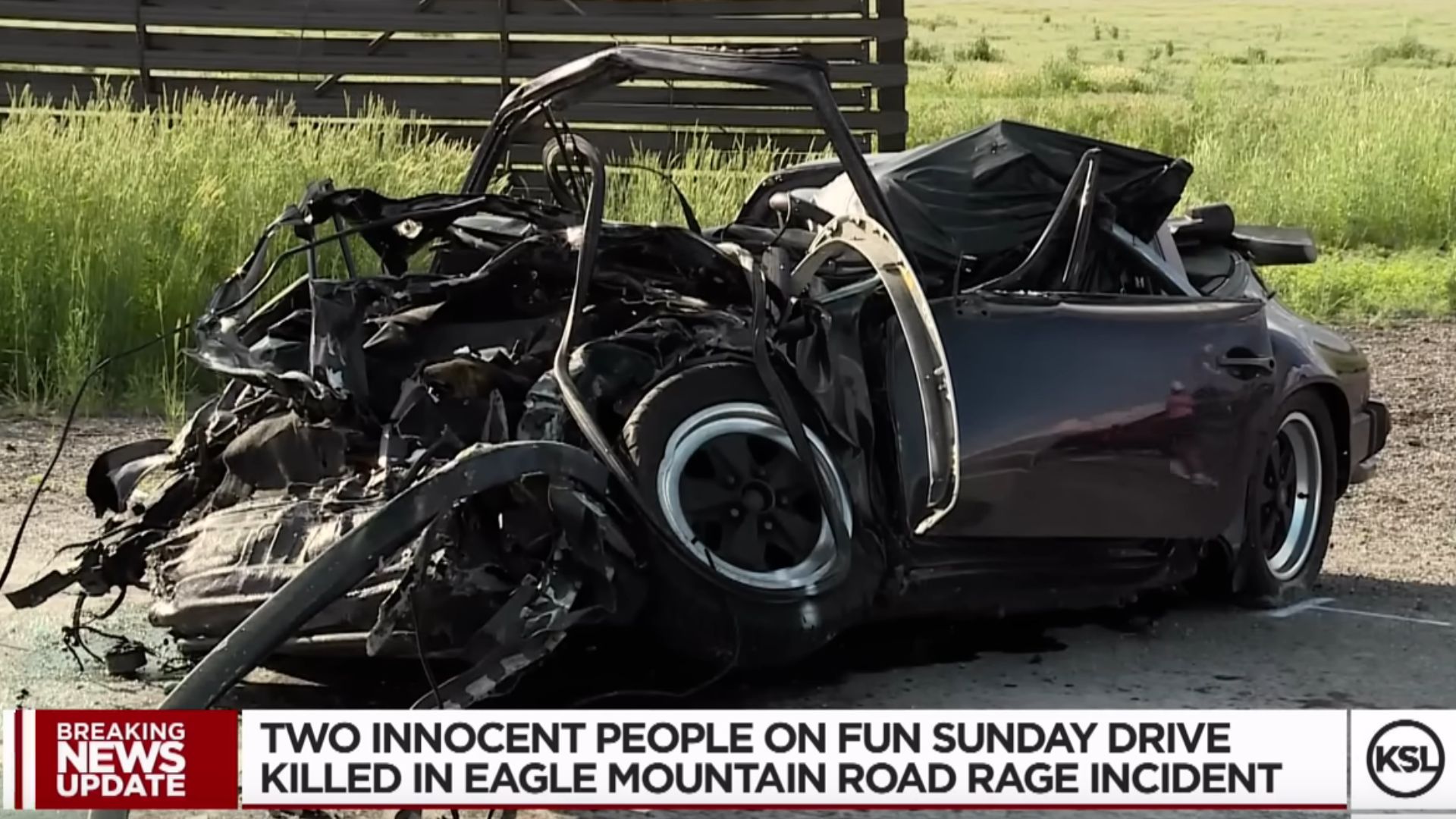

A 48-year-old man and a 47-year-old woman were killed on SR 73 near Eagle Mountain, Utah while on a Sunday drive in their classic 1987 Porsche 911, when a truck involved in a road rage incident crossed the center line and struck them head-on. Both were members of the local Porsche Club and were simply out enjoying their car on a weekend when someone else’s rage on the road ended their lives. The senselessness of the tragedy is difficult to process.

Road rage incidents that end in fatalities have been increasing in frequency nationally, driven by a combination of factors including increased traffic stress, documented increases in aggressive driving behavior since the pandemic, and a broader erosion of social norms around anger expression. A driver who loses control of their emotions, makes a reckless or aggressive maneuver, and kills innocent people they have no connection to represents a category of road death that feels particularly cruel in its randomness.

For the Porsche Club community, the loss of two members who were doing exactly what car enthusiasts do on weekends — taking a beloved car out on a scenic road to enjoy it — is a reminder of the vulnerability that exists on any public road. No amount of enthusiasm or preparation protects you from a driver on the other side of the road who has lost control of their vehicle or their judgment.
The legal consequences for the driver responsible for the crash will work through the courts. Utah’s laws on vehicular homicide and reckless driving carry serious penalties when the conduct results in death, and prosecutors typically pursue charges proportionate to the outcome when road rage contributes to fatalities. Whatever the legal result, it can’t undo what happened on that stretch of highway.
Driving is a cooperative activity that depends on everyone on the road maintaining a minimum of rationality and self-control. When that breaks down — when someone’s anger at a perceived slight becomes more important to them than the safety of everyone around them — people who did nothing wrong pay the ultimate price. The Utah tragedy deserves to be remembered as exactly that: avoidable, senseless, and a consequence of choices that one person made and two people paid for.
Related Articles
- Detroit Camaro Driver Killed in Shooting — Road Crime Continues to Claim Lives
- Illinois Driver Killed After Metal Debris Pierces Windshield on Dan Ryan Expressway
- Road Rage Turns Deadly: Driver Accused of Targeting Motorcyclist
Comments are closed.