
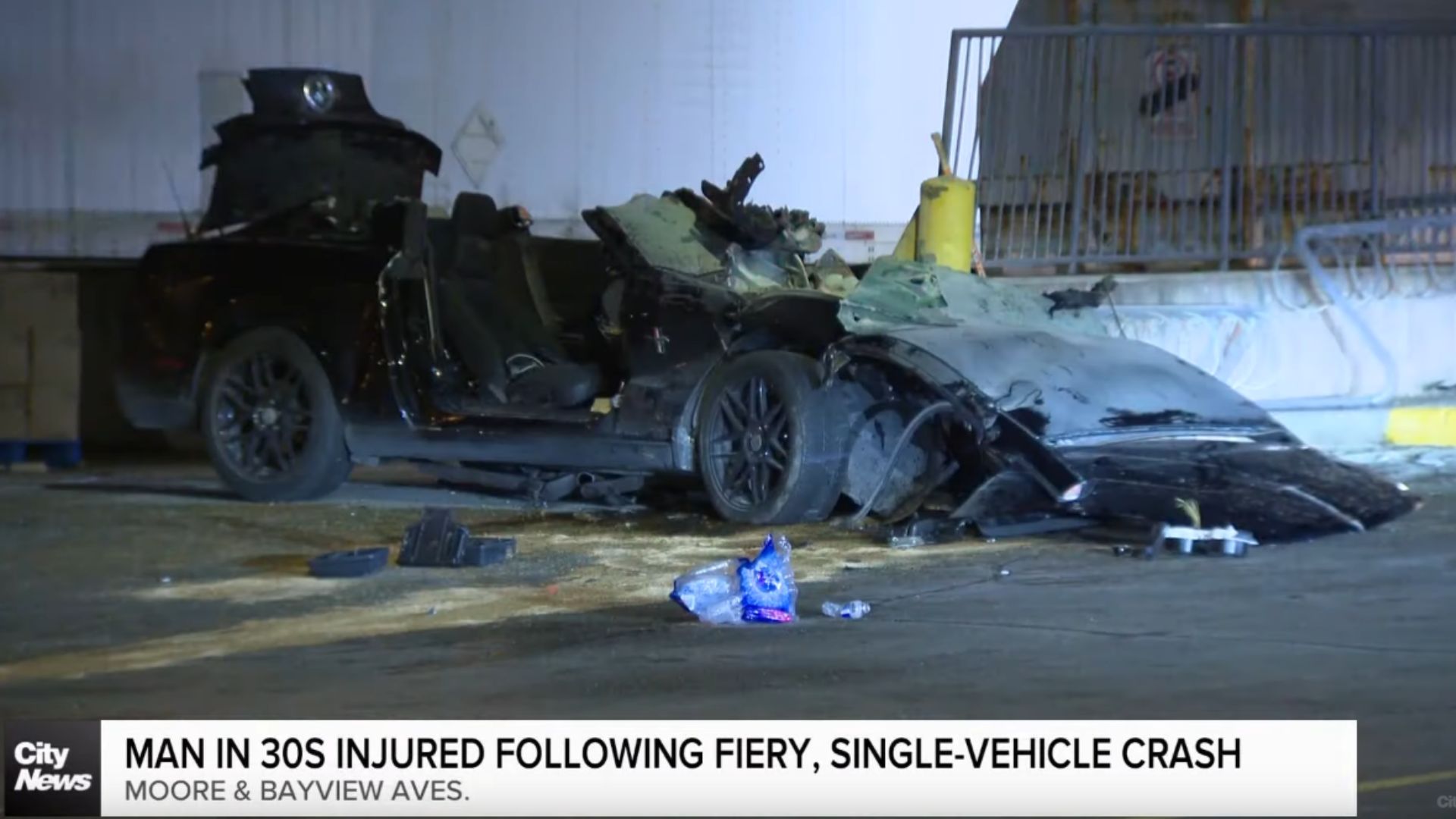
A Ford Mustang crash in Canada ended in a fiery wreck, adding another entry to the extensive catalog of Mustang incidents while fortunately concluding with the driver surviving the dangerous combination of crash impact and vehicle fire. The incident, which saw the Mustang catch fire following the crash, illustrated both the recurring presence of the pony car in accident coverage and the serious danger that post-crash fires present to vehicle occupants. The driver’s survival of the fiery wreck represents a fortunate outcome given the lethal potential of the combination of factors involved.
Post-crash vehicle fires represent one of the most dangerous secondary hazards in serious accidents, as occupants who survive the initial impact may face the additional threat of fire before they can escape or be rescued from the vehicle. The Mustang’s involvement in yet another crash reinforces the model’s prominent place in accident coverage, though the driver’s survival of the fiery aftermath is the most significant aspect of this particular incident. Modern vehicle safety engineering, including fuel system designs intended to reduce fire risk in crashes, contributes to survival in these situations, though post-crash fires remain a serious danger.
Related Articles
- Mustang Refuses To Die In Yet Another Crash
- Canadian Elderly Driver Cited For Crash That Happened 65 Years Ago