
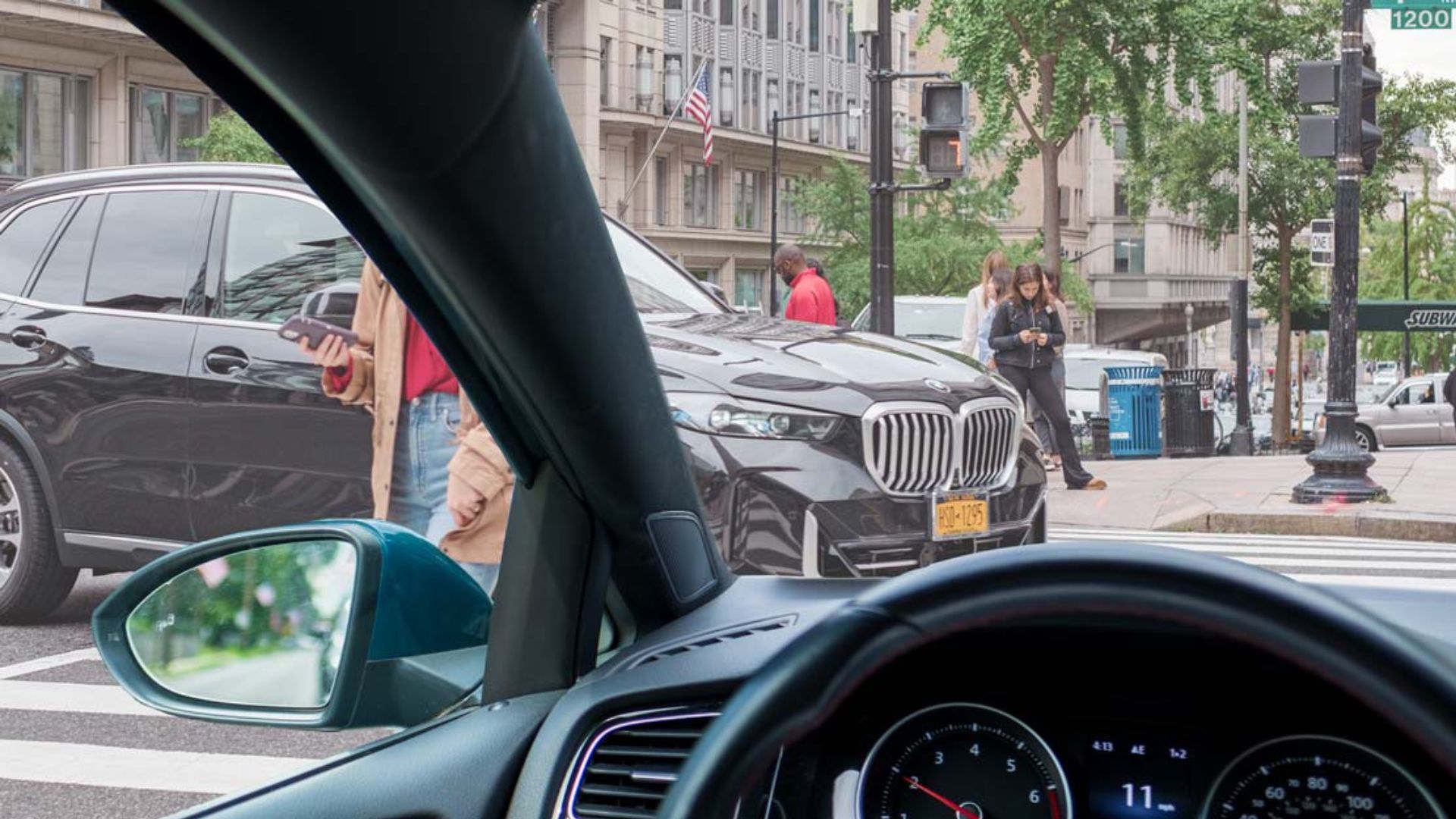
The Insurance Institute for Highway Safety has identified forward blind spots as a growing safety concern in modern vehicles, pointing to pillar designs and hood profiles that can obscure short pedestrians and children from drivers in certain situations.
The issue centers on the A-pillars — the structural columns on either side of the windshield — which have grown thicker in many vehicles to meet federal roof crush standards. While that change improved rollover protection, it created larger blind zones at angles where pedestrians can be obscured at intersections during turns.
IIHS testing showed that child-sized pedestrians could disappear entirely behind certain A-pillar and hood combinations when a vehicle turns, particularly at slow urban speeds where pedestrian interactions are most common.
The organization is calling for better pedestrian detection systems and improved camera integration to compensate for the visibility limitations created by current structural designs. Several automakers have already begun incorporating small supplemental windows in A-pillar bases as a partial remedy.
The findings are expected to influence future safety rating criteria and potentially drive regulatory discussion about minimum forward visibility standards for passenger vehicles.