
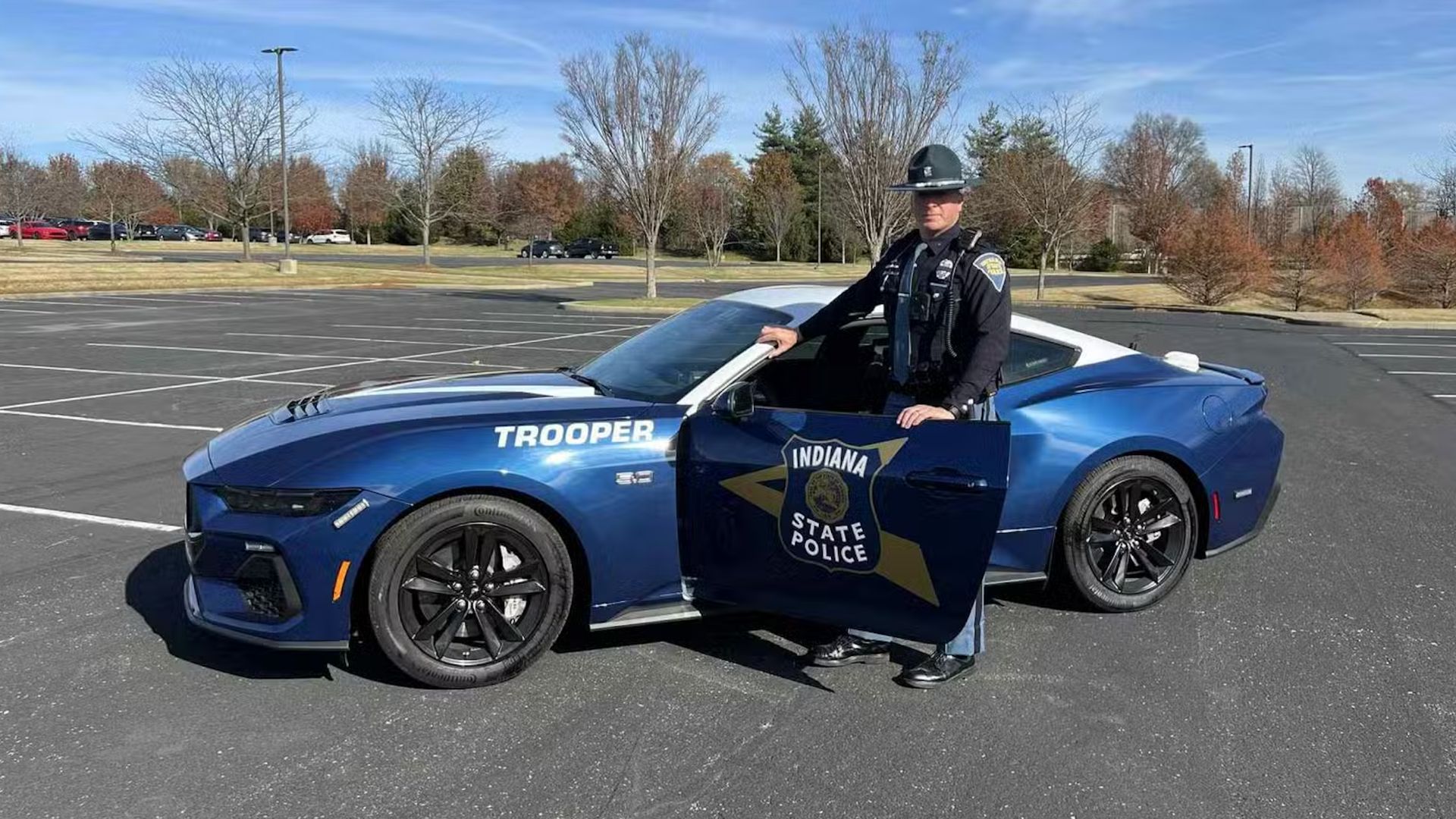
Indiana State Police are adding Ford Mustang GTs to their patrol fleet, joining a small but growing number of departments turning to muscle cars to keep pace with increasingly powerful vehicles on the road. Modern police fleets already lean heavily on SUVs, but Indiana’s addition of the Mustang reflects a shift toward higher-performance options for specific enforcement needs.
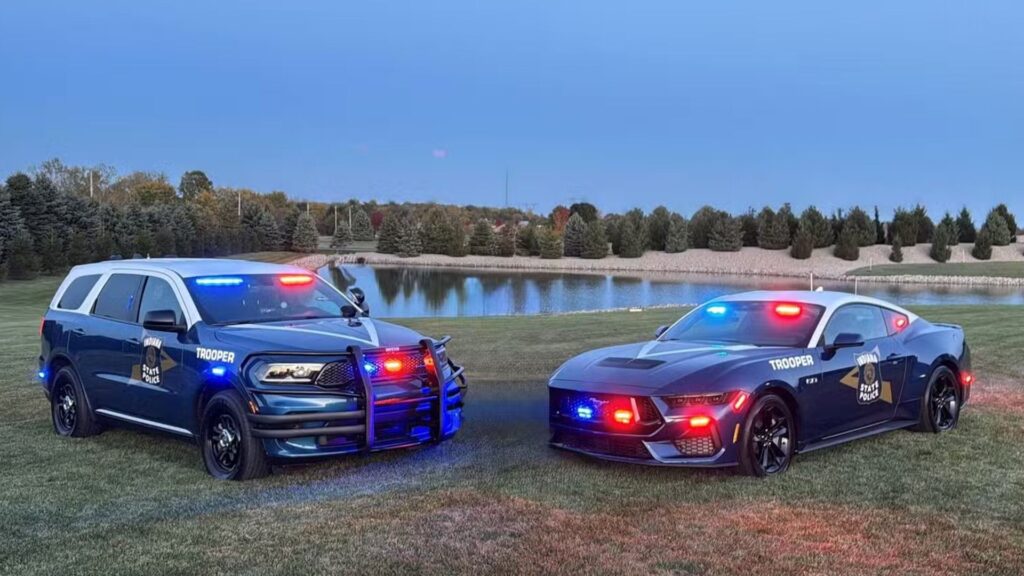
Why Departments Are Turning to the Mustang
Ford no longer offers an official police package for the current Mustang, but that hasn’t stopped some departments from adapting the car for patrol use. Indiana joins Florida and Virginia in deploying the Mustang GT’s 480-horsepower V8 to pursue vehicles capable of outrunning older patrol cars. With many modern performance vehicles now producing 500 to 600 horsepower or more, some agencies have found their existing fleets increasingly outmatched in pursuit situations.
Minimal Modifications Required
Unlike past police-spec vehicles, Indiana’s Mustang GTs require no heavy modifications, armor, or specialized suspension work, since the factory GT already meets the performance requirements needed for patrol use. Indiana is also giving the cars a retro-styled blue-and-white paint scheme reminiscent of a design last used decades ago, with the same styling being applied to the department’s standard patrol cruisers as well.
Buyer’s guide: Best Winter Accessories for SUV Owners
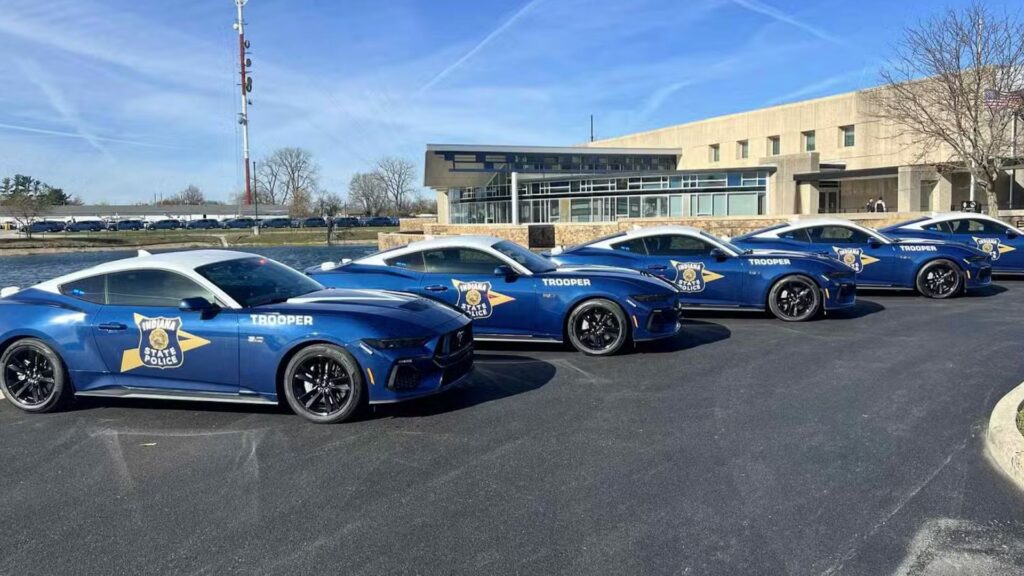
Who Gets to Drive Them
Access to the new Mustangs is limited to experienced troopers, specifically those with 15 or more years of service, who were required to submit a written request and complete specialized training before being approved to drive them on patrol. The intent behind the program is to use the Mustangs as a visible deterrent against street racing and aggressive driving, aiming to discourage dangerous behavior before it escalates.
A Seasonal Fleet Addition
The Mustangs won’t be used year-round. Once winter weather arrives, the cars are expected to be parked in favor of the department’s SUVs, which are better suited to snow and ice, with the Mustangs returning to active patrol duty once road conditions improve in the spring.