 By John Lloyd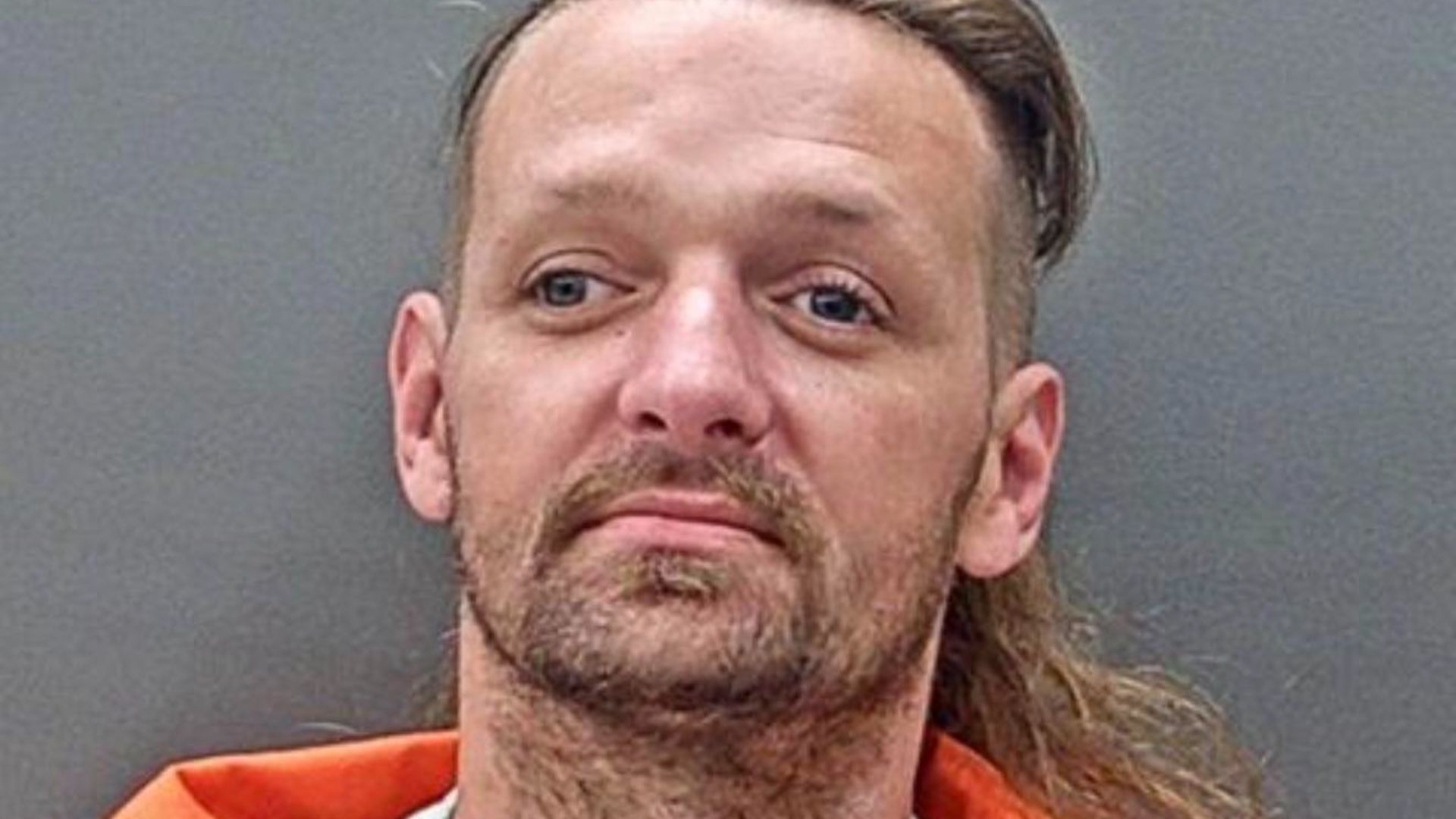
A stolen vehicle, a machete, and a string of crashes in Wheatfield, Indiana on Tuesday evening laid bare a growing failure that keeps repeating: dangerous offenders getting behind the wheel and turning public roads into threat zones.
Leesburg Man Arrested After Alleged Machete Attack During Morning Road Rage Incident
Authorities say officers responded around 5:11 p.m. Feb. 3 to a traffic stop at the Family Express gas station on East State Road 10. The driver refused to identify himself and would not exit the vehicle. Officers observed behavior consistent with possible drug use, escalating the situation and prompting more units to respond.
Then it spiraled.
Investigators say the suspect deliberately rammed two marked law enforcement vehicles, striking a deputy’s squad car while the deputy was still inside. The suspect fled, plowed into a civilian vehicle at the intersection of State Road 10 and State Road 49, and kept going until the stolen car became disabled near South Street.
The violence didn’t end when the vehicle stopped. Authorities say the suspect got out armed with a machete and ignored repeated commands from officers. Police deployed a Taser to stop what they described as an immediate threat.
The suspect, identified as Duncan Davis, 45, of South Bend, was taken into custody, evaluated by EMS, and transported to Franciscan Health Rensselaer before being booked into the Jasper County Jail. One deputy was injured in the vehicle ramming and treated at a local hospital before being released. Investigators later confirmed the car had been reported stolen out of Porter County.
This wasn’t a simple arrest. It was a chain reaction of failures playing out in real time.
A stolen vehicle became a weapon. Police cruisers became targets. A civilian driver was pulled into the chaos. A deputy was injured. And it all unfolded in broad daylight near a gas station and major roadway.
The pattern is familiar and getting harder to ignore. Vehicles are increasingly part of violent confrontations, used for escape, intimidation, and impact. The consequences land on officers, drivers, and anyone nearby when things go wrong.
This incident didn’t end in fatalities, but that outcome feels increasingly fragile. The risk was obvious. The danger was immediate. And the response came only after the threat had already escalated.
The takeaway is unavoidable: the moment a stolen vehicle turns into a weapon, the damage is already underway. The system is reacting, not preventing. And each time this happens, it reinforces a reality the industry and public safety leaders can’t sidestep anymore—when stolen cars keep becoming instruments of violence, pressure builds until change is no longer optional.
 Shawn Henry
  Eve Nowell