 By Shawn Henry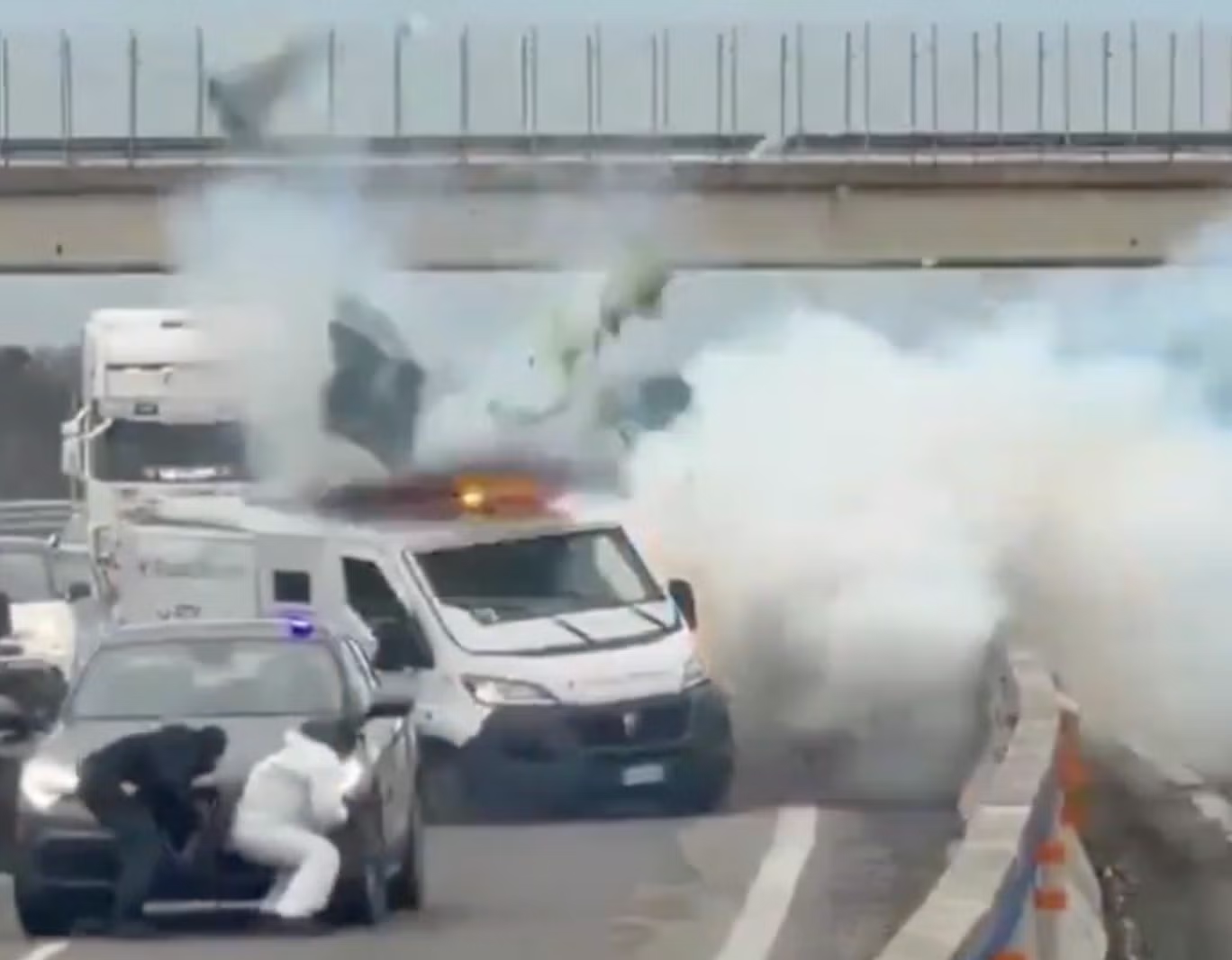
An armored van built to withstand criminal threats was stopped cold on a busy southern Italian highway, its doors blown open by explosives as armed suspects fired weapons and escaped. This was not cinematic flair. It was a breakdown of security in the real world, and it happened in plain sight.
The attack unfolded Monday, Feb. 9, on the 613 highway between Lecce and Brindisi in the Puglia region. At least eight masked suspects coordinated the assault, blocking traffic, deploying explosives, and using military-grade weapons to neutralize an armored vehicle belonging to Battistolli’s BTV division. The van was breached violently. That alone marks a failure.
Armored transport exists for one reason: to resist exactly this kind of attack. Yet the doors were blown off in seconds. Vehicles with removable flashing lights were used to create confusion and impersonate authority. Armed suspects emerged from parked cars and began unloading cargo while others fired at police. This was not improvisation. It was a rehearsed exploitation of known weaknesses.
The fact that the transported money was ultimately protected by a remotely activated foam security system does not erase the larger issue. The physical vehicle failed. The road was taken over. Gunfire erupted on a public highway. Civilians were exposed to extreme risk while an armored system designed to deter crime became the center of it.
ITALY: An armed gang carried out a daylight assault on an armored cash in transit van in southern Italy this morning. The attack targeted a BTV armored vehicle on the SS 613 highway between Lecce and Brindisi, near the Tuturano exit in the Puglia region.
— Open Source Intel (@Osint613) February 9, 2026
According to Italian… pic.twitter.com/Bqu03Dy4rx
An Alfa Romeo used in the heist was later abandoned in a field, underscoring how easily fast, modern vehicles were used to execute and exit a violent crime scene. Two suspects, ages 38 and 61 from Foggia, were arrested on charges including attempted murder, aggravated robbery, possession of war weapons and explosives, and resisting public officials. Authorities believe at least six more participants remain at large.
No civilians or officers were injured, but that outcome hinges on luck, not design. The industry sells armored vehicles as hardened, secure, and prepared. This incident proves those claims collapse under coordinated force.
Security cannot rely on last-resort systems activating after explosions and gunfire. The takeaway is unavoidable: this attack forced authorities and the transport industry to confront that what looked secure on paper failed under pressure, and failure on public roads is no longer acceptable.