
For years, the collector car world operated under one basic assumption: prices only went one direction.
Classic Mustangs became “investments.” C3 Corvettes turned into retirement assets. Square-body trucks, Fox Body Mustangs, Chevelles, Broncos, and even ordinary driver-quality muscle cars exploded in value as pandemic-era money flooded into the hobby. Auction coverage made it feel endless. Social media amplified every six-figure sale until people started believing nearly any old American performance car was guaranteed to appreciate forever.
More Stories Like This
- Teen Shot at Massachusetts Car Meet as Burning Stolen Car Full of Bullet Holes Sends Crowd Running
- Hellcat Murder Case Takes Dramatic Turn After Suspect Rejects Plea Deal in Deadly AirTag Tracking Confrontation
That assumption is finally starting to break apart.
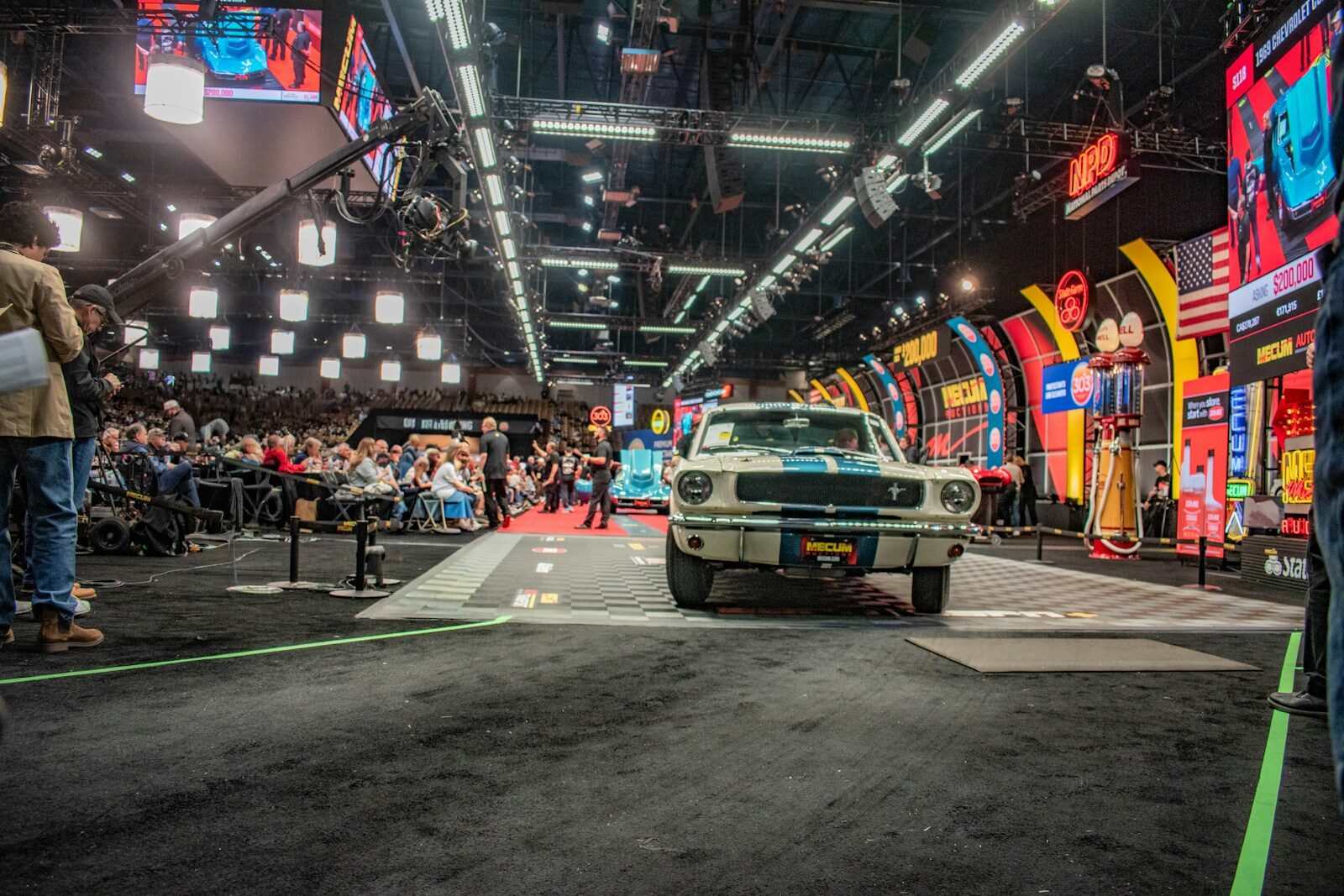
The correction hitting the collector car market in 2026 is no longer subtle, and the data behind it is becoming impossible to ignore. Hagerty’s market indexes, auction sell-through rates, and results from Mecum events all point toward the same reality: a huge portion of the mid-market muscle car world has softened dramatically since the peak frenzy of 2021 and 2022.
The problem is that many owners still have not accepted it yet.
According to Hagerty data, the overall Hagerty Market Index has reportedly fallen roughly 17 percent from its December 2022 peak. That alone is significant because the index tracks the broader health of the collector vehicle market across multiple categories and price segments. But the real story becomes much more obvious once you look beneath the surface.
Not every part of the market is falling equally.
That distinction matters because it explains why some collectors still think everything is fine while others are quietly watching values collapse underneath them. The top of the market remains remarkably strong. Seven-figure Ferraris, ultra-rare Shelby Mustangs, Carrera GTs, and Enzos continue bringing enormous money because wealthy buyers remain active regardless of interest rates or economic pressure.
Meanwhile, ordinary enthusiast-level muscle cars are telling a completely different story.
Mecum Kissimmee 2026 reportedly posted sell-through rates around 70 percent, down from roughly 75 percent the year before. That may not sound catastrophic at first glance, but in auction terms it signals growing resistance from buyers who are no longer willing to blindly chase inflated reserve prices.
Then came Mecum Indy.
Anyone walking the event or following results online noticed the same phrase appearing over and over again: “Bid Goes On.” That label effectively means bidding failed to reach reserve, and the vehicle did not officially sell on the block. The amount of no-sales across bread-and-butter collector cars became difficult to ignore, especially in the exact segments that exploded hardest during the pandemic years.
Fox Body Mustangs stalled. Driver-quality Camaros struggled. Square-body trucks softened. Monte Carlos and G-bodies sat. C3 Corvettes repeatedly failed to hit reserve.
And honestly, none of this happened by accident.
Related Incidents
- Classic Car Buyers Lose Thousands After Scammers Hijack Real Auto Shops in Multi-State Fraud Scheme
- Stellantis’ Stunning Comeback: Hemi V8 Demand Helps Reverse $26 Billion Collapse as Massive Cost Cuts Begin
- The Real Story Behind a 1966 Mustang Running Tesla Full Self-Driving and Why It’s Exposing a Major Industry Standoff
The collector market became overloaded with speculative buying between 2020 and 2022. People started treating ordinary enthusiast cars like guaranteed appreciating assets instead of hobby vehicles. Buyers who never would have spent six figures on classic trucks suddenly jumped into the market because every headline and YouTube thumbnail screamed the same message: values were going vertical forever.
That environment changed fast once interest rates climbed and economic uncertainty returned.
The average muscle car buyer is not operating like the person bidding on a Ferrari 250 GTO or Porsche Carrera GT. Mid-market enthusiasts finance purchases, refinance homes, trade vehicles, or stretch budgets to buy dream cars. When borrowing money becomes more expensive and economic confidence weakens, those buyers get cautious immediately.
That’s exactly what the market is reflecting now.
Hagerty’s own Median Sale Price metric reportedly hit its lowest inflation-adjusted point in more than 12 years. That detail is critical because it shows the market is not simply “stabilizing.” In many segments, prices are actively retreating while inflation simultaneously erodes real-world value even further.
Condition has also become brutally important.
During the boom years, buyers often overlooked flaws because fear of missing out dominated everything. Rough paint, mediocre restorations, questionable originality, or incomplete documentation mattered less when prices were climbing monthly. That environment is gone now.
Hagerty data reportedly shows “good” #3-condition vehicles getting punished dramatically harder than top-tier examples. In some cases, #3-condition cars lost roughly 35 percent of value while pristine #1-condition vehicles only dropped around 10 percent.
That gap completely changes the market dynamic.
A rough Boss 302 or tired big-block Corvette no longer automatically feels like a smart buy simply because the badge sounds special. Restoration costs exploded alongside labor prices, parts shortages, and paint expenses. Buyers understand now that a “cheap” project car can become financially upside down very quickly.
That realization is hammering driver-quality cars hardest.
And yet, despite all the warning signs, many sellers remain mentally stuck in 2022 pricing. Auction reserves still frequently reflect peak-pandemic optimism instead of current market conditions. That disconnect is creating increasingly awkward standoffs between sellers who refuse to lower expectations and buyers who know the market shifted months ago.
The divide becomes even clearer when comparing American muscle cars to the ultra-high-end market.
While ordinary collector vehicles soften, blue-chip supercars continue attracting aggressive bidding. Ferrari Enzos reportedly surged dramatically in value recently, while a 1965 Shelby GT350 crossed the million-dollar threshold at Mecum. Those cars operate in an entirely different financial universe where scarcity and wealth insulation protect values from broader market pressure.
There are only a few hundred Enzos in existence. Ford built well over a million Mustangs during the mid-1960s alone.
That supply difference matters enormously.
The result is a collector market that increasingly feels split into two completely separate economies. Wealthy collectors continue fighting over ultra-rare trophy assets while middle-market enthusiasts are suddenly discovering that ordinary muscle cars behave far more like discretionary consumer purchases once the hype disappears.
That does not mean the collector market is collapsing entirely.
Certain vehicles still show genuine strength, especially low-mile, highly original, or historically important examples. Analog supercars, pristine Fox Bodies, split-window Corvettes, K-code Mustangs, and rare Shelby cars still attract buyers because they combine rarity, condition, and emotional appeal.
But the broader idea that “all old cars always go up” is clearly breaking down.
That reality is especially painful for buyers who entered the market late. A lot of enthusiasts purchased cars near peak values believing they were safe investments protected by nostalgia and limited supply. Now some of those same owners are discovering their vehicles may not be worth what they owe, let alone what they expected to gain.
And honestly, the market may not rebound quickly.
Hagerty’s Market Rating has reportedly remained stuck in flat-market territory for months rather than showing signs of a rapid V-shaped recovery. More inventory continues entering the market as pandemic-era buyers attempt to exit positions, while buyers themselves remain increasingly selective.
That creates a difficult environment for average collector cars.
The best vehicles will likely continue holding value because truly exceptional cars always find buyers. But the middle of the market, especially rougher driver-quality muscle cars that benefited most from speculation, may continue facing pressure as the correction works through the system.
For years, enthusiasts were told American muscle cars were bulletproof investments.
The auction results are finally telling a much harder story.
Continue Reading: The Real Story Behind the $70K Honda S2000 With 835 Miles and Why This Auction Is Shaking the Collector Car Market